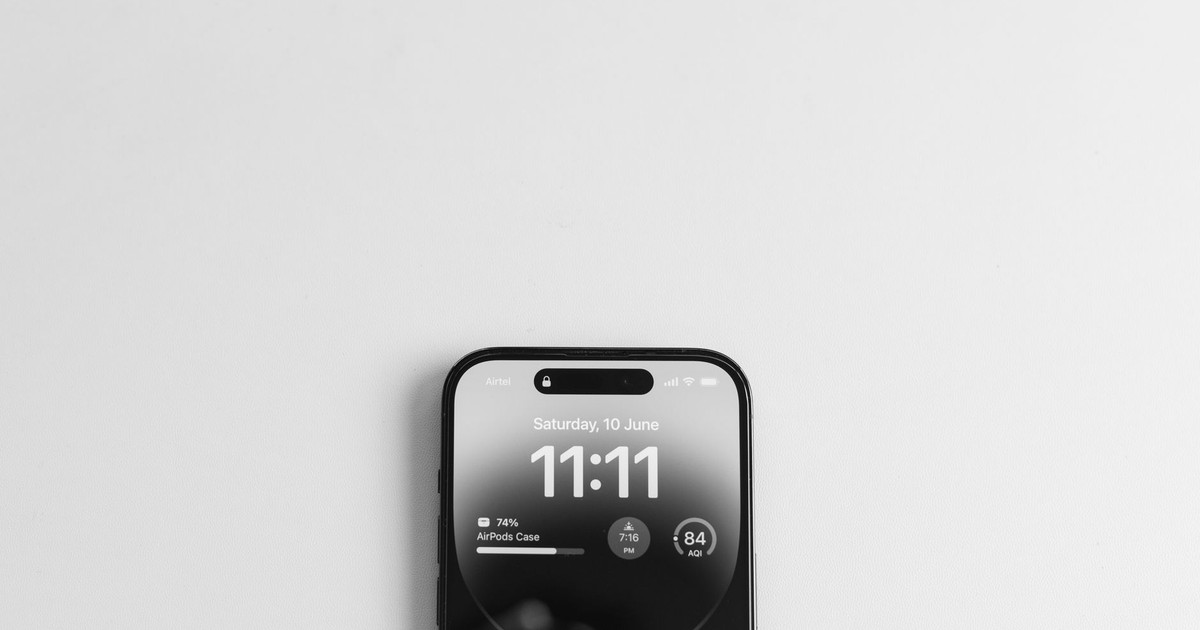

Most times you glance at your phone, the clock says something forgettable: 11:04, 2:33, 8:52. Then one week it seems like every time you look up, the display reads 11:11, and something in your brain quietly files that away as significant. The number starts to feel less like a coincidence and more like a pattern.
There is a long spiritual tradition around that pattern, and psychology has a well-documented explanation too. The practical takeaway turns out to be almost the same, no matter where you land. The two explanations can sit side by side without canceling each other out. There is no scientific evidence that angel numbers carry messages. Using the moment as a cue to breathe and reflect is still harmless.
Why does 11:11 refuse to feel ordinary?
In numerology, 11:11 angel numbers carry a specific meaning: a wake-up call, a moment of alignment and new beginnings, a prompt to pay attention to what you are thinking right now. The 11 at the core is a master number for intuition and awakening, and 11:11 doubles it.
According to Solacely’s guide to master numbers, 11 is one of three “master numbers” in numerology, alongside 22 and 33. Instead of simplifying 11 down to 2, which is what 1+1 equals, many readers keep it whole to preserve its meaning of intuition and illumination. The number does not get folded down because folding it down loses the point.
In this framework, 11:11 is that master number shown twice, side by side, in full light. The clock is doubling the most charged number of them all.
Read More: 8 Signs That Some Believe Mean There Are Angels in Their Home
What do believers say it means?
The associations cluster around a few consistent themes. Awakening is first, with 11 understood as the master number of intuition, so 11:11 reads as your inner voice getting louder. Then comes alignment, the sense that you are on the right path and should trust that. Then comes the idea of new beginnings: a door opening rather than one closing.
People who follow angel numbers treat that lineup of four ones as a kind of permission slip, a moment when the universe is especially open to you bringing about whatever you have been working toward. The wish-at-11:11 tradition flows directly from this idea. In that reading, the moment is not random. It is a cue.
In numerology and in most angel number traditions, 11:11 is read as encouragement, not a warning: you are aligned, a new beginning is available, trust your intuition. Whatever else you make of it, the message is not a dark one.
What do psychologists say is actually happening?
According to WebMD, there are two parts to the frequency illusion. First, you believe that something has begun appearing more often. Then confirmation bias convinces you it did not appear as much before. The frequency has not actually gone up, but your brain has decided that it has.
This is the Baader-Meinhof phenomenon, also called the frequency illusion. It is the psychological process that explains why 11:11 angel numbers feel like they are everywhere once you start noticing them. If you do not pay attention to something, you will not remember it. So once you have encountered a concept for the first time, you begin to perceive it more simply because you are now attuned to it.
Think about how many times you check the time each day. You glance at the clock at 11:04, 11:17, 11:33, and 11:49. None of those register. But when it reads 11:11, your brain flags it, files it, and adds it to a growing pile of evidence. The other glances never made it into the pile. The sightings are remembered; the non-sightings are never counted. Nobody keeps a tally of the 11:12s.
Confirmation bias then seals the deal. It is the tendency to look for things that support your existing way of thinking while disregarding things that do not. Every later 11:11 sighting feels like proof. Every 2:47 or 6:33 goes unremembered. The pattern feels airtight because the data you are keeping is not the full dataset.
Why can both things be true at once?
The frequency illusion explains how you see 11:11 so often, but it does not fully explain why you care.
You care because you are paying attention to your life. You are in a period of change, or searching, or hoping something is trying to reach you. The number does not create that feeling; it reflects it back. The meaning is not in the clock. It is in the one who is looking.
A moment that prompts you to pause, recalibrate, and ask yourself whether you are living in line with what you actually want is a genuinely useful moment. The source of the prompt does not change its usefulness. Whether you read 11:11 as a signal from the universe or as your own brain’s pattern-recognition firing on something beautiful and symmetrical, the pause is real and the reflection is real.
What should you do the next time you see it?
The practical answer, no matter your position on the metaphysics, is surprisingly consistent across both camps: stop for a moment.
If you believe in the spiritual reading, the numerology tradition is clear. 11:11 is a wake-up call, a moment to pay attention to what you are thinking right now. Use it. Notice where your mind is. Notice whether the direction you are heading still feels right.
If you are firmly in the psychology camp, the same instruction applies. The frequency illusion does not stop working just because you understand it. You are going to notice 11:11 again. When you do, the brain-based version of the moment is still a rare instance of your attention snagging on something it found worth flagging. Use that too.
Breathe. Ask yourself a real question. Notice what comes up.
The practice of using a repeated number as a cue to reflect is harmless by any measure. It costs nothing. It demands thirty seconds. It can interrupt a day that has gotten away from you and return you briefly to the question of what you actually want.
Is the number a mirror?
What is true in both the numerology tradition and the psychology literature is that 11:11 functions as a mirror, not a map. It does not tell you where to go. It reflects back the fact that you are asking the question at all, and there is more information in that than most of us pause long enough to register.
The believer and the skeptic both end up in the same place: standing still for a moment, paying attention to what they are actually thinking. The spiritual framework gives that stillness a name and a cosmology. The psychological framework gives it a cause. Neither one makes the moment less real.
Some patterns in life carry meaning because the universe put them there. Some carry meaning because you are ready to find it. The honest answer is that most of us cannot say for certain which is which, and that uncertainty is not a problem to solve. It is just the texture of paying attention to your own life. The next time the clock reads 11:11, you will know what to do with the thirty seconds that follow.
AI Disclaimer: This article was created with the assistance of AI tools and reviewed by a human editor.