
Every house has at least one appliance that nobody thinks twice about leaving plugged in. The toaster sitting on the counter since 2019. The iron you used this morning and set on the bathroom shelf. The space heater humming behind the couch cushion. None of them are on, technically. But “technically off” and “actually safe” are not the same thing, and the difference between those two ideas is where a lot of house fires start.
There are two distinct reasons to care about this. The first is fire safety, and it is more serious than most people realize. The second is money: appliances that stay plugged in when they’re not running draw what engineers call standby power, or what everyone else calls phantom load. The Lawrence Berkeley National Laboratory estimates that idle loads account for up to 10% of a typical household’s electric bill, and according to the U.S. Department of Energy, always-on devices can cost the average household up to $100 a year. Neither of those problems requires a major lifestyle overhaul. They mostly just require the habit of pulling a plug.
The nine appliances below are the ones worth building that habit around. Some are obvious. Some are the ones sitting in a corner of your house that nobody has thought about in months.
1. Space Heaters
Space heaters are, without question, the most dangerous item on this list, and they deserve to be first. According to the NFPA, fire departments responded to an estimated average of 37,365 fires involving heating equipment per year from 2020 to 2024. Space heaters and heating stoves accounted for 30% of those fires but were responsible for 73% of the associated deaths. That ratio tells you everything you need to know about how quickly a space heater fire escalates.
The risk doesn’t disappear the moment you turn one off. A space heater that’s switched off but still plugged in can overheat if there’s a fault in the cord or the heating element, and faults in cords are not always visible to the naked eye. The cord gets warm every time the unit runs, and repeated thermal stress across months of use degrades the insulation. Leaving it plugged in between uses means the cord stays live even when you’ve forgotten the heater exists.
The Electrical Safety Foundation International (ESFI) recommends always unplugging a space heater when it is not in use and storing it safely rather than leaving it connected to a live outlet.
2. Toasters
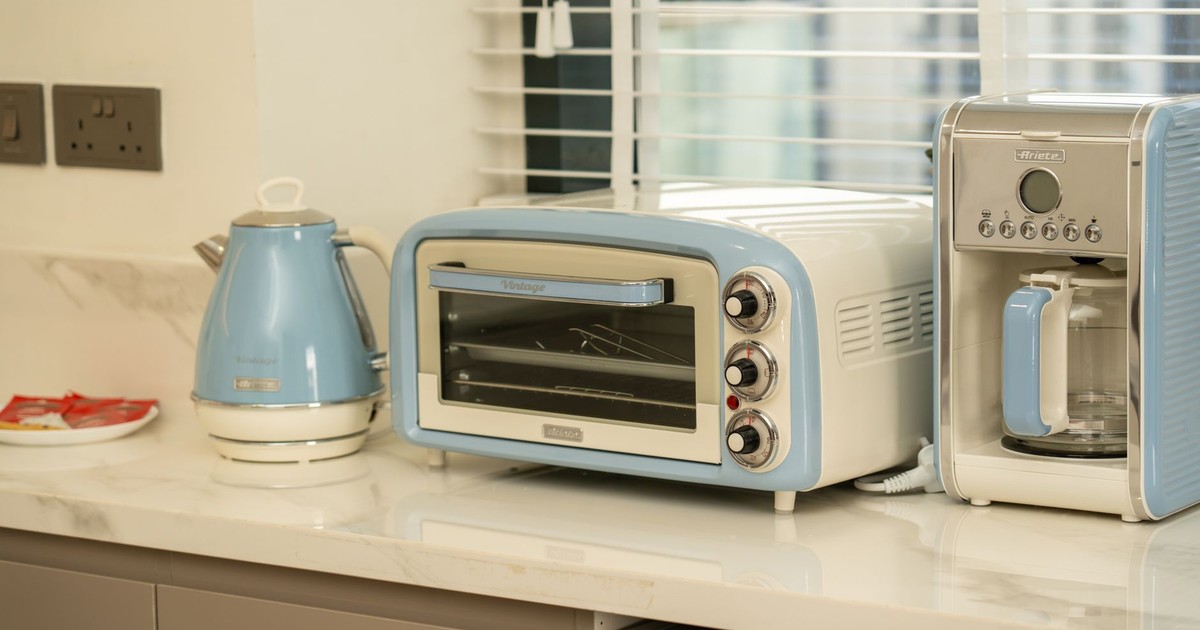
The toaster gets treated like furniture. It lives on the counter, it gets used every morning, and nobody thinks of it as a fire hazard because it’s just bread. But crumbs build up in the bottom tray, and crumbs are flammable. A toaster left plugged in with a full crumb tray and a faulty heating element is a more specific risk than most people imagine, and faulty heating elements are not rare in older machines.
The electrical argument matters here too. Even when not in use, a plugged-in toaster is drawing a small amount of standby current, keeping internal components powered and ready. Across the course of a year, that adds up across every appliance in your kitchen. The habit of unplugging the toaster when you’re done with breakfast is the kind of thing that feels pointless until you look at your electricity bill next to someone who does it consistently.
The practical solution is simple: use it, wait for it to cool, and pull the plug. Many people who have made this a habit also find it prompts them to empty the crumb tray more regularly, which handles both problems at once.
3. Toaster Ovens

Toaster ovens deserve their own entry because they run at significantly higher temperatures than toasters, their heating elements stay hot longer after a cycle ends, and they tend to sit on counters surrounded by things that shouldn’t be near sustained heat. Paper bags, dish towels, the wooden cutting board leaning against the backsplash – none of those items need to be especially close to a toaster oven for heat proximity to become a hazard.
Most toaster ovens don’t have a true “off” state when plugged in. The clock display on models that have one is pulling power constantly, but more importantly, the internal components remain energized and ready to heat. A malfunction can trigger a heating cycle without any input from you.
Unplugging a toaster oven after each use also removes one variable from the equation: if there’s something wrong with it, it can only act on that fault when it’s actually drawing power. An appliance that isn’t plugged in cannot malfunction electrically.
4. Air Fryers

Air fryers became a permanent fixture in millions of kitchens over the last several years, and their safety profile doesn’t always get the attention it deserves. They run at temperatures up to 400 degrees Fahrenheit or higher, they have internal fans that continue spinning briefly after the heating cycle ends, and their heating elements are housed inside a compact cavity that retains heat efficiently. That’s good for cooking. It’s less good when the unit stays plugged in and something goes wrong.
Grease accumulation is also a factor that’s specific to air fryers. Fat residue builds up on the heating element with each use, and that residue can smoke or ignite if the unit unexpectedly powers on, which is possible as long as it’s connected to a live outlet. If you use your air fryer daily, unplugging it takes about one second and removes a meaningful risk.
The energy argument applies here as well. Air fryers with digital controls draw standby power whenever they’re plugged in, keeping displays lit and control boards active. None of that is free.
5. Irons

An iron left plugged in is a risk that most people learn about the hard way, or by reading something that made them run back upstairs to check. Modern irons typically have auto-shutoff features that activate after a few minutes of inactivity, and that feature has prevented an enormous number of accidents. But “typically” is doing a lot of work in that sentence. Older irons often don’t have auto-shutoff, and even newer models can have features that malfunction.
The surface temperature of an iron’s soleplate can exceed 400 degrees Fahrenheit on a linen or cotton setting. Placed on an ironing board, that heat dissipates safely. Placed on a cotton shirt, a wooden shelf, or a polyester garment you accidentally left underneath it, it does not. Unplugging an iron after use isn’t just about electrical safety; it’s about the appliance cooling to a neutral state before you leave it unattended.
The habit here is worth making absolute rather than conditional. Not “unplug it if you’re leaving the house,” but unplug it every single time, regardless of how long you plan to be gone. Conditional habits have a way of failing at exactly the wrong moment.
6. Portable Air Conditioners

Portable AC units run on compressors, and compressors draw substantial current. The Lawrence Berkeley National Laboratory estimates that idle loads in a typical household can account for up to 10% of the electric bill, and portable AC units sitting plugged in between uses are among the larger contributors to that figure, since their internal components continue drawing power even in standby mode to maintain thermostat readiness.
There’s a fire angle here that’s less intuitive than with the other appliances on this list. Portable air conditioners accumulate condensation internally, and if that drainage system is even slightly compromised, moisture can work its way toward electrical components. A unit that’s plugged in provides a live electrical pathway for any moisture that reaches the wrong place. Units that are unplugged when not in use remove that possibility entirely.
During the months when the unit isn’t being used at all, it’s worth unplugging it fully and storing it properly rather than leaving it connected to a live outlet indefinitely.
7. Hair Styling Tools

Flat irons, curling wands, and hot rollers are in a special category of risk because they’re used in rooms with more fabric per square foot than most other spaces in the house: towels, bath mats, robes, shower curtains. A styling tool set on a countertop while you deal with something else is a scenario that repeats itself in a lot of households and occasionally ends badly.
The temperatures involved are significant. A flat iron can reach 450 degrees Fahrenheit, hot enough to ignite fabric through sustained contact in under a minute. Many styling tools have auto-shutoff, but the same caveats apply as with irons: the feature can malfunction, and older tools often don’t have it at all.
Unplugging hair tools immediately after use is the safest approach. A tool that isn’t drawing power will still be hot for several minutes, but it’s cooling rather than maintaining temperature. Keeping a small heat-resistant mat nearby so there’s a dedicated spot to set tools while they cool makes this a much easier habit to maintain.
8. Coffee Makers
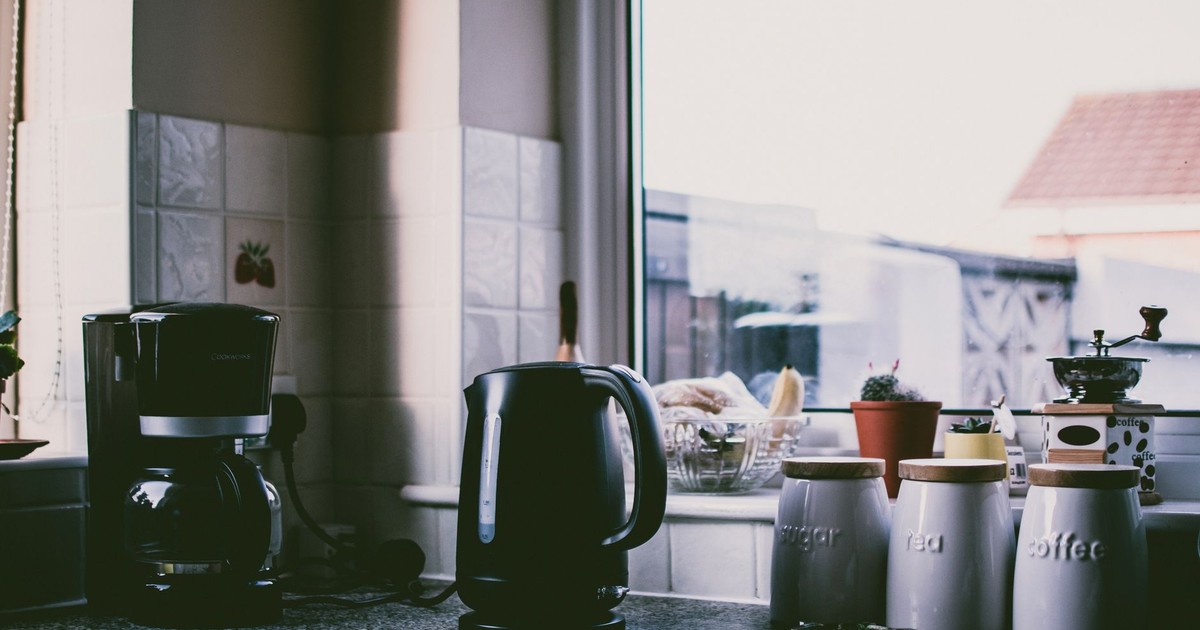
Coffee makers occupy a strange middle ground on this list. The fire risk is lower than with the heating appliances above, but the phantom power draw is one of the more meaningful on a per-appliance basis. A coffee maker with a warming plate, a digital clock display, and Wi-Fi connectivity can draw anywhere from two to five watts continuously in standby mode. Multiplied across every day of the year, that’s not trivial.
The warming plate is worth addressing on its own. Some coffee makers keep the warming plate active by default after brewing, and a warming plate that’s left on with an empty carafe can, after enough time, scorch the glass or damage the heating element. Unplugging the machine after your morning coffee takes the carafe-scorching question off the table entirely.
For households where the coffee maker runs on a timer, the workaround is a smart plug – set it to power on before you wake up and power off an hour after brewing. That preserves the convenience without keeping the machine live all day.
9. Candle Warmers

Candle warmers are the least obvious item here, partly because they look so inert. They’re just a disc and a plug and a candle. Nothing about them reads as dangerous, which is exactly why they tend to get forgotten – left plugged in, sometimes for days at a time, because there’s no flame to remind you that heat is involved.
But heat is involved. An electric candle warmer typically runs between 120 and 140 degrees Fahrenheit, which is warm enough to soften and melt wax across a long enough period. If the wax melts past the top of the vessel and contacts the warming element directly, the risk profile changes. And a unit that’s been running for 48 hours continuously is a unit whose electrical components are under sustained thermal stress.
The category also includes plug-in wax warmers, which operate on the same principle. They’re used as a flameless alternative to candles, which makes them feel inherently safe. They’re safer than an open flame, but they’re not zero-risk, and leaving one plugged in and unattended for extended periods is something the manufacturers themselves generally advise against. Pull the plug when you leave the room. The scent will still be there when you come back.
Read More: Firefighters Want Everyone To Know What They Should Never Plug Into A Power Strip
The Real Math Here
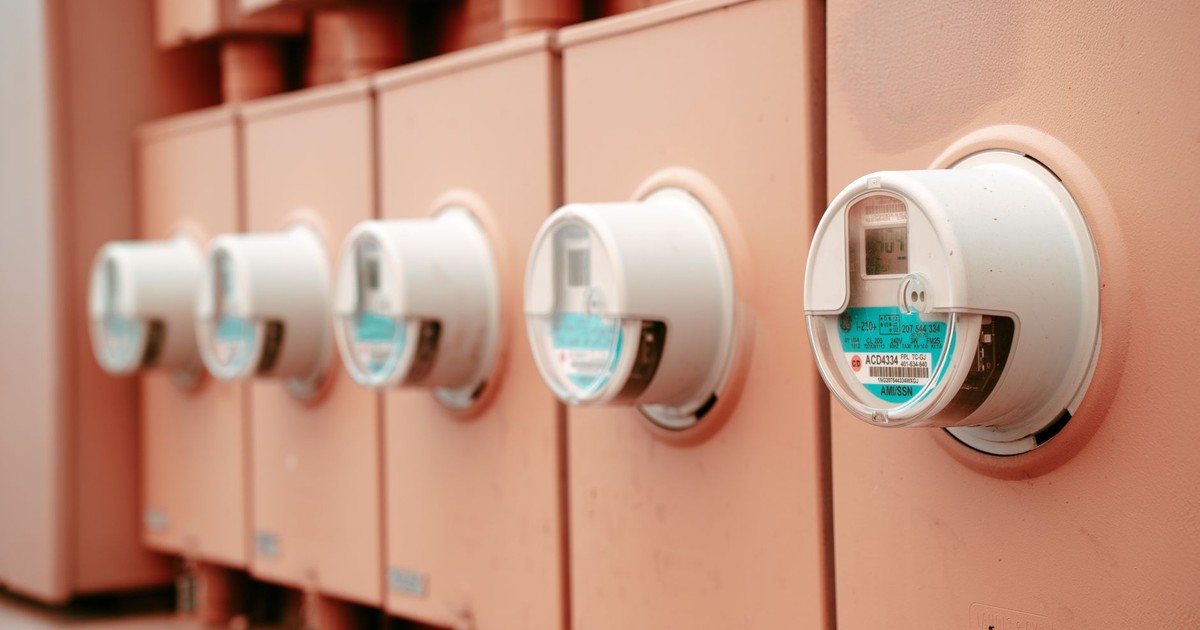
According to PG&E, appliances and devices silently drain energy from your home even when they are in standby mode or turned off, and the Lawrence Berkeley National Laboratory estimates those idle loads are roughly responsible for 1% of global carbon emissions. That’s a number that sounds abstract until you translate it into the appliances sitting plugged in on your counters right now, doing nothing except drawing current.
The decision to unplug appliances after use is not complicated, and it’s not about perfection. You will forget sometimes. Everyone does. But making it a default for the nine appliances above addresses the highest-risk scenarios in the time it takes to walk out of the room. None of these items need to be connected to a live outlet when they’re not in use. They work exactly the same whether they’ve been sitting plugged in for a week or plugged in thirty seconds before you turn them on. The only thing the constant connection adds is risk.
Some of this is fire safety. Some of it is $100 a year you’re spending on electricity generated by appliances doing absolutely nothing. Both are reasonable reasons to change a habit.
One Plug at a Time

The nine appliances on this list are not an exhaustive inventory of everything in your house that could theoretically cause a problem. They’re the ones where the risk is specific enough, and the fix simple enough, that putting them here actually means something. A flat iron is not the same category of concern as a refrigerator. A space heater is not the same as a lamp. The distinction matters because not every plug-in-everything rule is realistic, and most people will stop following a habit the moment it starts feeling absurd.
What tends to work is a smaller set of firm commitments. Pick the three or four on this list that already make you slightly nervous and start with those. The habit of checking those specific appliances embeds itself faster than a generalized rule, and it covers the ground that actually needs covering. The rest of the list can follow when it follows. You don’t need a perfect system. You need a better default.
Disclaimer: This information is not intended to be a substitute for professional medical advice, diagnosis, or treatment and is for information only. Always seek the advice of your physician or another qualified health provider with any questions about your medical condition and/or current medication. Do not disregard professional medical advice or delay seeking advice or treatment because of something you have read here.
AI Disclaimer: This article was created with the assistance of AI tools and reviewed by a human editor.