

Your digestive system does not care how ambitious your workout goals are. It cares whether you move at all. The answer keeps turning out to be the same low-tech, zero-cost thing: walking.
Not power walking with a weighted vest. Not a two-hour gym session you’ll resent by Tuesday. Dr. Roshini Raj, a gastroenterologist at NYU Langone Medical Center, puts it plainly: walking is great, and any aerobic exercise helps digestion. When your body slows down, your digestive system slows down with it. Sit for long stretches and the whole system starts to drag. Food moves sluggishly, gas builds, bloating sets in, and constipation follows.
The amount of movement required to make a real difference is genuinely achievable. The research points to short, consistent, modest movement you can fold into a normal day without rearranging your life around it.
What Happens Inside When You Start Moving

The digestive tract is essentially one long stretch of muscle. When you walk, your abdominal muscles contract rhythmically, your core engages, and the resulting physical motion creates an indirect massage on your intestines. This stimulates peristalsis, the wave-like muscular contractions that push food through your gut, and encourages the whole process to keep moving at a healthy pace.
Moderate exercise promotes gut health by enhancing motility, reducing inflammation, and supporting microbial balance. Chronic low-grade gut inflammation is at the root of a significant number of digestive complaints, and one of its most reliable triggers is prolonged sitting. Moving more interrupts that loop.
According to a 2025 systematic review on exercise and gastrointestinal disorders, regular moderate-intensity exercise, including walking, cycling, and yoga, has been associated with improved GI function in conditions like gastroesophageal reflux disease and irritable bowel syndrome. Those are not niche diagnoses. They are the digestive complaints that fill gastroenterologists’ waiting rooms. A 20-minute walk after dinner appears in the same research as medication discussions for these conditions.
The 10-Minute Rule After Eating

There is a specific, time-sensitive window after a meal when movement does something that movement at other times of day does not do quite as efficiently.
Researchers writing in Scientific Reports examined whether walking for 10 minutes immediately after consuming glucose would improve post-meal blood sugar control more effectively than walking for 30 minutes starting half an hour later. Both approaches improved blood sugar control compared to resting, but the 10-minute walk immediately after eating was uniquely effective at reducing peak glucose spikes.
The conventional assumption has always been that longer is better, that a proper 30-minute walk earns the benefit and a 10-minute stroll doesn’t really count. Participants in the study chose their own comfortable walking pace, averaging a gentle 3.8 km/h, roughly 2.4 mph. This was not a brisk sports pace. It was a casual, after-dinner pace, the kind where you could hold a conversation with one hand still holding your phone.
Shortly after we eat, our bodies enter “rest and digest” mode, a period when the gut and brain communicate intensively. Walking during this window works with that process rather than against it. The muscles activating during a gentle walk draw glucose out of the bloodstream as fuel, which is why blood sugar spikes stay lower. During high-intensity exercise, by contrast, the body redirects blood flow away from the digestive organs and toward working muscles, lungs, and heart—which is why intense effort close to a meal can cause GI distress.
For anyone managing blood sugar, and a significant number of women in their 40s and 50s are doing exactly that, often without a formal diagnosis pointing them there, National Geographic reports that research suggests 15 minutes of light walking blunts post-meal glucose spikes, and a 2025 study confirmed that a 10-minute walk immediately after a meal improved blood sugar control just as well as a 30-minute walk done later.
What Walking Does to Your Gut Microbiome

The gut microbiome, the enormous, chaotic, deeply personal community of bacteria living in your digestive tract, is not a fixed entity. It changes constantly in response to what you eat, how you sleep, how stressed you are, and how much you move.
Moderate-intensity continuous training consistently increases alpha diversity, a measure of the variety of species in your gut. Higher alpha diversity is associated with better overall gut health and is linked to enrichment of beneficial bacterial taxa.
A systematic review published in Frontiers in Physiology found that moderate-intensity training specifically enriches butyrate-producing bacteria, including Faecalibacterium prausnitzii and Roseburia hominis, along with mucin-degrading Akkermansia muciniphila. Butyrate is a short-chain fatty acid that functions as the primary fuel source for the cells lining your colon. More butyrate means a better-maintained gut lining, which means less permeability, less inflammation, and better overall digestive function. The bacteria that produce it respond directly to regular aerobic movement, not extreme exercise, not marathon training, just consistent moderate activity.
People expect to hear about motility and bloating. The microbiome piece goes deeper: consistent movement is literally reshaping the bacterial community that runs the day-to-day operation of your gut.
Why Intensity Matters and How to Get It Wrong

Not all movement helps digestion equally, and some types can actively make things worse.
High-intensity exercise, think sustained running, intense interval training, endurance races, temporarily redirects blood flow away from the digestive organs and toward the working muscles. This is why runners notoriously deal with GI distress during and after races. The gut, suddenly deprived of its usual blood supply, reacts accordingly. This is not a reason to avoid vigorous exercise, but it is a reason not to treat it as your primary digestion strategy.
The consistent winner across the research is moderate-intensity aerobic activity: walking, light cycling, swimming, casual hiking. While moderate exercise generally promotes gut health, intense or prolonged physical activity may exacerbate GI symptoms, particularly in individuals with pre-existing digestive disorders. Moderate movement, the category most people feel vaguely guilty about because it doesn’t feel hard enough, is doing exactly the right job for your gut. The activity you’re tempted to dismiss as “not really exercise” may be the most digestively useful thing in your routine.
Yoga, Twists, and the Gut-Brain Axis
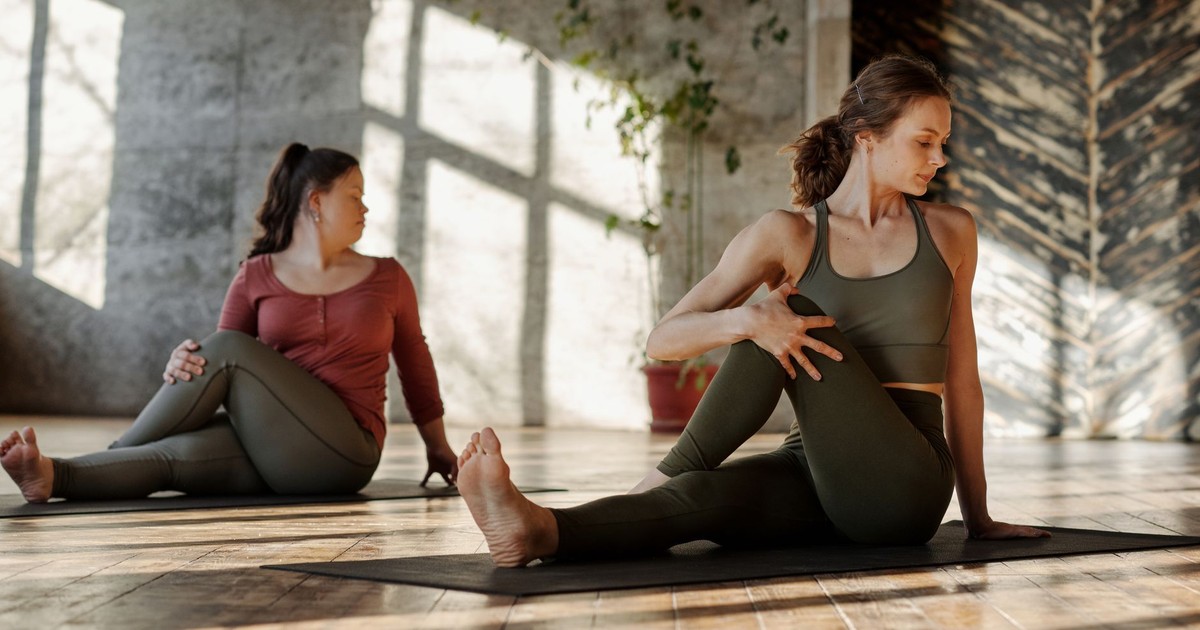
Walking is the cornerstone, but it is not the whole story. For days when a walk isn’t happening, or when bloating is already an event and you need something that works differently, yoga offers a different route to the same destination.
Certain poses, especially those that include twisting, help stimulate the digestive system. Specific poses and breathwork also activate the vagus nerve, the communication highway between the brain and the gut, which can help prevent the kind of inflammation that causes digestive issues.
Stress is one of the most reliable triggers of digestive disruption, and the gut-brain axis runs in both directions: a stressed brain creates a stressed gut, and yoga’s emphasis on breath and parasympathetic activation addresses the problem from the neurological end rather than the physical one.
Twists, forward bends, and inversions improve blood circulation, peristalsis, and organ efficiency, relieving constipation, bloating, and slow digestion. A seated spinal twist, the kind where you cross one leg over, place the opposite elbow against the knee, and rotate your torso, creates a compression-and-release effect on the intestines.
A 2023 randomized clinical trial found that yoga reduced IBS symptom severity within the treatment group and produced significant improvements in quality of life and perceived stress compared to controls. IBS affects a substantial portion of women, and more regular bowel movements with less pain is the kind of outcome that makes a compelling case for rolling out a mat a few evenings a week.
Making It a Habit, Not a Project

The version of this that actually works does not require a gym, a special app, a specific time slot, or a commitment you’ll be negotiating with yourself by week three.
Walking for 10 to 30 minutes after meals may help manage blood sugar levels, improve digestion, and reduce gastrointestinal symptoms like bloating and gas. Start there. One walk after dinner. Not a power walk, not a workout, just movement. Out the door, around the block, or on a treadmill while watching something you’d feel vaguely guilty about otherwise.
The microbiome benefits accumulate with consistency. The post-meal blood sugar benefits happen immediately. The yoga twists can happen on the floor of your bedroom in five minutes before you go to sleep if that’s what your evening looks like right now. None of this requires a before-and-after transformation story. It requires repetition, and repetition requires that the thing be easy enough to actually do.
One practical note on timing: if you find that moving immediately after eating causes discomfort, which some people do, particularly after larger meals, wait 10 to 15 minutes, then start. The research supports a window of up to 60 to 90 minutes post-meal and still captures blood sugar benefits. The goal is movement before your digestive system has to work entirely on its own.
What This Means in Practice

The single most consistent finding across the research on exercise for digestion is that the bar is lower than most people expect. Ten minutes. A comfortable walking pace. After a meal. Done repeatedly, several times a week. That is the intervention documented in peer-reviewed journals as clinically meaningful.
The mental reframe required is to stop treating a gentle post-dinner walk as the thing you do instead of exercising, and start treating it as one of the most targeted digestive interventions available to you. The research is not suggesting that walking is a consolation prize for people who can’t manage a “real” workout. It is suggesting that walking, timed correctly and done consistently, does something that many harder workouts don’t.
Your gut is not impressed by intensity. It is impressed by regularity, by moderate movement that keeps the system moving without pulling blood flow away or triggering the stress response that makes everything worse. The thing that helps your digestion most is also the thing that is easiest to talk yourself out of because it doesn’t feel like enough. It is enough. The data says so.
Disclaimer: This information is not intended to be a substitute for professional medical advice, diagnosis, or treatment and is for information only. Always seek the advice of your physician or another qualified health provider with any questions about your medical condition and/or current medication. Do not disregard professional medical advice or delay seeking advice or treatment because of something you have read here.
AI Disclaimer: This article was created with the assistance of AI tools and reviewed by a human editor.