

Hiding emotional pain long enough stops being a choice and starts being a reflex. Most people who do it are not dramatic about it, not even particularly aware of how thoroughly they’ve built their whole social presentation around the idea that everything is fine. They laugh quickly at the right moments. They ask how you are before you can ask how they are. They are reliably, professionally, almost impressively okay.
Something in the daily machinery of their lives costs them more than it should. Not catastrophically. Not in ways anyone would notice or call out. Just a little more friction everywhere, a little more energy expended on tasks that look ordinary from the outside, a little more exhaustion at the end of days that didn’t even seem that hard. Hiding emotional pain is one of the most quietly expensive things a person can do, and the bill arrives in places nobody thinks to look.
What follows are nine of those places.
1. Accepting a Simple Compliment

Tell someone who is hiding pain that they did something well, and they deflect it almost before they’ve finished hearing it. “Oh, it was nothing.” “Anyone would have done it.” “The team really did all the heavy lifting.” The compliment dissolves in their hands like paper in water.
This isn’t false modesty exactly, and it isn’t a strategy to seem likable (though that’s often how it reads). Someone who has been quietly telling themselves their inner experience doesn’t matter has, by extension, been telling themselves that their contributions and efforts don’t matter much either. The interior monologue of emotional suppression is rarely confined to emotions alone. When you have spent years downgrading your own distress, downgrading your own accomplishments starts to feel like the same motion. The logic is bleak but coherent: if what I feel inside isn’t worth naming, why would what I do on the outside be worth celebrating?
The compliment registers but doesn’t stick, because the self-concept that would receive it and hold onto it has been quietly eroded by the same habit that keeps the pain hidden. There is no internal shelf for it to rest on.
2. Sleeping Through the Night

Research published in Scientific Reports found that improved sleep quality was predictive of reduced habitual use of expressive suppression, and that expressive suppression partially mediated the relationship between sleep quality and anxiety symptomology, confirming that emotion regulation and sleep quality are meaningfully connected. The relationship runs in both directions. Suppressing emotions regularly makes sleep worse. Worse sleep makes suppression harder to maintain. It’s a loop, and once you’re in it, both ends reinforce each other.
People who are hiding emotional pain often report lying awake with no particular thought, just a kind of low-grade restlessness that they can’t name or explain away. The body, unable to process what the mind has refused to acknowledge, does its processing in the small hours. The thoughts that couldn’t be admitted during the day resurface at 2 a.m. in whatever form they can manage: formless anxiety, a stomach-dropping sense that something is wrong without any clear object.
A 2026 meta-analysis published in BMC Psychology synthesized evidence on expressive suppression and sleep quality across multiple adult samples, finding mixed results regarding the association between habitually hiding emotions and poorer sleep, with cultural background and pandemic context emerging as meaningful moderators. The irony is that the person in question will often describe themselves as tired. Everyone around them will nod. Nobody will connect it to what’s actually happening.
3. Knowing What They Actually Want
When someone spends years treating their emotional experience as noise to be managed rather than information to be processed, they eventually lose access to parts of their own internal guidance system. The question “what do you want for dinner?” should not require effort. For people who have systematically trained themselves not to feel what they feel, it sometimes genuinely does.
Preferences, desires, and wants are emotionally inflected. They emerge from a felt sense of what would be good, what would bring satisfaction, what would feel right. Emotional repression operates mostly as an unconscious habit. Unconscious habits are not selective. A person who has suppressed their emotional life in one domain has typically suppressed access to it in others. The feelings you learned to quiet don’t wait patiently in a corner while you continue accessing the useful ones. They recede together.
The result is a person who seems agreeably easy-going, who is reliably happy with wherever the group decides to eat, who defers frequently on decisions, but who is also, privately, not sure what they actually want from most situations. The agreeableness and the confusion come from the same place.
4. Receiving Help Without Guilt

Asking for help is one thing. Receiving it without immediately becoming a smaller version of yourself is another. People who are hiding emotional pain have often built their entire social identity around being low-maintenance, around not burdening anyone, around being the person who copes rather than the person who needs. When someone tries to help them, the guilt can be almost physical.
With what Dr. Margaret Rutherford calls perfectly hidden depression, suppression of painful emotions can become entrenched, a habit, a way of living, to the point where the person doing it may no longer recognize how they hide. When hiding has become that thoroughly automatic, accepting help means momentarily dropping the cover, and the person on the inside often has no idea who they are without it. The help creates a kind of cognitive alarm. Someone is seeing me. Someone is treating me like a person who has needs. This should be fine. This does not feel fine.
The guilt tends to express itself as over-compensation. Elaborate thank-yous. Immediate attempts to reciprocate. The careful erasure of any debt incurred. Not because they’re ungrateful, but because the alternative, allowing themselves to simply have been helped, asks something of them that years of hiding has made genuinely hard.
5. Staying Present in Conversation

Most people assume that being distracted in conversation is a focus problem. For people carrying concealed pain, it’s often an endurance problem. Maintaining the surface presentation (the appropriate responses, the right expressions, the energy to track what’s being said and respond in kind) takes more cognitive load when part of your mental bandwidth is permanently allocated to keeping something else out of sight.
Emotional suppression only masks the external expression; internally, it increases the experience of stress beyond what natural emotional expression would, and it triggers rumination and fixation around the repressed emotion, which amplifies distress. Rumination is not a passive process. It actively draws resources. The mind that is quietly looping on something it won’t consciously acknowledge is simultaneously trying to have a conversation about weekend plans, and something has to give. Usually it’s the conversation.
The person will seem like they’re listening. They’ll nod in the right places. But there’s a slight delay, a half-second lag between what’s said and when they respond, a sense that they arrived at the answer by a route that shouldn’t have been necessary. People who’ve endured emotional pain often compensate with heightened attentiveness to others’ feelings, which can make them appear entirely present while actually running on reserve.
6. Tolerating Silence

Silence is where the things you haven’t said live. People who are actively hiding emotional pain tend to find it louder than other people do. They fill it. Not always with words, sometimes with activity, with checking phones, with finding tasks that didn’t need doing until the room went quiet. The busyness that people around them often admire is frequently a relationship with noise more than a relationship with productivity.
When internal life feels chaotic, external control becomes crucial. People hiding unhappiness often develop strict routines and systems that give them a sense of stability and predictability. The over-scheduled calendar isn’t ambition. The immaculate inbox isn’t discipline. They are architecture built to keep a certain quality of stillness at bay.
This looks, from the outside, like being a high-functioning, impressive person, and from the outside, it often is. The cost is that genuine rest, the kind that requires tolerating your own company without agenda, becomes almost impossible. Relaxation stops being restorative because relaxation requires sitting with yourself, and sitting with yourself has, for a long time, not been entirely safe.
7. Moving On After Conflict

After an argument, most people need some time, some processing, some re-entry into ordinary life. People who hide their pain need something more specific: they need the conflict to be over and everyone around them to confirm that it’s over, and even then they carry residue that doesn’t fully clear. Not because they’re grudge-holders, but because conflict threatens the presentation. Conflict is a place where real feelings are expected to surface, and people who have spent significant energy ensuring real feelings don’t surface are now in direct opposition to the social contract of the argument.
Emotional repression is linked to anxiety disorders, depression, and other mood disorders, consequences that extend well beyond the moments of suppression themselves. The aftermath of conflict tends to activate all of that at once. The person processes not just what happened but what almost came out, what they managed to keep contained, and what it would have meant if they hadn’t. That’s a longer and more exhausting process than ordinary post-argument decompression. It looks, from the outside, like they’re being dramatic about something that’s already been resolved. It feels, from the inside, like something much more complicated than that.
8. Being Around People Who Are Openly Emotional

There is a specific discomfort that comes from watching someone else cry freely, express anger without apology, or admit that something hurt them. People who hide emotional pain don’t always feel sympathy in those moments. Sometimes what they feel is something closer to vertigo, the unsettled sensation of watching someone do something that their own body has been told not to do for a very long time.
Socialization and culture teach us to suppress sadness, anger, fear, and sometimes even joy, and these lessons become part of how emotions are understood as appropriate or inappropriate. When those rules have been internalized deeply enough, encountering someone who doesn’t follow them can produce an almost involuntary disapproval, or discomfort that the person themselves can’t fully account for. They’ll often describe people who express emotion freely as “too much,” without being able to explain why “too much” bothers them as viscerally as it does.
What they’re encountering is usually a contrast they haven’t wanted to look at directly. Other people’s open emotion is a mirror. The discomfort is less about the emotional person in front of them and more about everything they’ve spent years keeping carefully out of frame.
9. Trusting That Good Things Will Last

This one is almost never articulated, because articulating it would require a degree of self-awareness that, understandably, the person hasn’t quite arrived at yet. But it’s there. Good news arrives with a slight holding-back, received at arm’s length rather than taken in. Good periods are accompanied by a background suspicion that this can’t hold. Relationships that are going well generate a particular low-grade anxiety that the person can’t explain to their partner, who is standing right there being reliably present and wondering why that still doesn’t feel like enough.
Studies find that people who try to mask their emotions tend to have lower emotional well-being, though the relationship between hiding emotions and psychological wellness is not always straightforward, and depends partly on how authentic and deliberate the concealment feels to the person doing it. But for people who are hiding pain that has not been acknowledged, the concealment is not deliberate so much as reflexive. And the reflexive bracing-for-impact that kept them functioning through hard times doesn’t reliably stand down when circumstances improve.
This is why people who hide their pain can seem like they don’t trust love even when love is right in front of them. It’s not that they don’t want to trust it. It’s that the internal environment that would allow them to relax into good things, to believe in continuity, in safety, in being allowed to have something good, has been shaped by the same history that taught them to hide in the first place. The hiding and the bracing grew up together.
Read More: The Day I Lost A Parent, I Lost A Part Of My Soul And I Wish They Knew How Much I Miss Them
What This Is Really About
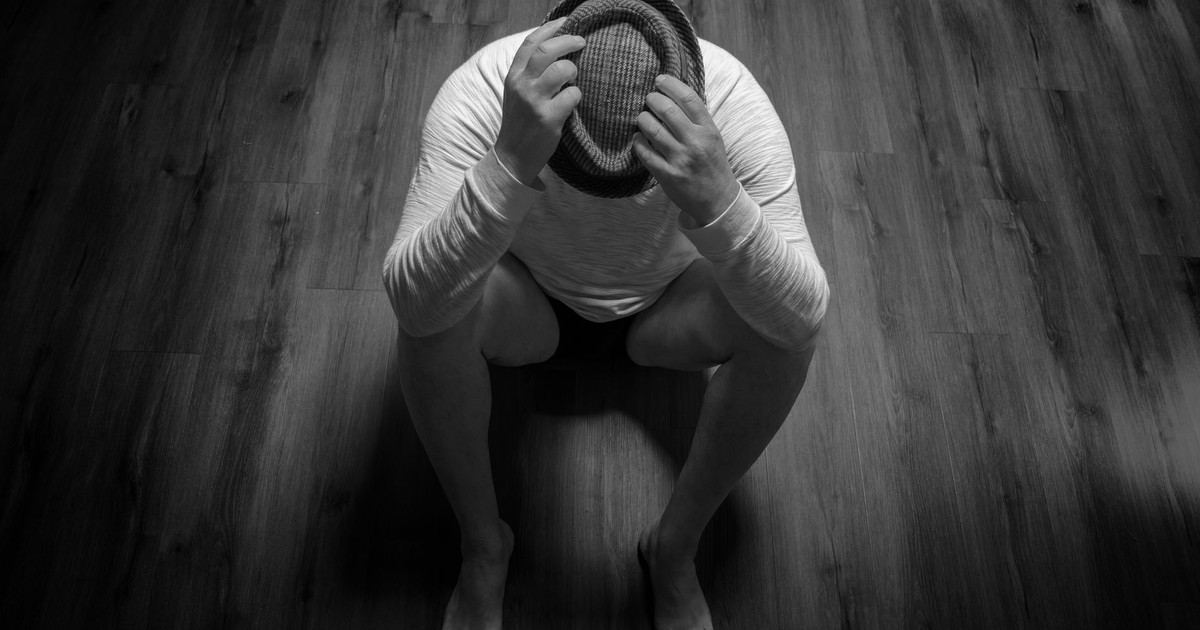
None of these nine things happen in isolation, and none of them require a dramatic origin story. Hiding emotional pain is rarely a conscious decision someone made one morning. It tends to accumulate from small lessons about what is acceptable to express, what gets rewarded, what makes the people around you comfortable or uncomfortable. By the time it’s a fixed pattern, it’s been running long enough that identifying it as a pattern at all requires a kind of double vision most people haven’t been asked to develop.
What makes it hard to catch from the outside is exactly what makes it hard to catch from the inside: it doesn’t look like a problem. The person who can’t receive a compliment looks gracious. The person who can’t tolerate silence looks productive. The person who struggles to trust good things looks measured and careful. The behaviors are legible as virtues. Only the cost is hidden, and the cost is paid in private, in the thousand small moments per day when something takes more effort than it should.
The archive of things you’ve kept quiet doesn’t disappear. It just gets more expensive to maintain. And sometimes the first thing that has to change is simply recognizing that the toll is real, not as a diagnosis, not as a verdict, but as a plain acknowledgment of what keeping all of it contained actually costs, even when nobody else can see what’s being spent.
Disclaimer: This information is not intended to be a substitute for professional medical advice, diagnosis, or treatment and is for information only. Always seek the advice of your physician or another qualified health provider with any questions about your medical condition and/or current medication. Do not disregard professional medical advice or delay seeking advice or treatment because of something you have read here.
AI Disclaimer: This article was created with the assistance of AI tools and reviewed by a human editor.