
You’ve cleaned the sink. You’ve wiped the counters. You’ve even run the garbage disposal for good measure. And somehow, every morning, there are still ants. Not a swarm, just enough of them, marching a perfectly organized line around the edge of the basin like they own the place. Which, by their reckoning, they kind of do.
The problem isn’t usually what it looks like. Most people assume a kitchen ant problem means the house is dirty, and they respond by cleaning harder – scrubbing surfaces, emptying trash cans, stashing every crumb in a sealed bag. Sometimes that helps. Often it doesn’t, because the real causes of kitchen sink ants go deeper than visible mess, sometimes literally. Things are happening in your drain, under your cabinet, and along your pipes that are more attractive to ants than anything sitting on your counter.
1. Standing Water You’re Not Thinking About
Even if you wipe your counters daily, the sink area still provides a reliable water source, and that water is often more valuable to ants than food. A damp sponge sitting next to the faucet. A small puddle left in the basin after washing dishes. Water pooling in the rubber rim of a dish rack. None of it looks like an infestation waiting to happen, but if you’ve ever left a damp sponge or a small puddle around your sink, that functions as an open invitation for ants.
Rinsing and wringing your sponge after every use matters. Drying the basin after the last dish wash of the night matters. The sink doesn’t need to be bone dry, but it should not have visible standing water sitting in it overnight. Ants are most active in the hours humans are asleep, so what you leave behind at 10 p.m. is what they find at 2 a.m.
2. A Slow Leak You Haven’t Fixed
According to Today’s Homeowner, the most common culprit for kitchen sink ants is moisture from leaky pipes, poor caulking, or standing water around the sink. This isn’t just the water you can see. Under most kitchen sinks there is a cabinet, and inside that cabinet, pipes run through darkness and humidity that most homeowners only inspect when something goes obviously wrong. A slow drip from a supply line joint, condensation on cold pipes during warm months, a slightly cracked drain fitting – none of these feel urgent until you open the cabinet and find ants.
If left unchecked, moisture buildup can lead to wood rot, especially under the sink, which attracts carpenter ants that tunnel through damp wood. Carpenter ants cause real structural damage – tunneling through wood that has already softened from moisture – and they move in specifically because those compromised conditions make nesting easy. Getting the plumbing tight, recaulking the sink edge where it meets the counter, and making sure the cabinet floor under the sink is dry are not optional steps. They are the foundation of any ant fix.
3. Drain Biofilm Nobody Told You About
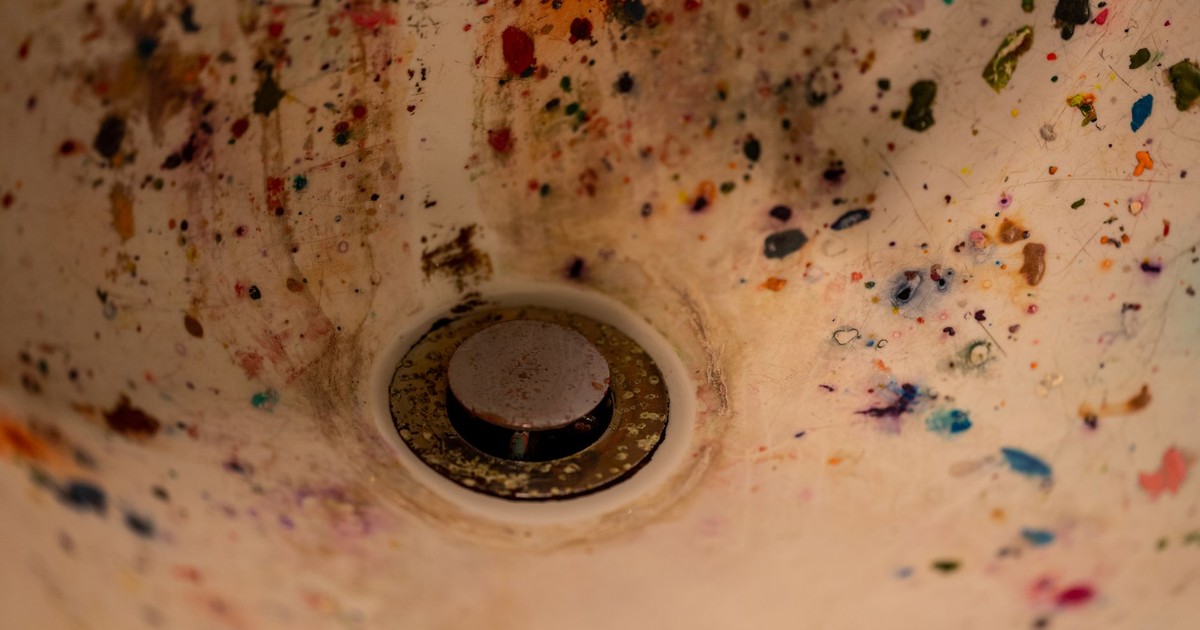
Inside your drain, there is often a thin layer of organic buildup called biofilm, which creates a continuous food source. Ants don’t need a visible crumb when they can feed on microscopic residue inside the pipes. Biofilm develops from soap, food particles, grease, and organic matter that accumulate on the inner walls of the drain as they wash through day after day, building up a faint but persistent odor that ants can detect from a distance.
A kitchen that passes a visual cleanliness check can still have an active ant problem for exactly this reason. A quick rinse doesn’t address the biofilm layer. Pouring boiling water down the drain weekly, followed by a baking soda and vinegar flush, breaks down the organic buildup and removes the scent signal. A drain brush used monthly can clear the walls of the pipe just below the drain opening, where most of the accumulation happens.
4. Dirty Dishes Left Overnight
Today’s Homeowner reports that ants will scavenge for scraps left on dirty dishes, inside drains, or around garbage disposals. A plate with a little pasta sauce on it. A mug with a trace of honey at the bottom. A pot soaking in slightly greasy water. Each of these is a food signal to an ant scout, and when that scout finds a good source, it creates a pheromone trail from the food back to the nest so that other worker ants can follow it and bring food back to the colony.
The distinction between “soaking overnight” and “soaking for an hour while you watch TV” matters. Ants are most active after dark. Dishes that go into the sink in the evening and sit until morning are the highest-risk scenario. If you’re not going to wash them before bed, rinsing the food off the surface – really rinsing, not just running the tap over them – removes the signal even if the dish itself isn’t clean.
5. The Pheromone Trail You Didn’t Erase
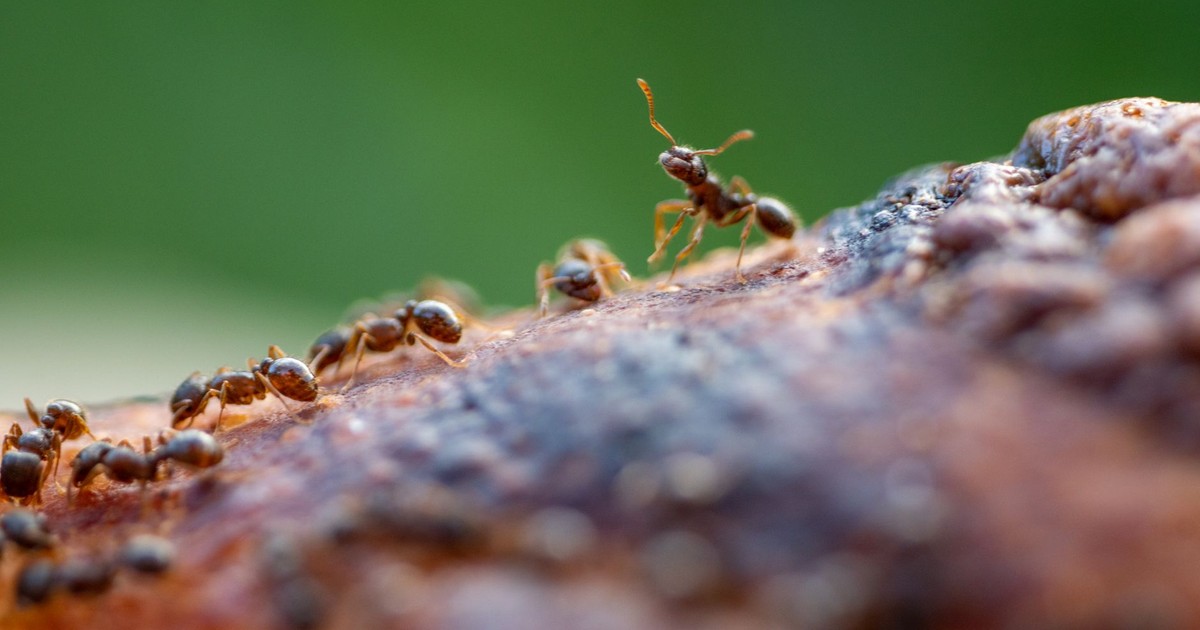
Killing the ants you can see does not solve the problem if the trail they were following is still active. According to Prevent Pests, smooth kitchen surfaces like countertops, floors, and baseboards can hold pheromone residue for days – even if you kill the ants you see, the trail remains active and will continue to guide others unless fully removed.
Research from Aptive Pest Control explains why: each subsequent ant that successfully follows the trail reinforces it by adding additional pheromone deposits, and trail strength increases with usage, creating more pronounced chemical pathways that attract larger numbers of foragers. The longer a trail goes undisturbed, the stronger it gets and the more ants it draws. The fix is not to kill the ants on the trail – it is to destroy the trail itself. A solution of equal parts white vinegar and water, wiped along the full length of the visible ant path and extended at least a foot past where you last saw them, temporarily masks the pheromone scent and makes the trail harder for foragers to follow.
Reaching for a repellent spray at the entry point feels like the obvious move, but Affordable Pest Solutions notes that repellent sprays applied directly at an entry point can actually worsen an infestation by splitting one trail into two or three as the colony routes around the barrier. If you’ve ever treated a spot and found the ants reappear nearby in a slightly different configuration, this is exactly what happened. The goal is to eliminate the trail and block the entry point, not just push the column sideways.
6. Gaps Around Pipes and Caulking
The place where pipes pass through the cabinet wall is almost never perfectly sealed. Most kitchens have gaps around the supply lines and drain pipe where they exit through the cabinet back panel or floor, and these gaps are exactly the right size for ants to use as a door. They don’t need much – a gap the width of a credit card is more than adequate for most species.
Inadequate caulking around the sink and a garbage disposal clogged with food debris can also lead to ant activity at the kitchen sink. Walk around your sink and look at where the basin meets the counter. If the caulk line has cracked, shrunk, or pulled away in even a small section, that is both a moisture entry point and a potential ant highway. Recaulking is a twenty-minute job and a tube of kitchen-grade silicone caulk costs next to nothing. Foam gap filler or caulk around the pipe openings inside the cabinet closes off a major entry route that no amount of surface cleaning will address.
7. Food Residue in the Garbage Disposal
The garbage disposal is one of the most reliably overlooked sources of ant activity at the kitchen sink. Even small amounts of grease or residue in the garbage disposal can sustain a colony. The disposal grinds food but does not remove all traces of it. Grease coats the inner walls. Food particles collect under the rubber splash guard – the flexible rubber flap you push food past – and in the space between the grinding ring and the drain. That splash guard, in particular, is almost never cleaned and is almost always filmed with organic residue.
Running cold water while using the disposal and for thirty seconds after helps carry food particles further into the drain rather than letting them settle just inside. Ice cubes run through the disposal monthly help scrub the grinding surfaces. The splash guard can be removed on most models, scrubbed with dish soap on both sides, and replaced in under two minutes. The underside of that rubber flap is exactly the kind of warm, dark, food-residue-coated environment that makes ants extremely interested in your sink.
Read More: How To Use Baking Soda To Kill Pests
The Ant Problem Is Rarely Just One Thing
Kitchen sink ants almost never trace back to a single cause. It is usually a combination – a slow drip under the cabinet meeting a biofilm-coated drain meeting a sponge that never fully dries. Each of those alone might not be enough to sustain a colony. Together, they create an environment that checks every box an ant scout is looking for: moisture, food signal, and a reliable entry point.
None of the fixes here are dramatic. You don’t need to tear out a cabinet or call someone for a problem that has been building for months. Recaulk the gaps. Clean the splash guard. Wipe trails with vinegar and let it sit. Fix the drip you’ve been meaning to fix for three weeks. For natural pest deterrents that work alongside these fixes, a salt line along baseboards or cabinet edges adds another layer of discouragement without any chemicals near your food prep area. The ants are not a sign that something is catastrophically wrong. They are a sign that a few small things have added up – which means a few small things, done consistently, will add up in the other direction.
Disclaimer: This information is not intended to be a substitute for professional medical advice, diagnosis, or treatment and is for information only. Always seek the advice of your physician or another qualified health provider with any questions about your medical condition and/or current medication. Do not disregard professional medical advice or delay seeking advice or treatment because of something you have read here.
AI Disclaimer: This article was created with the assistance of AI tools and reviewed by a human editor.