

The oddly specific life hacks that actually stick are not the broad-stroke advice you’ve already absorbed and quietly ignored. They answer a problem so particular you didn’t even realize you had it until someone named it out loud and you felt personally understood by a stranger on the internet.
These are hacks in the truest sense: small structural tweaks, specific behavioral rules, and oddly precise shortcuts that reduce friction in the areas of daily life where friction is quietly costing you time, money, energy, or what little remains of your sanity. They don’t require a complete personality overhaul. They just require you to do one small thing differently, and then notice the difference.
Some of them come from decades of collective trial and error shared across Reddit threads and social media comment sections. Others are grounded in research on how the brain actually behaves under fatigue, stress, and the endless low-grade overwhelm of modern life.
1. Never Make a Major Decision After 10 PM

Your judgment does not hold firm across the day. It degrades. A 2025 scoping review from PMC found that sleep deprivation is associated with increased risky and erroneous decision-making, and you don’t need to be fully sleep-deprived for the effect to kick in. Late nights erode your executive function hours before you actually fall asleep.
Sleep loss particularly affects the prefrontal cortex regions responsible for executive decision-making, leading to impulsive choices and a reduced ability to weigh potential negative outcomes. This is not a character flaw. It’s biology. The version of you who exists at 11 PM has fewer cognitive resources than the version who woke up that morning, and she is not the right person to be texting exes, finalizing purchases, or hashing out anything consequential. A 2024 study in Frontiers in Psychiatry found that sleep deprivation impairs the ability to process negative feedback, undermining the error-correction that sound decision-making depends on.
When something feels urgent at night, write it down and set a reminder for 9 AM. Almost everything that felt pressing at midnight will reveal itself as either resolved, less important, or something you can handle with a clear head. The ones that survive morning are the ones worth your attention.
2. Audit Your Subscriptions Once a Quarter

The subscription model was designed with one thing in mind: frictionless payment. According to a 2026 survey by Self Financial, the average American now holds 3.4 active paid subscriptions, spending $35.03 monthly. The same survey found that in 2024, 85.7% of Americans had at least one paid subscription going completely unused each month.
Set a 20-minute calendar block once every three months. Go through your bank statements and your email inbox (search “receipt” and “subscription”). Cancel anything you haven’t used in 60 days without negotiating with yourself about whether you might use it eventually. You won’t.
3. When Dining in an Unfamiliar Town, Follow the Pickup Trucks

Pickup trucks belong to working locals. Working locals don’t drive across town to eat somewhere mediocre when they know exactly where the good food is. They are not on vacation and they are not performing for a food influencer. They are just hungry.
The inverse also holds. If a restaurant near a highway exit is full of rental cars and suitcases leaning against the wall, that’s not a sign of quality. It’s a sign that everyone who went there also didn’t know where else to go. The parking lot is data. Read it before you commit to an hour of your evening.
4. Buy Three of Anything That Fits Perfectly

If you find shoes that don’t hurt your feet, jeans that fit without alterations, a bra that you genuinely forget you’re wearing, or a shirt in a cut that works for your body, buy multiples immediately. Do not wait to see if they restock. Do not assume the product will still exist next year.
Good things get discontinued. The mental energy you spend over the following two years trying to find a replacement for the perfect item is worth far more than the cost of buying two extra pairs upfront. If you’ve ever spent an afternoon trying to recapture the exact fit of shoes that no longer exist, you already know this is true.
5. Keep a Running “Buy Later” Note on Your Phone

Most impulse spending happens because you see something you want and feel an immediate pressure to act before the feeling fades or the item disappears. The simple fix is a running list on your phone. Add items to it in the moment and then review the list at the end of the month. Most of the things on it will no longer appeal to you. Some of them you’ll have completely forgotten wanting. A few will still seem worth buying, and those are probably the ones actually worth buying.
The friction of writing something down rather than immediately purchasing it is enough to interrupt the impulse loop, and the delay strips away the emotional urgency that made the item feel necessary in the first place. Your future self reviewing the list is a much better shopper than your present self standing in the aisle.
6. Treat Every Microphone as Live

In meetings, on calls, in hallways near open windows: assume you are being heard. The number of catastrophic miscommunications that happen because someone forgot they were still on a conference call, still being recorded, or simply within earshot of the wrong person would fill several books.
The habit extends beyond literal microphones. Assume the message you’re composing in frustration is the one that will be screenshotted. Assume the comment you made in the parking lot was heard. Not because the world is surveilling you, but because operating from this assumption keeps your communication clean, intentional, and something you’d be comfortable owning. You will occasionally over-explain things that didn’t need explaining. That is a much smaller problem than the alternative.
7. Learn to Cook Three Things Extremely Well

Not ten things. Not an entire cuisine. Three. The goal is not culinary mastery. It’s having three specific meals that you can execute from memory, on a bad week, with whatever is approximately in the refrigerator. One of them should come together in under 20 minutes. One should be appropriate for serving guests. One should be deeply comforting.
The return on investment for cooking three things well is disproportionate to the effort involved. You save the money you’d spend on delivery, you avoid the 45-minute spiral of trying to decide what to eat when your executive function is already depleted, and you have something to offer when people you like come over. A person who can reliably cook three excellent meals is more capable, calm, and solvent than a person who knows 30 recipes and orders takeout anyway.
8. Check the Toilet Paper Before You Sit Down

This one requires no elaboration. You already know what the elaboration would be. Do this every single time, in every gas station, office building, and unfamiliar bathroom you ever enter for the rest of your life. Make it automatic. Consider it the only truly non-negotiable life hack on any list like this one.
9. Always Glance Back at Your Seat When You Leave a Public Space

When you stand up from a restaurant table, a park bench, a waiting room chair, or an airplane seat, turn around and look at it before you walk away. Make this a reflex. You will leave behind a phone, a jacket, a pair of glasses, a child’s toy, or something else you would have spent the rest of the day retracing your steps to find.
The version of you who does this takes approximately one second per exit. The version of you who doesn’t is the person calling the restaurant at 9 PM to ask if anyone turned in a charger.
10. Use Incognito Mode Before Buying Tickets or Booking Travel

Travel and ticketing sites track your browsing sessions and, in some cases, adjust prices based on what they know you’ve already viewed. Repeated searches for the same flight can cause the displayed fare to increase. Opening a private browsing window clears that session data and shows you the base price without the tracking behavior layered on top.
Similarly, clearing cookies before a purchase strips out any targeted pricing or loyalty assumptions the site has built around your browsing history. This takes about 20 seconds and occasionally saves you a meaningful amount of money. The times it makes no difference at all cost you nothing except 20 seconds. The ratio strongly favors doing it every time.
11. Set Your Savings Transfer to Happen the Day After Payday
Automated savings works not because it requires discipline but because it removes the moment of choice entirely. When money is transferred to a savings account before you’ve had a chance to spend it, you adapt your spending to whatever remains. When the transfer happens at the end of the month from whatever’s left, you almost always find that less than expected survived the month.
Day-of-payday transfers compete with the psychological pleasure of seeing a fresh balance. Day-after transfers catch most people before they’ve started mentally allocating the money. It’s one calendar day, but it sidesteps most of the friction. Automate it once, then leave it alone.
12. Reply to the Two-Minute Email Immediately
If an email takes less than two minutes to answer, answer it right now. Do not close it, star it, flag it, mark it unread as a reminder, or add it to a task list with the intention of coming back to it. Just answer it. The accumulation of two-minute tasks waiting in a queue creates a kind of low-level psychological weight that costs more mental energy to maintain than the tasks themselves would take to complete.
The inbox that eats your Sunday morning is almost always full of two-minute tasks you saved for later.
13. Pick Concert T-Shirts One or Two Sizes Larger Than You’d Normally Buy

Concert shirts purchased at a show are not being bought for who you are at 32. They are mementos. They have a sentimental half-life of decades. They will be worn as loungewear, as nostalgia objects, as the shirt you grab on a lazy Sunday. A shirt that fits like a dress now is a comfortable oversized shirt for the reunion tour, the 20th anniversary documentary, and the Tuesday mornings between.
Buying exactly your size at a concert is optimizing for a use case that is not the actual use case. The oversized shirt forgives everything: the years, the body changes, the nights you just want to be comfortable.
14. Read the Print Version of Online Recipes

When a recipe online interests you, click the “print” link before reading anything else. This strips out the 1,200-word essay about the recipe writer’s grandmother, the pop-up ads, the 47 ingredient-sponsored sidebars, and the embedded video that starts playing at full volume. What remains is the actual recipe. You can save the print page as a PDF, bookmark just that link, or simply proceed with cooking without losing a third of your evening to backstory.
This also works for any online article with a print mode. The print version is the information. Everything around it is scaffolding designed to keep you on the page longer.
15. Write Down Your Three Most Important Tasks Before You Go to Bed

Not a full to-do list. Not a project plan. Three things. When you write the list the night before, your sleeping brain processes and prepares. When you write it in the morning, you’re using morning energy, which is often your sharpest, to plan rather than to execute.
The three-item constraint matters. A list of 15 things creates decision paralysis and guarantees that everything feels equally urgent, which is the same as nothing feeling urgent. Three forces prioritization. Three is also achievable on a genuinely bad day, which makes it sustainable across weeks rather than collapsing under the pressure of the days when everything goes sideways.
16. Keep a Charger in Every Bag You Use Regularly

Not the same charger rotated between bags. A dedicated charger that lives in the work bag, the gym bag, or whichever bags you carry regularly. The cost of an extra charging cable is approximately four dollars. The cost, in time and anxiety, of discovering a dead phone at the airport or before a long day with no charger in reach is incomparably higher.
This principle extends to anything small and critical that you regularly need and occasionally don’t have: a backup lip balm, a safety pin, an emergency $20 in cash tucked into a side pocket. A four-dollar charger cable in the bottom of a bag is a form of infrastructure.
17. Recognize That Procrastination Feels Like Rest but Functions Like Debt

The mental overhead of maintaining an awareness of an undone task, of carrying it forward through each day, rescheduling it, feeling vaguely guilty about it, rescheduling it again, accumulates far more cognitive cost than simply doing the task. What feels like avoiding discomfort is actually extending it across a longer timeline.
The mental energy you are spending on procrastinating is not free. You are already paying the cost of the thing. You’re just getting nothing for it. Taking action delivers the thing done. Continuing to defer delivers the same cost with nothing to show for it.
18. Let the ‘One In, One Out’ Rule Govern Your Home

Every time something new comes into your home – clothing, a kitchen gadget, a book, a piece of decor – something already there leaves. Not eventually. Now, or at least before the new item is fully integrated. This single rule, applied consistently, prevents the accumulation creep that turns orderly homes into crowded ones over the course of a few years.
The rule also functions as a small forcing function on purchases. When you know that buying the new item means identifying what will leave to make room for it, the purchase requires a moment of actual deliberation. That moment is enough to prevent a significant portion of regrettable acquisitions.
19. Use a Physical Timer for Focused Work
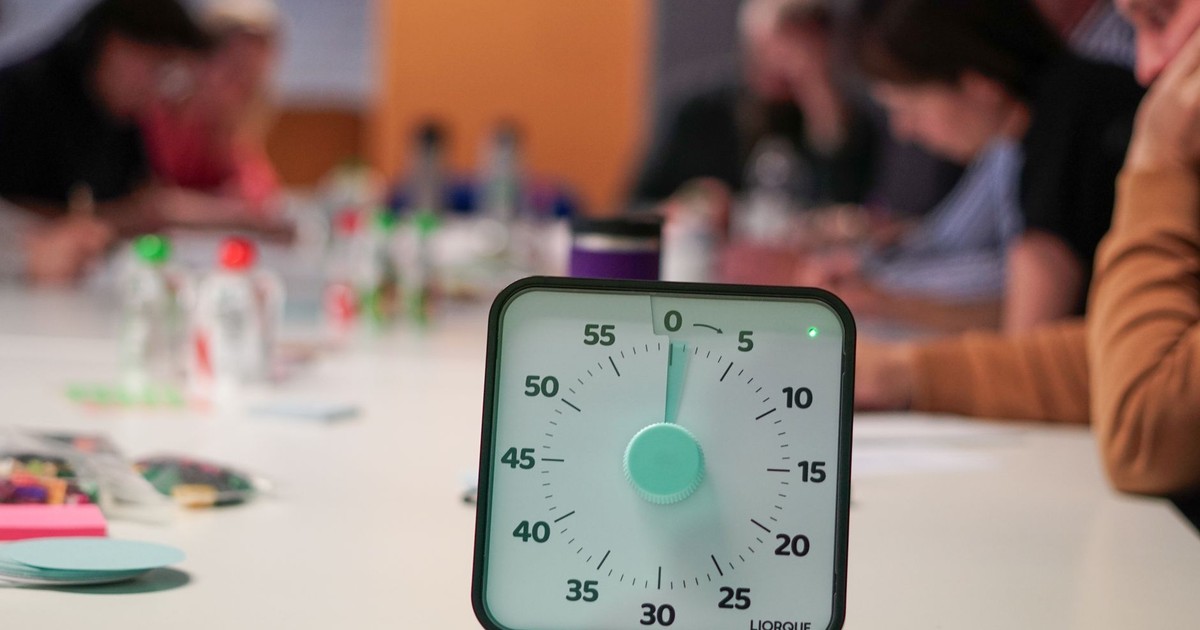
The phone timer exists, but the phone is where every distraction also lives. A physical kitchen timer – the kind you wind and set – sits on the desk and ticks without tempting you with notifications. The act of physically setting it creates a small external commitment: 25 or 30 minutes, and during those minutes, only the task in front of you.
A ticking timer makes the time feel finite and the task feel bounded. “I will work on this for 30 minutes” is far more approachable than “I will work on this until it’s done,” especially for tasks you’ve been avoiding. Most feared tasks turn out to be less difficult once started than anticipated. The timer makes starting the only thing you have to decide.
20. Time Large Purchases Around Known Sale Cycles

Major appliances go on sale in September and October, when retailers make room for new models. Furniture discounts typically appear in January and July, after the holiday rush and at mid-year clearance. Electronics drop in price reliably around late November and in the weeks after the winter holidays when returned stock gets repriced.
Timing purchases of appliances, furniture, cars, electronics, and more according to annual sale periods is a reliable and repeatable way to save. The same item, bought two months earlier in panic or impatience, will often cost significantly more. The hack is not to need things when you need them but to anticipate the need early enough to wait for the right window.
21. Ask for Extensions Earlier Than You Think You Need To

Whether you’re dealing with a deadline at work, a bill you can’t cover this month, a medical bill with a payment plan, or a registration renewal that fell through the cracks: ask before the deadline, not after. Institutions are consistently more accommodating when the ask comes early. After a missed deadline, you are negotiating from a position of failure. Before it, you are a responsible person communicating proactively.
Ask for the payment plan before the bill goes to collections. Ask for the extension before you’ve submitted incomplete work. Ask for the grace period before the account is marked overdue. The answer might still be no, but the frequency with which an early ask results in yes – and a late ask results in no – is remarkable enough that it functions as a reliable strategy rather than a hope.
22. Leave Hair and Fingerprints in Rideshares

A woman on social media popularized the tip of deliberately leaving strands of hair on the floor and fingerprints on the window of every rideshare she takes – leaving clear DNA evidence behind in case anything goes wrong. It’s the kind of advice that went viral because it is both practical and sobering.
The broader principle is sound: when you are in a situation where your safety depends on being identifiable or traceable, take the simple steps that make that possible. Always verify the driver’s name and plate before getting in. Share your live location with someone you trust. Sit behind the driver rather than in the passenger seat. The rideshare safety hacks that feel overcautious in the moment are the ones you’re glad you used on the one occasion when it mattered.
None of This Is Revelation

Most of these oddly specific life hacks you’ve probably heard at least once before in a different form. The gap between knowing a thing and actually building it into your daily routine is where most good advice goes to die – not because the advice was wrong, but because a single exposure is rarely enough to make something stick. The ones that are still in your head tomorrow are the ones worth trying first. Pick one. Just one. Build that into the week before you add another, because the version of you trying to adopt all 22 at once is the same version of you who has read seven productivity books and still can’t find her keys.
AI Disclaimer: This article was created with the assistance of AI tools and reviewed by a human editor.