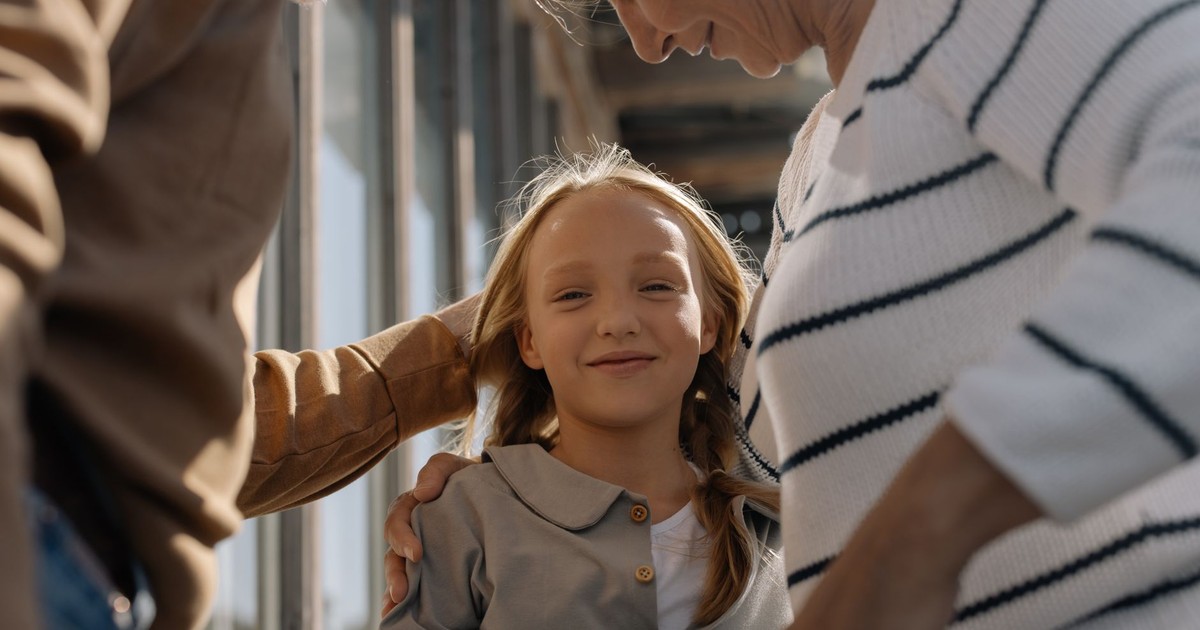

Shannon Evola, born Shannon Lands, knew Amanda and Russell Evola as Nonna and Nonno from the time she was five years old and went to live with them in Temperance, Michigan. She called them that for more than three decades. She raised her own sons in their orbit. She introduced them to friends as her parents, because that is what they were. The paperwork just hadn’t caught up yet.
On December 4, 2020, in a Zoom courtroom, Shannon was 36. Amanda was 78. Russell was 80. After thirty-one years of being a family in every way that counts, they made it legal.
The adoption happened during the holiday season, right before Christmas. For Shannon and the Evolas, it closed a loop that had been open for most of her life. A formal acknowledgment of something the people in that family had never needed a judge to confirm.
The Family That Was Already There?
Shannon was five when she came to live with Amanda and Russell. They were the ones who answered every call, every need, every hard year. The Italian terms Nonna and Nonno carried the warmth of their heritage and the particular tenderness of what they were to her. But the relationship was never in question.
They made a home. They raised a child. They became, in the fullest sense of the word, parents. Just without the legal designation that most people get attached to them at birth.
When the adoption was finalized, it reshuffled the family tree. Her aunt and uncle, Amanda and Russell’s biological children, became, legally, her brother and sister. Her sons, Luca, who was seven at the time. And Nico, who was five, went from having the Evolas as great-grandparents to having them as grandparents. The generational line straightened. The names on the documents finally matched the names in Shannon’s heart.
Read More: Studies show kids need their grandparents more than we realize.
A Zoom Courtroom, a December Afternoon?
The adoption hearing took place on a Friday afternoon in early December, over Zoom. A family gathered on a screen, watching the law confirm what they had always known, with the particular technical awkwardness of a video call and the particular emotional weight of thirty-one years coming to a point.
Adult adoption carries its own legal logic, distinct from the adoption of a child. Once a person becomes a legal adult, the consent of their biological parents is no longer required. Adult adoption requires the consent of the adoptive parent and the adoptee, and spousal consent is also required if either party is married, though exact requirements vary by state. Shannon and the Evolas could move forward without needing consent from biological parents.
Some of the most important relationships a person has never get the formal recognition they deserve. Adult adoption is one of the fewlegal processes that can correct that, years or decades after the relationship was already built.
The Bigger Picture Behind One Family’s Story?
The arrangement that shaped Shannon’s life, a childraised by grandparentswhen her own parents couldn’t do so, is more common than most people realize. About 2.5 million children are being raised in kinship and grandfamilies in the United States, according to theGrandfamilies & Kinship Support Network, based on the latest 2025 data. These are children raised by grandparents, aunts and uncles, older siblings, or close family friends. Family members who took on a parenting role, often without the formal legal protections that come with traditional adoption.
Shannon’s adult adoption story adds to that number a human face and a particular kind of ending: one where the child who was raised in a kinship family got to stand in a courtroom, as an adult. And say yes, formally, to the family she had always had. Most kinship arrangements never reach that moment. Thegrandma raising tripletsstory, the aunt who becomes a mother out of necessity. The grandparents who reorganize their retirement around a grandchild who needed somewhere to go, these families exist in enormous numbers, doing enormous work, mostly outside the frame of anything official.
The Evolas did it for thirty-one years. Amanda was 47 when Shannon came to live with her. Russell was 49. By the time the adoption was finalized, they were in their late seventies and eighties. And their granddaughter was middle-aged, and the family they had built together was three generations deep.
What Changes, and What Doesn’t?
The adoption didn’t change Shannon’s relationship with Amanda and Russell. She already knew who her parents were. Luca and Nico already knew who their grandparents were. The love was not new. The commitment was not new.
The adoption gave the relationship a name that the law recognizes. And with it, a set of rights and protections that follow a person through the rest of their life. Inheritance. Medical decision-making. The ability to sign documents on each other’s behalf. These are not romantic things, but they are real. And they matter most in the moments when everything else is falling apart and someone needs to be able to act.
For Shannon’s sons, the change is more than administrative. They were seven and five when their mother was adopted by the people who had always been their great-grandparents. Those great-grandparents are now their grandparents, in name and in law. Nonna and Nonno moved up a generation on the official paperwork, the paperwork finally caught up with how the boys already thought of them.
The Holiday It Happened In?
Christmas is the season when families take stock of themselves. Who is there, who is missing, what the last year looked like. It is also the season when the gap between what a family looks like on paper and what it actually is tends to feel widest.
Shannon’s family closed that gap on December 4th. Not symbolically, not sentimentally, but actually, with a court order, in a Zoom hearing, before the holidays. When you have been waiting more than three decades to formalize something you have known your whole life. You do not wait until January.
What This Means for You?
Not every family that looks unconventional has the paperwork to prove what it is. Plenty of people grew up being raised by grandparents, aunts, older siblings. Or family friends who stepped in without being asked to, without being legally recognized for doing so. And without ever making a speech about what they were sacrificing. Those relationships are real. They shape people. They are family by every measure that counts, even when the law doesn’t say so.
Shannon’s adult adoption story shows it can still happen later in life. To formalize what was already true, to give a relationship the legal weight it always deserved. That is not available to everyone, and not everyone needs or wants it. But for the families who do want it, the option exists. And it does not require the approval of anyone who wasn’t there for the hard years.
Millions of grandparents and relatives have done exactly what Amanda and Russell Evola did when Shannon was five years old. What is unusual is the ending: a December afternoon on a Zoom call. Three people who had been a family for thirty-one years, making it official.
AI Disclaimer: This article was created with the assistance of AI tools and reviewed by a human editor.