Guilt is not the same thing as sadness, and it is not the same thing as shame, though the three tend to travel together. What Vivienne Jolie put on a gallery wall in Los Angeles earlier this month was something harder to categorize than any of those words alone: a journal entry, dated May 14, 2026, that read, “I feel guilty for needing to be in the hospital this long.” She was 18 years old. She had been hospitalized at the start of the year. She named the hospital The Tulip Field, and she painted it.
The exhibition, titled “The Tulip Field: A Gallery on Patience of Patients,” ran from November 2 through 8 at Forager Crafts in Los Angeles. The paintings depicted tulips, which were the stand-ins Vivienne used for herself and her fellow patients, glimpsed in moments she described as “hopelessness, moments I couldn’t stop laughing, moments of safety, moments of bravery.” She accompanied the paintings with a written statement and with journal entries she had kept during her time in treatment, one per painting, each title pulled from her own handwriting.
The statement opened with this: “Like many, I have struggled with mental health. I have also struggled with an eating disorder. At the beginning of this year, I was hospitalized for my ED. I was angry, sick, and very alone.” She was not writing for a press release. She was writing for whoever wandered into a small gallery in Los Angeles and found themselves reading words they hadn’t expected to find there.
Editor’s note: The headline refers to Brad Pitt as “heartbroken.” That description comes from an unnamed source in In Touch Weekly. Pitt has not made a public statement.
What did she actually say?
What made Vivienne’s disclosure so striking wasn’t the disclosure itself. It was the precision of what she described, and the fact that she held two contradictory truths in the same statement without resolving them. She wrote about arriving at The Tulip Field angry and closed off. She wrote about what broke the walls down: “the kindness and warmth of the kids and staff.” And then she called the experience “the worst and best time of my life,” and said she is “better for it.”
That is not a tidy arc. Anyone who has been through something genuinely hard knows that “worst and best” is not a contradiction to be smoothed over. It is the most accurate description available. Vivienne wrote it that way on purpose. The statement was signed not with her full legal name but with “Vivienne Marcheline,” her first and middle names only, the new surname standing quietly aside.
The May 14 journal entry carries its own particular weight. The guilt of needing help. The guilt of taking up space. The sense that there is something wrong with being unwell, and also with being unwell for this long, a feeling that has nothing to do with the facts and everything to do with how hard it is, even in treatment, to fully believe you are worth the care being offered to you. Vivienne didn’t edit that feeling out. She put a date on it and hung it on a wall.
Read More: Bruce Willis’ family faces tragic new health battle as daughter, Tallulah Willis, struggles
How did the paintings work as a journal?
The exhibition didn’t rely only on the written statement. The paintings were accompanied by journal entries Vivienne had written while she was hospitalized, pages from the inside of an experience she was now sharing with strangers. Each painting’s title came directly from one of those entries. Vivienne wrote that she pulled “sentences I took from journal entries I wrote during my time at the hospital, from passages I felt best fit the paintings.”
That structural decision, using the journal to title the art rather than explain it, means the work carries the voice of the person who was living through it, not the voice of someone looking back with the benefit of distance. The difference is audible. “I feel guilty for needing to be in the hospital this long” does not sound like a caption. It sounds like a Tuesday.
According to a Page Six source, “it took a lot of strength and courage for Vivienne to open up about something so personal, but she’s so glad she did.” The exhibition is over. What she built in that gallery is now part of the public record.
What does the name change mean?
The exhibition opened the same day a Los Angeles judge formally granted Vivienne’s petition to change her legal name from Vivienne Marcheline Jolie-Pitt to Vivienne Marcheline Jolie. The statement she displayed at the show was signed “Vivienne Marcheline,” her first and middle names only, the new surname standing quietly aside.
Vivienne is one of Jolie and Pitt’s six children, and she is the fourth of their children to legally drop the Pitt surname since the couple separated in September 2016, following Maddox, Zahara, and Shiloh. The family’s legal and personal split has been very public and very prolonged. The name change registered as another chapter in a story that shows no signs of a clean resolution. If you want the full picture of how the name changes unfolded for Vivienne and her sisters Zahara and Shiloh, that history goes back further than most people realize.
Vivienne had already been going by “Vivienne Jolie” professionally. She worked as a producer’s assistant on her mother’s Broadway production of The Outsiders and was credited that way in the Playbill. The legal change made official what had already been her choice in practice.
How did Brad Pitt react?
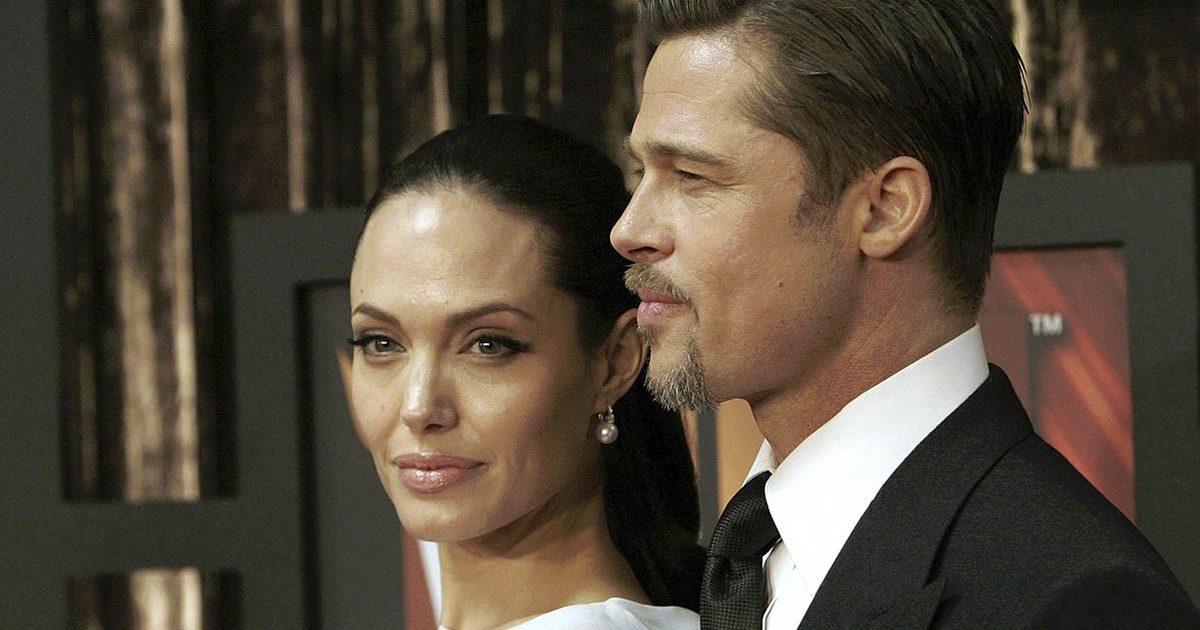
Brad Pitt and Vivienne are estranged. That is not new information, but it is the context in which his reported response to her disclosure has to be read. Pitt may be estranged from his daughter, but according to an In Touch Weekly source, that doesn’t mean he has stopped worrying about her. “Brad is heartbroken that Viv went through something so awful,” the source said. The source added that Pitt “just hopes and prays that she’s getting all the support she needs and that she’s thriving again,” and that he is “really proud of her for being brave enough to talk about what she’s been through.”
Pitt himself has not made any public statement. Representatives for Angelina Jolie declined to comment to the Daily Mail, and representatives for Pitt had not responded to requests at the time of reporting.
The estrangement makes the In Touch source’s words hard to fully parse. A father who is heartbroken and proud, hearing about his child’s hospitalization through public reporting, is a genuinely painful image, whatever your read of the broader family dynamics. The source’s quote doesn’t pretend things are fine between them. It describes love operating at a distance, filtered through news cycles, with no clean way in.
Who is Vivienne beyond the headlines?
For years, Vivienne Marcheline Jolie existed primarily in the public imagination as one of six, a face in an airport photo, a child of famous people, defined entirely by the relationship between her parents. What the exhibition made plain is that she has been building her own inner life with some care, and that she is willing to share it on her own terms, in her own time, in a form she controls.
She worked on Broadway. She makes paintings. She keeps a journal. She named a hospital after a flower field and then painted what she remembered. She signed her artist statement with two names and let the third be implied. These are not the choices of someone who is performing her healing for an audience. They are the choices of a young woman who has thought carefully about what she wants to say and how she wants to say it.
Tallulah Willis, another daughter of a famous Hollywood couple, spoke publicly about her own eating disorder battle, and the conversation she opened helped other people feel less alone in what they were carrying. Vivienne’s disclosure, delivered through paint and journal pages in a small LA gallery, has the same quality of offering something real rather than performing wellness.
If you or someone you love is struggling with an eating disorder, the National Alliance for Eating Disorders runs a free, therapist-staffed helpline at 866-662-1235, Monday through Friday, 9 a.m. to 7 p.m. EST.
What is worth holding onto?
There are plenty of ways to read this story through the lens of celebrity: the estranged father, the broken family, the name change, the famous mother. All of that is real, and none of it is irrelevant. But those angles exist in the margins of what Vivienne actually did. She described a condition she hadn’t chosen to have, in an institution she hadn’t chosen to enter, surrounded by people she hadn’t chosen and ended up needing in ways she hadn’t anticipated.
The guilt she described, needing to be there longer than she thought she should, is not unique to her. Eating disorders carry a particular shame that runs alongside the illness itself, often making the illness harder to treat and recovery harder to trust. The fact that she named that feeling, dated it, hung it on a gallery wall, and then signed her name to it is worth more than most of what gets said about recovery in public.
She said she was angry, sick, and very alone. She also said she has never laughed or cried harder, never been more honest or more herself. Both of those things can be true at the same time. She is 18, she is an artist, she went through something serious this year, and she told us about it in the clearest possible terms. This is not medical advice. If you are struggling, talk with a doctor or a qualified treatment provider, or call the helpline above.
Disclaimer: The author is not a licensed medical professional. The information provided is for general informational and educational purposes only and is based on research from publicly available, reputable sources. It is not intended to constitute, and should not be relied upon as, medical advice, diagnosis, or treatment. Always consult a licensed physician or other qualified healthcare provider regarding any medical condition, symptoms, or medications. Do not disregard, avoid, or delay seeking professional medical advice or treatment because of information contained herein.
AI Disclaimer: This article was created with the assistance of AI tools and reviewed by a human editor.