
Identical twins, born in China. Placed into separate adoptions, sent to different American families who never knew the other existed. Same birthday. Same face. And for more than two decades, no connection between them at all, until one woman on a layover in Seoul happened to know them both.
Emma Stricker and Anna Sevey were adopted twins whose reunion began not with a DNA database or a genealogy app. But with a stranger who looked at a photograph and said a name out loud. The families were strangers. The cities were different. The only thread was a woman named Joy who had, by coincidence, been part of two separate adoption paths. Happened to be in the right airport lounge at the right time.
Emma and Anna are now 27 years old. They both live in Manhattan. They see each other most weeks, sometimes almost every day. The story of how they got there is the kind that sounds invented when you try to explain it at a dinner party, but it isn’t. It is just what happened.
The Airport Moment That Changed Two Families

A family from Kentucky was traveling to China to adopt a baby girl. As proud parents do, they passed around photos of their older daughter, Emma. Joy, who had before adopted a child alongside a New Jersey family, right away recognized something in the face she was looking at. “Oh my God, that looks just like Anna Sevey,” she said.
That double-take was the entire hinge of this story. No app, no DNA database, no social media algorithm. Just a woman in a transit lounge who happened to have been in the right room at the right time, twice, with two different families. The odds of that happening in any other era. On any other layover, are almost too small to calculate.
Joy knew Anna Sevey because she had adopted a child at the same time as Anna’s family. That connection, forged through a previous adoption, was the only thread linking two little girls on opposite ends of the country.
The families made contact. The Strickers were also a lesbian couple. Reaching out carried a brief moment of worry about how they might be received by the New Jersey family. Those worries dissolved when Anna’s reply was simply: “My parents are also lesbians.”
A DNA Test, a Birthday, and a First Meeting in Miami
The girls shared a birthday. A DNA test later confirmed what everyone already suspected: Emma Stricker and Anna Sevey were identical twins, born in China. Adopted by families in different states, neither of whom knew the other existed.
The twins were first reunited at age 4, when their families went to Disney together in Miami. You could argue about timing, four is both very young and somehow exactly right. Young enough that the reunion was more instinct than occasion. No speeches, no careful orchestration. Just two small children who, by every account, right away recognized something in each other they hadn’t known was missing.
Anna, until then, had been painfully shy and barely spoke to anyone. Emma was the first real friend she ever had. Emma remembers it as “nonstop talking, yapping, running around.” There is something almost too perfect about an introvert. An extrovert finding each other, except that they were the same person. Same DNA, different homes, different wiring. The Minnesota Study of Twins Reared Apart, which followed 137 reared-apart twin pairs, including 81 identical twins, over 20 years, found that identical twins reared apart are about as similar in personality. Temperament as identical twins raised together, suggesting that environment does real work, even on twins who start from identical genetic material.
The Larger Story Behind Their Adoption
Emma and Anna were two among many. More than 160,000 Chinese children were adopted into families around the world after China officially opened its doors to international adoption in 1992, according to China’s Children International, an organization created by and for Chinese adoptees. About half of those children were adopted into U.S. Families. Children from China accounted for 29 percent of all U.S. Overseas adoptions between 1999 and 2023.
That era is now closed. China’s intercountry adoption program has ended. In August 2024, China announced it would no longer process intercountry adoptions, closing a 32-year chapter in the history of international adoption. The generation of children who came through that program, including Emma. Anna, are now adults, building their lives in a country that received them, often without the full context of who they were and where they came from. The question of biological siblings, of twins separated at family placement, is not abstract for thousands of people now in their twenties and thirties. Stories like Emma and Anna’s are a reminder of how much can remain unknown. What a stranger’s double-take can undo.
Research on twins adopted from China under the one-child policy has shown the remarkable pull of shared genetics even across separate households. A 2024 study led by Dr. Nancy Segal, a psychologist at California State University, Fullerton, examined 15 pairs of identical twins adopted by different families. Found their IQ scores grew more similar over time, converging as the twins aged. The world they were raised in shaped them, as it shapes everyone. But it couldn’t reach all the way in.
Stories of adopted siblings reunited across years and distance keep accumulating. They all carry the same undercurrent: the information was there the whole time, waiting for the right accident to surface it.
Two Lives, One City, Separate Apartments
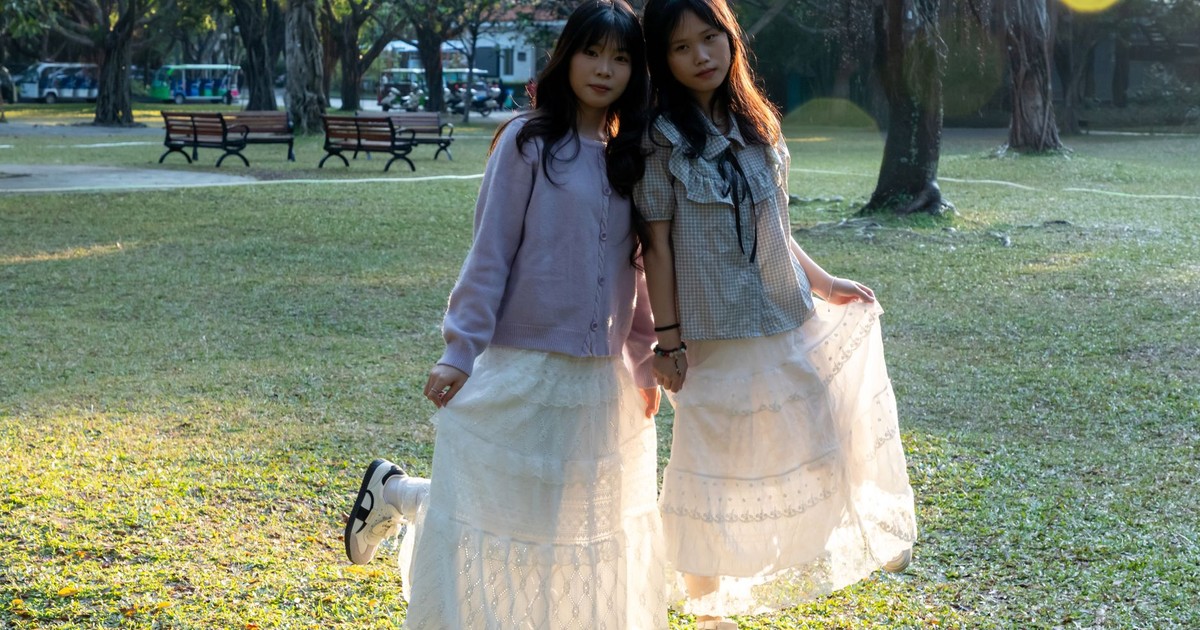
Today, Emma and Anna are 27 years old and both live in Manhattan. Emma works in social media and dance. Anna works in advertising sales for a media company. They see each other most weeks. Some weeks, almost every day. And as Anna has made clear, the separate apartments are not because they don’t love each other.
They are not the twins who moved in together. Finished each other’s sentences and became a single unit. They are two distinct people who happen to be identical, who grew up in different states, who had entirely separate first years. First friendships and first everything. The bond is real and they would tell you exactly how real. But it is not a merger. It is a relationship. A stranger, a DNA test, a layover in Seoul. Twenty-three years all had to fall into place before it could exist.
Anna has said it plainly: “Emma’s my one sister.” Not “my twin” in the novelty-sense, not “my biological sibling” in the clinical sense. Her one sister. The person she would not have known existed if Joy had been on a different flight.
Read More: Mom of 10 is raising her biological son and adopted twins as triplets, “Don’t tell them they’re not”
What a Stranger’s Double-Take Actually Means
The story of Emma Stricker. Anna Sevey as adopted twins reunited by a chance encounter is an easy one to tell as a miracle. In some ways it is. But it also points to something harder to hold: for every story like this one, there are likely others that never happened. Other children placed separately, other families who never crossed paths in the right airport lounge, other birthdays that passed without anyone connecting the dots. The adoption records that existed were often incomplete. The systems weren’t designed to track sibling separations. No one was keeping a list.
Joy wasn’t keeping a list either. She was just paying attention. She saw a face in a photograph. Said the name of the child it reminded her of, out loud, to the people in the room. A person noticing, and saying something. It is both the smallest possible action and the one that made everything else possible. Emma and Anna know their names and their story. Each other because one woman on a layover in Seoul didn’t just think “huh, that’s interesting” and move on. Some information only exists because someone decided to say it.
Disclaimer: This information is not intended to be a substitute for professional medical advice, diagnosis, or treatment and is for information only. Always seek the advice of your physician or another qualified health provider with any questions about your medical condition and/or current medication. Do not disregard professional medical advice or delay seeking advice or treatment because of something you have read here.
AI Disclaimer: This article was created with the assistance of AI tools and reviewed by a human editor.