

Retreats are becoming the latest trend in the world of wellness, promising everything from mental clarity to physical fitness. One retreat, however, in the arid landscape of Joshua Tree National Park stands out for its intensely focused objective: female sexual satisfaction, aka the female orgasm. Sex and dating columnist Jana Hocking of the Mail Online recently offered a candid glimpse into this specialized experience. She went to the Back to Body Sex Retreat for her job – and to maybe find some answers to her own sexual qualms. What she experienced was a rigorous, hands-on, and most notably, extremely expensive journey toward female orgasm. With a price tag reaching a staggering $15,000 for the full experience, Hocking’s detailed account provides a fascinating look at what women are willing to pay for ownership of their own pleasure.
The High Price of Climax and the Attendees’ Motivation
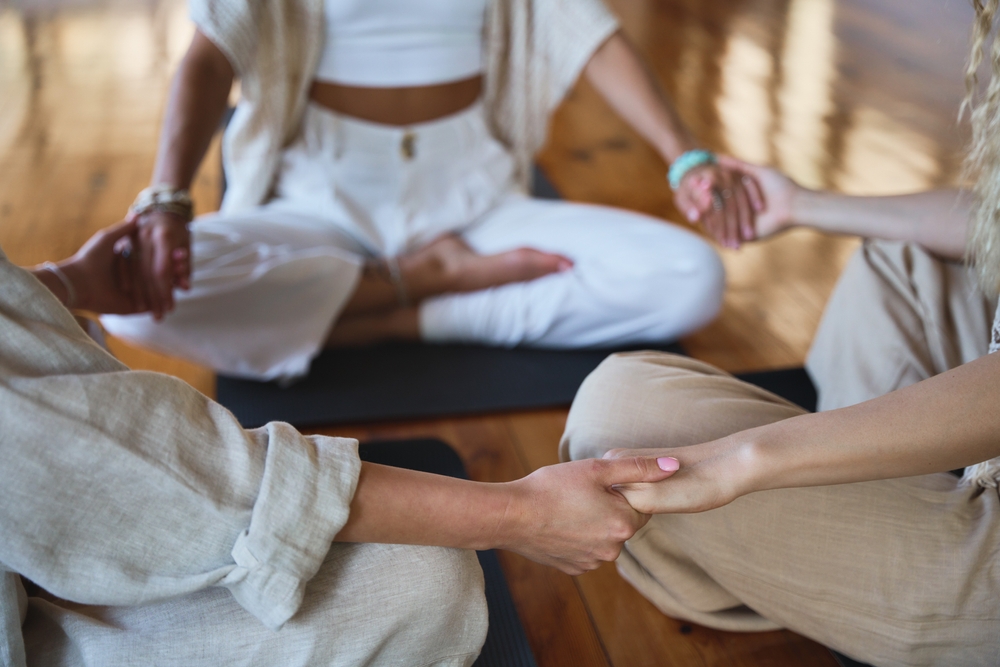
The price, which Hocking noted also offers weekend packages for less than $1,000, sparked immediate surprise, but the motivations of the women attending are perhaps the most compelling details. Visiting for a column assignment, Hocking originally expected a group of “outlandish” extroverts. Instead, she found a cohort of women dealing with profound personal issues.
The price—which Hocking noted also offers weekend packages for less than $1,000—sparked immediate surprise, but the motivations of the women attending are perhaps the most compelling detail. Hocking, who visited for a column assignment, originally expected a group of “outlandish” extroverts. Instead, she found a cohort of women dealing with profound personal issues. She found that most of the women fell into one of two categories, or sometimes they were in both:
- They were struggling with a past trauma and needed to learn how heal and to enjoy intimacy again.
- Self-discovery post-divorce. Many of the women were recently divorced and realized they had never truly experienced orgasm. They were viewing the retreat as a chance to prioritize their own sexual needs for the first time.
“They were either getting divorced and realized they hadn’t had a proper orgasm and wanted to right wrongs, while other women were dealing with trauma and needed to learn how to enjoy sex again, which was quite heartbreaking,” Hocking explained, speaking on the Just Between Us podcast.
Learning to Put Her Needs First
The camp is hosted by founder Pamela Madsen and her team. It is designed to shift the focus away from external performance and toward genuine personal climax. Hocking, herself, realized that this was in fact something that she struggled with, asking herself the question as to whether or not she was putting her needs first.
“My goal was to take back ownership of my sexuality because I realized I was performing — I can do a Meg Ryan orgasm like the best of them — but am I having a real orgasm? Am I putting my needs first?” she said on the podcast.
Inside the Unique Sessions and Hands-On Demonstrations
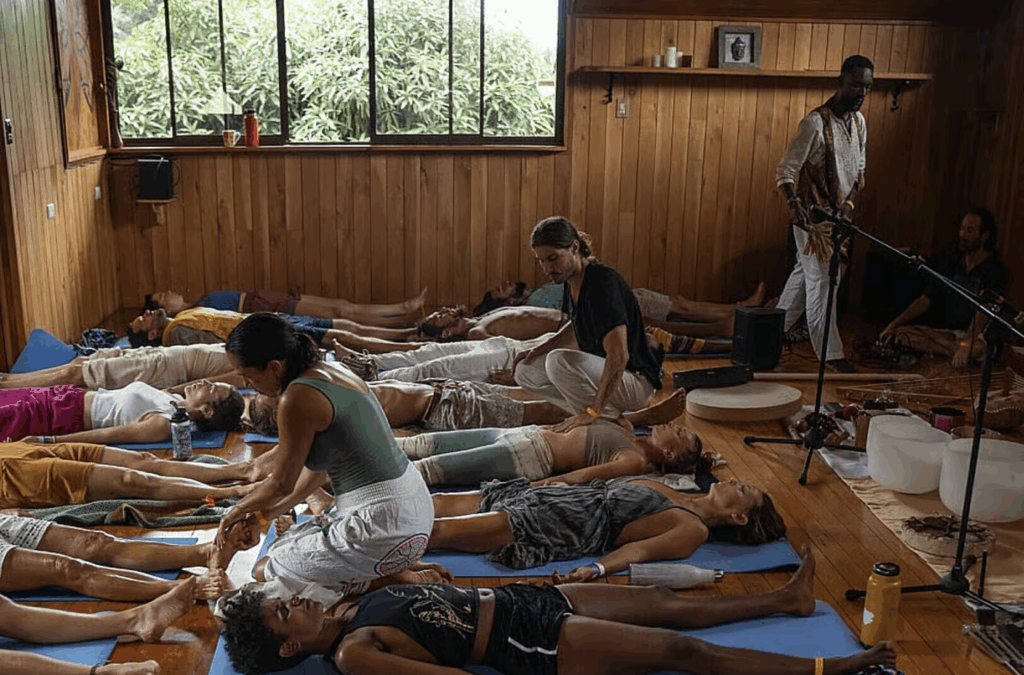
The retreat was far from a traditional spa weekend, and it certainly is not for anyone uncomfortable with nudity or expressing themselves in front of strangers. Hocking explained that, after the initial introductions and their reasons for why they were there, things moved quickly into highly intimate and unique sessIons aimed at fostering a deeper connection with your own body.
The Vulva Meditation
One of the initial exercises involved a form of tantric meditation. Attendees were instructed to sit, either naked or in their underwear, and perform a ritual where they held their vulvas and rocked back and forth. The objective was to speak to their vulvas and tell them what they wanted, who they wanted to be, and what their goals were. This exercise was a foundational step in teaching participants to prioritize and communicate their desires.
Public Climax and Anatomy Class
Other sessions involved public, hands-on tutorials. In more than one instance, the founder, Pamela Madsen, engaged in an exercise involving live demonstrations. One of these was an anatomy lesson, where a urologist offered a detailed, hands-on tutorial on female anatomy. The urologist used Madsen as a live model, with attendees standing around as the expert pointed out and labeled parts such as the labia and the clitoris. In another class on foreplay, Madsen received half an hour of foreplay from a male assistant. It was designed to culminate in an orgasm in front of the attendees. Hocking admitted, however, that the session went on so long that she got bored.
A Pricey Path to Confidence
Despite witnessing a public orgasm and participating in highly intimate workshops, Jana Hocking said she was the only attendee who admitted to not achieving climax during the duration of the retreat. However, she concluded that the experience was still valuable. After all, the ultimate goal of the retreat is not so that you experience an orgasm there, but rather an internal shift in perspective. Hocking says that she left the retreat feeling more confident and better equipped to reach climax on her own terms and in her own time. The experience helped her to take back ownership of her sexuality, moving her focus from performing for others to authentically prioritizing her own pleasure. That being said, the price tag is steep, and there are perhaps ways to arrive at the same conclusions without spending thousands of dollars.
Unlocking Pleasure: A Deep Dive into the Female Orgasm

The experiences shared by Hocking at the Back to Body Sex Retreat highlight a universal desire: achieving consistent, fulfilling orgasms. For many, this goal feels elusive, leading to the well-documented “orgasm gap.” Understanding the anatomy, physiology, and psychology behind female pleasure is key to bridging this gap and taking back ownership of one’s sexuality.
What Is the Female Orgasm?
Clinically, an orgasm is defined as the rhythmic contractions of the genitals, accompanied by an increased heart rate and higher blood pressure. It is a neurological event characterized by the release of tension and a surge of feel-good hormones like oxytocin and dopamine.
The experience, however, is deeply subjective. Often described as a “pinnacle of pleasure,” or a sensation where the entire body feels “alive and electric,” it is an experience that varies from person to person. For an orgasm to occur, both the physical (blood flow, muscular tension) and the mental/emotional component (arousal, presence) must be engaged.
The Many Kinds of Female Orgasm
Female pleasure is highly complex, and orgasms are typically categorized based on the primary area of stimulation, though they can often be experienced individually or as a blended effect. The different types are as follows:
- Clitoral orgasm: This is the most common type of orgasm for women. It occurs through direct stimulation of the external clitoris, a highly nerve-dense bud. Stimulation is achieved using the hands, the mouth, or a vibrator.
- Vaginal orgasm: Less frequently achieved, this is the orgasm that results from deep penetration and friction against the vaginal walls, often without clitoral contact.
- G-spot orgasm: This is a nerve-packed area located a couple of inches inside the vaginal canal that produces an orgasm often described as feeling more full-bodied and internal compared to a clitoral one.
- Cervical orgasm: The cervix is further inside the vagina. The cervix, however, is a very sensitive area and therefore requires a careful, gentle approach. The orgasm, however, can be intensely pleasurable.
- Nipple orgasm: A nipple orgasm is centered on breast stimulation and is described as a “pleasurable release of sexual arousal.” Stimulation can be heightened with various toys or sensation play like ice or feathers.
- Anal orgasm: This results from the stimulation of the anal canal, where many nerve bundles are located. It is enhanced with proper lubrication and rimming.
- Blended orgasm: This occurs when multiple areas are stimulated at once, such as the clitoris and the G-spot. The result is an orgasm that can feel extra intense.
Why Women Struggle: The Orgasm Gap

Caption: The orgasm gap refers to the disparity in the percentage of men who experience orgasm during sex versus the number of women.
Only about half of women consistently climax during partnered sex, with 9% reporting to have never orgasmed during intercourse. This discrepancy, known as the orgasm gap, is often attributed to a few key factors. These include:
- Intercourse-centric focus: Since the clitoris is the primary route to orgasm for most women, a sexual script that rushes to penetration and neglects sufficient clitoral or whole-body foreplay is a major barrier.
- Psychological hangups: Emotional issues such as shame around pleasure or not being fully present and absorbed in the sexual experience can interrupt the flow of arousal necessary for climax.
- Lifestyle factors: Smoking negatively impacts blood flow and circulation, including to the clitoris. Excessive alcohol consumption dulls sensation and can impair the ability to orgasm.
- Anatomical misconceptions: There is a societal lack of focus on female anatomy and pleasure that has historically prioritized male orgasm. This has led to a focus on methods that are not effective for the majority of women.
Achieving Consistent Climax: Tips for Taking Ownership
The lessons learned at an expensive retreat can be distilled into actionable steps that any woman can practice to improve her sexual satisfaction. You can likely do this without spending so much money, too. That being said, you may find that speaking with a licensed professional, such as a therapist, can help. This is especially true if your reasons for an inability to climax stem from trauma or a psychological/emotional place. Consider the following your own personal guide to orgasm:
1. Prioritize Your Own Arousal

One of the biggest problems women face is that they are concerned with the other person and their pleasure so much that they completely forget to focus on their own. That, or they are concerned about how they are appearing or looking during the act, and therefore can’t relax enough to just let things flow. Prioritizing your own arousal looks like the following:
- Don’t Skip Outercourse: Gradual arousal is key. Don’t rush to penetration; instead, build up physiological and psychological arousal with outercourse – aka everything but penetration. This includes kissing, fondling, and prolonged oral stimulation.
- Embrace the Vibrator: Vibrators are designed to maximize pleasure and are scientifically proven to increase the frequency and intensity of orgasms, whether alone or with a partner. Start with one that targets the clitoris or G-spot.
- Cuddle and Connect: Prioritize cuddling and non-sexual intimacy before sex. This natural boost of oxytocin (the love hormone) can enhance the intensity or the orgasm that follows.
Read More: Sex Ed Missed This – Here’s What You Really Should’ve Been Told
2. Master the Mechanics and Communication

Communication is everything when having sex with another person. Don’t be afraid to tell them what you want or need – in most cases, your partner will find that sexy. Talking about sex can actually be used as an act of foreplay: I really like it when you xyz; With you, I want to try xyz… Talking about and imagining what you can do together, either in person or by text, builds desire while at the same time you are communicating what you like. Communication also looks like the following:
- Clitoral focus: If you’re struggling during partnered sex, suggest positions that allow for direct or indirect clitoral stimulation during penetration. Examples of this include rider-on-top or certain rear-entry positions. Use your hands to guide your partner or to stimulate yourself during intercourse.
- Lube is essential: Use plenty of lubrication, especially for G-spot or anal play. The friction from insufficient lubrication can cause discomfort and pain, which immediately halts the process of arousal.
- Be present: The biggest hurdle is often a wandering mind. Practice mindfulness before and during sex to remove distractions. Focus on the physical sensations and the flow of the experience.
3. Address Mental and Emotional Barriers

Emotional and mental blockades will continue to prevent you from experiencing orgasm until you address and overcome them. This could look like a lot of things, including:
- Exploring your body solo: If you’ve never had an orgasm, or very few, self-exploration (aka masturbation) is the first step. This allows you to understand what you like, what you don’t, and the exact spots and rhythms that work for your body. Doing this solo allows you the opportunity to figure this all out without external pressure.
- Seek psychological help: If shame, trauma, or a negative narrative around pleasure is preventing connection with your body, consider consulting a sex therapist or counselor. Working through these emotional hangups is often the key to unlocking physical pleasure.
No Pressure Zone

The most important takeaway in all of this is to not put pressure on yourself to orgasm every time you have sex – in fact, female orgasm shouldn’t necessarily be your goal. Your goal should be to enjoy – focus on the sensations that you are feeling, explore your body, if you’re having sex with a partner, enjoy their body, enjoy this unique way of connecting with another person, and simply just let it flow. When you relax and enjoy, you are more likely to be in the moment and actually orgasm anyway. If you go into sex with the only objective being enjoyment and pleasure, you will have a good experience either way. An orgasm is just the icing on the cake.
Of course, if you are having partner sex with someone who you don’t feel is listening to you, prioritizing you, or isn’t making you feel comfortable enough to communicate your needs, this needs to be addressed. You can’t have good sex or orgasm with someone who doesn’t truly care about your pleasure.
The Bottom Line
The journey toward consistent and fulfilling female pleasure, whether experienced at an exclusive $15,000 retreat or explored in the intimacy of one’s home, boils down to a fundamental principle: sexual self-ownership. By moving past the outdated notion that orgasm is merely a lucky byproduct of penetration, and instead embracing the scientific reality of the clitoral and blended orgasms, women can actively close the orgasm gap. The key to unlocking this confidence, as Jana Hocking discovered, isn’t necessarily reaching climax in a public setting, but rather the essential work of achieving emotional presence, understanding one’s unique anatomy, and prioritizing communication to ensure that every sexual encounter is focused on authentic, personal satisfaction.