

How many children make for a fulfilling but manageable life? For decades, the traditional answer for the ideal number of children has been two. A September 2025 Gallup poll confirms this by finding that Americans want an average of 2.7 children, with 40% saying two is ideal and 27% preferring three. Only 4% say one child is best.
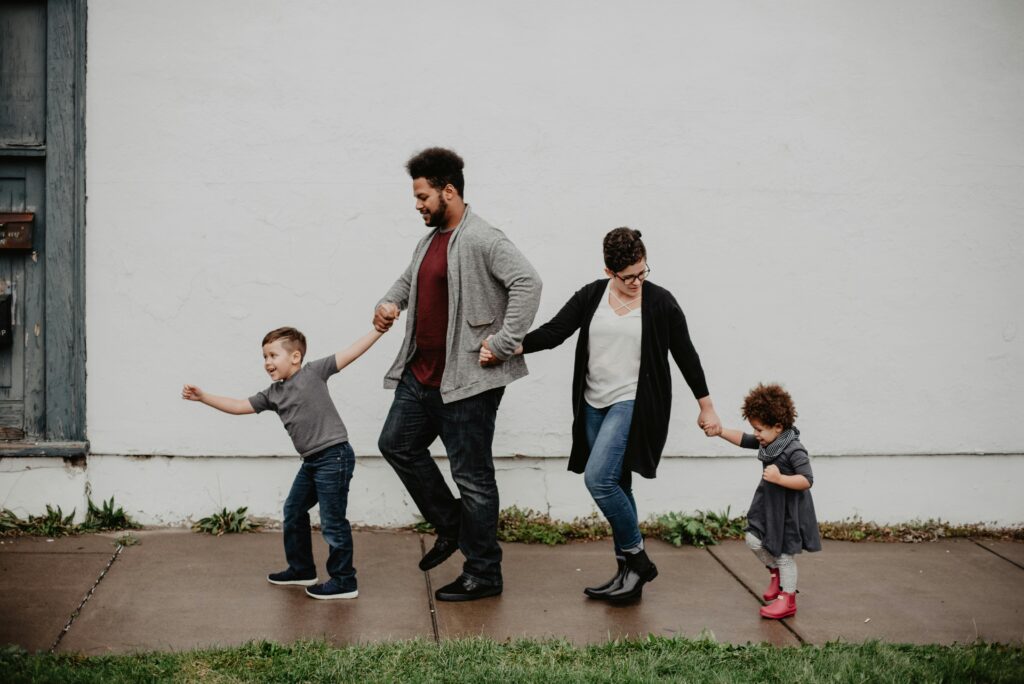
But Hans-Peter Kohler at the University of Pennsylvania found something different when he studied 35,000 adults in Denmark to see how children affect happiness. They found, the first child boosts wellbeing, but the second and third children don’t add to that boost. For mothers, additional children actually decrease happiness, while fathers see zero effect on their happiness from more kids beyond the first.
The Ideal Number of Children
Leah Ruppanner at the University of Melbourne wanted to understand why happiness doesn’t keep rising with each child. She studied how parents’ sense of time pressure, which means feeling like you have too much to do and not enough hours to do it, changes after every birth. Ruppanner followed roughly 20,000 Australians for up to 16 years, checking in regularly to see how their stress and mental health changed as their families grew.

Image by: Pexels
The study found that for many parents, one is the least stressful number of children to have, as demands and mental strain rise sharply with each additional child. A second child, for instance, doubles the time demands. Mothers bear most of this extra load, and the mounting pressure drags down their mental health. When demands consistently outweigh the ability to meet them, the result is burnout.
When Time Pressure Becomes Burnout
Research published in Psychology Today found that 1 in 20 parents experiences parental burnout. Among working parents, that number jumps to 66%. This isn’t ordinary tiredness. Burnout starts with overwhelming exhaustion tied directly to your role as a parent. Just waking up to face another day with your kids starts to feel impossible. Those demands multiply with each child.
Burnout moves through three stages. Exhaustion arrives first, leaving parents drained before the day begins. Then emotional withdrawal sets in, often without awareness. Parents stop engaging with their children as they once did. The mind creates this distance as a form of self-preservation, conserving what little energy remains.
Research links this stage to child neglect, where parents remain physically present but emotionally absent. The final stage brings painful self-recognition. The parent in the mirror looks nothing like the person once imagined. Shame seals everything inside, making it nearly impossible to admit the problem or ask for help. The suffering stays private as the condition deepens.
Read More: How to Handle Adult Children Who Don’t Respect or Listen to You
The Pull Toward Bigger Families
Knowing the least stressful number of children to have is one, why do parents choose to have more? The reasons have little to do with well-being, Kohler says. Couples want their child to have a sibling.
Culture plays a role, too. The idea of an only child still carries stigma. Parents fear their child will be lonely or spoiled. They imagine warm sibling bonds and want that picture for their family. These motives feel genuine, yet few parents realize how much they demand in return.
Beyond emotional and cultural forces lies the question of money. The old belief that poor families have more children than rich ones is mostly wrong. Among U.S.-born white and Asian Americans, fertility rises with income. High earners in these groups have the most children. U.S.-born Black and Hispanic women show the opposite pattern, while among foreign-born women, income and fertility are barely linked at all.
This is not a universal economic rule. It is cultural. In many African countries, women with more resources tend to have more children. Citizens of oil-rich Gulf states earn hundreds of thousands yet maintain high birth rates. The Amish and Ultra-Orthodox Jews also have large families regardless of income.
Money creates barriers in the U.S. The September 2025 Gallup poll confirms people say they want an average of 2.7 children. However, the actual fertility rate is just 1.6 births per woman.
This is because childcare expenses have risen 29% since 2020, according to Child Care Aware of America, and 1 in 4 parents reports times when the family lacked money for food or rent. These pressures keep families smaller than planned.
Taking This Research Home
No study can tell you what the ideal number of children you should have. Some parents thrive with three or four kids, while others struggle with one. That doesn’t mean you shouldn’t have more children if you want them.

Family size decisions aren’t just about stress levels. Parents coming from big families can make them want to recreate that experience by wanting their children to have sibling relationships. Or maybe the dream of a full house outweighs everything else.
Those are all valid reasons. However, the reality is that pressure will double and finances will strain, so build a support network before expanding the family. And watch for burnout along the way. Overwhelming exhaustion tied to parenting signals trouble, as does pulling away emotionally or losing pleasure in the parental role. When burnout hits, sleep needs to come first. Also, talking to a therapist who understands can also make all the difference.
Parenting isn’t an easy job, but it is very rewarding, and parents find ways to make it work. They adapt, they ask for help, and they lower impossible standards. Families come in all sizes, and most of them turn out just fine. The research tells one story. Life writes another.
Read More: Why a Growing Number of People Are Saying No To Having Children