

Johnny Mathis sang his last live professional note on May 18, 2025, in Englewood, New Jersey. When the final song ended and the applause faded, a 70-year career quietly came to a close.
Two months earlier, his management posted the news on Facebook. Mathis was struggling with memory problems that were getting worse. Columbia Records canceled every 2025 tour date except for four final shows. The statement read, “Due to Mr. Mathis’s age and memory issues, which have accelerated, we are announcing his retirement from touring and live concerts.” Thousands of fans had to return their tickets for summer concerts that would never happen.
But before the final note, there was a first one.
The $25 Piano
According to Johnny Mathis’s biography, he was born in Gilmer, Texas, in 1935. He is the 4th of 7 children born to Clem and Mildred Mathis. When Johnny was still small, the family moved west to San Francisco and found a basement apartment on Post Street. The living room was tiny. Money was tight, as you can imagine. Clem worked whatever jobs he could find to keep the seven kids fed and housed.
Before the children came along, Clem had another life. Back in Texas, Clem made his living as a musician. Music meant a great deal to him. When Johnny turned 8, Clem bought an old upright piano for $25. However, that evening, when he brought the piano home, he discovered it was too wide for the front door.
Most people would have given up. But not Clem, he spent the entire night in the street taking it apart. Johnny woke up and came outside to watch. His father worked by lamplight, unscrewing keys and removing panels, separating the frame from the body. He carried each piece down the steps into their basement apartment. By morning, he had reassembled the whole thing in the living room.
The piano was ready to play, and Johnny learned his first song on it. “My Blue Heaven.“
That piano became everything to them. Clem taught Johnny songs and routines. Johnny went on to sing in the church choir, at school functions, and at community events. When he turned 13, Clem took him to see Connie Cox, a voice teacher in the Bay Area. She agreed to take Johnny on if he did odd jobs around her house. He studied with her for 6 years, learning vocal scales, voice production, and classical technique.
However, music was not his only talent.
Columbia Records Comes Calling
After Mathis enrolled at San Francisco State College in 1954, he set a high jump record of 6’5½”. That was just 2 inches short of the Olympic record. Sports writers across Northern California wrote about him regularly. In 1954, the San Francisco Chronicle ran a feature on high jumping. The article showed Johnny Mathis alongside future NBA star Bill Russell. Russell ranked first in the city. Mathis was second.
By 1955, the Olympic trials were approaching. Mathis had a real shot at making the U.S. team for Melbourne in 1956.
That same year, a friend who played in a weekend band brought him to the Black Hawk nightclub for a Sunday jam session. Helen Noga, who co-owned the club, heard Mathis sing once and knew she wanted to manage him.
Noga spent months trying to get Columbia Records interested. She called George Avakian, a jazz executive at the label, over and over. He kept brushing her off. Then, in September 1955, Mathis landed a weekend singing job at Ann Dee’s 440 Club, and Noga finally convinced Avakian to show up.
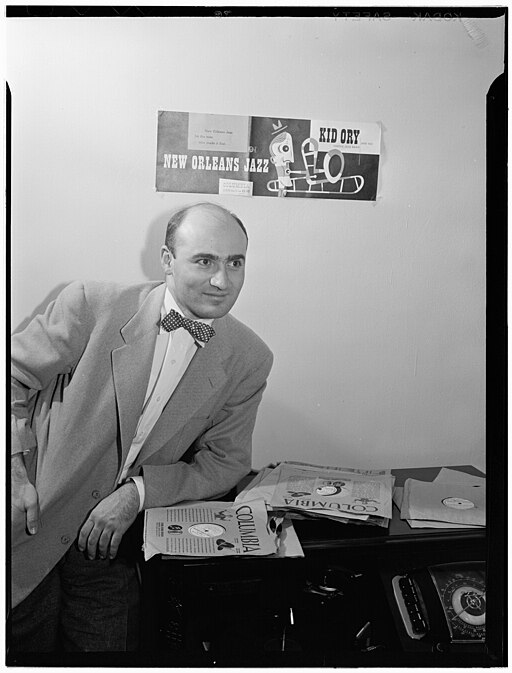
Avakian listened to one set. Before he left the building, he sent a telegram to New York. “Have found a phenomenal 19-year-old boy who could go all the way. Send blank contracts.”
Now Johnny Mathis faced a choice. Columbia Records wanted him in New York to record. But the Olympic trials were coming. Luckily, his father helped him think it through. Music won. Mathis went to New York in August 1955 and signed with Columbia Records.
When Jazz Didn’t Sell
Columbia Records wasn’t sure how to market him at first. Avakian heard a jazz vocalist and spent months setting up the right session. He brought in Gil Evans and John Lewis to arrange the songs, two names that carried weight in jazz circles. The album came out in July 1956, nearly a year after Mathis signed. Critics praised it, but almost nobody bought it. Jazz vocal albums weren’t popular at the time.
Columbia Records passed Mathis to Mitch Miller, their lead producer for pop music. Miller had built a career turning singers into hitmakers. He listened to Mathis and heard something different. This wasn’t a jazz voice. This was a voice for romance.
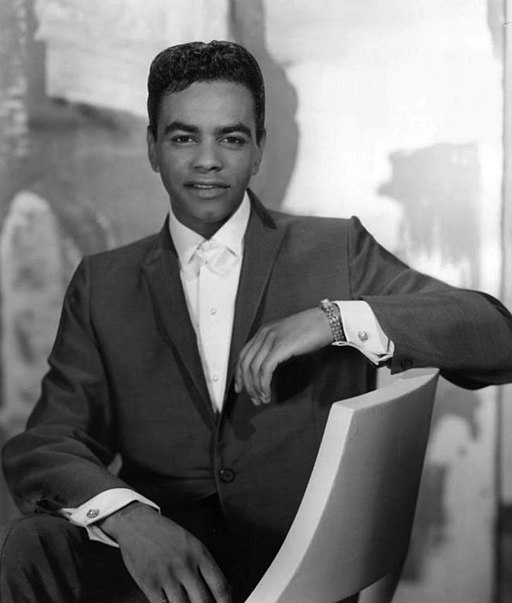
Miller brought Mathis back into the studio that fall. In one recording session, Johnny Mathis laid down 4 songs that would transform his career. He started with ‘Wonderful, Wonderful.’ Then came ‘When Sunny Gets Blue’ and ‘Warm and Tender.’ The session ended with ‘It’s Not For Me To Say.’
These were the songs that would make him famous. Miller had found the sound. Mathis sang romantic ballads the way other people have private conversations. Intimate but never quiet. Emotional without drama.
MGM Studios heard “It’s Not For Me To Say” and wanted it for a film called Lizzie. Mathis appeared on screen as a tavern piano bar singer, his first movie role. The song appeared in theaters. Radio stations picked it up. Then the other three songs started getting airplay. By summer 1957, Mathis had two songs climbing the charts at the same time. The next year, he played himself in a nightclub scene in 20th Century Fox’s “A Certain Smile,” singing the title song.
50 Million People Watching
Mathis appeared on The Ed Sullivan Show in June 1957. Before that Sunday night, he was a singer with a few regional hits and some momentum. Sullivan introduced him to 50 million Americans watching at home. Within weeks, “Wonderful, Wonderful” and “It’s Not For Me To Say” were both climbing the charts. “Chances Are” came next and hit number one.
Columbia Records saw an opportunity. In March 1958, just sixteen months after Mathis started recording, they released Johnny’s Greatest Hits. The move looked absurd. Who puts out a greatest hits album after barely a year in the business?
Well, after that, everyone did. The album stayed on the charts for 490 consecutive weeks, that is nearly ten years. No other album had ever done that. Pink Floyd’s The Dark Side of the Moon finally broke the record in 1983, 25 years later.
Every greatest hits collection released since owes something to what Columbia Records did in 1958. Johnny’s Greatest Hits created the template.
But commercial success alone doesn’t explain why people kept buying his records. Something about Mathis connected with listeners in a way other singers did not.
Why People Believed Him
In late 1959. Mathis was in the studio, running behind schedule. The crew wanted to wrap up. But Martha Glazer, who managed composer Erroll Garner’s work, was waiting to hear “Misty.” So they gave him one try.
He recorded it in a single take. It would become the moment that really defined him.
Listen to that recording, and you hear what sets him apart. His voice is smooth, emotional, but never overdone. Pop music often felt manufactured then, just as it does now. But when Mathis sang, it sounded like he meant every word. No irony. No wink to the audience. When he sang about love, people believed him. Years later, The Guardian would call him “one of America’s great romantic balladeers, whose rich, sincere voice lit up hits.”
He became the sound of American romance itself.
He recorded “Merry Christmas” in 1958 as his career took off. The album sold 5 million copies, according to RIAA records. Those songs still play on radio stations worldwide every holiday season.
He made six more Christmas albums after that. “When a Child Is Born” hit number one in the UK in 1976 and still shows up in playlists nearly 50 years later. The next year, his compilation “The Johnny Mathis Collection” spent four weeks at number one on the UK album charts. He returned to the top spot in 1980 with “Tears and Laughter.”
The same quality that made his love songs believable made his Christmas music work. He never oversold it. He just sang it straight.
Finding His Own Way
In 1963, Mathis made a move that surprised everyone. He left Columbia Records for Mercury, the label that had been his competition. But this wasn’t about money or spite. Mathis wanted control. At Mercury, he formed his own imprint, Global Records, and produced his own music for the first time. He worked with Quincy Jones, who would later produce Michael Jackson’s “Thriller.” He worked with Don Costa and Allyn Ferguson. The albums from this period showed a different side of Mathis, one willing to experiment.
The break didn’t last long. By 1967, he was back at Columbia, but he brought all his Mercury recordings with him. And he kept the independence he had fought for. In 1964, while still at Mercury, he had formed Rojon Productions and his personal label Jon Mat Records. From then on, he wasn’t just a singer. He was a businessman who happened to sing.
21 Years Between Number Ones
Most artists from the 1950s disappeared when rock took over. Although Mathis stayed without changing who he was. In 1978, twenty-one years after “Chances Are” made him famous, he recorded “Too Much, Too Little, Too Late” with R&B singer Deniece Williams.
The song hit number one on three Billboard charts almost instantly. Williams was rising in R&B, and Mathis remained the romantic balladeer. They recorded it four days before Christmas 1977, and the track introduced him to a generation that never heard his early hits.
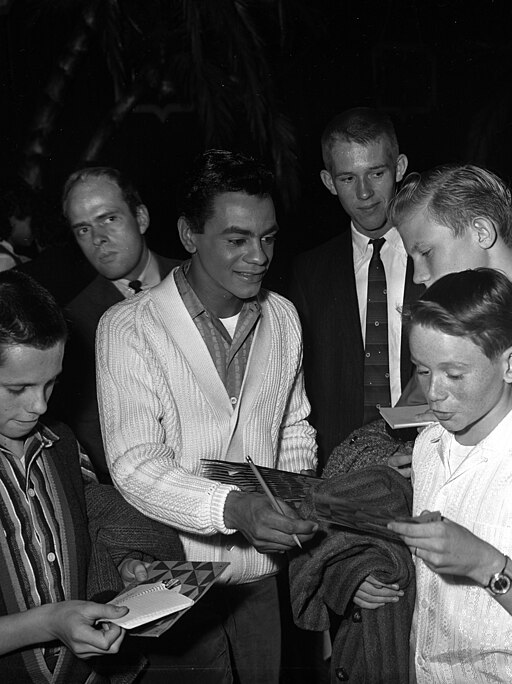
Four years later, Mathis and Williams recorded “Without Us,” the Family Ties theme song. The show ranked second in ratings from 1985 to 1987. Every Thursday night, millions of Americans heard Mathis before watching Michael J. Fox play Alex P. Keaton. The song gave him a weekly presence that concert tours could never match.
Other artists kept calling. In 1993, Barbra Streisand brought him in for a West Side Story medley. Ray Charles wanted him for “Over the Rainbow” on his final album in 2004. Mathis sang at Charles’s memorial service months later when the legend died. His voice gave their records something they could not get anywhere else.
Film and television directors understood the same thing. His music appeared in Goodfellas, Silver Linings Playbook, Mad Men, and The Simpsons. When a scene needed real emotion without irony, they chose Mathis.
In 2017, two albums Mathis recorded decades earlier finally saw release. One was produced by Nile Rodgers and Bernard Edwards of CHIC. Another featured Sergio Mendes. These lost albums showed Mathis trying new sounds even when the records stayed on the shelf. He was never standing still.
Read More: Polio Couldn’t Stop Her: How Cyd Charisse Became Hollywood Royalty
The Decision to Stop
In 2018, Mathis talked about when his career would end in an interview with music writer Michael Cavacini. “It revolves around whether or not you’re physically able and in good health,” he said. “That’s the most important thing because you won’t feel like doing anything if you’re not healthy. And being a vocalist, you have another thing to worry about. The vocal cords are flesh and blood, so anything can happen to them.”
Seven years later, in March 2025, his management posted an announcement on Facebook explaining that Mathis’s memory problems were getting worse. At 89, Mathis would retire from performing.

Just a year before that announcement, in 2024, the Library of Congress inducted “Chances Are” into the National Recording Registry. The song that made him a star in 1957 was now officially part of America’s recorded heritage. The timing felt right. Recognition came just before the voice went quiet.
Mathis turned 90 in September. These days, his time belongs to golf and cooking, the two pastimes that once filled the hours between concerts. He first picked up golf in the late 1960s after a friend took him to a course, and he never stopped playing. Before that, he spent his free time on the tennis court, but once he found golf, he played almost every day he wasn’t on the road.
His love of cooking goes back even further. Mildred, his mother, taught him in their San Francisco kitchen when he was a boy, and he never lost the habit. Between tour stops, he cooked for friends, and he still does.
His website posted a message after the retirement announcement thanking fans for supporting his Voice of Romance concerts across 7 decades. The final line quoted one of his biggest hits. “It’s truly been ‘Wonderful, Wonderful.'”
Every Wedding, Every December
His final concert was in May, but his voice still fills rooms everywhere. Radio stations play him every December. Wedding DJs keep their records close. Couples still choose “Misty” for their first dance, the same way they did in 1959. Every song he ever recorded is streaming now, waiting to be heard. A teenager today can listen to the same “Chances Are” that their grandparents danced to in 1957.
His retirement closed a chapter that won’t open again. Tony Bennett stepped away in 2021. Mathis was the last performer from the 1950s Columbia Records era still touring, and with him, that era truly ends. The Las Vegas model fades with him, too. Casino showrooms built their success on artists who could deliver night after night for month-long residencies. Today’s arena stars can’t sustain that. The tradition likely ends here.
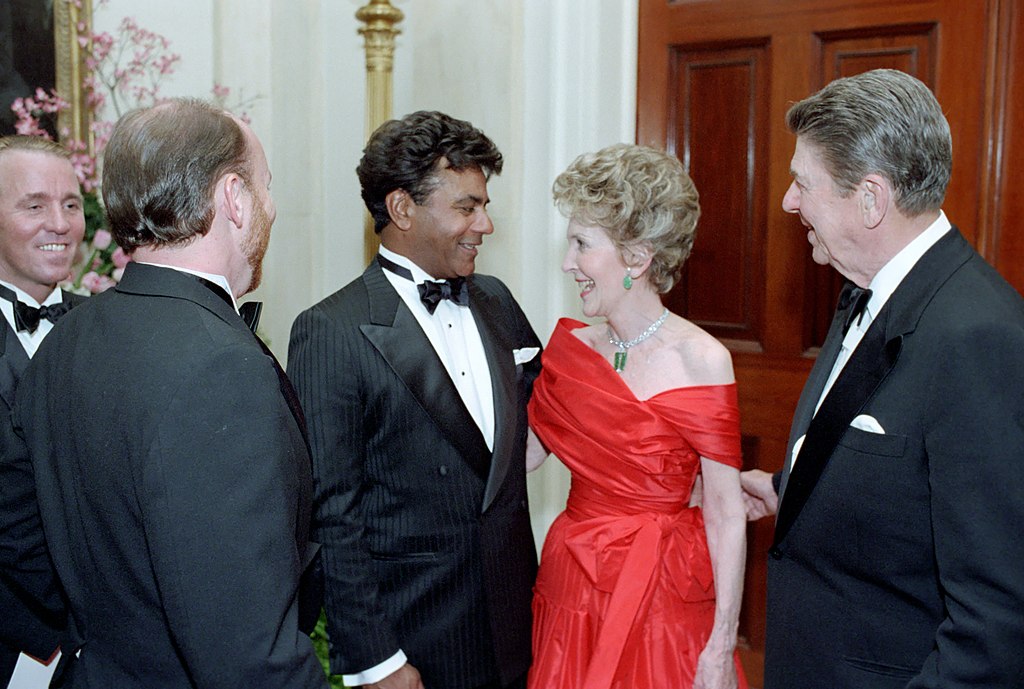
Mathis performed from Eisenhower to Biden, from vinyl to digital streaming, from segregated venues to the White House. He sang while America changed. Wars began and ended. Cities burned and rebuilt. Music moved from big bands to hip-hop. Through it all, Johnny Mathis kept singing about love the same way he learned on that $25 piano his father rebuilt one night long ago.
Now the voice that defined romance has fallen quiet. But walk into any wedding reception tonight. Tune in to any radio station this December. Somewhere, Johnny Mathis is still teaching someone how to fall in love. And he always will be.
Read More: Legendary Group of ‘Brothers’ That Wrote The Most Heartbreaking Song – It Had People In Tears