

On October 19, 2025, friends found Daniel Naroditsky unresponsive on a couch in his Charlotte, North Carolina, home. Charlotte-Mecklenburg Police arrived at 7:11 p.m., and medics pronounced the 29-year-old chess grandmaster dead at the scene. He was three weeks from his 30th birthday.
Police are investigating the death as a possible suicide or drug overdose, according to an incident report. Toxicology results are pending, and the medical examiner has not released an official cause of death. The department’s homicide unit is handling the case, which is standard procedure for deaths like this.
Oleksandr Bortnyk, a fellow grandmaster, went to check on Naroditsky after he stopped responding to messages. Peter Giannatos, founder of the Charlotte Chess Center, came with him. Bortnyk later described finding his friend dead on the couch with the television still running. He said in a YouTube video that he never found anybody in his life like Daniel, calling him his best friend.
The Charlotte Chess Center announced the death the next day and asked the public to respect the family’s privacy during the investigation.
A Child Prodigy’s Rise
Daniel Aaron Naroditsky was born on November 9, 1995, in San Mateo County, California, to Jewish immigrants from the Soviet Union. His father, Vladimir, came from Ukraine, and his mother, Lena Schuman, emigrated from Azerbaijan.
Alan, Daniel’s older brother, introduced him to chess at age 6. Years later, Daniel told the New York Times that people want to imagine it was love at first sight and that his brother couldn’t pull him away from the chessboard. It was more of a gradual process, he said, where chess slowly entered the battery of things they did to pass the time. A lot of his best memories were just doing things with his brother.
Vladimir began teaching Daniel more seriously after that initial introduction. The boy absorbed the game with a focus and memory that set him apart. Alan Kirshner, who ran scholastic chess matches in Fremont, met Daniel at his very first tournament. After watching the 6-year-old play, Kirshner pulled his father aside. You’ve got a prodigy there, he said. Daniel played a very adult game in the sense that he really thought about it and analyzed positioning, Kirshner recalled years later.
By age 11, Daniel had won the Under-12 World Youth Championship in 2007. That victory put him on the international chess map as a rising talent worth watching.
From Prodigy to Grandmaster
At 14, Naroditsky published his first chess manual and became the youngest published chess author at the time. The book revealed an early gift for teaching that would shape his career years later. Four years after that, at 18, he earned the grandmaster title, the highest honor in chess aside from World Champion.
He enrolled at Stanford University to study history, taking a year off mid-degree to compete in tournaments before graduating in 2019. Abel Talamantez, tournament director at the Mechanics Institute in San Francisco, stayed connected with Daniel throughout his college years. Despite pressure to choose finance or technology, Daniel earned his history degree and pursued chess full-time. The chess world was way better off for it, Talamantez said.
Building Excellence in Multiple Arenas
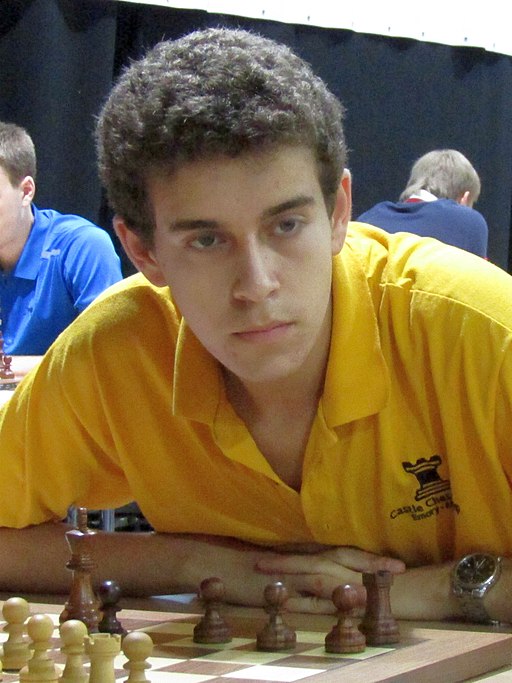
Naroditsky’s classical chess rating peaked at 2647 in May 2017, placing him among the world’s top 200 players. Throughout his career, he stayed consistently in the top 200 globally and top 15 in the United States. The breakthrough came at the 2015 World Team Championship, where he posted a performance rating of 2701 and defeated strong Russian grandmaster Dmitry Jakovenko.
One victory defined his career more than any other. In the 2021 U.S. Championship, Naroditsky defeated Fabiano Caruana, then the world’s number two player with a 2800 rating. Beating someone at that level meant he belonged with chess’s elite.
Blitz chess became his true domain. The fast variant gives players just minutes for entire games, and Naroditsky first crossed the 2700 blitz rating mark in 2024. He maintained a top 25 world ranking throughout his adult career. His blitz rating reached 2732 by August 2025, placing him among the world’s top 20 blitz players.
That same August delivered a career peak when he won the U.S. National Blitz Championship with a perfect 14/14 score. At the 2024 World Blitz Championship, he tied for first place in the preliminary rounds with a 9.5/13 score and a 2749 performance rating. Tiebreaks dropped him to 9th place, narrowly missing the knockout rounds.
Online speed chess captured his dominance most clearly. Naroditsky played 140,000 games on Chess.com, making him the eighth most active titled player on the platform. He regularly topped the leaderboards in both blitz and bullet formats on Chess.com and Lichess.
The Teacher Who Changed Chess Education
Teaching became Naroditsky’s greatest contribution to chess. His ability to explain things in accessible ways drew massive audiences online. Nearly 500,000 people subscribed to his YouTube channel, and 340,000 followed him on Twitch, tuning in daily to watch him play and learn from his commentary.
What set him apart from other chess streamers was his method. Instead of just playing moves, he explained the reasoning behind them, invited viewers to think through positions alongside him, and shared his love for the game’s beauty and logic. Chess players at every level considered his instructional content the best available in chess education.
Nemo Zhou, a Woman Chess Grandmaster and chess content creator, told the BBC that Daniel was everything the combination of chess and content creation was supposed to be. He had a way to make chess fun, she said, calling him a true historian of the game who did everything with kindness.
This teaching gift attracted students from beginners to established content creators. YouTuber Cr1TiKaL trained with Naroditsky for a year and a half. After his death, Cr1TiKaL called him such a bright light in the chess community.
Writing provided another outlet for his educational mission. Naroditsky contributed regularly to Chess Life magazine, writing an endgame column from 2014 to 2020. The New York Times hired him in 2022 to write a tactical problems column. Each piece made chess accessible and engaging for readers who might never watch a livestream.
From 2020 until his death, he served as Grandmaster-in-Residence at the Charlotte Chess Center, where he coached and mentored young players. Chess.com named him their lead commentator in 2021, and he became famous for his articulate analysis during major tournaments.
The Kramnik Accusations
The last year of Naroditsky’s life was overshadowed by conflict with Vladimir Kramnik, the Russian grandmaster who held the world championship from 2000 to 2006. In October 2024, Kramnik claimed that Naroditsky’s online chess performances were statistically impossible and likely involved computer assistance.
Kramnik challenged Naroditsky to a match with a $50,000 wager to prove his skill. The lack of response only intensified the attacks. Statistics and analyses appeared claiming certain moves and accuracy percentages in Naroditsky’s games were unnatural. Naroditsky became one of many young players targeted in what Kramnik called a crusade for fair play.
Chess.com muted Kramnik’s account in 2023 for spreading unsubstantiated allegations. Many in the chess community dismissed his claims, with some joking that being accused by Kramnik had become a compliment signaling strength as a player. Chess YouTuber Anna Cramling called the unproven allegations cyberbullying.
During a 2024 appearance on the chess podcast Take Take Take, he sounded exhausted and angry. I’m really sick of it, he said. I’m not going to tolerate any of the hate any longer. He called cheating the worst crime a chess player can commit and condemned Kramnik and his supporters for spreading falsehoods.
Czech grandmaster David Navara, another target of Kramnik’s accusations, later admitted to having suicidal thoughts from the harassment. The pattern of public accusations without evidence created turmoil in the chess world, but governing bodies took no action to stop it.
Bortnyk said he spoke to his friend Danya a few days before he died. Daniel was very sad about this situation with Kramnik, Bortnyk recalled. He insisted that his friend never cheated in his life.
Final Days
On October 17, 2025, two days before his death, Naroditsky returned to streaming after a brief break. His final YouTube video was titled You Thought I Was Gone. He told viewers he was back and better than ever and played matches from his home studio for an hour.
But viewers could see something was wrong. During what became his final Twitch stream, Naroditsky looked exhausted and agitated. Ever since the Kramnik stuff, I feel like if I start doing well, people assume the worst of intentions, he said, his voice trembling. Between games, he rubbed his temples and muttered, deep breaths. A friend off-camera urged him to end the stream. He nodded and logged off.
During that same stream, Kramnik posted on X, telling Naroditsky to stop using drugs and urged his friends, if he had any, to intervene. Viewers watched Naroditsky’s head slump into his hands.
Two days later, on October 19, Bortnyk and Giannatos went to check on him. Bortnyk described the scene in his emotional video. I came to check on him with Peter, the Director of Charlotte Center, and our mutual friend, he said. We came together to check because he wasn’t answering, and we found him dead on the couch.
A Community Responds
News of Naroditsky’s death sent the chess world into mourning. On October 20, the U.S. Chess Championship began with a minute of silence. Grandmaster Levon Aronian was visibly emotional after his game. “It’s heartbreaking,” he said. “I knew Danya quite well, and I can say he was always a good friend and a nice guy.”
Five-time World Champion Viswanathan Anand called the news devastating. He described Naroditsky as “an excellent chess commentator and educator” and “a genuinely nice person.”
Benjamin Bok, the Dutch grandmaster who had known Naroditsky since they competed in the 2007 Under-12 World Championship, wrote on X that he still couldn’t believe it and didn’t want to believe it.
I still can’t believe it and don’t want to believe it. It was always a privilege to play, train, and commentate with Danya, but above all, to call him my friend. I have known him since the World U12 Championship in 2007 where he won the gold medal. My sincere condolences to his… pic.twitter.com/TH8YYKaXol
— Benjamin Bok (@GMBenjaminBok) October 21, 2025
Hikaru Nakamura spoke on a livestream days later. “He loved streaming, and he loved trying to be educational,” he said. “The chess world is very grateful.” After Naroditsky’s death, Nakamura condemned Kramnik openly, calling him “a disgrace to chess.“
Naroditsky’s older brother Alan released a statement: “To the world, Daniel is the chess grandmaster, passionate commentator, and the gifted educator who we know and love. To me, he is all of those things, but he will always be Danya, my little brother.” Alan described them as inseparable as children, sharing a love for the Golden State Warriors.
His mother told Fox News something that cut to the heart of what happened. “There was nothing more important to Daniel than his dignity and his name as a chess player,” she said. “The whole world was on Daniel’s side. He played more and more because he was trying to prove that he’s not what he was accused of.”
Read More: Remembering Mac Sinise, Gary’s Sinise’s Son, Who Passed Away at Age 33
Investigations and Aftermath
After Naroditsky’s death, FIDE announced it would investigate Vladimir Kramnik for public statements made “both before and after the tragic death.” The Ethics and Disciplinary Commission would review whether Kramnik should face sanctions ranging from financial penalties to a ban.
Kramnik claimed he had contacted Charlotte police to investigate Naroditsky’s death and provided them with “additional information.” His X posts called attempts to link the tragedy to his name, something that “crosses all boundaries of basic human morality.” Legal action against FIDE and anyone who held him responsible became his next threat.
A petition on Change.org gathered over 50,000 signatures calling for FIDE to strip Kramnik of his titles. Some grandmasters pushed for boycotting FIDE events over the organization’s slow response to the harassment.
Chess.com renamed its Speed Chess Championship trophy the Naroditsky Cup in his honor. FIDE announced plans to establish a special prize in his name for contributions to chess as both a player and an educator.
Daniel Naroditsky’s Legacy
Daniel Naroditsky changed how chess is taught in the digital age. His streams weren’t performances meant to impress. They were about bringing people along on the journey, helping them see what he saw when he looked at the board. Players who never met him in person still felt they knew him because he let them into his thought process, his struggles, and his excitement when he found a beautiful move.
Rune Vik-Hansen, a Norwegian philosopher, wrote a tribute piece for ChessBase that captured what made Daniel different. “He did not merely instruct. He invited his audience to partake directly in his vision of the game as a reflection of order and reason itself. In Daniel Naroditsky, the modern world was offered a rare consolation, that intellect need not be cruel, that genius may yet be kind, that beauty, though often hidden beneath the veil of calculation, still yearns to disclose itself to those with eyes clear enough to see.”
Brilliance and kindness rarely exist together at this level. Naroditsky could have simply played chess at the highest levels, collected titles, and lived privately. Instead, he chose to open his world to others, breaking down barriers that made chess seem intimidating or inaccessible.
The chess world has lost players before, but Naroditsky’s death cuts deeper because of how directly he connected with so many through his teaching. His family asked people to remember him “for his passion and love for the game of chess, for the joy and inspiration he brought to us all every day.”
He was 29 years old. What he gave in his short life was immense. The chess world will miss him deeply and carry forward the lessons he taught, both on and off the board.