
In March 2025, speaker and author Elena Cardone posted a photo on Instagram showing herself alongside Erika Kirk, Charlie Kirk, and Grant Cardone at what appeared to be a casual afternoon meeting. Erika wore minimal makeup. She looked like a woman dressed for an off-camera moment, which is probably exactly what it was.
Six months later, Charlie Kirk was shot and killed while giving a talk to students at Utah Valley University. A bullet struck his neck as he took an audience member’s question. Within weeks, Erika stepped into the role of CEO at Turning Point USA and took over the public-facing duties that had belonged to her husband. She went from occasional event appearances to constant media coverage, delivering speeches at conservative rallies, appearing on Fox News, and promising to make her husband’s organization bigger and bolder than ever before.
As her face showed up on more screens, people started scrolling backward through her social media. They found the March photo, held it up against the woman now appearing on Fox News segments and Turning Point stages, and the commentary began. The conversation that followed was never really about foundation or eyeliner. It was a referendum on appearance, ambition, and what it means to look the part in conservative politics.
What The Photo Actually Shows
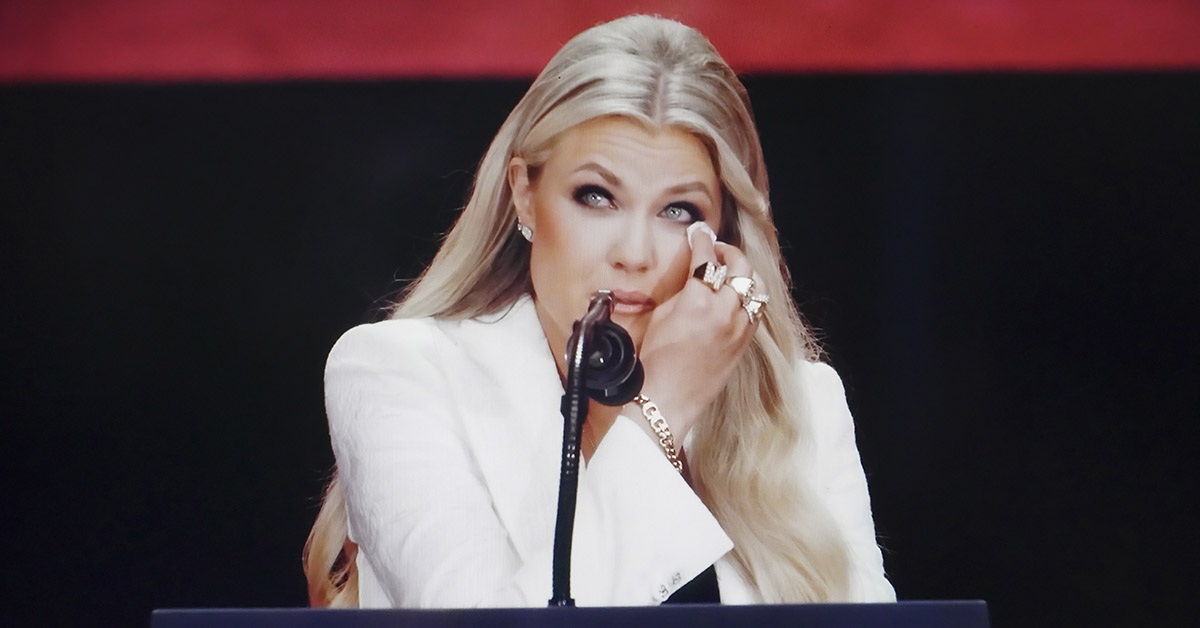
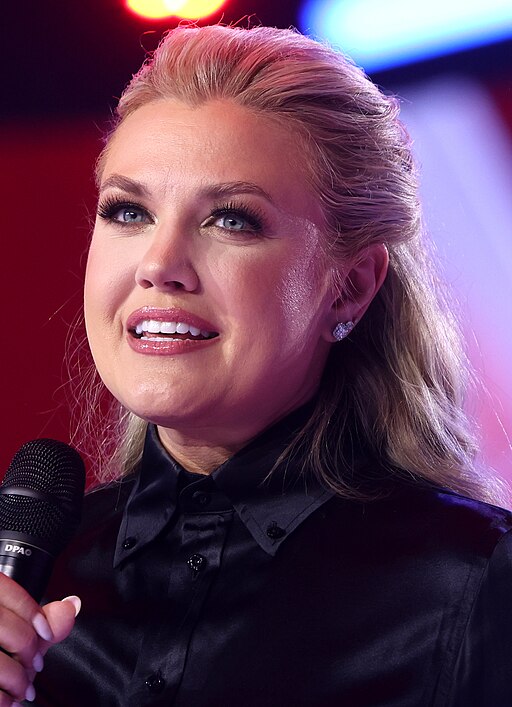
In her public appearances since becoming CEO, Erika wears a full-glam look. Heavy contouring, thick black eyeliner, false lashes, glossy lips, and blown-out blonde hair falling past her shoulders. The style reads as camera-ready at all times, built for studio lighting and political stages. It matches what critics have called the Mar-a-Lago look, a full-glam aesthetic common among women in Trump’s political circle.
But the before-and-after framing misses something. Photos from Erika’s Miss Arizona USA days in 2012 show a full face of makeup and the same blown-out blonde hair she wears now. Clips from Turning Point USA events filmed while Charlie was still alive show Erika on stage beside him wearing heavy contouring and false lashes, the same look people are treating as new.
In her 2012 Road to the Crown video for Miss Arizona USA, she talked about growing up as a self-described tomboy who wore Jordans and athletic clothes. She called herself a late bloomer when it came to makeup and said the shift happened gradually over time, not because of any single event. The pageant circuit trained her for the camera, and she’s been comfortable in full glam ever since.
So the look was already in place long before Charlie’s death made her a public figure. What the March photo captured wasn’t the absence of that look. It captured a woman who, like most women, wears different makeup for different settings. The viral comparison wasn’t showing a transformation. It was showing two contexts.
What The Internet Decided It Meant
The most repeated take was that she looked better without all the makeup. One Instagram user wrote that Erika was too pretty to wear all that makeup and that it made her look like Tammy Faye. Referencing the 1980s televangelist whose heavy mascara made her one of the most recognizable faces on Christian television and eventually a shorthand for overdoing it. Another commenter said she looked like she was perpetually wearing the bold glamour filter. Referencing the TikTok effect that smooths and glams a face beyond recognition.
But much of the conversation wasn’t really about beauty preferences at all. For many observers, the timing felt deliberate. One commenter wrote that she started wearing more makeup after her husband died, and followed it with the word interesting. As though that single detail contained a conclusion it was impolite to say out loud.
Another compared her to a resident of the Capitol in The Hunger Games, the ruling class in Suzanne Collins’ dystopian novels, whose exaggerated cosmetic routines signal power and distance from ordinary people. Others went further still, accusing her of using her husband’s death as a launchpad for her own political career. One user captured a suspicion that extended well beyond her appearance when they wrote that something in their soul told them something was not right with Erika.
Plenty of people pushed back on the whole premise. Arguing that a woman’s makeup is her own business and that the fixation on a widow’s appearance says more about the people picking it apart than it does about her. But none of it might have gained the traction it did if the look didn’t already have a name.
A Label Already Waiting
The reason the photo landed the way it did is that people weren’t seeing it in isolation. By the time Erika’s bare-faced March image resurfaced, the term Mar-a-Lago face had already been circulating online for months.
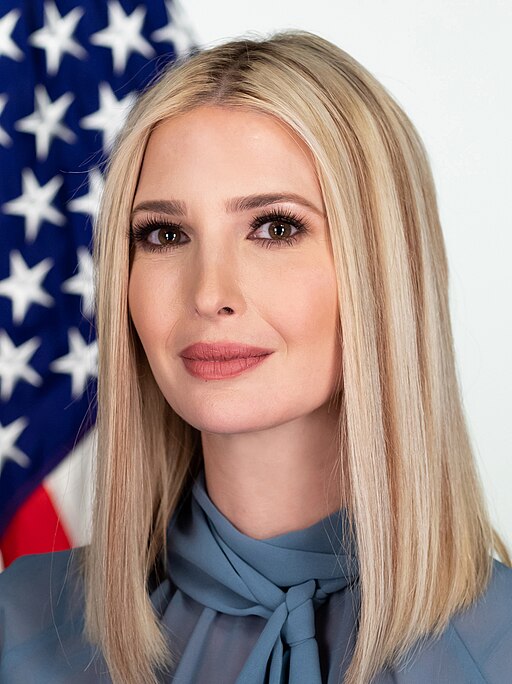
It described a full-glam aesthetic that women in Trump’s political orbit had adopted as something close to a uniform. Karoline Leavitt, Kristi Noem, Kimberly Guilfoyle, and Ivanka Trump all wore versions of it. The look had become familiar enough that people could name it the moment it appeared on screen. That recognition gave it a kind of cultural weight that went beyond any single person wearing it.
Wikipedia now has an entire page dedicated to the phenomenon. Tracing its origins back to 2006 and The Real Housewives of Orange County. Plastic surgeons quoted in HuffPost describe the look as overfilled cheeks, full lips, well-defined eyebrows, a strong jawline, and a narrow-bridged nose. They list facelifts, eyelid surgery, fillers, Botox, laser treatments, and dental veneers among the procedures that constitute the Mar-a-Lago aesthetic. One California surgeon estimated the 2025 cost at around $90,000, plus $2,500 a year in ongoing maintenance.
So when Erika’s before-and-after surfaced, it didn’t land as a personal story about one woman who changed her beauty routine. It landed as the latest exhibit in a case the internet had already been building for months. The label existed, the catalog of faces kept growing, and Erika’s March photo slotted right in without anyone needing to draw the connection. The framework did that work on its own.
The Parodies Were Rolling
By late 2024, the mockery had already become a genre of its own. Comedian Suzanne Lambert posted a TikTok recreating what she called Republican makeup after she noticed a consistent look among the conservative women leaving comments on her videos. Lambert described the goal as achieving a dusty, drained look and walked viewers through the technique. Skipping moisturizer and primer, using foundation that didn’t match her skin tone, applying too-dark concealer, and letting mascara clump on the lashes. The video pulled in more than 4.7 million views.
@itssuzannelambert Replying to @🧍♀️ ♬ original sound – suzanne lambert
Other beauty creators followed with their own versions. Each one feeds a running commentary that picked up speed with every new political appearance. The parodies followed a consistent formula. They mocked the orange-toned foundation, the heavy black eyeliner, the spidery mascara, and the overall impression of makeup applied without access to natural light. They treated the look as a uniform that marked political allegiance, not just personal taste.
Some conservatives pushed back, calling the trend hypocritical and mean-spirited. Others responded by mocking liberal makeup instead, pointing to blue-dyed hair and minimal makeup as the aesthetic of the left. But by early 2025, the conversation had moved well past any single creator. It had become a cultural shorthand. A way of signaling what team you were on or what team you thought someone else belonged to.
The Budget Behind The Look
The look didn’t just have a name. It had institutional backing. Campaign finance records first reported by NOTUS show the RNC spent more than $59,000 on makeup artists between April and November 2025, with the bulk of that money going to Brittany Goetz, a hair and makeup artist who previously worked at Fox News. She received $53,850 of that total. The payments were filed under media preparation.
That figure makes it harder to treat the aesthetic as a collection of individual women making their own beauty choices. Someone at the organizational level is budgeting for this look and making sure the people who appear on camera match a specific visual standard. The RNC is paying to maintain consistency across its media presence, and that consistency has a recognizable face.
The demand extends beyond campaign spending. D.C. plastic surgeon Anita Kulkarni told Axios she’s been turning away newly arrived political insiders who come in asking specifically for that Mar-a-Lago face. Many of them want more filler layered on top of faces that have already been treated, which she considers medically risky. She calls it filler blindness. When everyone in your social and professional circle has had similar work done. You gradually lose track of what an untreated face actually looks like.
Kulkarni said she didn’t see this kind of demand during Trump’s first term. When there were more establishment Republicans in the mix. Surgeon Troy Pittman, who treats people in Trump’s orbit, told Axios that the expectation in Washington has changed entirely. The city used to be a place where patients wanted cosmetic work nobody could detect. Now they come in wanting it to show.
What A Surgeon Sees
Plastic surgeon Frederick Weniger told Glam he sees careful maintenance when he compares Erika’s 2012 pageant photos to how she looks now. He hasn’t treated her personally. But working from photos, he noticed her cheeks looked slightly fuller, and her lips appeared more consistent in shape than they did in her early 20s. Light filler placed over time would explain the changes, he said, the kind of gradual work that many women do without anyone noticing.
There may have been a subtle nose refinement or eyelid touch-up, but neither stands out strongly enough to say with certainty. To him, she reads as someone who takes care of her skin and has access to a good makeup artist. Not someone who walked into a clinic and asked for a new face.
This reading treats the glam look as personal grooming. The kind of upkeep that women in public life have always done and will continue to do. It sees continuity rather than transformation. It assumes that a woman who competed in pageants in her early 20s and married a man who built a media empire might reasonably invest in maintaining her appearance over time. That’s not a political statement. It’s just how the game works.
What A Critic Sees
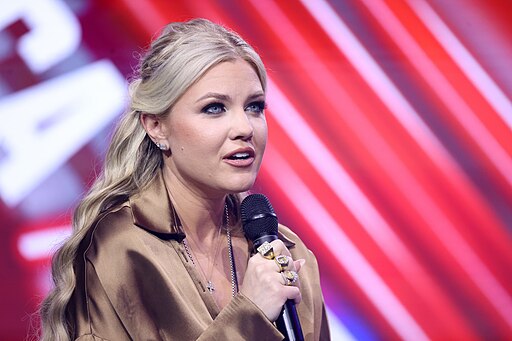
Beauty critic Jessica DeFino sees something else entirely. DeFino writes the newsletter The Review of Beauty and covers how appearance functions as a political tool. In interviews and her podcast, she has connected the Mar-a-Lago look directly to the administration’s stance on gender, arguing that aesthetics are never neutral when they’re this consistent across a political movement.
When a political movement treats gender as binary and fixed, DeFino argues, the women inside it face pressure to perform femininity as visibly as possible. The heavy makeup and cosmetic work stop being about looking polished and start functioning as proof of belonging. It becomes a way of making sure your appearance leaves no room for anyone to question what side you’re on.
The surgeon looked at one woman’s face and saw skincare. The critic looked at the same aesthetic and saw a political uniform being worn in real time. They were reading the same features but asking different questions, which is why they arrived at different answers. One asked what work has been done to maintain this face. The other asked what message this face sends to the people watching. Both questions are valid. Neither tells the whole story on its own.
Read More: Amanda Seyfried Defends Socialism as a “Gorgeous Idea” After Backlash Over Charlie Kirk Remarks
Why Her Bare Face Won’t Stop Trending
Salon reported in January 2026 that searches tied to the Mar-a-Lago face label have slowed, and the online conversation has started shifting toward newer aesthetics. That’s how algorithm-driven beauty trends tend to work. They move fast, become their own parody, and lose momentum once the commentary starts writing itself.
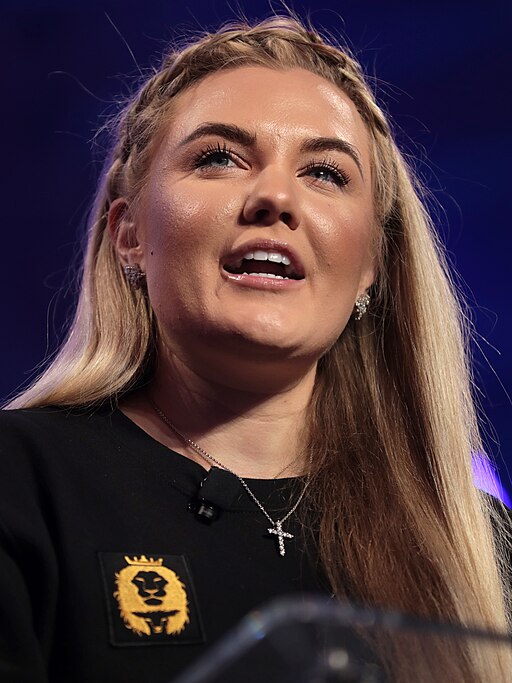
But the scrutiny of women’s faces in public life doesn’t follow trend cycles. It predates social media by decades, and it won’t disappear because one label drops out of search results. Women in politics and in positions of public authority have always had their appearance treated as open territory. As though stepping into power means forfeiting control over what their face communicates.
Erika Kirk’s entering public life through the violent death of her husband hasn’t made the commentary any more restrained. If anything, the circumstances added fuel. People saw a widow who changed her look as her visibility grew, and they wanted to assign it a motive that made sense to them. For some, that motive was grief, a woman putting on armor to face the world without her husband. For others, it was ambition, a woman using tragedy to launch a political career she’d wanted all along. And for most, it was probably some mix of both, filtered through whatever they already believed about women, power, and conservative politics.
Erika Kirk wore minimal makeup six months before her husband was killed. She wears a full face now. Whether that says something about political positioning, personal evolution, or the reality of adjusting to a life under constant cameras depends entirely on who’s doing the watching. The conversation was never really about her foundation shade, and it won’t stop at her either.
Read More: Internet ‘Detectives’ Zero In on Charlie Kirk and His Wife in Bizarre New Theory