

If you spend time online, you will see Gen Z reacting in disbelief to the things Millennials did growing up. But those habits were just normal life and how the world worked at the time. When you compare those old routines to today’s digital reality, they can look almost prehistoric.
Millennials grew up during one of the fastest technological transitions in modern history. According to research, Millennials were born between 1981 and 1996. Many remember a childhood without smartphones, without social media, and sometimes without home internet. Then Gen Z entered a world where WiFi was already common, and smartphones quickly became standard.
The world you grow up in quietly shapes who you become. It influences how long you can focus, how you handle awkward moments, and even how confident you feel talking to people. Childhood is not just about memories; it also builds habits that stick.
If you grew up with slow internet, one shared computer, and no quick way to look things up, you learned patience without realizing it. You figured things out, and you waited for your turn. You got comfortable with a little boredom. On the other hand, if you grew up with a smartphone in your hand and answers a few taps away, you developed a different kind of skill set. You learned to navigate information quickly and stay connected all the time.
Neither experience is wrong nor better; they are just different. That is why so many everyday Millennial childhood habits feel strange, even unbelievable, to younger generations today.
Calling a Friend’s House Phone and Speaking to Their Parents
Before smartphones and messaging apps, communication required more courage and a bit more effort. If a Millennial wanted to talk to a friend, they picked up a landline phone and dialed the house number. That number was often memorized or written near the refrigerator.
Most families shared a single phone line. When you called, a parent often picked up first. You asked politely if your friend was available. Sometimes you made small talk while waiting. It felt awkward, but it was normal. That interaction happened regularly, so children built comfort speaking to adults outside their immediate family.
Research on social development shows that structured verbal interaction supports confidence and communication skills. Millennials practiced those skills because that was the only way. If your friend was not home, you hung up and tried again later. There was no status update, no typing indicator, no quick follow-up message.

Privacy was usually limited in households, as many phones were mounted on the wall with long cords, and conversations happened in shared spaces. Family members overheard parts of what you said. That environment encouraged filtering and self-awareness. Meanwhile, Gen Z grew up with portable personal devices, where communication became private and individualized.
Busy signals were common, too. Dial-up internet used the same phone line, so if someone was online, incoming calls just got a busy signal on the other end. If someone picked up the phone, the internet disconnected, and often families negotiated turns and time limits. Technology felt like a shared resource rather than a personal extension of one’s life.
Caller ID was also not guaranteed, and you usually answered without knowing who was calling. Gen Z often ignores unknown numbers, whereas Millennials answered first and figured it out later.
Staying Out All Day With No Way to Be Reached
Many Millennials grew up with physical freedom, where they left the house for hours without a phone and without real-time tracking. After school, they rode bikes, walked to parks, or knocked on friends’ doors without confirming plans first. Parents often gave simple instructions such as be home before dark, and streetlights served as a time signal.
Children relied on neighborhood familiarity and trust. If something went wrong, they found an adult or walked home. Payphones provided limited backup, and many kids carried coins in case they needed to call. That required memorizing numbers and knowing how to navigate public space.
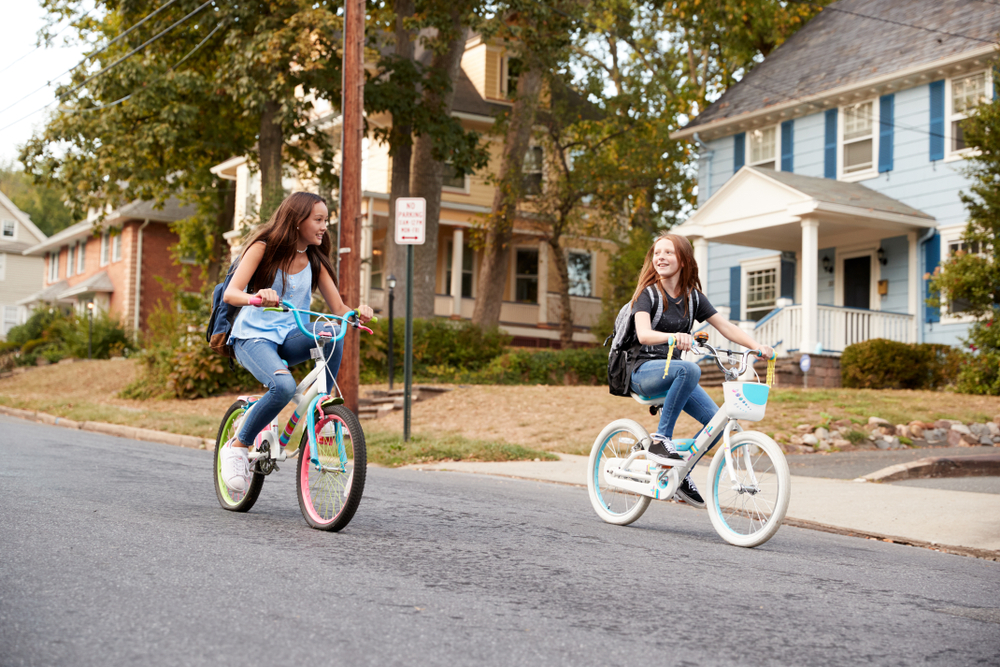
Unstructured outdoor play also shaped development. Psychological research suggests that free play supports creativity and problem-solving. Without constant digital stimulation, boredom forced invention. Kids created games, negotiated rules, and resolved disputes face-to-face, and conflict resolution happened in real time, not through screens.
Gen Z grew up in a world where location sharing and instant messaging are common. According to research, many children now receive smartphones around the age of eleven. That changes the structure of independence. Instead of vanishing for hours, young people often remain digitally connected to family and friends.
This resulted in reduced uncertainty but also changed expectations. Delayed replies now create anxiety, whereas in the past, silence was assumed. Parents worried, but they expected communication gaps. Millennials adapted to limited contact windows, but Gen Z adapted to continuous access.
Waiting for Entertainment, Information, and Everything in Between
Patience was not optional in Millennial childhood, as it was built into daily systems. Dial-up internet connections required waiting. Images loaded slowly, downloads took a significant time, and if someone picked up the phone, the connection ended abruptly.

Image credit: Shutterstock.
Broadband adoption expanded in the early 2000s, but many households relied on dial-up for years. That meant waiting became routine, and entertainment required effort, too. Renting a movie involved visiting a store and hoping your choice was available, and if it wasn’t, you selected something else. Late fees added pressure to return items on time.
Music consumption followed similar patterns. You waited for songs to play on the radio, and you recorded them onto cassettes. Later, you burned CDs and hoped the process completed successfully. There was no unlimited streaming catalog at the touch of your fingers.
Television operated on fixed schedules, so if you missed an episode, you missed it. Shared viewing created synchronized cultural moments. The next day at school, everyone discussed the same show. Today, streaming allows staggered consumption, and shared timing is less common.

Image credit: Shutterstock.
School research required physical resources. Students used encyclopedias and library catalogs, and they searched index cards and photocopied pages. Digital search engines now provide information instantly, and educational research shows that digital access increases speed but also introduces distraction.
Writing down directions or using a paper map was common before smartphones included GPS. If you missed a turn, you improvised. That level of navigation required attention and spatial awareness, but today, turn-by-turn directions adjust automatically on your GPS app.
Gen Z grew up with on-demand services, rapid downloads, and algorithmic recommendations. That environment encourages speed and personalization, whereas Millennials adapted to scarcity and delay. Neither experience is inherently superior, but they foster different expectations.
Memorizing Numbers and Growing Up Without Permanent Documentation
Another set of everyday Millennial habits involved memory and privacy. Phone numbers were either memorized or handwritten in an address book. If you lost a slip of paper with a number on it, you lost the number. Smartphones now store contacts automatically.
This change reflects cognitive offloading, a process where people rely on external devices to store information. Cognitive scientists note that tools change how memory functions. Millennials retained logistical details because they had to, but Gen Z often delegates those details to devices.
Childhood documentation looked different, too. Photos were taken on film cameras or disposable cameras. You waited for development and accepted imperfections. Videos were recorded on camcorders and stored physically, and most family memories lived in albums rather than cloud servers.
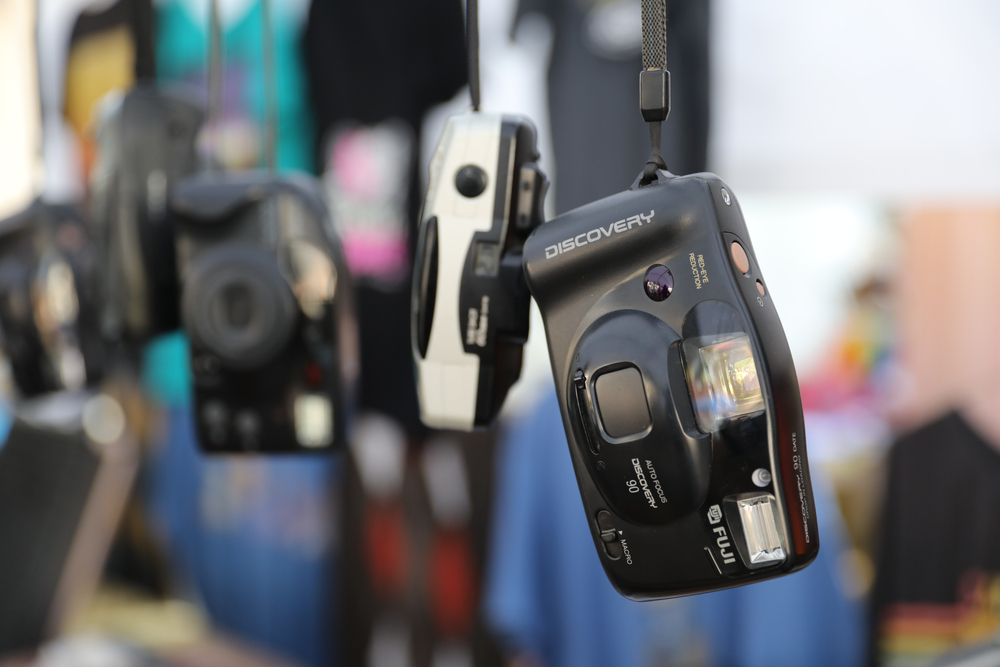
Gen Z childhoods often include thousands of digital photos stored online. Media psychology research suggests that growing up with constant documentation influences identity formation. Awareness of an audience begins earlier, and mistakes can circulate widely and persist.
For Millennials, embarrassing moments faded over time, and there was less risk of permanent digital records. Social comparison existed, but it was mostly local. Today, social comparison operates on a global scale through social media. These changes alter self-perception and pressure. Millennials formed identities largely offline before digital platforms became central. Gen Z often navigates self-presentation earlier and more publicly.
Sharing Devices, Space, and Cultural Moments
Many Millennial households had one computer in a shared area, and screen time required negotiation or schedules. Parents could glance at the monitor, and privacy was limited. This arrangement naturally restricted usage without formal controls.

Bedrooms were often shared with siblings, and shared televisions meant collective viewing. Gaming consoles were connected to a single screen, and multiplayer gaming happened side by side on couches. Technology use was more social and physical in those times.
Data shows that most modern teens have personal access to smartphones. Personalized devices reduce the need for negotiation and entertainment, and communication become individualized experience.
Malls once served as social hubs where friends gathered physically to browse stores and spend time together. Online shopping and social platforms have replaced much of that function. Physical gathering remains important, but it competes with digital alternatives in today’s technology.
For Millennials, these communal systems shaped interaction patterns, where you practiced compromise and face-to-face conflict resolution frequently. Gen Z practices digital coordination and remote collaboration more naturally.
What These Generational Differences Reveal
When examining these everyday Millennial routines, a larger theme emerges. Millennials grew up during a transitional period between analog and fully digital worlds. They experienced both scarcity and expansion, and they adapted to shared resources and later to personal technology.
Gen Z entered a world where digital systems were already established, and their baseline expectations reflect abundance, speed, and connectivity. Research in media psychology indicates that constant connectivity can increase exposure to social comparison and information overload. Millennials experience these effects now, too, but they did not shape their earliest childhood experiences.
It is tempting to romanticize the past or criticize the present, but neither approach captures reality accurately. Drinking from hoses and waiting for slow downloads were not inherently virtuous. Constant access and digital fluency are not inherently harmful. Each environment produced strengths and trade-offs. Millennials developed comfort with temporary disconnection and delayed responses. Gen Z developed rapid digital navigation skills and global awareness at younger ages.
The most striking insight is how quickly norms shifted. In less than three decades, communication, entertainment, privacy, and independence transformed dramatically. A Millennial born in 1985 experienced childhood without smartphones and adulthood dependent on them. Few generations have witnessed such rapid change within a single lifetime.
Read More: Gen X is Getting to ‘That Time’ in Their Lives, and They Don’t Know How to Handle It

The bizarre things Millennials did are not just nostalgic stories; they are markers of societal transition. They reveal how tools shape habits, and how habits shape people. When Gen Z reacts with disbelief, they are reacting to the pace of change. When Millennials laugh at old routines, they are remembering a world that disappeared faster than expected. These generational contrasts highlight human adaptability, showing that people adjust to their environments as tools change and social norms shift, with each generation growing into the world it inherits.
Final Thoughts
In the end, the bizarre things Millennials did are not just funny throwbacks or nostalgic stories. They reflect a very specific moment in time, when childhood sat between analog routines and digital expansion. Those everyday habits, from memorizing phone numbers to waiting for dial-up internet, shaped how Millennials learned patience, independence, and face to face communication.
Gen Z grew up in a different environment, one built on speed, personalization, and constant connection. That does not make one generation stronger or smarter than the other. It simply shows how quickly the world changed. And if history tells us anything, it is that the ordinary habits of today will probably shock the next generation just as much.
A.I. Disclaimer: This article was created with AI assistance and edited by a human for accuracy and clarity.
Read More: Xennials – Who They Are and How They Are Different From The Millennials and Gen X’ers