

Skin changes during pregnancy and aging are something most parents just quietly accept. A bump here, a tag there – the body keeps adding things nobody asked for. And when one of those little growths appears in an inconvenient spot, the internet is right there with a thousand DIY fixes that look simple enough to try before bed.
That’s the problem. Because home skin tag removal dangers are far more serious than most people realize, and the bleeding that follows a bad decision can go from mildly alarming to a genuine emergency faster than you’d think. Dermatologists are seeing this play out in real life – patients calling in a panic, scissors or string in hand, unable to get the bleeding to stop.
Here’s what’s actually going on with skin tags, why so many people end up in trouble trying to remove them at home, and what the safer options actually look like.
What a Skin Tag Even Is
Before anything else – what are we dealing with here? Skin tags are non-cancerous (benign) growths. Medically, they go by the name acrochordons – but no one calls them that outside of a doctor’s office. They’re made up of skin cells, collagen, tiny blood vessels, and nerves, and can range in size from a few millimeters to a few centimeters. They tend to hang off the skin by a thin stalk, which is exactly what makes them look like something you could just snip off yourself. Spoiler: that instinct is wrong.
Studies show that approximately 50 to 60 percent of adults develop at least one of these harmless growths during their lifetime, with the likelihood increasing after the fourth decade of life. So if you’ve got one – or a cluster of them – you’re far from alone.
They pop up wherever skin rubs against skin or clothing. Skin tags are frequently found in areas where the skin experiences friction, such as the neck, armpits, eyelids, groin, and on the chest. A necklace you wear every day, a bra strap, a fold that forms with weight gain – all of these create the kind of repetitive friction that gives skin tags their start.
Why Do People Get Skin Tags?
Friction is the most direct trigger, but it’s not the whole story. The prevalence of skin tag lesions increases with age, obesity, and metabolic syndrome, and numerous epidemiological studies link them with type 2 diabetes, dyslipidemia, insulin resistance, and polycystic ovarian syndrome.
That’s worth sitting with for a second. Multiple skin tags appearing at once – especially if you’re under 40 and don’t have obvious risk factors – can sometimes be an early signal of underlying metabolic changes worth discussing with a doctor. Insulin resistance, prediabetes, and metabolic syndrome often present with few overt symptoms in their early stages. Skin tags can be one of the first visible signs.
Pregnancy is another well-known trigger. Hormonal fluctuations, particularly in estrogen and progesterone, can stimulate the formation of skin tags. As the abdomen and other areas expand, increased skin-on-skin contact and friction promote their growth. Weight gain during pregnancy can also create more skin folds and creases, which are common sites for skin tag development.
The good news for anyone who grew a collection during pregnancy: tags that appear during pregnancy sometimes shrink or fall off after delivery as hormone levels normalize, though many persist. So waiting it out is a perfectly reasonable approach – and one dermatologists often recommend before doing anything else.
Is It Safe to Remove Skin Tags at Home?
No – and this is not the kind of thing to figure out through trial and error. Dermatologists recommend against trying to shave or cut them off on your own because of the risk of severe bleeding, infection, or scarring.
That warning comes from a simple anatomical fact: inside every skin tag is a blood vessel. It’s what keeps the tag alive. It can be easy to inadvertently nick a blood vessel or vein, leading to significant bleeding. And this isn’t just a trickle. The American Academy of Dermatology warns that trying to remove a skin tag at home could cause a serious infection or uncontrolled bleeding that requires emergency care.
Clinical guidance from StatPearls, published through the National Institutes of Health, states that patients should not attempt home removal because without proper technique and a sterile environment, the risk for excessive bleeding and infection increases substantially.
Then there’s the misdiagnosis problem, which is genuinely scary. If a supposed skin tag is growing quickly or changes in shape or color in a short time, it might be skin cancer – and dermatologists are equipped to identify and safely remove skin tags and other skin lesions. Snipping something off at home doesn’t just risk injury; it could destroy evidence of something that needed a biopsy.
What Happens If You Cut Off a Skin Tag and It Bleeds?
This is the question thousands of people are googling from their bathroom floor, and it deserves a straight answer. Common complications after skin tag removal include bleeding, infection, scarring, and incomplete removal leading to regrowth. If the bleeding doesn’t stop quickly with firm pressure, you’re already in trouble. Signs of infection requiring immediate medical attention include increasing redness, warmth, worsening swelling, pus discharge, and fever.
The American Academy of Dermatology cautions that trying to remove a mole or skin tag at home can cause a deep-seated infection. It can also be easy to inadvertently nick a blood vessel or vein, leading to significant bleeding.
DIY removal also frequently fails to remove the entire stalk. Medical experts do not recommend cutting off skin tags at home due to the high risk of infection, uncontrolled bleeding, and scarring. DIY removal methods often fail to remove the entire stalk, leading to potential regrowth or complications. So you’ve gone through pain, risk, and mess – and the thing grows back anyway. Not exactly a win.
Can Removing a Skin Tag Leave a Scar?
Yes, and in some situations, the scarring can cause real, lasting problems beyond cosmetic ones. The AAD cautions that scarring from DIY removal on skin covering a joint – such as a knuckle or elbow – can actually limit range of motion in that joint. That’s a significant consequence for what started as a small bump.
Even on less vulnerable areas of the body, the scarring from at-home attempts is typically worse than anything a professional would leave behind. A dermatologist is the most qualified person to remove skin tags. They have the skills and training to treat delicate problems, like skin tags on eyelids, and they also excel in minimizing scarring, which is particularly important for skin tags on the neck.
The Problem with Over-the-Counter Removal Products
The shelves are full of skin tag removal kits, creams, and serums promising painless results at home. Most of them are not worth the packaging they come in. According to Banner Health dermatologist Rebecca Thiede, MD, “There is no scientific proof these OTC products work. Even worse, you risk skin irritation, bleeding and scarring.”
Banner Health notes that at-home skin tag removal carries the combined risks of bleeding, infection, and misdiagnosis – including the very real possibility of mistaking a melanoma for a skin tag and treating it with a drugstore remedy instead of getting it properly assessed.
Some OTC products are worse than useless. Some products contain caustic agents that can cause severe scarring, disfigurement, and even delay diagnosis of skin cancer when consumers self-manage growths that should be professionally evaluated. That’s a lot of downside for something that cost $12 on Amazon.
What Safe Skin Tag Removal Actually Looks Like
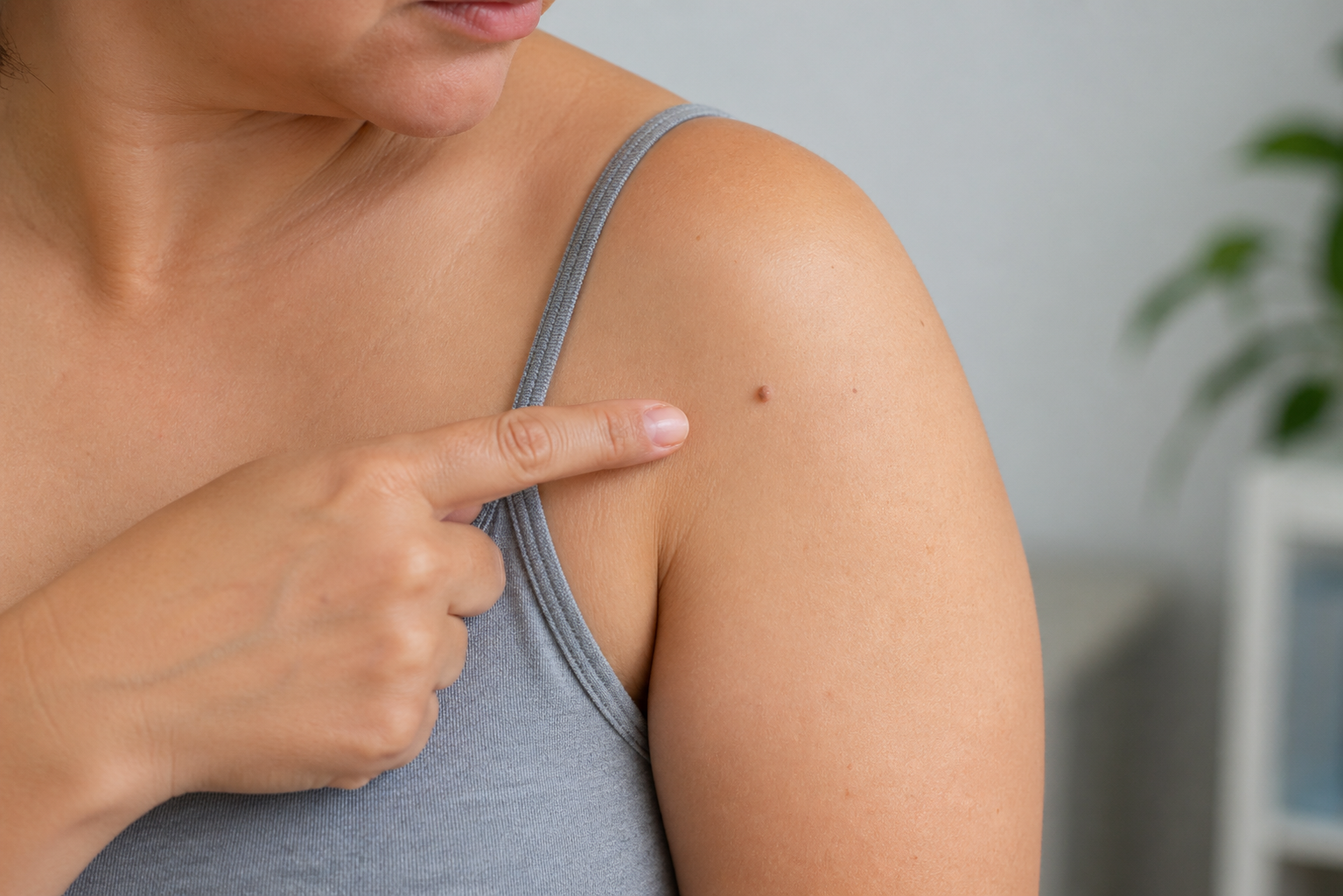
Here’s the reassuring part: professional removal is genuinely fast and simple. It’s a quick and simple procedure, and it’s permanent, so the tags won’t grow back. Dermatologists have several methods, and the right one depends on the size, location, and number of tags being removed.
Snip excision involves numbing the area first and cutting the tag off with sterilized surgical scissors or a scalpel. Most specialists prefer radiocautery – essentially using an electrified needle – for skin tag removal due to its ease of use and precision. Radiocautery (also called electrodessication) works by zapping the tag with controlled heat, which simultaneously removes the growth and minimizes bleeding. Cryotherapy is another option: liquid nitrogen is used to freeze the tag off, and the cold temperature causes the tag to fall off after some time.
Removing a skin tag is generally a low-risk procedure, but some bleeding from the site is common. It’s important to follow your doctor’s instructions for care at home. Keeping the site clean is the first step to prevent infection.
One thing worth knowing: insurance usually won’t cover skin tag removal because it’s considered cosmetic. That’s frustrating, but not surprising given that the procedures are quick and relatively affordable when done in-office. The cost of a professional visit is almost always less than the cost of treating a skin tag removal at home gone wrong – think ER visits, antibiotics, and scar revision.
What to Do Now
If a skin tag is bothering you – catching on jewelry, rubbing against clothing, or just living rent-free in your mental energy – the right move is to make an appointment with a dermatologist. The safest way to remove skin tags is to see a dermatologist, who can do it safely and effectively. That’s not an overcautious opinion from one doctor – it’s the consistent position of every major dermatology organization.
When you’re there, the conversation goes two ways: removal and diagnosis. Dermatologists can accurately diagnose growths that are not actually skin tags. If anything you’ve been treating as a skin tag has changed color, grown rapidly, or started bleeding on its own – that appointment becomes urgent, not optional.
If your skin tags appeared during pregnancy and you haven’t delivered yet, the most practical advice is to hold off. Many will resolve on their own once hormones settle post-partum. If they don’t, a dermatologist can take care of them quickly. In almost all cases, pregnancy-related skin tags will go away on their own once you give birth and have stopped breastfeeding as hormones return to pre-pregnancy levels.
The bottom line on home skin tag removal dangers is genuinely simple: the risks – uncontrolled bleeding, infection, scarring, and missed cancer diagnoses – are not proportionate to the DIY convenience. It is safest for an experienced professional to remove a tag in a medical setting, especially if it is large, painful, or located in a sensitive area. Skin tags are harmless little passengers. Don’t let a hasty removal decision turn one into a much bigger problem.
Disclaimer: This article was created with AI assistance and edited by a human for accuracy and clarity.