

There’s a particular kind of unease that settles in slowly. A parent who always had a sharp tongue now just seems detached. A spouse who used to be the life of the room has gone oddly flat. A sibling who was famously patient is suddenly prickly in a way that doesn’t feel like a bad week. Nobody says anything, because what would you even say? It’s nothing specific. It’s just… a feeling that something is different.
Families are often the first to sense it, and they’re right to pay attention. Because researchers are increasingly finding that what looks like a mood or a personality change in a middle-aged or older adult can sometimes be something far more significant. Not always. Not automatically. But often enough that neuroscience is now taking these kinds of early behavioral signals very seriously, and it’s completely changing how we think about the earliest warning signs of dementia.
This is not a story about forgetting where you left the keys. It’s about something that can show up years before memory loss, in people who are still driving, working, and living fully independent lives – and it’s something doctors are only just beginning to screen for.
What Is Mild Behavioral Impairment?
The term you’re going to start hearing a lot more of is Mild Behavioral Impairment, or MBI. MBI is defined as the emergence of persistent neuropsychiatric symptoms – that is, new changes in behavior or personality – in older individuals, and it represents a potential marker of early neurodegeneration. Think of it as the behavioral counterpart to mild cognitive impairment (MCI), which is the well-known memory-focused precursor to dementia. But MBI doesn’t start with memory. It starts with who a person seems to be.
New-onset persistent personality and behavior changes after age 50, rather than signaling a new-onset psychiatric disorder, could be an early manifestation of a neurodegenerative disease. That’s a significant reframe. For years, doctors and families both tended to attribute mood or personality changes in older adults to stress, depression, life events, or just getting older. Now there’s a growing body of evidence suggesting those changes deserve a much closer look.
MBI is considered a possible window for early intervention – which is exactly why getting familiar with it now matters so much. The earlier it’s identified, the more options there are for monitoring, lifestyle adjustment, and potential treatment down the line.
What the Research Actually Shows
The numbers here are hard to brush aside. A 2025 study from Johns Hopkins University School of Medicine, involving 2,246 dementia-free adults with a mean age of 75.6, found that people who met criteria in one or more MBI domains had more than double the risk of developing dementia – a hazard ratio of 2.15.
A 2026 structured narrative review found that approximately two-thirds of individuals who later developed mild cognitive impairment or dementia had developed neuropsychiatric symptoms before any cognitive symptoms appeared – with irritability and depression being the most common early signs. Two-thirds. That means for many people, the very first sign of what will eventually become dementia isn’t memory-related at all.
And MBI isn’t rare. A 2026 meta-analysis of over 5,000 participants found that approximately 52% of people with mild cognitive impairment also meet criteria for MBI, underscoring how prevalent it is within the pre-dementia population. For caregivers and adult children watching a parent or partner change, that statistic carries real weight.
The Five Domains of MBI – And Why Motivation Is the First Signal
Researchers define MBI across five neuropsychiatric domains: decreased motivation, affective dysregulation (mood instability), impulse dyscontrol, social inappropriateness, and abnormal perception or thought content. These aren’t personality flaws or character shifts. They’re measurable, documentable patterns that researchers can track and assess.
What’s particularly striking is how early motivation problems show up. A 2025 study using the ADNI-3 database – the first of its kind to specifically assess individual MBI domains and their effects on daily functioning – found that in cognitively normal older adults, the only significant behavioral predictor of functional decline was decreased motivation. Not memory. Not language. Just a quiet but persistent loss of drive in someone who was previously engaged and active.
The same study found that in adults already diagnosed with mild cognitive impairment, functional status was significantly predicted by four MBI domains: affective dysregulation, decreased drive, social inappropriateness, and abnormal perception – all measurable even before a formal dementia diagnosis. In other words, by the time someone is cognitively impaired, several behavioral changes may have already been present and affecting their daily life for some time.
The Johns Hopkins research also found that individuals with mild cognitive impairment were more likely to exhibit decreased motivation, affective dysregulation, and impulse dyscontrol compared to cognitively normal peers. These aren’t subtle philosophical differences between people – they’re patterns of change, in someone you know, from who they used to be.
Why Behavior Changes Before Memory
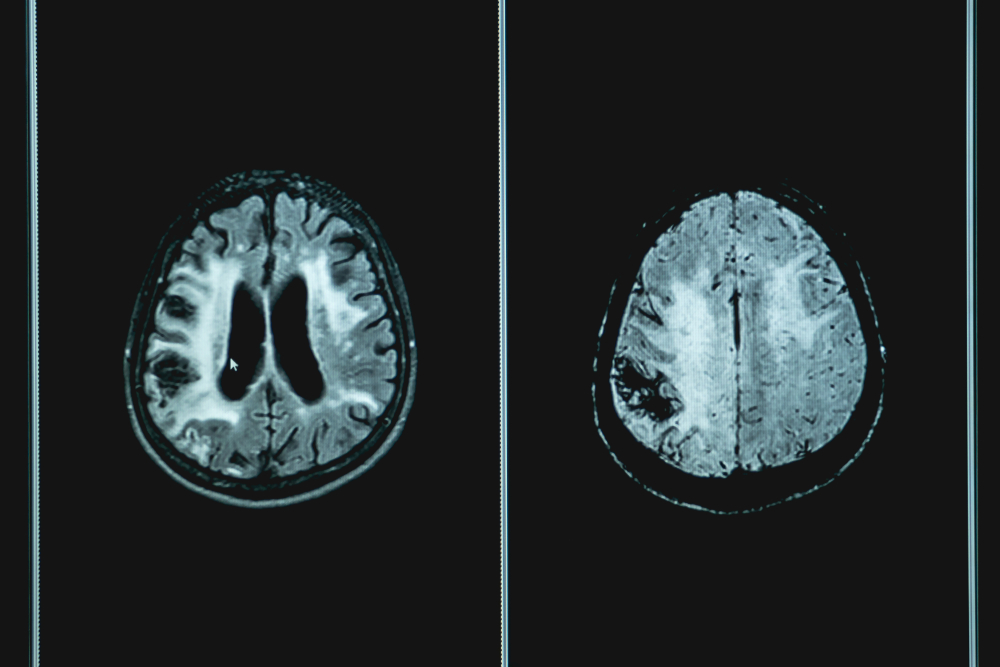
The brain doesn’t degrade uniformly. It follows specific paths depending on the disease process at work, and those paths often run through areas that govern emotion, motivation, and social behavior before they reach memory centers. Degeneration rarely begins in a single place, and the frontal and cingulate circuits that govern motivation and emotion sit at crossroads of many neural highways.
Epidemiological evidence consistently shows that MBI – defined as the emergence of persistent neuropsychiatric symptoms in older individuals – is associated with a higher risk of incident cognitive decline and dementia. The behavioral changes aren’t incidental. They’re part of the disease’s earliest biology.
A landmark New England Journal of Medicine study traced Alzheimer’s biomarkers over twenty years and found that amyloid started diverging from normal nearly eighteen years before symptoms, with tau following about eleven years later. Which means the brain has been changing for a long time before anyone notices something’s wrong. Behavioral symptoms may be among the earliest readable signs of that process.
The Dementia Connection – And Which Type Changes Personality First
Here’s where the research gets very specific. Not all dementias follow the same path. Alzheimer’s often begins with apathy or irritability, while in behavioral-variant frontotemporal dementia, empathy and social judgment are affected first while memory remains completely intact.
Unlike other types of dementia, frontotemporal dementia typically results in behavior and personality changes manifesting before memory loss and speech problems. This is why FTD is so frequently missed in its early stages – a person can seem entirely lucid, hold conversations, and recall recent events, all while their personality, social judgment, and empathy are quietly deteriorating. FTD disorders are among the most common dementias that begin in people at younger ages than typical, with symptoms often starting between the ages of 40 and 65. That’s not elderly. That’s midlife.
The symptoms of frontotemporal dementia gradually strip people of basic abilities that most of us take for granted, and FTD is a common cause of early-onset dementia, often striking people in the prime of life when they are working and raising families. For any family wondering whether what they’re seeing is real, that context matters enormously.
Early Behavioral Signs of Dementia – What to Actually Look For
Knowing the research is one thing. Knowing what to look for in a real person, in real life, is another. These are the early behavioral signs of dementia that researchers have identified as falling under the MBI umbrella – and they’re the ones worth tracking carefully if they represent a genuine change from someone’s baseline character.
1. Loss of motivation. The person who used to love their garden, their woodworking, their book club, stops initiating. This isn’t burnout. It’s a persistent loss of drive that doesn’t resolve with rest or encouragement.
2. Irritability or agitation. New, out-of-character short-temperedness, particularly in someone who was previously patient or even-keeled. The key word is “new.” Lifelong grumpiness is different.
3. Mood instability. Emotional reactions that feel disproportionate or unpredictable – a sudden tearfulness, irrational anxiety, or emotional flatness in situations that previously would have prompted a warm response.
4. Social inappropriateness. Behavioral variant frontotemporal dementia is characterized by prominent changes in personality and behavior, with nerve cell loss most prominent in areas that control conduct, judgment, empathy, and foresight. Comments that would never have been made before. A disregard for social norms that feels jarring.
5. Loss of empathy. Not callousness exactly, but a blunting of emotional responsiveness. FTD affects personality significantly, usually resulting in a decline in social skills coupled with emotional apathy, including lack of concern for a loved one’s illness and diminished response to others’ distress.
6. Impulsiveness. New risk-taking behaviors, impulse purchases, or decisions made without the consideration that characterized this person before. Impulsive behavior that is genuinely out of character.
7. Unusual fixations or repetitive behaviors. An odd new obsession, a very specific preoccupation, or repetitive actions that seem purposeless and persist.
8. Suspiciousness or paranoia. New-onset distrust, accusations, or unusual beliefs that persist longer than a bad mood or a stressful week.
9. Depression or withdrawal. Irritability and depression were found to be the most common early neuropsychiatric symptoms in people who later developed mild cognitive impairment or dementia. A new, sustained withdrawal from people and activities is a signal worth noting.
10. Disinhibition. Saying things that would previously have been filtered. Making comments that are tactless, inappropriate, or even cruel, in ways that feel genuinely foreign to who this person has always been.
11. Abandoning previously loved hobbies. The refusal to do a regular chore, play a game they once enjoyed, or try something new could signal early signs of dementia. When someone drops the activities that previously gave them joy – and doesn’t replace them with anything – it’s worth paying attention.
The critical distinction in every one of these is change from baseline. MBI isn’t about personality traits someone has always had. It’s about new, sustained changes in someone you know well, persisting for six months or longer.
What to Do If You’re Concerned

The good news is that identifying these changes early creates options. When an older adult becomes uncharacteristically withdrawn, impulsive, or suspicious, and the change endures, it warrants clinical attention. Recording examples and timelines can help disentangle psychological stress from early neurological disease – and tools like the MBI Checklist or the Neuropsychiatric Inventory can quantify what families already observe.
Bringing specific, dated examples to a doctor appointment is far more useful than a general “something feels off.” Note when the behavior started, how often it happens, whether it’s getting more frequent, and how it compares to who this person was six months or a year ago. That kind of documentation gives a clinician something concrete to work with.
It’s also worth knowing that not every case of MBI progresses to dementia. Many people will experience neuropsychiatric changes for reasons that have nothing to do with neurodegeneration. But the research is consistent: those with a combination of mild cognitive impairment and MBI are more likely to progress to dementia and less likely to revert to normal cognition than those with MCI alone. Knowing that gives families and clinicians a reason to act earlier.
On the lifestyle side, there’s real evidence that how you use your brain matters. A study by researchers at Trinity College Dublin, published in the Journal of Alzheimer’s & Dementia, found that simple activities like meeting friends, playing music, or traveling may help keep the brain healthy and reduce the risk of dementia. People who were more active in these areas had better brain function, and lifestyle factors had a stronger effect than genetic risk – meaning even people more likely to develop Alzheimer’s may improve their chances by staying active.
What This Means for You
The phrase “early warning signs of dementia” has always made people picture someone who can’t find their words or loses track of a conversation. What this research tells us is that the earliest signals can look much more like a personality story than a memory story. Someone getting harder to be around. Someone who’s less themselves. Someone who, in a phrase that families use again and again, just isn’t who they used to be.
Neuroscience is catching up to what caregivers have noticed for decades – that late-life changes in mood, drive, or social instinct can be early footprints of the same biological processes that will, years later, erode memory. The gap between noticing and acting on these changes is where early intervention lives. And early intervention, across almost every area of dementia research, is where outcomes are best.
This doesn’t mean panicking every time a parent has a short fuse, or reading pathology into a grumpy day. It means knowing what to look for, trusting your own long-term knowledge of someone you love, and being willing to bring those observations to a doctor rather than quietly talking yourself out of them. For clinicians and caregivers alike, the implication is simple but profound: behavioral change is data. You’re allowed to treat it that way.
Disclaimer: This article was created with AI assistance and edited by a human for accuracy and clarity.