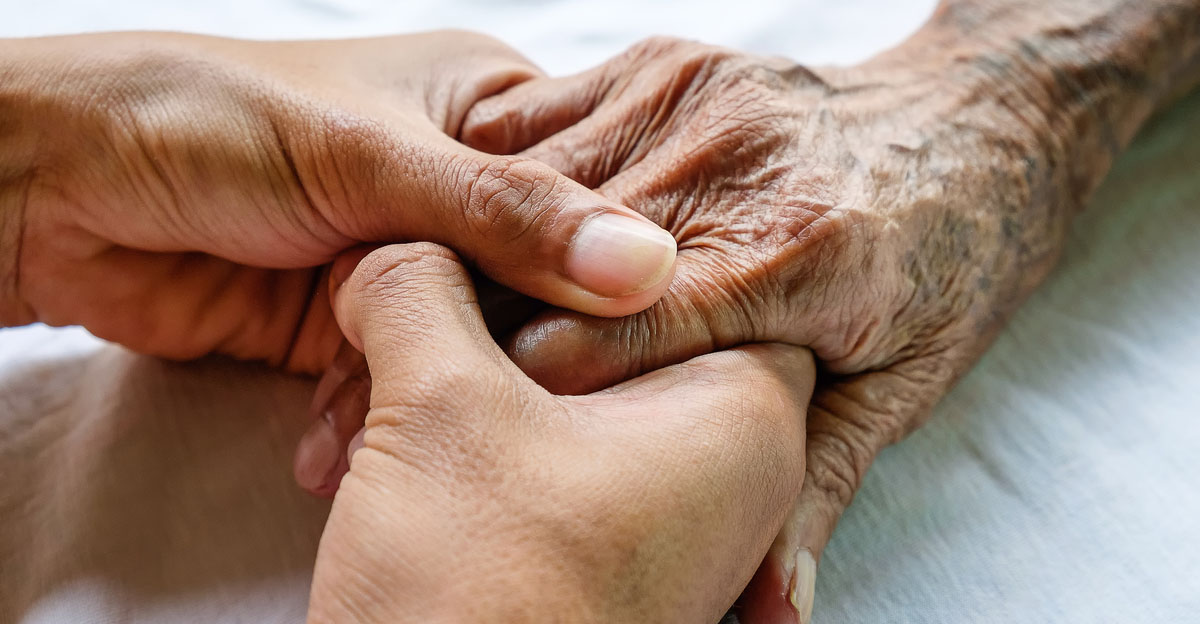

Most of us don’t grow up knowing what dying actually looks like. We see it on TV, a gentle fade, a last meaningful word, a peaceful hand releasing. Real life is rarely like that. When someone you love is close to death, the body changes in ways that can feel frightening and strange if you don’t know what to expect. Understanding what’s happening, and why, can make all the difference between panic and presence.
Hospice nurses and palliative care doctors see these changes every day. They know the signs. And honestly, that knowledge is something every family deserves to have access to, not just the medical professionals in the room. What they’ve seen , and what they quietly wish more people knew before they were standing in that room , might surprise you.
The Body Is Doing Something It Knows How to Do
One thing worth holding onto before we get into specifics: dying is a natural process, and the body moves through it in recognizable ways. Not every person shows every sign. Some people linger for days showing almost nothing unusual; others change quickly within hours. What’s consistent across many deaths is a cluster of physical changes that doctors and hospice teams have come to recognize as part of the body winding down. These aren’t medical emergencies. They’re the body doing something it knows how to do.
1. Breathing That Shifts Dramatically
The first and often most unsettling change for families to witness involves breathing. Near the end of life, breathing can become irregular, with periods of rapid breathing that may suddenly stop for a short time, and then begin again. The change to Cheyne-Stokes breathing, named for the person who first described it, usually means that death is minutes or hours away, according to the Hospice Foundation of America (2024).
Cheyne-Stokes breathing, put simply, is a cycle of very shallow breaths building to deeper ones, followed by a pause where breathing stops entirely before starting again. It can last several seconds. For anyone watching, those pauses can feel unbearable. But it’s important to know that the person experiencing it is typically unconscious and not in distress.
The NHS (2024) confirms that in the final hours and days, breathing may become less regular and a patient may develop this pattern, where periods of shallow breathing alternate with periods of deeper, rapid breathing, followed by a pause before breathing begins again. Knowing the name for it doesn’t make it easy to watch. But it does make it less terrifying.
2. The “Death Rattle”, What It Actually Is
There’s a sound that sometimes accompanies the final hours that can be deeply distressing for the people in the room: a low, rattling or gurgling noise with each breath. According to the NHS, noisy breathing often called the ‘death rattle’ occurs because the body naturally produces mucus in the breathing system, and when the dying person is no longer moving around, mucus builds up and causes a rattling sound when they breathe.
The Palliative Care Network of Wisconsin notes in their 2023 clinical resource that excessive oral secretions causing the ‘death rattle’ are among the five highly specific clinical signs correlated with death within 3 days. It’s worth noting that not every person develops this sound at all, but when it does appear, it tends to signal that death is very close.
The rattle itself is more distressing for observers than for the person dying, who is usually deeply unconscious and not aware of it. If you’re sitting with someone who’s making this sound, you’re not witnessing suffering. You’re witnessing the body’s natural process.
3. Skin Color and Temperature Changes
This one tends to catch families off guard because the visible changes to skin can be striking. According to the Hospice Foundation of America, skin may become purplish, pale, gray, or blotchy, especially on the knees, feet, buttocks, ears, and hands, and this is often a sign that death will occur within days or hours.
The reason this happens comes down to circulation. As the heart weakens and blood pressure drops, blood pulls away from the extremities and the body prioritizes the core organs for as long as possible. The NHS explains that as death nears, the hands, feet, ears, and nose may feel cold, and the skin becomes mottled and blue, or patchy and uneven in color, due to reduced circulation.
From a clinical standpoint, the Palliative Care Network of Wisconsin reports that peripheral cyanosis (bluish discoloration of the skin at the extremities) is strongly correlated with imminent death, while mottling at the knees hints at approaching death, based on clinical studies. If you’re touching a loved one’s hand and it feels cool despite the room being warm, that’s not a sign something has gone wrong. It’s simply the body redistributing its resources.
If you’re caring for someone at home or in a hospice setting, the most useful thing you can do at this stage is keep their skin comfortable, speak gently to them, and let the hospice team know you’re noticing these changes so they can support you and the patient appropriately.
4. Terminal Restlessness and Confusion
This is one of the most misunderstood symptoms in the final days of life, and one of the hardest for families to cope with. A person who has been calm and still may suddenly seem agitated, try to climb out of bed, pull at their bedding or clothing, appear confused about where they are, or not recognize the people in the room. Known by several names, terminal agitation, terminal restlessness, or terminal delirium, this symptom is treated in hospice care for otherwise eligible patients and is far more common than most people realize.
Terminal restlessness affects up to 88% of dying patients, according to Amedisys Hospice. That number is staggering, and it means that if you’re at a bedside and this happens, you’re experiencing something that the overwhelming majority of families in the same situation also go through.
The person may groan or shout in a confused way, become restless, fidgety, pull at their bedcovers, or try to get out of bed when it’s unsafe. Hearing or seeing that from someone you love is genuinely harrowing. What helps is knowing it isn’t voluntary, it isn’t distress in the way we recognize distress, and the hospice team has tools to keep the person comfortable. Talk to the care team about what medication options may help manage agitation if it’s causing the person visible discomfort.
5. A Change in Consciousness
The final shift, and in many ways the quietest one, is a gradual withdrawal from the world. A person who was sleeping a lot may stop waking at all. According to the Palliative Care Network of Wisconsin, loss of radial pulse and mandibular movement (the jaw moving during breathing) are among the signs clinically correlated with death within 3 days, signs that are part of a broader picture of the body’s systems shutting down one by one.
Before full unconsciousness sets in, the person may seem glassy-eyed, or drift in and out in ways that make meaningful conversation feel impossible. They might not respond to touch or sound. This can feel like losing someone twice, once before the moment of death, and once after. For families, this stage is often the loneliest.

What’s important to understand is that hearing is believed to remain intact far longer than other senses, even in deeply unconscious patients. Speaking to a person who appears unresponsive is not pointless. Sitting with them, holding their hand, playing music they loved, all of this can matter, even if you never get confirmation that it did.
What This Means for You
Understanding these five changes won’t make losing someone easier. Nothing does. But knowledge has a way of converting fear into something more manageable. When you know what you’re looking at, you stop trying to fix it, and you can start simply being there. That shift, from panicked bystander to present witness, is one of the most profound things a person can offer someone who is dying.
If you’re caring for someone at home or spending time at a bedside in a hospice setting, don’t wait until something startles you to ask questions. Talk to the hospice team early, ask what to expect, and ask again when something surprises you. These teams exist precisely because dying is hard for families to navigate alone. You don’t have to know what you’re doing. You just have to show up.
One thing many families find helpful to know in advance is that terminal restlessness doesn’t mean the person is in pain in the way we typically understand pain. The agitation has neurological roots, often related to metabolic changes, organ dysfunction, or shifts in brain chemistry as the body shuts down. It isn’t a sign that someone is frightened, or that they’re suffering in a way their mind is registering. Hospice doctors are careful to explain this because the instinct when you watch someone you love thrash or cry out is to assume they’re experiencing what you would experience if you were doing the same thing. That analogy doesn’t hold here.
It’s also worth knowing that small, practical measures can help alongside any medications the care team might recommend. Reducing stimulation in the room, dimming lights, limiting the number of people present, speaking in calm and low tones, and gently placing a familiar object nearby can all help create conditions that reduce agitation. Some hospice nurses recommend narrating softly to the person what’s happening around them, even if they appear unresponsive, simply saying “you’re safe, we’re here, you don’t need to worry” in a steady voice. Whether or not it breaks through to the person’s awareness, it has a grounding effect on everyone in the room, including the family members who need something to do with their helplessness.

One Last Thing Worth Saying
These five signs don’t always appear in order, and they don’t always all appear at all. Dying is not a perfectly predictable process. But the fact that it follows recognizable patterns means that the medical community, and by extension the hospice teams serving your family, can offer real guidance rather than just comfort. Lean on them. Ask the nurse to walk you through what they’re observing. Ask the doctor what they expect in the next few hours. These are not rude questions. They are exactly the questions you should be asking, and every good hospice professional will be glad you asked them.
You came to this article because someone you love is dying, or because you’re trying to prepare yourself for what that might look like. That kind of deliberate preparation is an act of love, even when it’s painful. Knowing what’s coming doesn’t take away the grief. But it means you can be present for the reality of it, rather than lost in fear of it. And presence, in the end, is the only thing any of us can truly give.
Disclaimer: This article was created with AI assistance and edited by a human for accuracy and clarity.