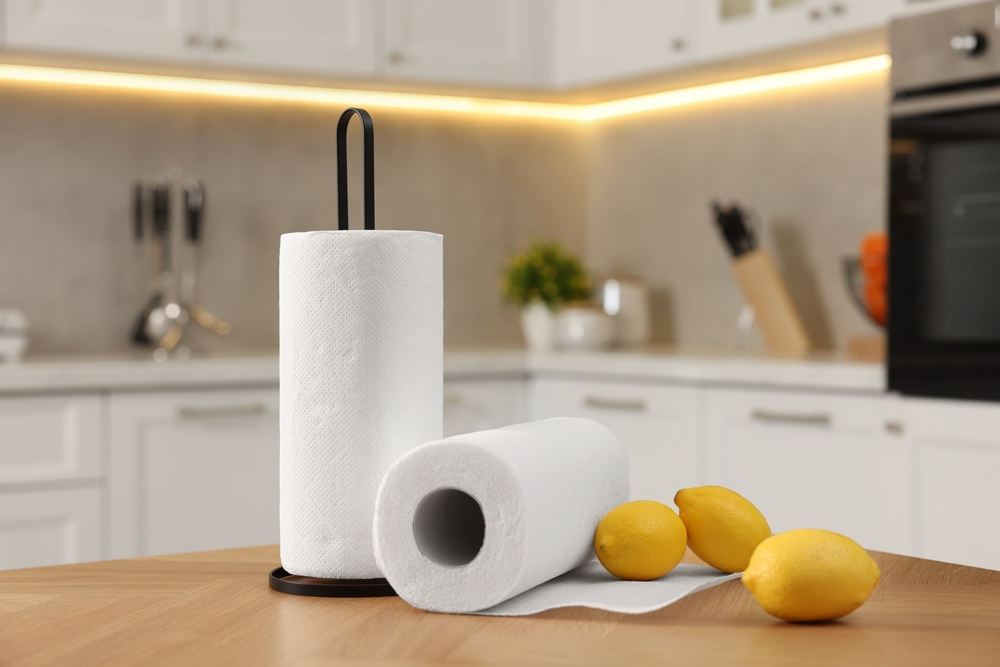

Paper towels are one of those household items that feel almost universally useful. There’s one on the counter before the pan hits the stove and another under the dish rack just in case. They absorb, they wipe, they vanish into the trash without ceremony. For a lot of quick cleanup jobs, they are genuinely the right tool. But the confidence we place in them can quietly work against us. On certain surfaces, the act of reaching for a paper towel and giving something a good wipe is doing visible, sometimes irreversible damage, while looking for all the world like cleaning.
The problem is structural. Paper towels are made from wood pulp and designed for quick absorption. They shed tiny fibers that cling to smooth surfaces. That fibrous, slightly abrasive texture is exactly what makes them good at blotting a spill off the counter. On the wrong surface, that same texture functions less like a cleaning cloth and more like very fine sandpaper, dragging grit across finishes, leaving lint in grooves, and stripping materials of the moisture or oils they need to stay intact. The damage tends to be cumulative, which is what makes it so easy to miss until the harm is done.
If you’ve been following the secrets to a consistently clean home and still can’t figure out why certain surfaces look worse after cleaning, the answer might be in your hand. Here are eight surfaces where paper towels are working against you.
1. Windows and Mirrors
This is the one that generates the most disbelief, because wiping a window with a paper towel feels so instinctive that questioning it seems absurd. And yet here we are. Paper towels can leave streaks, scratches, and waste on glass surfaces, and on mirrors they smear residue and attract debris, leading to a frustrating and inefficient cleaning process. You’re not imagining it when the mirror looks fuzzier after you cleaned it than it did before. The lint is real, the smear is real, and you end up in a loop of wiping and squinting that could go on indefinitely.
The physics of it are worth understanding. Over time, repeated wiping can cause faint scratches, especially on delicate coatings like anti-glare film or window tint, and those micro-marks build up slowly, dulling the glass. One wipe won’t ruin a window. Two hundred wipes, over years of good intentions, absolutely can. Too many paper towels leave lint clinging to the window after all your effort, whereas a rubber squeegee and a microfiber cloth do a far better job, and if there are just a few smudges, a dry microfiber cloth alone can handle it without any cleaner at all.
A clean, dedicated microfiber cloth for glass is genuinely one of the better investments in a cleaning kit. It lasts hundreds of washes, costs about four dollars, and produces better results the first time. The paper towel economy is not as economical as it appears once you factor in how many you go through before the window looks right.
2. Finished Wood Furniture
Wood furniture tends to get a pretty casual wipe-down, often with whatever happens to be nearby, which is usually a paper towel. Paper towels are too abrasive and drying for finished wood surfaces. The fibers can create micro-scratches in varnish or polyurethane coatings, and when combined with spray cleaners, they can leave streaks or uneven residue. The polyurethane coating on a dining table is there to protect the wood underneath, and wearing it down incrementally through routine cleaning defeats the point of having it.
Wood is susceptible to scratches from the texture of a paper towel, and cleaning finished wood surfaces with paper towels can compromise the coating and, over time, lessen their overall appearance. Wood can also appear dusty after cleaning with a paper towel, thanks to the left-behind lint. The finish goes dull, then looks cloudy, then you find yourself wondering if you need to refinish a table that is only three years old.
The alternative is straightforward: a slightly damp microfiber cloth, or a soft cotton cloth with a wood-appropriate cleaner, wiped in the direction of the grain. It takes no more effort. The difference is visible within a few weeks of switching.
3. Electronic Screens
Phone screens, laptop displays, smart home panels, television screens. All of them have become cleaning targets in a world where fingerprints and smudges are a constant. And nearly all of them are being wiped down with paper towels by people who would be horrified to know what that’s doing. Cleaning experts warn against ever using paper towels on delicate glass surfaces like LCD or plasma TV screens because the fibers can cause permanent etching on the screen. Permanent etching. Not a streak that wipes away, but a structural change to the glass itself.
Fingerprints and dust accumulate on various screens around the home, and while it’s tempting to give them a quick wipe with a paper towel, electronic manufacturers warn against it. Paper towels can potentially scratch and abrade electronic screens, leaving permanent scratches and indentations. Many modern screens also have an oleophobic coating, the oil-resistant layer that keeps fingerprints from bonding, and paper towel friction degrades that coating faster than almost anything else.
If any screens in your home need a wipe, microfiber cloths, diluted 70-percent isopropyl rubbing alcohol, or electronic wipes are the appropriate tools. Given what a replacement phone or television costs, a four-dollar microfiber cloth is not a difficult argument to make.
4. Stainless Steel Appliances
Stainless steel appliances look polished and modern right up until they don’t, and the descent from gleaming to dull can happen faster than expected. Refrigerators and dishwashers have a brushed finish with a directional grain, and paper towels can catch on that grain, leave residue, and create fine scratches. Wiping against the grain, which is almost inevitable when you’re using a paper towel without paying careful attention, amplifies the damage significantly.
Paper towels leave lint on stainless steel surfaces, causing them to look dull and drab instead of sleek and shiny, and they’re also not great at removing tough stains like fingerprint smudges or grease buildup. Black stainless steel is even more unforgiving. It has a thin polymer coating or treatment applied that’s easily chipped or scratched with abrasive cleaners, and once scratched, the bright silver shows through. That damage is not reversible without professional refinishing.
A microfiber cloth with a small amount of diluted dish soap, always wiped in the direction of the grain, is the approach professional cleaners consistently recommend. It takes exactly as long as a paper towel wipe, and your refrigerator looks like a refrigerator again rather than a scuffed approximation of one.
5. Nonstick Cookware
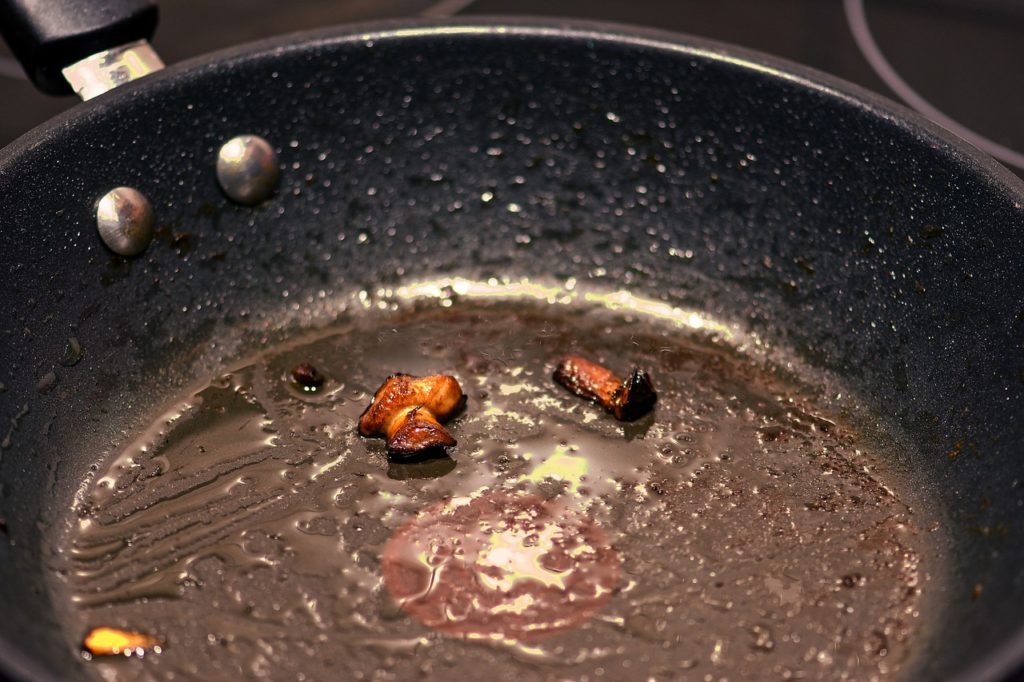
This one has practical implications beyond aesthetics. Consumer Reports notes that you should not use a paper towel to clean a nonstick pan, as it could leave food debris that causes the pan to smoke and burn the next time you use it. Beyond that immediate problem, paper towels on smooth nonstick surfaces often only smear grease instead of lifting and removing it, and applying extra force while scrubbing can scratch the protective coating, leading to the need to replace cookware more frequently.
The protective coating on nonstick pans is not just a convenience feature. It is the entire product. Once that surface is compromised, you’re dealing with food that sticks, uneven heating, and potentially degraded coating particles in your meal. Consumer Reports’ cookware testing team notes that if a nonstick pan has any chips or scratches, it should be discarded because the nonstick coating could be flaking off into food being cooked in the pan. Getting there faster by using abrasive paper towels on it is an expensive shortcut.
A soft sponge with mild dish soap and warm water handles nonstick pans perfectly well, and it won’t cost you a new pan. The extra thirty seconds are worth it.
6. Leather
Leather furniture, bags, car interiors, and shoes all have one thing in common: they need to retain moisture to stay supple and intact. Whether it’s a leather sofa, handbag, or car interior, paper towels are too rough for delicate leather surfaces and can strip away natural oils, leaving the material dry and prone to cracking. That cracking is not cosmetic. Once leather loses its structural moisture and begins to split, the damage cannot be undone without professional restoration.
Regular use of paper towels on leather furniture, bags, or shoes can lead to cracking, stiffening, and premature aging, because the absorbent nature that makes paper towels great for spills makes them terrible for leather care. A leather sofa that should last twenty years starts looking worn out in five when it’s being regularly stripped of its oils by well-meaning cleaning sessions. The couch didn’t age badly; it was cleaned badly.
A soft, slightly damp cloth is the right tool for surface cleaning, followed by a leather conditioner applied periodically to restore what everyday use removes. It costs less than replacing the furniture and considerably less than the professional restoration bill.
7. Car Paint and Exterior
Cars represent a specific category of surfaces where the stakes for getting this wrong are higher than most people expect. Paper towels can scratch and dull car paint. The exterior finish of a car is composed of several layers, primer, base coat, clear coat, and the clear coat that gives paint its depth and gloss is susceptible to the micro-scratching that a paper towel’s rough texture introduces. Those scratches catch light differently, which is what produces the swirl-mark effect that makes dark-colored cars look like they’ve never been properly washed.
Paper towels can take the vibrance out of your car’s paint and cause tiny scratches, making cloth the safer choice for preserving the looks and value of your vehicle. The same applies to the interior: dashboard panels, instrument clusters, and touchscreens inside a car all qualify as electronic surfaces and all of them react badly to the abrasive texture of a standard paper towel. A car that’s wiped down with paper towels after every wash ends up looking older than it is, and the finish work required to restore it runs into real money.
Automotive microfiber cloths are designed specifically for paint work. They’re thicker and softer than standard cleaning microfibers, designed to trap particles rather than drag them across the surface. For the interior, the same electronic-safe microfiber cloth used on home screens does the job.
8. Tile Grout
Grout is porous, textured, and prone to absorbing whatever it comes into contact with, which makes it demanding to clean under the best of circumstances. Paper towels snag on textured grout lines and tear easily, leaving behind small shreds of paper that create more cleanup work rather than less. You end up finishing the cleaning session with paper fragments embedded in the grout, which is definitively worse than what you started with.
The problem is compounded by the fact that paper towels aren’t stiff enough to do the job grout requires. Grout needs scrubbing pressure applied with something that won’t disintegrate. A paper towel in water turns to mush in the middle of the effort, taking the cleaning solution with it and leaving nothing useful behind. Cleaning experts recommend using an old toothbrush on grout, as well as on brick and other textured surfaces. A stiff-bristled grout brush and a dedicated grout cleaner will do more in thirty seconds than ten paper towels managed in ten minutes, and it will leave the grout actually clean rather than papered.
Read More: 27 Effective Housekeeping Hacks for Naturally Cleaning Your Home
The Simpler Version
None of this requires a complete overhaul of how you clean. Most of it comes down to one swap: a small collection of microfiber cloths, designated by use, replaces the paper towel in almost every scenario above. One for glass, one for electronics, one for wood, one for stainless steel. They wash easily, last for years, and produce better results on every surface where paper towels cause problems.
Paper towels still earn their place in the kitchen for the jobs they were actually designed for, blotting raw meat, catching bacon grease, keeping produce dry in the crisper drawer. The issue isn’t that they exist, it’s that they’ve quietly taken over cleaning jobs they were never designed to do. The roll on the counter is convenient, which is exactly why it gets grabbed for everything. Knowing where to stop reaching for it means that everything from the mirror to the dining table to the sofa looks cleaner with less work. That’s the kind of information a whole lot of cleaning routines are missing.
AI Disclaimer: This article was created with the assistance of AI tools and reviewed by a human editor.