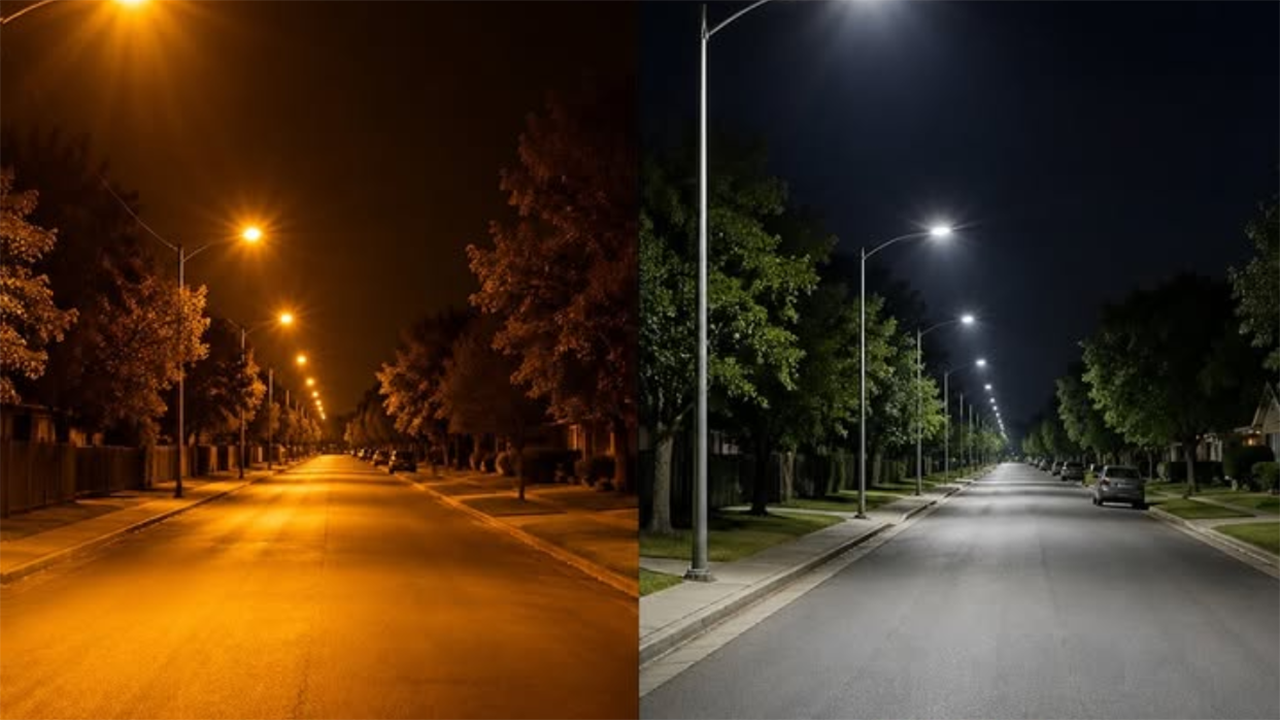

Every light bulb you buy now comes with a color temperature on the box, a number followed by a K, and most of us have stood in the lighting aisle at some point squinting at the packaging like it’s a prescription we’re not qualified to read. Warm white. Soft white. Daylight. Cool white. The differences sound minor, almost decorative, until you realize the lighting in your home is doing something to your body and your brain every single hour you’re awake in it, and also several hours after you think it’s stopped.
The yellow-versus-white light question sounds like a preference. Something you’d settle based on vibes, the way you choose a throw blanket or a paint color. But the research tells a more complicated story – one where the light you flip on at 8 PM is having a measurable effect on whether you fall asleep at midnight or lie there until 1:30 staring at the ceiling. Where the bulb above your desk is either sharpening your focus or quietly draining it. Where something as mundane as a lamp is doing biological work on you, constantly, whether you asked it to or not.
Here’s the short version: yellow light and white light are not interchangeable, and neither one is better in any absolute sense. They’re better at different things, in different rooms, at different times of day. The longer version is actually worth knowing.
What “Yellow” and “White” Actually Mean
Before anything else, a quick clarification on terminology, because the words “yellow” and “white” are doing a lot of casual work here. What people typically call yellow light is warm light, measured at roughly 2,700 to 3,000 Kelvin (K) on the color temperature scale. The Kelvin scale measures the color of light emitted by a light source, with lower numbers producing warmer, more amber-toned light and higher numbers producing cooler, bluer light. Warm lighting has a soft, inviting glow reminiscent of a setting sun or a candle flame, with a color temperature rating of between 2,400 and 2,700K, producing a yellowish-orange light that creates a cozy, relaxed atmosphere.
What people call white light generally means cool or daylight-spectrum light, sitting at 5,000 to 6,500K. This lighting resembles the clear, bright light of morning daylight, perceived as more vibrant and less yellow, often described as having a blue or white quality closely mirroring the natural light from a cloudy sky.
Before the advent of CFL and LED lights, there were limited options for energy-saving lighting, and almost all incandescent bulbs gave off that same warm, yellowish glow. The explosion of LED technology changed everything – now a single trip to the hardware store puts hundreds of variations in front of you, and the choice actually matters.
The Case for Yellow Light
Yellow light’s most devoted advocates are often people who have noticed, sometimes without being able to name the reason, that their home feels different depending on what’s switched on. There’s a reason for that feeling, and it goes beyond aesthetics.
Warm hues of red, orange, and yellow are better for preparing the mind and body for sleep, and dim yellow and orange colored lights have little impact on the circadian rhythm. Exposure to this light may increase melatonin production, especially compared to cooler colors such as blue light. Melatonin is the hormone your body releases to signal that it’s time to wind down – the biological equivalent of someone dimming the lights for you from the inside.
A 2011 ScienceDaily report found that exposure to the light of white LED bulbs suppresses melatonin five times more than exposure to the light of high-pressure sodium bulbs that give off an orange-yellow light. Five times. That is not a small difference. It means the bulb in your bedside lamp is either helping your body gear down for sleep or actively working against it, depending on what color temperature it is.
People who prefer yellow light often describe it in terms of mood and atmosphere rather than function: it’s what makes a room feel lived-in rather than clinical, what makes dinner feel like dinner rather than a performance review. Warm lighting is often used in residential spaces like living rooms, bedrooms, and dining areas, where a sense of calmness and warmth is desired. That preference is not arbitrary – the softness of the light registers in the brain as a signal to relax, which is precisely why restaurants and hotel lobbies spend considerable money getting the Kelvin number right.
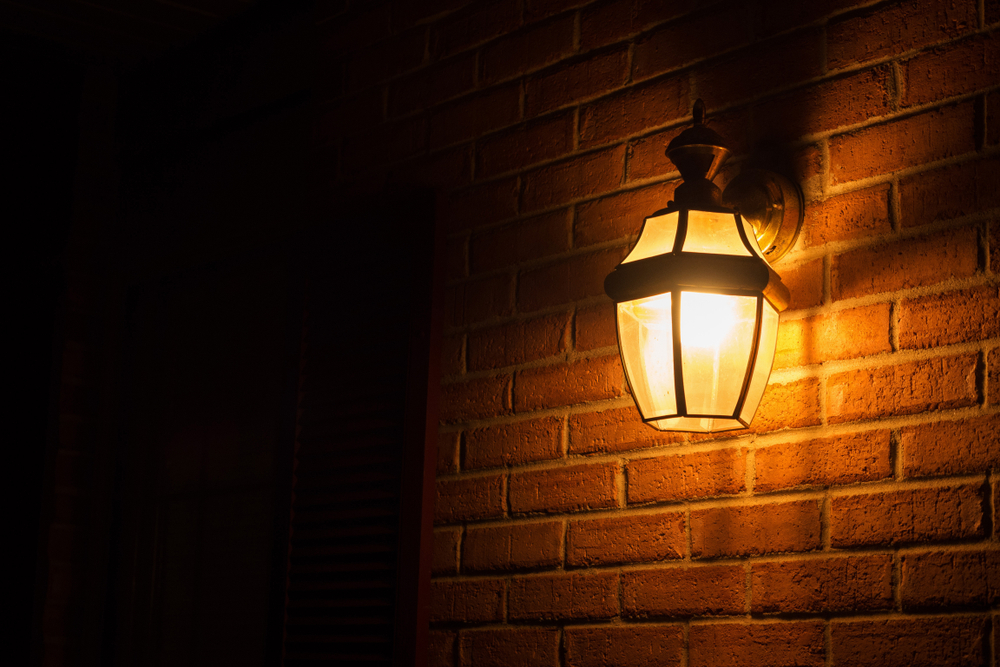
Yellow light is softer and warmer, reducing visual fatigue, and is perfect for reading, brainstorming, or evening work when you want to maintain comfort without compromising alertness completely. For people who spend long hours reading or working in the evenings, this is a real consideration: warmer light is simply easier on the eyes over extended periods, even if it’s not doing much to sharpen your concentration.
There’s also a psychological argument that’s harder to quantify but genuinely worth considering. Some people, particularly those who find the starkness of white light oppressive or anxiety-inducing, report that warm light is the only version that makes their home feel like a sanctuary. Home decor gets away with a lot, and so does lighting. If a 2,700K bulb is the reason you actually decompress in the evenings, that is worth something.
The Case for White Light
White light has a reputation problem in domestic settings – it reads as office, hospital, convenience store – and that reputation is largely earned. Used in the wrong room at the wrong time, it is exactly as flattering as fluorescent overhead lighting in a department store changing room. But used correctly, it does things yellow light cannot.
Research from the Lighting Research Center at Rensselaer Polytechnic Institute suggests that exposure to cool white light at 6,500K enhances performance and increases alertness while reducing drowsiness, compared to warm white light at 2,700K. If you have ever noticed that you can concentrate better in a brightly lit space – a library, a coffee shop with industrial lighting, an office – that’s the mechanism at work. The cooler wavelengths in white light stimulate your brain’s alertness systems, which is the opposite of what you want at 10 PM but exactly what you want at 10 AM.
Cool lighting is ideal for task-oriented spaces such as kitchens, bathrooms, offices, and classrooms, where clarity, concentration, and alertness are important, and it enhances the appearance of white and light-colored surfaces, making spaces appear more spacious, clean, and modern. The practical argument here is visibility: white light simply lets you see more. Checking whether a piece of chicken is fully cooked, applying makeup, reading fine print on a label, threading a needle – these tasks benefit from the clarity that warmer light can’t quite deliver.
A 2025 study published in the Journal of Environmental Psychology that examined 100 office workers under different lighting conditions found that cooler lighting at 7,000K was associated with enhanced cognitive performance and reduced cognitive fatigue, potentially due to its similarity to natural daylight and its ability to stimulate an alert state conducive to mental tasks.
White light also has the practical advantage of color accuracy. It increases alertness, making it ideal for high-focus tasks, though it may cause eye strain or glare if used for long periods without proper diffusers or appropriate desk positioning. That caveat is real – badly managed white light can be its own kind of uncomfortable. But the fix is usually a diffuser or a well-placed lamp shade, not a full swap to warm bulbs.
The Sleep Question, Specifically
If there’s one domain where the evidence genuinely lines up clearly, it’s sleep, and the answer points in favor of yellow light in the hours before bed. The research on this is consistent enough to take seriously.
Harvard researchers found that participants exposed to warm light in the evening fell asleep 19 minutes faster than those exposed to cool light. Nineteen minutes sounds modest until you’ve spent nineteen minutes staring at the ceiling willing your brain to shut off.
The Sleep Foundation explains the mechanism clearly: bright and cool-colored light makes it harder for the body to transition to a sleepy state, while cooler colors signal to the body that it is time to wake up, rather than wind down. Your body evolved to follow light cues – warm, low light in the evening meant sunset and, shortly after, sleep. Cool bright light meant midday, which meant stay alert. The LED bulb in your living room doesn’t know it’s 9 PM any more than your body can tell it’s artificial.
If you have children, this is worth paying particular attention to. Babies and children appear to be negatively affected before bed by blue and white lights, which is why experts often recommend warmer colors for night lights. A cooler-spectrum night light in a child’s room is effectively asking them to produce less melatonin at exactly the time you’d like them to be producing more.
The Stress and Focus Question
Outside of sleep, the conversation gets more interesting. A 2025 study from ScienceDirect found detail that a lot of popular lighting advice misses: warm, dimmed lighting at 3,000K and 100 lux effectively reduced stress markers and perceived stress levels among participants, aligning with the calming effects of warmer light tones. So yellow light isn’t just good for sleep – it’s also better for recovery, decompression, and any situation where the goal is getting your nervous system out of a heightened state.
This matters in a home context specifically. Many of us use the same room for working, eating, watching television, and winding down, which means we’re asking a single lighting setup to serve several competing purposes. The room where you want to be alert enough to finish a work email and calm enough to unwind afterward is not a room that one fixed bulb color can fully serve.
This is where smart bulbs and color-temperature-adjustable lighting have genuine practical appeal. Natural sunlight moves through its own color arc each day – warm at sunrise, cool and bright through midday, then easing back to warm amber as evening arrives – and mimicking that progression at home can improve both well-being and biological harmony. The investment in a tunable bulb is not a wellness trend – it’s a fairly direct response to a real biological need.
Which Room Gets Which Light
The short, practical version: cool lighting works best in task-focused spaces like kitchens and bathrooms, while warm lights belong in areas meant for relaxation.
Bedrooms are the clearest case. Warm light with a lower color temperature of 2,700K to 3,000K creates a cozy and relaxing atmosphere that can increase melatonin production in the evening and nighttime, promoting better sleep. If there is a single room in your house where the lighting investment pays off most directly, it’s the one you sleep in.
Kitchens and bathrooms make a reasonable argument for white light – visibility matters in both, and neither is a space where most people linger long enough for the alertness effects to become a problem. Offices and dedicated work spaces are the strongest case for cooler light during daytime hours, when that alertness-promoting quality is exactly what you want rather than what you’re fighting.
Living rooms are the genuinely complicated case, because they host everything: dinner, movies, homework, conversations, and the last hour before bed when you’d like your body to start winding down. A floor lamp with a warm bulb paired with an adjustable overhead is not a bad solution. Neither is accepting that one room can’t perfectly serve every purpose, and choosing based on what you use it for most.
What Your Lights Are Actually Doing
The lighting in your home is not passive background. It’s communicating with your body’s internal clock, affecting your stress hormones, your sleep hormone, your alertness, and your mood, across every room, every hour of the day. That is a lot of influence to hand over to whatever bulb happened to be in the socket when you moved in.
Yellow light does the things we associate with rest: it preserves melatonin, reduces stress markers, creates an environment that signals safety and warmth. White light does the things we associate with function: it improves visibility, sharpens alertness, reduces errors on tasks that require real precision. Neither one is the right choice for every situation. Both are the right choice for specific ones.
The honest answer to the yellow-versus-white question is that asking which is better is like asking whether you should eat breakfast or dinner. The answer is determined by what time it is and what you’re trying to do – and the fact that you can now change your light temperature from your phone means there’s very little reason to commit to one answer and live with it indefinitely. Start with the bedroom first. The rest of the house can follow.
AI Disclaimer: This article was created with the assistance of AI tools and reviewed by a human editor.