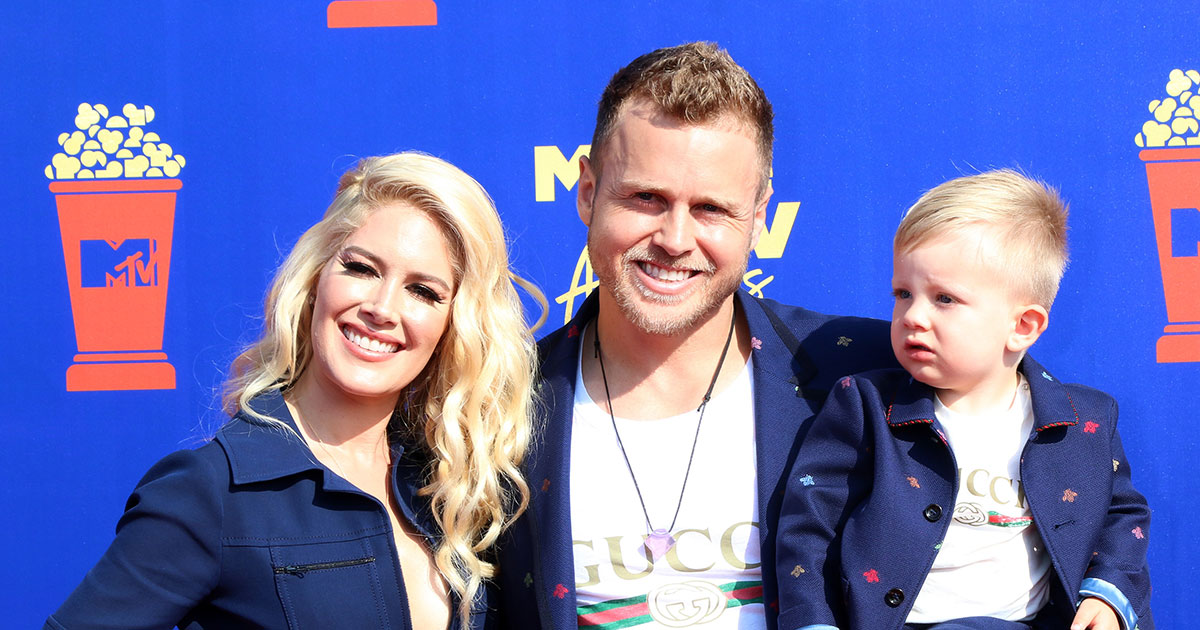

American politics occasionally produces a situation where the person standing at a podium, calling an incumbent mayor “an incredible liar” on live television, used to be best known for engineering feuds on a MTV reality show and spending $4,000 on a single bottle of wine. That is the situation Los Angeles finds itself in three weeks out from its June 2 primary, and it is considerably more interesting than anything the political establishment had planned.
Spencer Pratt, a Republican running in a nominally nonpartisan race, has turned what might have been a predictable Los Angeles mayoral election into a genuinely competitive one. If you grew up watching The Hills, you know exactly who Spencer Pratt is. You might even remember what you thought of him. The point is that nobody, including probably Spencer Pratt, expected this to be the next chapter. And yet, here we are: the man who earned the title of “Greatest Reality TV Villain” on a Yahoo fan-voted poll in 2015 is polling in second place for the job of running one of the largest cities in the United States.
The story of how he got there is genuinely worth knowing, because it is not just a celebrity-goes-rogue story. It is a story about grief, about a city that is visibly struggling, and about what happens when a person with nothing left to lose decides to run directly at the people he holds responsible.
From The Princes of Malibu to The Hills
Pratt first appeared on television in 2005 in the short-lived reality series The Princes of Malibu, where he acted in the role of “manager/publicist/agent/stylist” for series star Brody Jenner. That gig didn’t last, but it put him in the right orbit. In 2006, MTV developed The Hills as a spin-off of Laguna Beach: The Real Orange County, originally chronicling the lives of Lauren Conrad, Heidi Montag, Audrina Patridge, and Whitney Port. In 2007, Pratt began dating and moved in with Montag.
What followed was one of the stranger arcs in early reality television history. Pratt became famous for being difficult to like. That was the whole point – MTV needed someone audiences could root against, and his relationship with Montag destroyed her friendship with Lauren Conrad, creating the central drama that kept viewers watching for six seasons. He was extraordinarily good at being the villain. Together, he and Montag established themselves as fixtures of the tabloid era, known for staging paparazzi photos, fueling feuds, and embracing the attention that came with being television’s most talked-about pair.
The fame that followed was enormous and – as it turned out – enormously expensive. After The Hills ended in 2010, the duo faced financial ruin as their income dwindled. While speaking with In Touch in 2013, Pratt opened up about their lavish spending habits at the height of their fame, explaining how they blew through their $10 million fortune. The post-show years meant a parade of second-tier reality appearances – I’m a Celebrity…Get Me Out of Here!, Marriage Boot Camp, and the UK’s Celebrity Big Brother – each one a reminder that the original ride was over and the reunion tour was a harder sell.
The Reinvention Nobody Saw Coming
Here is the part of the story that is easy to overlook: before the fire, before the campaign, Pratt had already pulled off one genuinely impressive reinvention. In 2016 he began cultivating a widespread following on Snapchat, sharing content about his daily life, his obsession with hummingbirds and crystals, and eventually became one of the platform’s top personalities, winning Snapchatter of the Year at the 10th Annual Shorty Awards in 2018. He also parlayed his passion for crystals into a business, launching Pratt Daddy Crystals, which he runs with Montag.
Then came The Hills: New Beginnings, the 2019 MTV reboot that gave Speidi another chapter. The show followed the Pratts as they navigated running their crystal business and wanting to expand their family. It was cancelled after two seasons. By the time it ended, Pratt had two sons, a crystal business, a social media following, and a life in Pacific Palisades that looked, from the outside, like a person who had genuinely figured out how to rebuild something after losing everything the first time.
He was about to lose everything a second time.
January 7, 2025
Pratt, like countless others, was directly affected by the LA wildfires in January 2025. The Pacific Palisades home he shared with his wife, Heidi Montag, and their two children burned to the ground on January 7, one of more than 5,800 structures consumed by the blaze. The fire devastated the neighborhood where he grew up and where his parents had lived for over 40 years.
Pratt blamed Mayor Karen Bass – who had broken a pledge not to travel overseas as mayor and was in Ghana at the time the fire broke out – for his home’s destruction. He and other property owners sued the city of Los Angeles and the Department of Water and Power, and he traveled to Washington D.C. to meet with Attorney General Pam Bondi and other federal officials about launching an investigation into Governor Newsom and Bass.
On January 7, 2026, one year to the day after his home burned down, Pratt announced he would run for Mayor of Los Angeles, challenging incumbent Karen Bass. The timing was not accidental. The anger underneath it was not performative.
The Campaign That Nobody Expected to Matter
His campaign ads racked up tens of millions of views and sparked a national conversation, injecting real volatility into an otherwise conventional contest. Some of those ads were made with AI. One viral video that his campaign reposted used artificial intelligence to portray Pratt as Batman and California politicians including Bass, Newsom, and Kamala Harris as unruly aristocrats. Another, more visceral ad was filmed outside the homes of his opponents. The video contrasted their pristine neighborhoods with the remains of Pratt’s own home, which burned down and has yet to be rebuilt. In it, Pratt slammed Bass and Raman for “not living in the mess they created” – a message with obvious resonance in a city still grappling with fire recovery.
Pratt also promoted his campaign in an episode of the Joe Rogan Experience podcast, reaching audiences far outside the traditional Los Angeles political conversation. According to the latest Ethics Commission filings, he raised nearly $540,000 since January 1, positioning himself as a “legitimate top-tier candidate.” Donors to his campaign include Katharine McPhee, Rick Salomon, Manny Pacquiao, and Jeff Jenkins, and as of April 2026, he had raised over half a million dollars. Lakers owner Jeanie Buss has also publicly supported his campaign.
In 2026, Pratt also published a memoir, entitled The Guy You Loved to Hate: Confessions from a Reality TV Villain. The title alone does a lot of work for a candidate trying to signal self-awareness while running on pure grievance. Whether or not those two things can coexist comfortably is a question the city of Los Angeles is currently in the process of answering.
The Debate at the Skirball
The Skirball Cultural Center sits just minutes from the communities lost in the Palisades Fire. That’s where Karen Bass, Spencer Pratt, and Nithya Raman met on the evening of May 6, and the weight of that geography was in the room the entire time.
Mayor Karen Bass, City Councilmember Nithya Raman, and reality television personality Spencer Pratt met in a televised mayoral debate, giving voters a look at three candidates who each met the station’s polling threshold. The one-hour debate was hosted by NBC4 and Telemundo 52.
It did not stay polite for long. Pratt called Bass “an incredible liar” over her account of wildfire wind speeds, and commentators credited him with a stronger-than-expected showing. Coordinated or not, Pratt and Bass effectively led a two-on-one tag-team attack against Councilmember Nithya Raman. The debate effectively narrowed the race to two credible candidates – Pratt and Bass – as Raman came off as inexperienced and unprepared according to the Los Angeles Times. For his part, Pratt displayed a noteworthy mix of confidence and message discipline for a political newcomer.
The mockery did not go unnoticed. The Times noted that Pratt’s treatment of Bass and Raman could be seen as “possibly sexist.” Pratt himself declared from the stage, “I’m the adult in the room. This is what it’s come to.” An informal online poll conducted by NBC4-LA showed that 89 percent of respondents thought Pratt won the debate. Informal online polls have the methodological rigor of a show of hands at a family dinner, but the number is not nothing.
Where the Numbers Stand
According to an Emerson College Polling/Inside California Politics survey from mid-May 2026, 30 percent support incumbent Mayor Karen Bass, 22 percent support Pratt, and 19 percent support City Councilmember Nithya Raman. Support for Bass increased by 10 points since March, Pratt by 12 points, and Raman by 10 points, while the percentage of undecided voters dropped from 51 percent to 16 percent.
There is a clear demographic divide: 47 percent of voters over 60 break for Bass, while 25 percent support Pratt and just 6 percent support Raman. Voters under 40 break for Raman at 31 percent, followed by Bass at 20 percent and Pratt at 13 percent. A plurality of men – 30 percent – support Pratt, while a plurality of women – 36 percent – support Bass.
Polymarket put Bass’s odds of winning at 45 percent, Raman’s at 38 percent, and Pratt’s at 18 percent following the debate. Registered Democrats outnumber registered Republicans in the city of Los Angeles by about a four-to-one margin – a structural reality that Pratt’s campaign has to contend with regardless of debate performance or viral reach. The city has not elected a Republican mayor since Richard Riordan, who won the race in 1993 and was reelected in 1997.
What the Polls Don’t Fully Tell You
The numbers above are a snapshot of an electorate that is genuinely unsettled. Pratt is drawing on frustration with the city’s sluggish rebuilding effort following the Palisades fire, and channeling broader dissatisfaction with quality-of-life issues like homelessness, crime, and the cost of living, which continue to weigh heavily on Angeleno voters.
California Republican strategist Matt Shupe has argued that Pratt’s campaign represents a “real sort of lightning in a bottle opportunity” in a city long controlled by Democrats – though the analogy of lightning in a bottle also implies that bottles are not where lightning typically ends up. The structural math is hard. If no candidate receives more than 50 percent of the vote – an outcome that appears likely given the current three-way split – the top two vote-getters will advance to a head-to-head general election in November. That runoff scenario is where Pratt’s Republican registration becomes the most significant variable of all.
Although the race is officially nonpartisan, Pratt is a registered Republican who has downplayed his party registration. In the May 2026 debate, he characterized himself as a community advocate in the style of former President Barack Obama. Some commentators found his debate performance effective with voters. In that same debate, Pratt denied being part of Make America Great Again.
What This Really Is
Spencer Pratt did not walk into this race as a stunt. He walked in as a man who watched his house, his parents’ house, and his neighborhood burn to the ground while the sitting mayor was on another continent. That is a specific kind of fury, and it is one that does not require a political background to be legible to other people. The city of Los Angeles has enough residents who feel, for their own reasons, that something has gone badly wrong and that the people in charge have not adequately answered for it.
What Pratt has done well – and it is worth naming plainly – is stay in the lane of that anger without losing the camera. He is an elder millennial with everywhere-all-the-time social media instincts, bluntly spelling out the city’s challenges and laying blame at the feet of its entrenched Democratic establishment. His willingness to be raw and provocative, on the bet that authenticity is the coin of today’s political realm, has generated the growing buzz around his campaign. The question of whether that translates to governing competence is a fair one, and it is the question that his opponents are counting on voters to ask before they fill in their ballots.
In another era, Pratt’s candidacy might have felt like pure Hollywood absurdity. In 2026 Los Angeles, it feels oddly on brand. His rise speaks less to celebrity politics alone and more to a city electorate clearly hungry for disruption, or at minimum, frustrated enough to entertain outsiders. The June 2 primary will tell us whether that frustration has a name on a ballot, or whether it dissipates the way most Los Angeles summers do – in the heat, without resolution.
The Part That Stays With You
What is strange about this story, if you sit with it for a minute, is how recognizable the emotional core of it actually is. A person loses something enormous. The people who should have prevented it offered inadequate explanations. So the person decides to become ungovernable in the most literal sense possible. That is not a political story. That is a human story wearing a political campaign as a costume.
Whether Spencer Pratt would make a good mayor is genuinely unknowable at this point. He has no governing record, and viral videos are not policy platforms. His opponents are not wrong to raise that question, even if they raise it with a certain amount of self-serving urgency. Los Angeles is a city of four million people managing an active disaster recovery, a homelessness crisis that has resisted decades of attempts to resolve it, and a budget that is under real strain. None of that gets fixed by someone who knows how to make a compelling 90-second ad. But then, it hasn’t been fixed by people who know how to make a compelling 90-second speech, either, and that’s the opening Pratt is walking through. The June primary will tell us how wide that opening actually is.
AI Disclaimer: This article was created with the assistance of AI tools and reviewed by a human editor.