
Electricity bills have climbed in ways that feel disconnected from anything a household actually changed. The thermostat is set the same way it was three years ago. The appliances haven’t multiplied. But the bill keeps going up, and the explanation most people get from their utility company amounts to vague gestures at infrastructure and demand. What most families haven’t fully registered yet is that the thing eating grid capacity right now isn’t EVs or population growth or even the old refrigerator in the garage. It’s something much larger, and much further away, and the people running it just told an entire town in California that their electricity is no longer available.
The residents of Lake Tahoe are not a small or obscure community. Nearly 50,000 people live there year-round, in one of the most visited regions in the United States, and in May 2026 they found themselves staring at a deadline: find a new power source, or the lights go out. The company that has supplied the bulk of their electricity for over a decade, Nevada-based utility NV Energy, informed their local provider that it would stop delivering power to the region after May 2027. The reason, depending on who you ask, is either a long-planned administrative wind-down or a very obvious consequence of what Nevada’s grid is increasingly being used to power instead: massive AI data centers owned by some of the wealthiest companies in the world.
It would be easy to read this as a distant, exotic infrastructure drama, the kind of story that lives on the business section until someone turns the page. But the forces behind it are already running through every utility bill in the country, and the Lake Tahoe story is the first time those forces have been stark enough to make a town’s lights blink.
The Arrangement That Was Always “Temporary”
Since 2009, NV Energy has supplied Liberty Utilities with 75 percent of its power, in part due to the challenges of creating energy infrastructure that would connect Tahoe with the rest of California. The geographic reality is striking: Lake Tahoe sits right on the California-Nevada border, but there are no transmission lines crossing the Sierra to connect South Lake Tahoe to California’s grid, so the utility has depended on Nevada’s transmission system to deliver power.
According to NV Energy, it was always understood that Liberty Utilities would eventually secure its own transmission access and energy supply so it could serve customers independently. In late 2025, NV Energy agreed to extend their supply until 2027 to prevent disruptions in service. That makes it sound orderly. The less orderly version is that the arrangement was extended in 2015, again in 2020, and once more in late 2025, each time because Liberty had not yet secured an independent supply, a timeline corroborated by regulatory documents. Two decades of “temporary” is a particular kind of institutional failure, and the residents living inside it are not the ones who failed to plan.
Liberty Utilities was told to seek a new energy supplier by the time NV Energy’s Greenlink transmission project came online in May 2027. The problem is that finding a new supplier is not simply a matter of calling around. Building a new transmission line over the mountains would cost hundreds of millions of dollars and bring significant land impacts, according to Liberty president Eric Schwarzrock. Liberty has asked California regulators for emergency help, but Liberty Utilities is a California-regulated company whose grid sits inside NV Energy’s balancing authority, meaning California regulators cannot order Nevada to keep the lights on.
“It’s like we don’t exist,” Danielle Hughes, a Lake Tahoe resident and supervisor with the California Energy Commission’s Efficiency Division, told Fortune. That sentence covers a lot of ground. It covers the regulatory patchwork that leaves a community of 50,000 people with no single entity accountable for what happens to them. It covers the experience of watching an infrastructure decision get made without you, about you, using your access to essential resources as a variable in someone else’s equation.
Nevada, Data Centers, and a Grid That Was Never Built for This
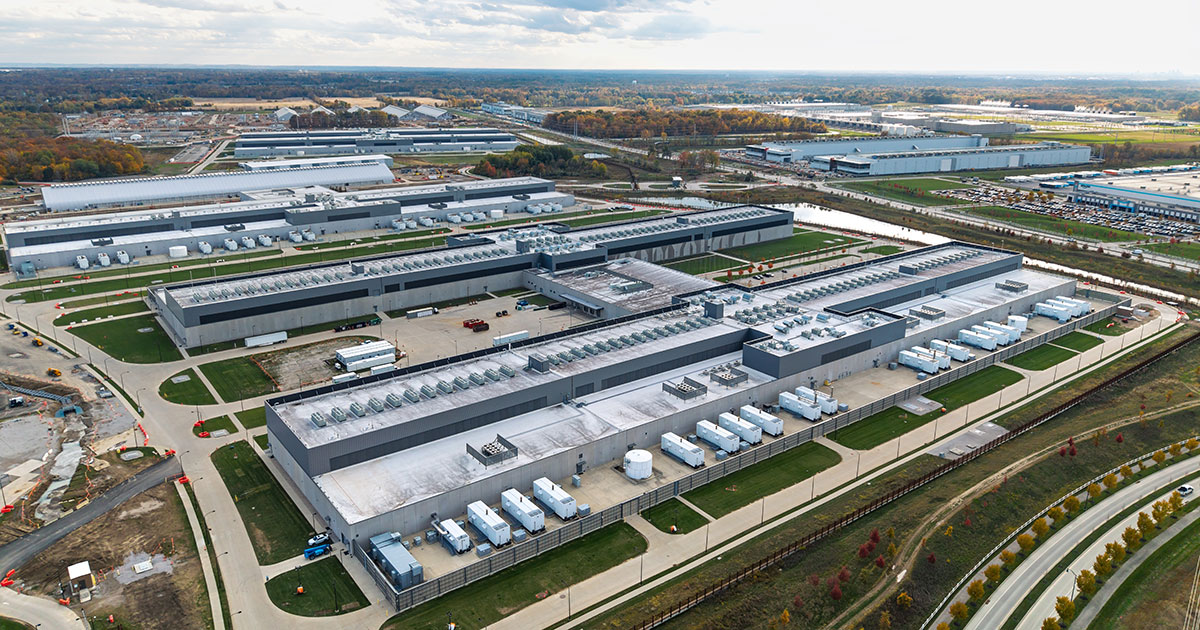
To understand why NV Energy is redirecting its capacity, you have to understand what has happened to Nevada’s grid in a very short period of time. Fueled by the expansion of artificial intelligence and cloud computing, data centers have rapidly proliferated across Nevada, and the state is now recognized as one of the fastest-growing data center markets in the United States. The Tahoe-Reno Industrial Center, east of Reno, has become a home base for major tech expansion, with Google, Apple, and Microsoft all building operations there.
According to the Desert Research Institute, in 2024, Nevada had about 40 data centers comprising 22 percent of the state’s electricity generation capacity, and that figure could reach 35 percent of forecasted generation by 2030. That is more than a third of everything Nevada produces going to server farms. In NV Energy’s own 2024 filing, about 75 percent of major-project load growth is attributed to data centers.
The scale is hard to fully absorb. The Desert Research Institute estimated that 12 new data center projects alone would need about 5,900 megawatts of power, roughly 2.8 times Hoover Dam’s output. Nevada voters approved a constitutional amendment requiring in-state utilities to get half of their power from renewable sources by 2030, and NV Energy now says it is on track to miss those clean energy standards for the first time. The culprit is a staggering amount of power requests from prospective data centers as AI computing explodes, combined with not enough renewable energy to power them.
This is not a small footnote. It means that the tech industry’s appetite is not only squeezing residential customers off the grid in practical terms. It is also pulling the energy system back toward fossil fuels at precisely the moment it was supposed to be moving away from them.
This Is Not Just a Nevada Problem
What happened to Lake Tahoe is an extreme version of something happening in slower motion almost everywhere. A 2024 report from Lawrence Berkeley National Laboratory found that data center load growth has tripled over the past decade and is projected to double or triple again by 2028. The report found that data centers consumed about 4.4 percent of total U.S. electricity in 2023 and are expected to consume approximately 6.7 to 12 percent of total U.S. electricity by 2028.
Virginia is the clearest window into where this is heading. Consumer Reports found that Virginia is already home to nearly 600 data center facilities with more than 100 more proposed or under construction, and a Bloomberg News analysis found data centers accounted for almost 40 percent of the state’s total electricity consumption in 2024. Residents there are already feeling it in their bills. One Virginia homeowner told Consumer Reports he received a $281 electricity bill in January 2026, a dramatic spike from the roughly $100 he’d paid the previous month, as rates climbed to cover infrastructure built to serve data center growth.
In the PJM electricity market stretching from Illinois to North Carolina, data centers accounted for an estimated $9.3 billion price increase in the 2025-26 capacity market, and as a result the average residential bill is expected to rise by $18 a month in western Maryland and $16 a month in Ohio. Research from Carnegie Mellon University estimates that data centers and cryptocurrency mining could lead to an 8 percent increase in the average U.S. electricity bill by 2030, potentially exceeding 25 percent in the highest-demand markets of central and northern Virginia.
Those are not abstract projections. Families are already carrying more of this cost than they realize. Average monthly electricity bills have risen significantly over the past several years, and data center infrastructure costs are a growing piece of the explanation – costs that utilities fold into the rates everyone pays, regardless of how carefully any individual household manages its own usage.
What Happens When the Leverage Is Gone
The most clarifying thing about the Lake Tahoe situation is not the timeline or the regulatory mess. It is a single observation from a local energy expert, quoted in Fortune: 49,000 customers competing in the Western electricity market against major utilities and data center operators have zero leverage.
Zero leverage. That phrase does a lot of work. It explains why the extensions kept getting granted to Liberty and not converted into a real solution. It explains why an entire region is now scrambling to find alternative power on a deadline not of its own making. And it explains, in a less dramatic but very real way, why individual families across the country have watched their electricity bills climb without any meaningful recourse.
Communities across the country have organized against data center construction, citing excessive power demands, water usage, and effects on property values. Local opposition blocked or delayed at least 16 data centers last year, worth a combined total of $64 billion. Maine lawmakers recently approved a proposal for a statewide moratorium on new data center construction, which could open the door for other states to follow.
The pushback is real. Whether it is fast enough to matter is a different question. Grid infrastructure and permitting timelines move in years, sometimes decades. Data center construction moves in months. For families tracking home energy costs and wondering why the numbers keep creeping up despite no obvious change in household habits, the Lake Tahoe story puts a face on an otherwise invisible dynamic. The grid you pay into every month is not a neutral public resource that serves whoever needs it most. It is an infrastructure market, and right now, the buyers with the most money are winning.
Read More: What Uses the Most Electricity in Your Home?
What This Means for You
The Lake Tahoe story will likely resolve, in the way that infrastructure crises eventually resolve: expensively, imperfectly, and with a timeline that serves institutional interests more than residential ones. Liberty Utilities will almost certainly find some form of replacement power before May 2027. NV Energy will point to the years of notice it gave. The California Public Utilities Commission will produce reports. Residents will pay whatever rate emerges on the other side of that process, and the sandwich shop owner who told reporters his monthly electricity bill already exceeds $1,500 will raise his prices again and wonder when it ends.
What does not resolve is the underlying math. Meeting the rising energy demands of data center expansion may necessitate trade-offs with other priorities, including electrification, manufacturing, and affordability. The blunter version is that something has to give when a grid is not large enough to serve everyone who needs it, and historically, the thing that gives is the people who have the least power to stop it from happening. Residential customers. Families. The 49,000 people of Lake Tahoe, and the version of the same trade-off playing out in electricity markets across the country every billing cycle.
You cannot individually outbid Google for grid capacity. But you can pay attention to where your utility rates are going, watch what your state legislature is or isn’t doing about data center oversight, and know that when your bill arrives looking different than it did two years ago, there is a reason, and it has nothing to do with how long you left the lights on.
AI Disclaimer: This article was created with the assistance of AI tools and reviewed by a human editor.