

When marriages end, the departure is rarely what it looks like from the outside. The exit is slower, quieter, more incremental than the word “divorce” implies. There’s a gradual withdrawal from conversations that once came easily, a shift in where he spends his Saturday afternoons, a politeness at dinner that is worse, somehow, than an argument would be. By the time the word “divorce” enters the room, most of the leaving has already happened. For the women on the other side of that equation, the whole thing can feel like a gut punch that came from nowhere. Except it didn’t come from nowhere. It came from somewhere. Understanding where is the hard part.
When men walk away from marriage, the reasons are rarely singular, and they are almost never the ones that get talked about at face value. The story a man tells about why he left – the one he gives to friends, the one he barely admits to himself – often sits a layer or two above what’s actually driving him. Financial pressure gets blamed when the real wound is one of identity. “We grew apart” stands in for years of feeling unseen. This is not an apologia for anyone’s choices, and it is certainly not a suggestion that the women left behind did something wrong. It’s an acknowledgment that marriages are systems, and systems fail in patterns. Those patterns are worth knowing.
None of what follows is meant to assign fault. Marriages are complicated structures held together by more than love, and when they come apart, it is rarely because one person was simply bad at being married. What research and lived experience consistently tell us is that men walk away from marriage for reasons that are far more emotionally textured – and far earlier in their development – than most people realize.
1. The Emotional Connection Dried Up Long Before the Conversation Did
Before a spouse decides to walk away, there is usually a prolonged period of dissatisfaction, frustration, and emotional disconnection. The person could feel unheard, unloved, or unappreciated, and this leads to a slow build-up of resentment and despair. For many men, that build-up happens in silence. They don’t bring it up. They assume things will shift. They wait.
Men can start feeling like they are living beside roommates instead of partners when emotional warmth and affection vanish from their marriages. They can absorb this emotional neglect for a while before eventually checking out – physically and emotionally – from a marriage that no longer holds any depth for them. The insidious part of this pattern is that by the time the man is articulating the problem out loud, or filing paperwork, his wife often had no idea the reservoir had run dry. He thought he was managing. She thought things were fine.
Research on emotional communication in marriage has found that when one partner struggles to identify and articulate their emotions – a trait researchers call alexithymia – the other partner experiences loneliness and a lack of communication that erodes overall marital quality. Men are more likely to exhibit this pattern, which means their emotional withdrawal often goes unnamed until it’s already permanent.
2. Feeling Unappreciated Erodes More Than Just Mood
Appreciation is not a luxury in marriage. It functions more like oxygen – unremarkable when present, catastrophic when absent for too long. Many men don’t leave because their married lives turn immensely hard; they leave because they are no longer appreciated. When all of their efforts are ignored or not acknowledged in the least, they simply walk away once their patience runs out.
The version of this that plays out in real marriages is often about invisible labor – the kind men do, which often goes uncelebrated because it doesn’t fit the narrative of who does the most. A man who has been silently paying the mortgage, attending every school play, and fixing the gutters without a word of recognition will eventually stop associating home with warmth. He starts associating it with performance without an audience.
What makes this particularly difficult to address is that appreciation tends to erode symmetrically. When one partner stops expressing it, the other often follows. It becomes a standoff that neither person consciously chose, and by the time anyone notices, they’re both eating dinner in front of their own screens and calling it a normal Tuesday.
3. Men Walk Away from Marriage When They Feel Constantly Criticized

There is a meaningful difference between a partner who challenges you and one who chips away at you. Men can appreciate constructive criticism when it comes to their marriage, but when constant criticism and nitpicking becomes the norm – when partners begin perpetually picking at their faults and making them feel inadequate – it drives men away.
The frequency matters more than the individual incidents. One pointed comment about how he loaded the dishwasher is manageable. Three hundred comments across three years, covering everything from his career trajectory to the way he talks to her mother, accumulate into something categorically different. Men can’t stay in a marriage where they feel like they will be judged or criticized for expressing their fears, ambitions, and vulnerabilities. They can only absorb so much of being ridiculed and dismissed before they lose all trust in their partner.
This is the pattern that often precedes what Hello Divorce describes as “walkaway husband syndrome” – not a dramatic blowout, but an accumulation of small disqualifications that leaves a man convinced he cannot be himself inside the marriage.
4. Closeness Breaks Down
Closeness in marriage is not simply about desire – it’s one of the primary ways many men register emotional connection. When it disappears, they don’t just miss the 1 on 1 time; they miss the feeling of being wanted by the person they committed their life to. Intimacy encompasses emotional and physical closeness between partners, and while a decline in personal moments can indicate relationship trouble, it goes beyond just the act. Reduced quality of connection across the board signals underlying issues within the relationship.
The breakdown rarely happens overnight. It usually tracks alongside the emotional disconnection, the criticism, the busyness, the children, the exhaustion. Nobody scheduled the withdrawal. It just accumulated. And for men who struggle to name what’s missing, the absence of physical closeness becomes the most legible signal that something has gone seriously wrong.
What complicates this further is that men often express emotional intimacy through physical closeness – which means the same disconnection their partner feels emotionally, they feel physically. Both partners can be starving from the same famine and neither one knows the other is hungry.
5. Financial Stress Fractures the Foundation
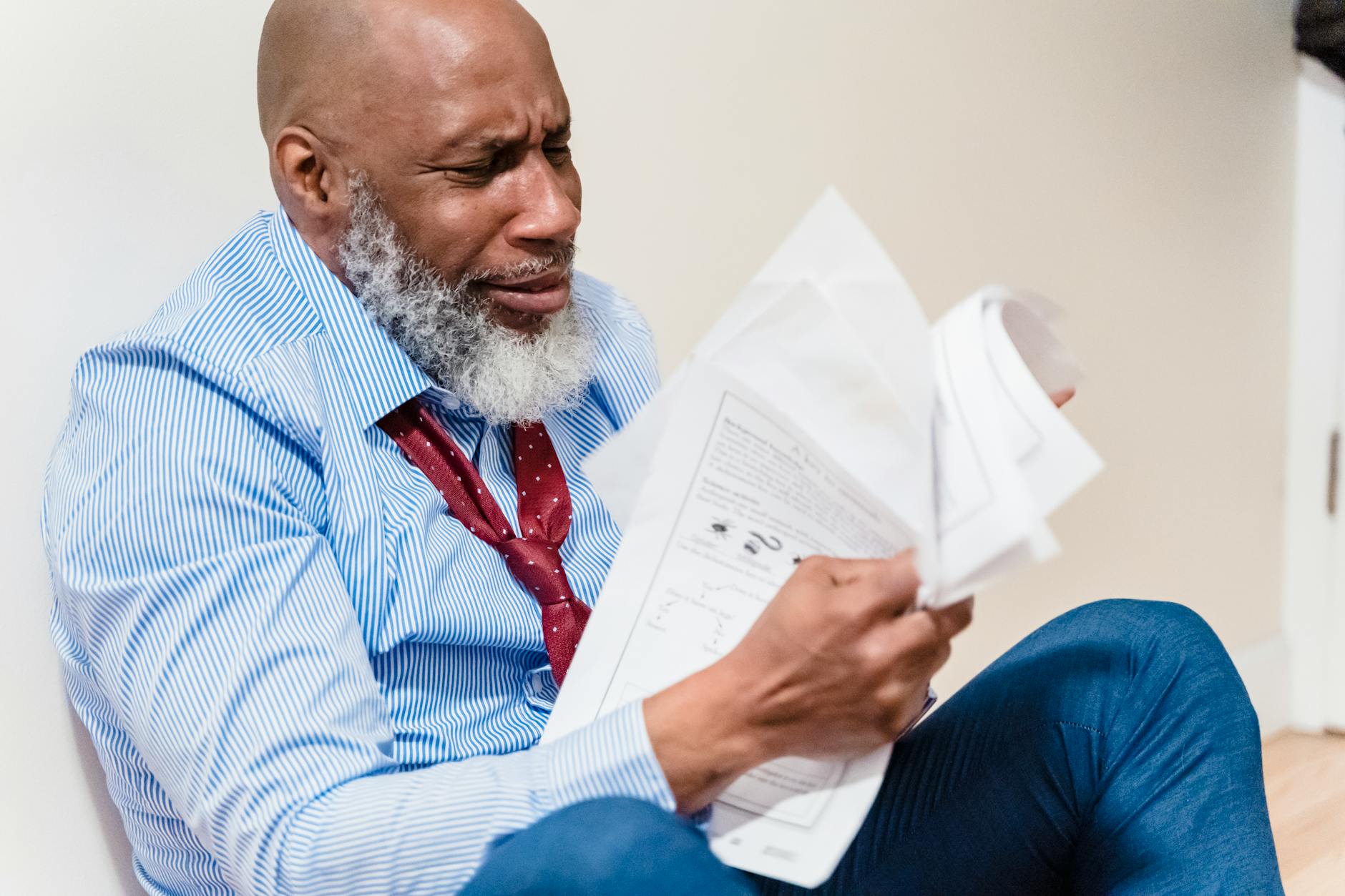
Money is one of the most reliable predictors of marital collapse, and it operates on multiple levels simultaneously. According to a 2025 analysis of divorce statistics, infidelity was cited as the most common cause of divorce at 22 percent, with financial stress close behind at 19 percent, and communication breakdown at 18 percent. Those numbers track closely with what happens inside long marriages – not because couples stop caring, but because sustained financial pressure changes the texture of every interaction.
When a man ties his sense of worth to his ability to provide – and that ability is threatened by debt, job loss, or inflation – the shame can become almost impossible to sit with inside a marriage. He’s supposed to be building something, and instead he’s drowning. The instinct, for many men, is to go quiet, go distant, or go away. A new factor emerging in recent years is what researchers are calling “digital drift” – the erosion of intimacy caused by constant device use and online socialization, which leads to further emotional disconnection on top of existing financial strain.
6. Loss of Identity and Personal Purpose
For many men, marriage and fatherhood arrive at precisely the moment their individual identity starts to compress. The person they were before – the one with the band, the travel plans, the ambition that hadn’t yet calcified into a job title – gets replaced by a role. And roles, unlike people, are replaceable. According to Marriage Quest, researchers describe midlife as the developmental stage where men face mortality, aging, and unmet dreams simultaneously while confronting the weight of responsibility. By the time men reach their 40s and 50s, many are juggling careers, parenting, and marriage – and the roles they’ve carried for years begin to feel heavy, or even hollow.
This is not a new problem, but it accelerates at predictable points in a man’s life. The children grow up and leave. The career plateaus. The hobbies were sacrificed somewhere around 2012. And he looks across the dinner table and realizes he can’t remember who he was before he became a husband, a father, a provider. That realization doesn’t always end in departure, but it opens a door that wasn’t there before.
Expectations can be silent killers of a marriage, especially when they’re unmet. Men can carry a litany of unspoken hopes and dreams – a vision of what marriage was supposed to look and feel like – and when the marriage never quite becomes that thing, a sense of disillusionment takes root. That gap between expectation and what the marriage actually became pushes them to seek what they couldn’t find at home.
7. Infidelity – Either as a Cause or a Symptom
Infidelity is the reason most people assume sits at the top of the list, and it is genuinely common – but the more honest conversation about it has to acknowledge that for many men, an affair is a symptom of a broken marriage rather than the cause of one. Affairs happen sometimes not because a man wants to leave his wife, but because he’s desperate to feel alive again. Divorce papers can get filed in the haze of “maybe I’ll be happier somewhere else.”
That is not an excuse. It is a description of a pattern – one that usually involves years of unaddressed emotional disconnection before anyone steps outside the marriage. The man who leaves for someone else was almost always already gone, in some meaningful sense, before the other person arrived. The affair provides the visible rupture, but the marriage had often been failing quietly long before.
For other men, discovering a partner’s infidelity is what ends it entirely. Trust, once broken in that particular way, is extraordinarily difficult to reconstruct, and some men decide that the attempt isn’t worth the cost.
8. Midlife Reassessment Changes the Calculus

The facial expressions that predict divorce are often catalogued by researchers – contempt, stonewalling, disengagement – but the internal reckoning that sets them in motion frequently traces back to a specific season of life. The most common age for marriages to break up is during the mid-40s through early 60s. This isn’t a coincidence – it maps directly onto the developmental reckoning that happens when men stop being able to defer the big questions. Am I where I wanted to be? Did I choose the right life? How much of this is left?
Drastic changes in career or financial risk-taking become common, along with the question of whether a man married the right person or whether he wants to stay married at all. These questions don’t emerge from nowhere – they’ve been accumulating under the surface of a busy marriage for years. Midlife just removes the distractions that kept them submerged.
The marriages most vulnerable at this stage are the ones that were built entirely around external logistics – raising children, building careers, managing a household – without developing the kind of interior connection that can survive once those structures are removed. When the kids leave and the scaffolding comes down, some marriages find nothing was holding them up from the inside.
9. Feeling Controlled or Undermined
When a man starts to feel like his only value is derived from the paycheck he brings in instead of who he is as a person, it erodes his emotional connection to the marriage. Men want to be appreciated for who they are, not merely as a financial resource to be accessed and then cast aside.
Beyond finances, the experience of being consistently overruled, managed, or treated as incapable – whether in parenting decisions, social plans, or everyday choices – accumulates into something that looks a lot like helplessness. A man who feels he has no real authority or voice inside his own marriage will eventually stop trying to use one. And men who stop talking, stop engaging, and stop caring are men who are already preparing to leave, even if neither party has named it.
The signs that predict divorce are rarely dramatic – they’re more often these quiet patterns of disengagement, the contempt that builds over years of feeling irrelevant inside a partnership.
10. Lack of Friendship and Shared Life
Long marriages can quietly lose the friendship they were built on. The companionship that made the early years feel effortless – the inside jokes, the shared curiosity, the comfort of simply being in the same room – can erode under the pressure of raising children, managing careers, and navigating the accumulating grievances that no couple fully avoids. When men walk away from marriage, they often describe missing their wife more than they expected, which is itself a grief: they left someone they loved because the marriage stopped resembling the life they thought they’d share.
What research into walkaway husband syndrome consistently finds is that the feelings of despair, disconnection, and emotional exhaustion often associated with walking away can absolutely be felt by husbands – men can become overwhelmed and reach a point where they feel divorce is their only option, experiencing the same frustration, sadness, and loneliness that drives anyone to leave. The loss of friendship is at the center of that exhaustion. Marriage without friendship is just cohabitation with paperwork.
11. Mental Health and Substance Struggles Go Unaddressed

Mental health is a structural issue inside many marriages that end. Depression, anxiety, and substance use don’t just affect the person experiencing them – they reshape every dynamic inside the relationship. Substance abuse puts enormous strain on even strong marriages, causing trust issues, financial crises, constant conflict, intimacy problems, and chronic stress that, left unresolved, can lead to divorce.
Men are also significantly less likely to seek help for mental health struggles before those struggles become crises. The cultural pressure to manage difficulty privately – to stay functional, stay stoic, keep providing – means that depression or anxiety inside a marriage often presents as irritability, distance, or emotional unavailability long before it’s ever identified as an illness. A wife watching her husband grow cold and strange may not know she’s watching someone drown. And the man drowning may not know it either.
The marriages that survive this pattern are often the ones where a partner named the change out loud and made space for the conversation – not because it was easy, but because it was more honest than pretending everything was fine.
12. The Belief That the Marriage Can’t Be Fixed
Research from Psychology Today points to a paradox: men may stay in unfulfilling marriages due to fear of instability, yet they also depend on marriage emotionally. Even when divorce offers relief, the desire to rebuild marital bonds persists – suggesting that marriage remains a primary anchor for emotional security for many men. Which means that when a man does finally leave, he has almost always concluded – rightly or wrongly – that staying will not produce a different result.
The belief that a marriage is unfixable often develops from a history of raised problems that went nowhere. He said something was wrong. Nothing changed. He raised it again. It became an argument. He stopped raising it. The silence looked, from the outside, like acceptance. It wasn’t. It was the conclusion.
A 2018 study in Sociological Inquiry revealed that men are more likely to seek remarriage after divorce, reflecting a persistent reliance on marriage for care and companionship – while women are more reluctant to re-enter, fearing additional caregiving burdens. Men don’t leave marriage because they hate the institution. They leave because the specific marriage stopped delivering what the institution promised.
What’s Usually Left Unsaid
The list above covers the documented, recognizable patterns – the ones that appear in research, in therapy offices, in the Reddit posts from men trying to explain something they still don’t fully understand themselves. But underneath all twelve of them runs a single current: most men who walk away from marriage did not stop loving their wives. They stopped believing the marriage could be a place where they felt like themselves.
That is a painful thing to hold, from either side. The woman left behind often carries the weight of wondering what she missed, what she should have done differently, whether any of it was inevitable. The man who left often discovers that the freedom he thought he needed comes with its own grief – leaving doesn’t resolve the loss. It just changes its shape. The loneliness of an empty apartment is a different kind of loneliness than the loneliness of a marriage that stopped working, but it is still loneliness.
None of this is meant to suggest that marriages which end should have been saved, or that the people in them simply tried hard enough. Some of them should have ended sooner. Some were genuinely harmful. Some were simply two people who built a life together and grew into different people along the way. What matters is that the reasons men walk away from marriage are almost always more human, more layered, and more quietly heartbreaking than the stories we tell about them. And sometimes, knowing the shape of a thing – even a painful thing – is the only way to stop being blindsided by it.
Disclaimer: This information is not intended to be a substitute for professional medical advice, diagnosis, or treatment and is for information only. Always seek the advice of your physician or another qualified health provider with any questions about your medical condition and/or current medication. Do not disregard professional medical advice or delay seeking advice or treatment because of something you have read here.
AI Disclaimer: This article was created with the assistance of AI tools and reviewed by a human editor.