

Most friendships don’t end with a confrontation. There’s rarely a tearful phone call, a formal falling-out, or a moment anyone can point to and say: that’s when it happened. What actually ends most friendships is far more ordinary – a text that stops being answered, plans that keep almost getting made, a birthday message that arrives three days late and then, eventually, not at all. The person who was once one of your closest people becomes someone you recognize when their name comes up in conversation, and not much more than that. Not with fire. With a fade.
The uncomfortable part of that fade is that it rarely happens without a reason. It happens because of patterns. Habits that accumulate so gradually that the person doing them has no idea they’re even doing them – habits that quietly signal to the people around them that the friendship isn’t being tended to, isn’t reciprocated, isn’t safe. The signals get read even when nobody says a word about them. And people respond to signals whether they mean to or not.
The lose-friends habits on this list are part of a broader national story. The Survey Center on American Life has found that Americans report having fewer close friendships than they once did, talking to their friends less often, and relying less on their friends for personal support. That isn’t just a cultural shift. It’s also the cumulative result of millions of small individual habits that push people apart, one unreturned call and one cancelled plan at a time. These are some of the habits most likely to be behind it – the ones people tend not to see in themselves until the circle has already gotten very small.
1. Never Being the One Who Reaches Out

There’s a specific kind of person who, if asked, would describe themselves as someone who has great friends – and who has not initiated a single plan in the past six months. They wait to be called. They wait to be invited. They respond warmly when someone reaches out, so they tell themselves the friendship is mutual, but what they’re actually doing is letting the whole weight of the relationship fall on someone else.
Friendship is not a service that other people provide. It requires bidirectional effort, and when that effort is consistently absent from one side, the person carrying the whole thing eventually gets tired. They don’t announce that they’re tired. They just stop initiating. And then, from the perspective of the person who never reached out, it looks like all their friends mysteriously drifted away at once.
The lose-friends habits almost always include some version of this one. It’s not malicious. It usually comes from a mix of avoidance, low self-worth, and the comfortable assumption that someone else will keep things going. That assumption has an expiration date, and it arrives faster than most people expect.
2. Canceling Plans Repeatedly Without Following Up

Canceling once is life. Canceling twice in a row with a vague “let’s reschedule!” that never results in a reschedule is something else. By the third time, most people have quietly downgraded the friendship in their mental filing system without saying a single word about it. The slot where you used to be filed under “someone I make actual plans with” now says “someone I might run into eventually.”
What makes this habit particularly erosive is that it sends a secondary message even when the cancellation itself is genuine. Canceling without following up to lock in a new date communicates that spending time with this person was not actually a priority. And while that might not be true, what’s communicated matters more than what’s intended. People read effort as evidence of care – and the absence of effort as evidence of something else.
The fix isn’t complicated in theory. Propose a new date in the same message where you cancel. Make it specific – not “sometime next week” but an actual day and time. That’s the difference between a canceled plan and a postponed one. Most people understand postponed.
3. Treating Every Conversation Like a Monologue

If someone were to transcribe your last three phone calls with a friend and count who talked for how long, what would the ratio look like? Some people would be surprised. There’s a particular conversational habit where someone arrives at every interaction loaded with things to say – updates, problems, observations, opinions – and they deliver them in full, and then they hang up. The question “how are you?” gets asked somewhere in there, but the answer, when it comes, tends to get cut short because there’s still more to share.
People who lose friends often don’t realize how thoroughly they’ve been occupying the conversational space. They experience the friendship as lively and engaged. The other person experiences it as one long presentation they’re expected to sit through and applaud. That dynamic works exactly once. After that, the other person starts finding reasons to keep calls short.
4. Only Reaching Out When Something Is Wrong
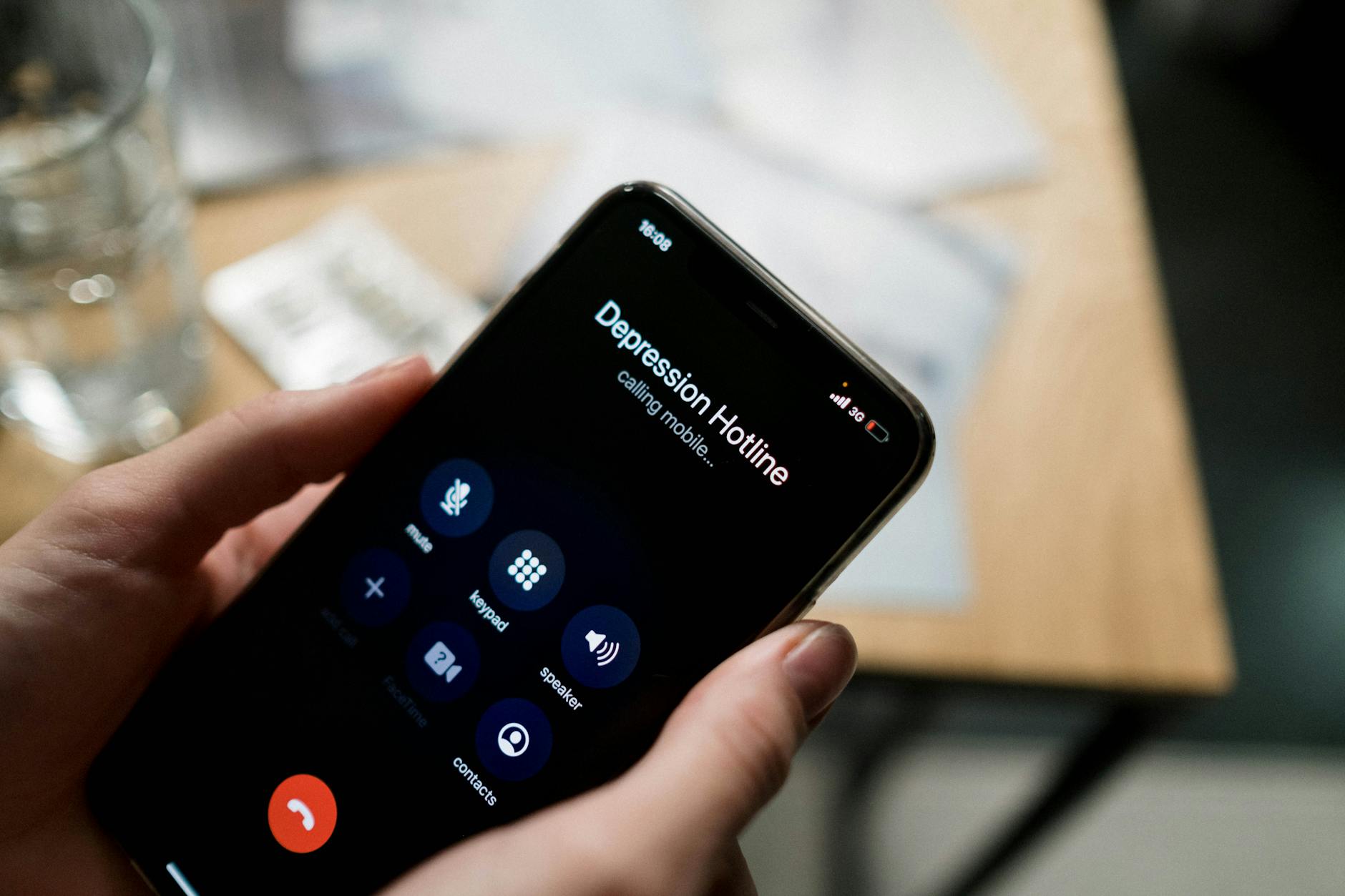
This one is recognizable to almost everyone who has lived it from the receiving end. The friend who goes radio-silent for weeks or months and then appears in your messages the moment they have a problem. You find out they got promoted and moved cities through Instagram six months after it happened, but when their relationship fell apart, you got a detailed voicemail.
What’s happening here isn’t malicious, usually. The person genuinely feels the friendship in the hard moments – those are the times the connection feels real and necessary. What they don’t think about is the sustained, ordinary contact that keeps a friendship alive in the absence of crisis. Friendships are not emergency services. They don’t stay warm just because they get called on when the situation is dire enough.
The people on the receiving end of this pattern don’t resent being needed – they resent being contacted only when they’re needed. The distinction is significant. By the time the fourth or fifth crisis call arrives, what used to feel like trust starts to feel like inconvenience.
5. Disappearing When Life Gets Hard for Someone Else

The opposite of the above, and arguably worse: the person who is reliably present when things are going well and reliably absent when a friend is in genuine trouble. They’re at the celebratory dinner, they’re fun at the birthday, they text back within minutes when the news is good. And when the friend gets the diagnosis, or the marriage falls apart, or the job disappears – suddenly they’re hard to reach, or they give responses so thin they might as well say nothing.
Research published in the journal Developmental Psychology found that the absence of social support is more of a threat to friendship continuity than the presence of negativity. In other words, it’s not even the fights that tend to kill friendships – it’s the consistent failure to be present when something genuinely matters. Hard moments are the defining moments of a friendship. How you respond to them is what people actually remember.
People who do this aren’t always cruel. They’re often conflict-avoidant, or frightened of grief and illness, or simply don’t know what to say and choose silence over imperfection. But to the friend going through something terrible, the silence reads as absence. And absence, in that context, is something most people don’t forget.
6. Letting a Romantic Relationship Swallow Everything Else

This happens in two phases. Phase one: the new relationship arrives and the friend disappears almost immediately, surfacing occasionally to describe how wonderful everything is. Phase two, which may come months or years later: something goes wrong in the relationship and the friend reappears expecting the same warmth and closeness that was there before. The archive of unreturned calls apparently doesn’t count.
Research on young adults and romantic partnerships has found that romantic relationships become the primary source of social support for many people, gradually reducing their investment in friendships as the relationship deepens. That’s a natural shift to some degree – lives change, priorities reorganize. What makes it a friendship-ending habit is the failure to acknowledge the imbalance or to make any deliberate, even occasional effort to maintain the connections that existed before the relationship arrived.
Friends understand that a new relationship changes things. What they don’t accept indefinitely is being shelved and then retrieved when circumstances require it. The pattern of friendship and intelligence research shows how easily even the most self-aware people deprioritize friendships when something else takes up cognitive and emotional space. Romantic partnerships are the most common version of that, but they’re far from the only one.
7. Being Chronically Negative Without Relief

Every friendship can hold difficulty. Real friends don’t require you to perform happiness you don’t feel. But there’s a meaningful difference between a friend who’s going through something hard and a friend who has, across the span of years, never had a conversation that wasn’t about how difficult and unfair everything is. The job, the weather, the traffic, the other people, the government, the movie they just watched – all of it material for extended complaint, none of it ever getting better.
The most significant impact of chronic negativity tends to fall on personal relationships – friendships and partnerships buckle under the weight of constant complaint, and even the most patient people eventually start to pull back. It’s not that friends don’t want to hear about your hard days. It’s that when every day is hard in the same way, and nothing is ever good, and solutions are always dismissed, the emotional cost of being someone’s primary audience starts to outweigh what the friendship offers in return.
Pause carefully on that, because the habit often comes from a real and unaddressed pain. The chronic negativity is usually not performance – it’s the sound of someone in genuine distress who has found no other outlet. That context matters. It doesn’t change what happens to the friendship as the pattern solidifies, but it does explain it.
8. Making Everything About Competition

There’s a particular brand of friendship where every piece of good news you share gets immediately countered with their equivalent, which is always slightly better. You got a promotion; they got two. Your kid hit a milestone; theirs hit it earlier. You had a rough week; they had a rougher one, and by the way, they handled it better. The conversation never quite lets you land anywhere.
People who do this are often completely unaware of it. The competitive habit is almost always rooted in insecurity, not malice – an anxious need to remain relevant and valued that expresses itself as a reflexive need to one-up every statement. But what the other person experiences is being chronically not-quite-enough, not-quite-interesting, not-quite-as-impressive as whatever is about to be introduced as a comparison. That feeling accumulates. Eventually, people stop bringing their good news, and then they stop bringing anything at all.
9. Being Unreliable as a Default

Some people are chronically late, chronically forgetful, chronically failing to follow through on things they said they’d do – and they’ve explained it to themselves as a personality quirk rather than a pattern of behavior that has costs. The friend who always said they’d come to the thing and never quite made it. The one who borrowed the book and the sweater and that specific casserole dish and none of it ever came back. The one who commits enthusiastically to things and then is surprised when those things arrive.
Reliability is one of the foundational mechanics of trust. When someone can’t be counted on in small things repeatedly, people stop counting on them in larger things. And when they stop counting on you for larger things, they stop including you in them. The social world contracts around reliability – and expands around it – more than most people realize. A 2009 sociological study, among the most-cited on the topic, found that people lose roughly half their close network members every seven years through natural social turnover. When you add chronic unreliability on top of normal attrition, the pace of loss accelerates significantly.
10. Gossiping About Friends to Other Friends

The logic of this one is always the same: you’re not saying anything you wouldn’t say to their face, you just need to vent, it was a private conversation with someone who also knows them, it’s basically harmless. It is not harmless. Circles are smaller than they look. Things travel. And even when the specific content doesn’t make it back, the general sense of “this person talks about people when they’re not in the room” spreads through a social group with remarkable efficiency.
What’s particularly destructive about this habit is the double hit it delivers. The person being talked about is undermined in their absence. But the people being talked to are also quietly registering that this person says one thing to someone’s face and another thing when they’ve left the room. No one with any self-awareness walks away from a gossip session thinking “this person would never do this to me.” They all walk away thinking exactly the opposite.
11. Refusing to Apologize When You’ve Gotten It Wrong

This one destroys more friendships than any single dramatic event. Most friendships can survive a fight. What they can’t survive is a fight where one person is clearly wrong and has made it structurally impossible to acknowledge that, because doing so would require a level of self-awareness that, respectfully, they have not yet demonstrated. The apology that never comes. The subject that gets changed. The reframe where somehow, by the end, the other person has become the one who owes an apology.
Friendships require repair after rupture. That’s not a suggestion – it’s how they work. When repair is consistently unavailable because one person in the dynamic treats acknowledgment of wrongdoing as an attack on their identity, the friendship becomes a place where the other person absorbs conflict without resolution. At some point they decide, without announcing it, that they don’t have the energy for that anymore.
12. Using Friends as Emotional Dumping Grounds

This overlaps with chronic negativity but it has a specific quality that distinguishes it: the person isn’t just negative in general, they direct a concentrated volume of emotional labor toward specific people in their circle. They call when they’re in crisis – frequently, extensively, and without much awareness of the load they’re transferring. They process at length. They circle back to the same situation across multiple conversations. And they rarely ask how the person on the other end of the call is doing.
Emotional support is something healthy friendships provide naturally. What makes this a friendship-ending habit is the absence of reciprocity. When the exchange is consistently one person pouring out and the other person holding the bucket without ever getting to set it down, the bucket-holder eventually stops answering the phone. Not with hostility. Just with the recognition that the call is going to take two hours and leave them feeling wrung out, and they have a limited number of hours and a finite amount of energy.
13. Talking About People Behind Their Backs and Getting Caught

The full version of the gossip habit – not just the general tendency but the specific, identifiable instance where the thing that was said privately made it back. This is one of the hardest friendship fractures to repair because it involves not just the betrayal itself but the realization that the public version of the relationship and the private version were not the same. People can forgive a lot. What they rarely fully recover from is finding out that someone they trusted was presenting a version of them to other people that they never consented to.
The discovery doesn’t have to be dramatic. It can be as mundane as a mutual friend mentioning something that was clearly said in a private conversation, or a subtle shift in how someone interacts with you that tells you something got back. Once that realization arrives, the trust that anchored the friendship is gone. Some things can be rebuilt. Trust, once genuinely broken, takes years. And most adult friendships don’t have years of patience available to spend on the project.
14. Growing in a Different Direction and Pretending Not To

People change. Values shift. Life circumstances move. The person you were close to at twenty-five is not always the person you are at thirty-five, and the people who fit your life then don’t always fit it now. That’s not a failure – it’s just what happens. What becomes a lose-friends habit is the refusal to honestly acknowledge when a friendship has run its natural course, paired with a performance of closeness that has no real content behind it.
The friendship that exists only as a scheduled annual dinner. The one that survives entirely on the nostalgia of who you both used to be. The one where the warmth is real but the actual connection has quietly dissolved because your lives and your values have diverged so significantly that there’s nothing left to anchor to. Increasing investment in new chapters of life can also weaken earlier friendships, and there’s no moral failure in that – but there is a loss of authenticity when the surface-level friendship continues past its actual expiration point without either person willing to say so.
15. Keeping Score

The most corrosive of all the lose-friends habits, and the one least likely to be named aloud: the person who has a running internal ledger of every imbalance, every favor extended, every time they drove and the other person didn’t, every birthday remembered and every one forgotten. They don’t always mention the ledger. Sometimes it just informs the temperature of the relationship in ways the other person can sense but can’t quite identify – a certain withdrawing of warmth that feels inexplicable, a cooling that arrived without apparent cause.
Friendship is not, ultimately, a transaction. The people who keep it treated as one tend to find that their circle contracts reliably, because the people around them can feel the accounting even when they can’t see it. Genuine warmth and scorekeeping cannot exist in the same space for long. One of them always wins.
Read More: 30+ Questions You’ve Never Asked Your Friends, But Definitely Should
What Nobody Tells You About Watching the Circle Shrink

Here’s the thing about these habits: almost nobody who has them knows they have them. That’s not a defense of the behavior – it’s just an accurate description of how these things work. They develop gradually, they feel normal from the inside, and the feedback they generate is almost always indirect. People don’t tell you that your chronic negativity is exhausting them. They just stop calling. People don’t say that you’re keeping score. They just stop reaching out when they’ve done something they’re proud of. The signal is always the silence, which means by the time it’s legible, a fair amount has already been lost.
Sociologist Gerald Mollenhorst’s research found that how we meet people shapes our social networks – and that we lose about half of our close network members every seven years regardless of these habits, through natural changes in circumstance and life stage. That’s the baseline. The habits on this list are the accelerant. They don’t have to define anyone permanently – most of them are patterns that can be interrupted with enough awareness and enough willingness to be uncomfortable about what the awareness reveals. But they can’t be interrupted if they can’t be seen. The first step is always just that: seeing clearly, and being willing to reckon with what the clarity shows you.
AI Disclaimer: This article was created with the assistance of AI tools and reviewed by a human editor.