

Nobody tells you how bad you are at noticing. You go home and replay a whole conversation, turning over a look someone gave you, a pause that lasted a beat too long, the way they angled their body toward yours even when they were technically talking to someone else, and you still can’t say for certain. It’s almost funny – the thing you most want to understand about another person is the thing they’re least able to tell you directly.
That’s not a failure of observation on your part. Research from communication scientist Jeffrey Hall at the University of Kansas found that people correctly identify flirting in only about 28 percent of cases – men detected it roughly 36 percent of the time, and women only about 18 percent. So the signal is real. You’re just working with instruments that weren’t designed for precision. Most of the signs of attraction playing out around you are happening below conscious intention – in posture, in pupil size, in the half-second of muscle movement across someone’s face before their brain has caught up with what their body is already doing.
What follows isn’t a checklist to obsess over after one ambiguous coffee. It’s a collection of behaviors that researchers, body language experts, and psychologists have found consistently connected to genuine attraction – the kind that happens whether someone means to reveal it or not. A cluster of these, in context, starts to mean something. One on its own is just a Tuesday.
1. They Close the Distance Without Realizing It

If you want to know whether someone is attracted to you, watch how close they get. Sexologist and relationship expert Jess O’Reilly tells Best Life that most people tend to close the space between themselves and another person when they find them attractive. As she puts it, “You may find yourself leaning in toward someone to whom you’re attracted without even noticing it.”
This is proximity as instinct, not strategy. The person doesn’t decide to move closer; they just end up there. Relationship expert Rodney Simmons notes that “when somebody lets you close to their intimate zone, this is almost a guarantee that they are attracted to you” – and if they let you close to their face, or move into your personal space, that’s a clear green light.
Context matters here, as it does with every item on this list. Someone standing near you in a crowded elevator is not sending signals. But if you notice someone consistently closing the distance between you two and maintaining that closeness in open, uncrowded spaces, it’s a fairly solid indicator they’re interested. The giveaway is the consistency – not one close moment, but a pattern of choosing to be near you.
2. They Mirror Your Body Language

One way someone tries to build connection with a person they’re attracted to is through mirroring – unconsciously imitating their body language. Some research suggests that when people mimic the body language of others, they are more likely to be perceived as likable and persuasive. It’s not necessarily intentional, either. People often unconsciously mirror the body language of those they find attractive.
You cross your legs, and they cross theirs. You reach for your drink, and a moment later so do they. You tilt your head, and their head tilts. Research shows mirroring is often a subconscious sign of attraction and rapport that happens when people feel a genuine connection – and it can extend beyond movement to copying phrases, mirroring energy levels, and even dressing similarly.
The key word is “unconscious.” A person who is deliberately copying you is either doing a bit or behaving strangely. The real thing is fluid and slightly delayed – a natural echo of you that they haven’t noticed themselves producing.
3. They Flash Their Eyebrows at You

This one lasts about a fifth of a second, so you’ll miss it if you’re not paying attention. When people see someone they’re genuinely pleased to see – particularly someone they’re attracted to – the eyebrows make a rapid upward movement almost immediately upon eye contact. It’s involuntary, universally observed across cultures, and researchers who study nonverbal communication refer to it as the “eyebrow flash.”
In a landmark 1985 study published in Ethology and Sociobiology, researcher Monica M. Moore observed more than 200 women in various settings and catalogued 52 distinct nonverbal courtship behaviors. The eyebrow flash appeared consistently as one of the earliest recognition signals – the body saying “you, specifically” before the mouth says anything at all. It’s the kind of involuntary tell that people can’t fake on command and rarely notice in themselves.
Combined with a smile that reaches the eyes and a brief pause in whatever they were doing when they spotted you, the eyebrow flash is one of the clearest signs of attraction you’re ever going to get without anyone saying a word.
4. Their Eye Contact Lingers a Beat Too Long

Body language expert Gavin Stone describes prolonged eye contact as “a massive sign of animal attraction,” noting that regular eye contact during conversation is a high indicator of interest – especially if the blink rate slows, which he considers an even bigger signal than the duration of the gaze itself.
There’s a difference between polite conversational eye contact and the kind that holds a moment longer than necessary before looking away. The latter has a quality that’s hard to describe but instantly recognizable – a slight deliberateness to the return glance, a willingness to stay there longer than social convention strictly requires. Even when someone isn’t maintaining constant eye contact, if you catch them frequently glancing your way or looking at you from across the room, it suggests they’re drawn to you and want to keep you in their field of awareness.
This is distinct from staring, which reads as aggressive or uncomfortable. Attracted eye contact has warmth in it. It moves away and comes back. It tends to happen most in moments when the person thinks you’re not looking.
5. Their Pupils Dilate
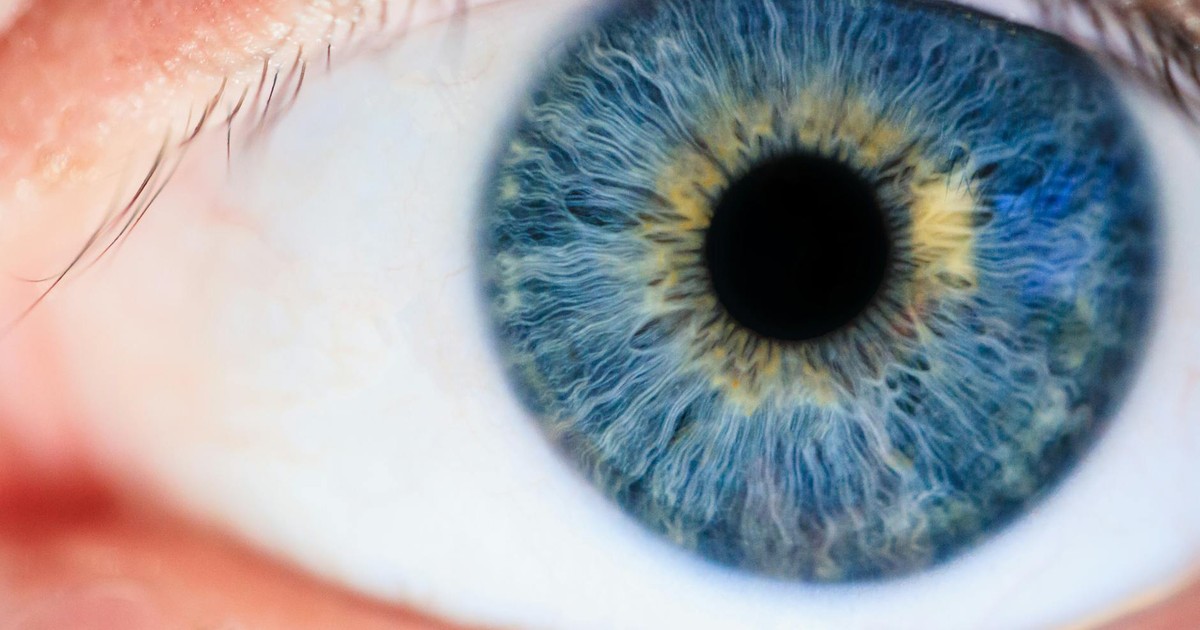
You’re unlikely to notice this in real time, but it’s happening. Researchers at Cornell University found that pupils widen most when people view someone they find sexually appealing – a response driven by the autonomic nervous system and entirely outside conscious control. The brain registers attraction, the nervous system responds, and the pupils widen. This is based on a long-established connection between pupil dilation and positive attitudes, including sexual interest and emotional arousal.
The practical application of this knowledge is less “stare at someone’s pupils at dinner” and more “understand that this is one of the body’s most honest reactions.” You can school your expression, choose your words, control where you direct your attention. You cannot control your pupils. It’s the kind of involuntary honesty that makes attraction science so interesting – the body is genuinely a terrible liar.
It’s worth noting that pupils also dilate in low light and in response to heightened emotion generally, not only attraction. But if the lighting hasn’t changed and something else just did, pay attention.
6. Their Voice Changes

People often change their tone to seem more attractive to someone they’re interested in. Research published in the Journal of Evolutionary Psychology found that women tended to speak in a higher voice pitch to men they found more attractive, while men characteristically lower their pitch to accentuate their masculinity.
Beyond pitch, there’s also the matter of expressiveness. Men who are excited and psychologically aroused by someone may use more vocal inflection and become more expressive in how they speak – a sign they’re engaged and interested. The voice becomes slightly more animated, slightly more performative in a way that suggests effort – a version of putting your best self forward that happens without a mirror.
What you’re listening for isn’t dramatic; it’s a slight softening, a drop in register, a willingness to use more color and rhythm than they’d use talking to, say, a coworker about a budget report. Research has found that men lower their pitch and use more varied intonation patterns when speaking to someone they find attractive compared to someone they don’t – evidence that vocal patterns shift in ways people aren’t necessarily aware of.
7. Their Body Is Open Toward You

Open body language – uncrossed arms, nothing blocking the space like a bag or purse, a relaxed face and an easy stance – is a sign that a person finds you safe and perhaps interesting. Taken together, these cues indicate the person feels genuinely at ease in your presence.
Beyond the absence of barriers, watch for active orientation. When someone is attracted to you, their torso tends to face you even when the conversation involves other people. Their feet point in your direction. Their shoulders are squared toward you rather than angled away. This also extends to how a person stands – feet firmly planted, body stretching to full height, suggests eagerness to be seen and known by the person in front of them.
This is the opposite of the body language of someone who is tolerating a conversation: arms crossed, weight shifted toward the exit, upper body angled toward the door. Open posture is a full-body invitation. It says: I have nothing to hide from you and I’m in no hurry to leave.
8. They Groom Themselves When You’re Around
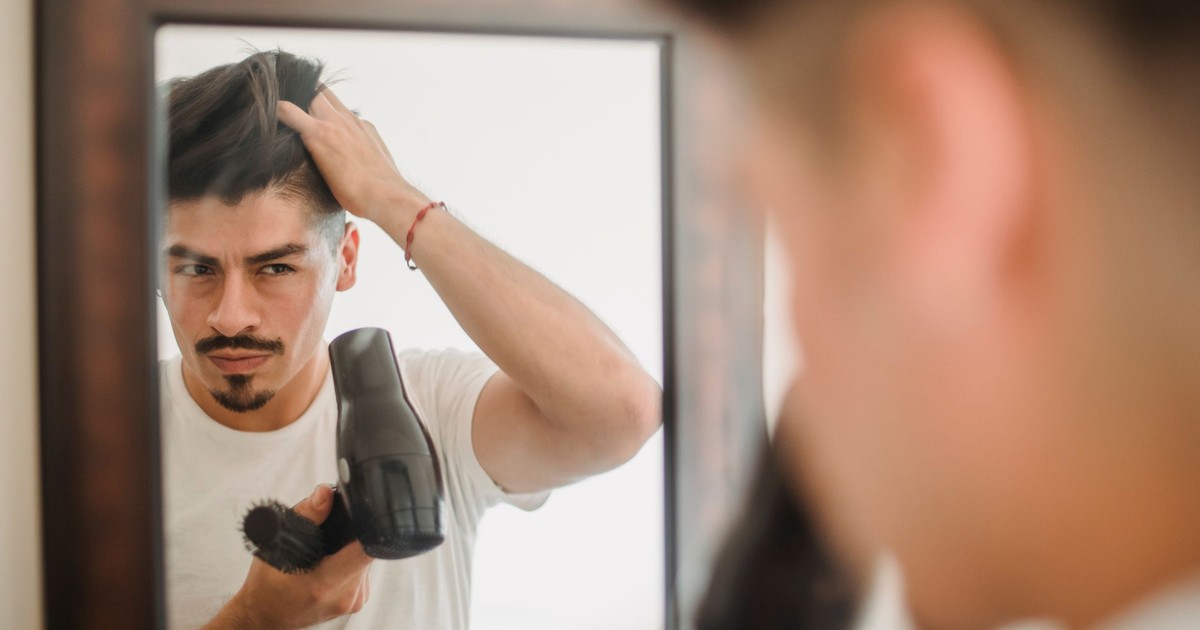
People will preen themselves to maximize their attractiveness around someone they like – rearranging clothes, unbuttoning a shirt collar, adjusting a suit, straightening their hair – all subtle attempts to look as good as possible in the moment. It happens without much conscious awareness, and it often kicks in right when you walk into the room or right when they realize you’re looking.
You’ll see it in small gestures: smoothing down the front of a shirt, tucking in a strand of hair, running a hand briefly over the jaw, checking a reflection in a nearby window. It’s the body doing emergency presentation work, a quick audit of “how do I look right now” that only gets triggered when the answer matters to someone specific.
This one is particularly telling when you catch it in the moment before they turn to speak to you. There’s a slight self-consciousness in the movement, a half-second of preparation, that distinguishes it from ordinary fidgeting.
9. Their Smile Reaches Their Eyes

A genuine smile is one of the most reliable indicators of attraction and enjoyment. If someone smiles at you frequently – with their mouth and their eyes both involved – it’s very likely they enjoy your company. When that smile noticeably widens and becomes more genuine upon seeing you, it’s often a clear sign of attraction. This true, uncontrolled smile that reaches the eyes – known as a Duchenne smile – is a significant indicator of authentic positive emotion.
The Duchenne smile is named after 19th-century French neurologist Guillaume Duchenne, who identified it by studying which facial muscles move voluntarily versus involuntarily. The corner muscles around the eyes – the orbicularis oculi – cannot be reliably faked. A polite smile lives only on the mouth. A genuine one crinkles the outer corners of the eyes and lifts the cheeks slightly.
When someone lights up in a way that moves all the way up their face at the sight of you, their nervous system is doing something their manners could not produce on demand. That’s the tell. Not a smile, but that smile – the one they’d have a hard time explaining if you asked them about it.
10. They Lean Forward When You’re Talking

In researcher Monica Moore’s landmark 1985 study, which catalogued 52 nonverbal courtship behaviors, leaning forward emerged as one of the most telling signs of romantic interest. A 2013 paper from researchers at the University of Kansas further confirmed this, finding that people who are attracted to someone draw their body forward during the interaction and adopt an open body posture.
It’s a simple physical logic: you move toward what you want. Leaning forward communicates engagement and interest – a way of closing the physical distance and signaling a desire to be closer during the conversation. It is distinct from simply being attentive; a person can be perfectly attentive while sitting upright. The lean is something more. It’s proximity made intentional, even when the person hasn’t consciously decided to do it.
You can notice it most clearly in group settings where the same person holds their ground with everyone else but drifts incrementally toward you across the course of a conversation. By the end of the hour, they’ve moved six inches. They didn’t plan it. The body just did its math.
11. They Find Reasons to Touch You

When it comes to flirting body language and attraction, few unconscious cues are more revealing than someone finding an excuse to touch you – laughing and touching your arm, grazing your hand while walking together, or touching your shoulder as they pass your chair, framed as accidental.
Body language expert Tracey Cox notes that a person may gently touch the person they’re interested in – brushing their arm, touching the small of their back while guiding them through a door – and that regular touching is widely considered a definitive sign of attraction. The touches that mean something aren’t the ones that linger long enough to be noticed by everyone else in the room. They’re the brief, plausibly deniable ones: a hand on your forearm while making a point, a tap on your shoulder, a brush of fingers while handing something across.
Touch collapses distance in a way that words can’t always manage. The person who finds reasons to make physical contact, however briefly, is communicating something their words haven’t gotten around to yet.
12. They Ask for Your Help – and Start Using “We”

When someone keeps finding reasons to ask you for help, psychology suggests it may actually be a sign of attraction. The psychology behind it is rooted in interdependency – creating a mutual reliance that communicates trust and romantic interest. When people like someone, they want to strengthen the connection, and making you feel useful to them is one way to deepen the bond.
This signal needs context: in professional settings, asking for help may simply mean someone needs your expertise. But if someone you’re interested in keeps finding reasons to seek your advice or assistance on personal matters, they may be subconsciously working to deepen the connection between you.
Pay attention, too, if they start using the word “we” while working or talking together – research from the British Journal of Psychology shows that attraction operates across multiple channels simultaneously, and the shift to inclusive language is one of the more telling verbal ones. “We should check that out sometime.” “What do you think we should do?” It’s a small grammatical move, and it’s almost never accidental. The pronoun shift is its own kind of lean.
Read More: If Someone Does These 10 Things, Your Relationship Will Never Be Healthy
What You Actually Do With This
The honest caveat is that none of these signals exists in isolation. A single item on this list – even prolonged eye contact, even the Duchenne smile – can appear in contexts that have nothing to do with attraction. What makes someone attractive has been studied across multiple non-verbal channels – face, body motion, voice, and scent – and researchers have found these different modes work together rather than independently. Which is to say: the signals cluster. A person who is genuinely drawn to you will produce several of them at once, consistently, without appearing to try.
None of this is a decoder ring for other people’s feelings. Noticing that someone moved six inches closer to you, or that their voice dropped when they started talking to you, or that the smile they gave you crossed their whole face – noticing those things doesn’t mean you have a conclusion. What it means is that you have data. The pattern you half-registered, the thing you kept almost saying to a friend before you talked yourself out of it, was not nothing. Some things get communicated long before anyone is ready to say them out loud, and the body, it turns out, has been speaking the whole time.
AI Disclaimer: This article was created with the assistance of AI tools and reviewed by a human editor.