
Somewhere around the third or fourth date, a lot of plus-size women have learned to brace for it. Not the goodnight kiss or the check argument – the moment when something small and off-script reveals exactly what the other person has been told to believe about a body like hers. It might be a comment framed as a compliment. It might be a preference revealed too casually. It might be an assumption about what she must want, or what she must settle for.
The myths that produce those moments don’t live only in bad dates. They live in friends’ well-meaning advice, in the way certain dating profiles get read, in the internal monologue a woman has talked herself into over years of absorbing what the culture insists is true. And most of them are wrong in ways that are specific, measurable, and worth naming directly.
Roughly 67 percent of American women wear a size 14 or above, which makes plus-size women the statistical majority – not a niche, not an exception, not a consolation bracket. And yet the myths that govern how plus-size women are expected to date, what they’re told they can want, and what they’re warned they should prepare for persist as if they were grounded in something real. Nine of the most stubborn ones deserve a closer look.
1. No One Finds Plus-Size Women Attractive
The most foundational of all the plus-size dating myths, and the one every other myth builds on, is the idea that attraction to plus-size women is rare – a niche taste at best, a politely suppressed pity at worst. The logic runs something like: if mainstream media doesn’t reflect it, it must not exist in meaningful numbers.
That logic doesn’t hold up to what people actually do. Attraction is wide-ranging and personal in ways that magazine casting directors consistently fail to capture. A 2025 meta-analysis published in the Journal of Eating Disorders found that body-positive content improves body satisfaction and emotional well-being, particularly when it highlights diverse representations – which suggests that the absence of diverse representation has been artificially narrowing what people believe is considered beautiful, not what people actually find attractive. The media gap and the desire gap are not the same gap.
What the attraction myth also misses is that it treats physical preference as fixed and culturally neutral, when neither is true. Preferences are shaped by what a person has been exposed to, who they’ve been around, and what they’ve been told is possible. A woman who has been told all her life that her body is unattractive may never fully believe the evidence directly in front of her – the dates, the second messages, the genuine interest – because the myth got there first.
2. Plus-Size Women Should Settle for Less
The assumption embedded in this myth takes a practical form: plus-size women should lower their standards, be grateful for any attention, expect casual arrangements rather than committed relationships, and not be too choosy about who they’re willing to date. It’s less often said aloud and more often communicated through the architecture of expectations – the way certain conversations get framed, the way friends offer advice.
Men will explicitly tell plus-size women that they only want something casual, even when the woman’s profile states otherwise – the implication being that women in larger bodies should be grateful for whatever attention they receive and aren’t worthy of being genuinely pursued. That implication is not a neutral observation about dating reality. It is a script that certain people have absorbed and then acted out, and it says nothing accurate about what plus-size women actually deserve or get.
The research on relationship satisfaction tells a more complicated and far more interesting story. A study of married couples published in PMC found that wives’ perceptions of their own physical attractiveness were positively associated with both their own and their husbands’ marital satisfaction – and that this association held regardless of the wife’s actual body size. Confidence and self-perception matter more to relationship quality than dress size does. The premise that plus-size women should accept less isn’t grounded in how good relationships actually function.
3. Dating Apps Don’t Work for Plus-Size Women
The common version of this myth is that dating apps are a hostile environment where plus-size women will be passed over constantly, fat-shamed regularly, and ultimately humiliated into giving up. The implied conclusion is that plus-size women should avoid apps altogether or expect dramatically worse outcomes than thinner women.
The reality is that dating apps are a mixed experience for essentially everyone, and the specific challenges plus-size women face – while real – are not unique enough to constitute a categorical argument against using them. A systematic review published in Computers in Human Behavior found that across 22 studies examining the relationship between dating app use and body image, 86.4 percent reported adverse effects on body image for users generally – meaning the app environment creates body image pressure across body types, not just for plus-size users. The design of these platforms, built around rapid visual judgment, creates appearance anxiety broadly.
According to WooPlus, a dating app specifically for plus-size women, 71 percent of its users reported being fat-shamed on mainstream apps – which is a real problem, not a minor inconvenience, and worth naming clearly. But the solution a lot of plus-size women have found is not to avoid apps entirely; it’s to treat them as one tool with known limitations rather than a verdict on their desirability. Being upfront in a profile, using full-length photos, and filtering out bad-faith interest early are practical adjustments, not resignation.
4. Plus-Size Women Aren’t Confident Enough to Date
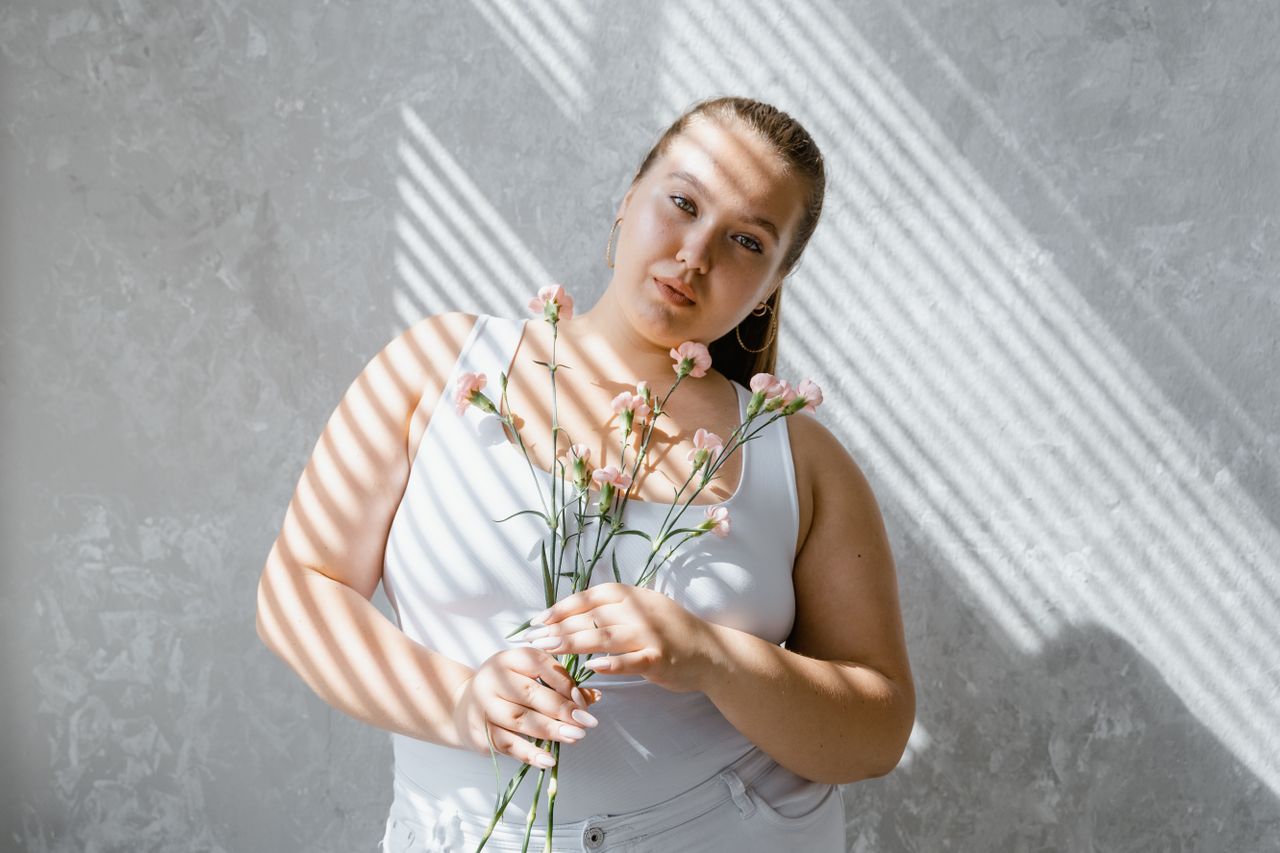
This myth runs in two directions at once. In one direction, it pities plus-size women – assumes they carry so much body shame that they can’t function well in romantic situations. In the other, it blames them – suggests that if they just felt better about themselves, dating would go fine, and therefore any difficulty they experience is a confidence problem they need to fix.
Both directions miss the mark. Confidence is not something a person either fully has or tragically lacks. It fluctuates. It’s affected by how someone has been treated. And it is entirely possible to have strong, well-founded confidence in most areas of life while still being worn down by years of messaging that insists your body is the wrong kind. That’s not a personal failing – it’s a predictable response to sustained cultural pressure.
Body appreciation is associated with better long-term mental health outcomes and acts as a protective factor against body dissatisfaction, which is genuinely useful to know. But framing confidence as the prerequisite for deserving good dating experiences inverts the actual dynamic. Being treated with respect by romantic partners builds confidence. Being repeatedly dismissed erodes it. The direction of that relationship matters.
5. Plus-Size Women Only Attract Men With a “Fetish”

This myth does double damage: it implies that attraction to plus-size women is inherently pathological, and it implies that any man interested in a plus-size woman must have ulterior motives. Both implications insult plus-size women and the people who are genuinely attracted to them.
Fetishization – treating a person primarily as a representative of a body type rather than as an individual – is a real experience that some plus-size women have described, and it’s worth being able to recognize. But conflating that with all attraction to plus-size bodies creates a framework in which plus-size women can’t win: either no one wants them (myth 1) or everyone who does want them is suspect (myth 5). The myth functions to make every expression of genuine interest seem like evidence of something wrong.
People are attracted to plus-size women for the same range of reasons they’re attracted to anyone – chemistry, personality, humor, physical presence, emotional resonance. The idea that an entire category of attraction is automatically suspect is the myth, not a protective truth. Treating genuine interest with reflexive suspicion doesn’t protect anyone; it just makes connection harder to recognize when it arrives.
6. Plus-Size Women Can’t Be Physically Active or Fun Dates
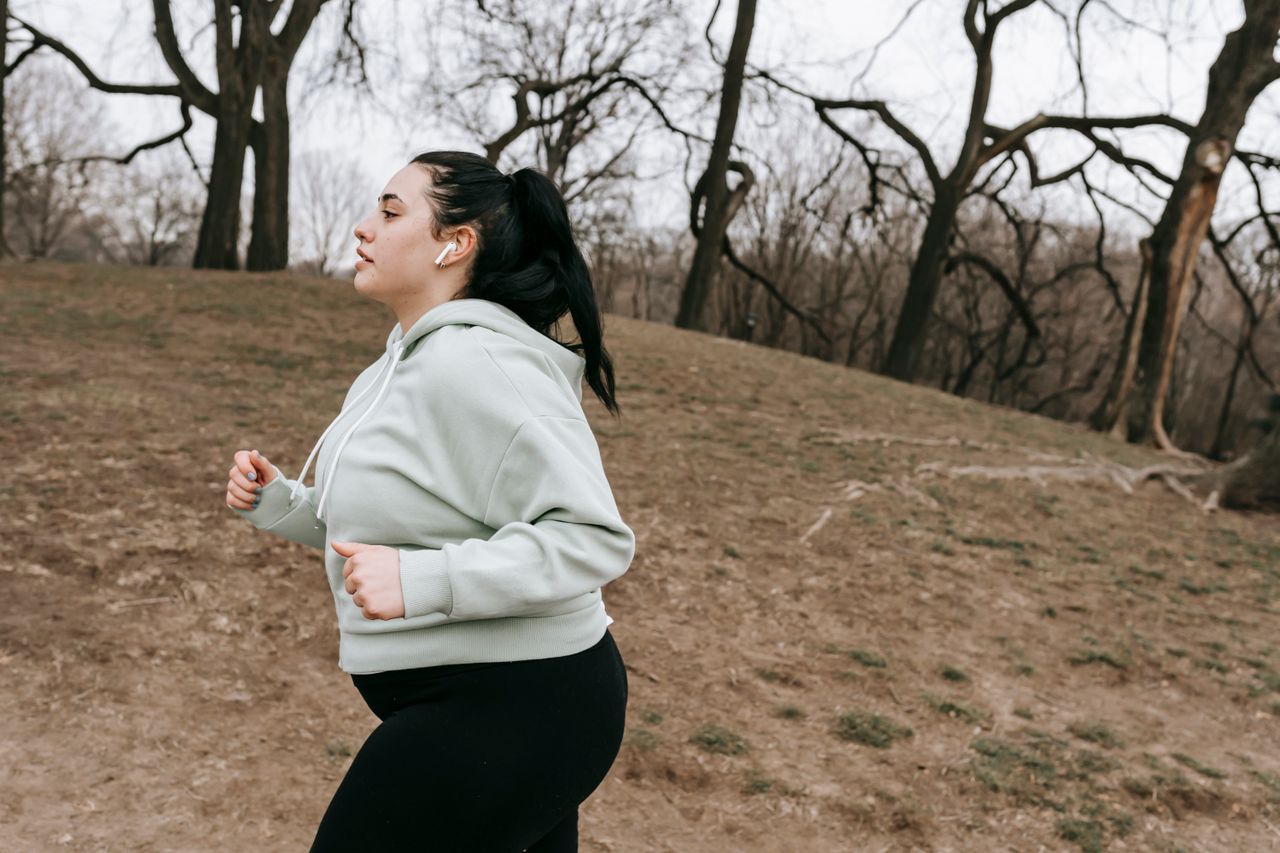
This one hides in the planning stage of early dating. The assumption surfaces when someone decides a plus-size woman won’t want to do something active, will be limited in what she can participate in, or will need the plans scaled down to accommodate her. It’s framed as consideration but functions as a preemptive diminishment.
Plus-size women hike, swim, dance, travel, do escape rooms at midnight, and arrive at every kind of date with full engagement. Body size is not a reliable proxy for physical capability, stamina, or enthusiasm. The people who hold this assumption have usually formed it from the same cultural shorthand that produces all the other myths – the equation of thinness with vitality and size with limitation – and not from anything they actually know about the specific woman in front of them.
The practical version of busting this myth is that it gets exposed quickly in real life. Anyone who has gone on several dates with a plus-size woman who moves through the world with energy and appetite has had this particular assumption corrected by direct experience. The myth survives mainly in people who are working from abstraction rather than from reality.
7. Plus-Size Women Are More Desperate or Easier to Manipulate
Among the most damaging of the plus-size dating myths is the belief that plus-size women are so grateful for attention that they’re easier to manipulate – less likely to enforce expectations, more willing to tolerate poor treatment, quicker to forgive because their options are presumed to be limited. Dating apps have made this myth operationally useful for bad actors, which is part of why it persists.
The assumption embedded in this behavior is that women in larger bodies should be grateful for whatever attention they receive – a belief that some people have not just internalized but actively acted on. That belief takes a recognizable form: men who pursue plus-size women specifically for casual arrangements while reserving committed attention for women with different body types, treating the former category as low-stakes and the latter as worth something.
The antidote is not to warn plus-size women to be more suspicious of everyone who approaches them. It’s to note that the behavior described above follows a recognizable script, and recognizing a script is genuinely useful. Most genuine interest doesn’t arrive with a side of pressure, an insistence on secrecy, or a careful avoidance of anything that looks like a real date in public.
8. A Plus-Size Woman’s Weight Is Always Up for Discussion
Dates are not consultations. The moment someone on a first, second, or third date starts offering opinions on what a woman eats, how she moves, what she might do differently, or how she’d look “if only” – they’ve crossed a line that their confidence in crossing says a lot about them and nothing useful about her.
This myth is really a social permission structure: the idea that a plus-size woman’s body is available for commentary in ways that other bodies aren’t. It’s the assumption that she knows she has a “problem” and would welcome a gentle nudge, or that mentioning it is doing her a favor. Weight criticism between partners is consistently associated with poorer relationship functioning, including lower relationship satisfaction, lower physical intimacy, reduced relationship stability, and less constructive communication during conflict. There is no version of this that improves a relationship. It degrades it.
The companion myth is that a plus-size woman must be actively trying to change her body – that she’s in a transitional state rather than living in the body she actually has. Neither myth is a compliment, and neither is a reasonable starting point for treating someone with basic respect.
9. Plus-Size Women Don’t Have Long-Term Relationship Success
The capstone of the list, and the one that tends to do the most long-term damage to how plus-size women approach dating at all: the idea that plus-size women are fine for a while but not the kind of person someone ultimately commits to. The myth presents itself as a statistical observation – which makes it harder to argue with, because it sounds like it might be true even when it isn’t.
Long-term relationship success is not determined by body size. It’s determined by compatibility, communication, shared values, genuine affection, and a hundred other factors that have nothing to do with what size jeans someone wears. The real bodies movement that has gained visibility in recent years reflects a broader cultural acknowledgment that relationship worthiness has never been about conforming to a narrow physical standard – it’s always been about far more than that.
What this myth actually does is take the fact that some people have discriminatory preferences and convert it into a sweeping claim about plus-size women’s future. That is not an honest reading of the evidence. Plus-size women are in long-term partnerships, marriages, and deeply committed relationships in the same proportions as anyone else. The myth survives because it’s never really been about statistics – it’s been about keeping a certain story in place.
Where These Myths Actually Come From
Every one of these beliefs has a point of origin, and it isn’t personal experience. It’s a cultural archive that got built before most of us were old enough to notice it being constructed – in the casting decisions of every romantic comedy, in the before-and-after structure of every weight loss advertisement, in the way women’s magazines have historically divided bodies into problems and non-problems. The archive never gets smaller on its own. It has to be actively contradicted.
The contradictions are already everywhere, if you know where to look. They’re in the specific, ordinary, unsensational fact of plus-size women living full romantic lives – not as exceptions to prove a rule, but as people doing what people do. None of the nine myths above survives sustained contact with reality. They only survive in the space between what people have been told and what they’ve actually seen.
That space gets smaller every time someone calls out what the myths actually are: not warnings, not observations, not kindly meant cautions – just wrong. A plus-size woman who walks into a date knowing which of these scripts she might be handed is not carrying a burden. She’s carrying a map. The myths don’t disappear by being named, but they do become harder to mistake for truth.
Read More: The Smarter and More Independent You Are, the Harder It Is to Find Love
Disclaimer: This information is not intended to be a substitute for professional medical advice, diagnosis, or treatment and is for information only. Always seek the advice of your physician or another qualified health provider with any questions about your medical condition and/or current medication. Do not disregard professional medical advice or delay seeking advice or treatment because of something you have read here.
AI Disclaimer: This article was created with the assistance of AI tools and reviewed by a human editor.