

You learn your mother’s laugh before you learn to walk. You borrow her eye shape, her nervous energy, her way of running late for everything but always arriving with something useful. Some of that is observation. A lot of it is something older than memory, written into you at the cellular level before you drew your first breath.
Most people know they inherit DNA from both parents in roughly equal measure, half from each, reshuffled at every generation. According to Heather Hampel, a genetic counselor at City of Hope Cancer Center, there are 20,000 genes in your body and half come from your mother while the other half come from your father. But not every piece of inherited biological material follows that tidy 50/50 split. There are categories of genetic material, and entire inheritance systems, that run exclusively through one parent or the other – and when it comes to the mother’s contribution, the science keeps finding reasons to be surprised.
The question of inherited traits from your mother goes well beyond hair color and the shape of your nose. Some of these connections sit at the level of your mitochondria – the tiny energy factories inside every cell – and others run through the X chromosome in ways that affect everything from your eyesight to your risk of neurodevelopmental differences. Here is what researchers currently understand about the traits that come exclusively, or predominantly, from mom – and a few that land firmly in your father’s column.
1. Mitochondrial DNA – and Everything It Controls

The most well-known trait that is solely passed down from mothers is a child’s mitochondrial DNA. Nuclear DNA is passed down from both parents, but mitochondrial DNA is exclusively passed through the maternal line. The significance of this goes considerably further than a biology textbook footnote.
Mitochondria are the energy-generating structures inside almost every human cell. They convert food into the chemical fuel your cells actually run on, and they carry their own small, circular strand of DNA entirely separate from the DNA inside the cell’s nucleus. Because mitochondria in a fertilized egg come entirely from the egg itself – not from the sperm – every human being alive inherits their mitochondrial genome from their mother, who inherited it from her mother, and so on in an unbroken maternal chain stretching back through human history.
Mitochondrial DNA inherited from the mother can influence how quickly cells age and regenerate, and mutations or inefficiencies in maternal mitochondrial DNA have been linked to accelerated aging processes. Mitochondrial diseases are chronic hereditary disorders that occur when mitochondrial DNA has defects or mutations. They can appear at any age, affect nearly every organ of the body – including the brain, nerves, muscles, kidneys, heart, liver, eyes, ears, and pancreas. Because the mitochondrial genome never recombines the way nuclear DNA does, a mutation in your maternal line can travel from generation to generation untouched.
2. Intelligence – the X Chromosome Link

According to many leaders in the field of genetics, a child inherits their intelligence primarily through the X chromosome. Considering that women have two X chromosomes, some scientists theorize mothers are twice as likely to pass down intelligence-related traits.
This is one of the more frequently debated areas in behavioral genetics, and it deserves some careful framing. Intelligence is polygenic – meaning hundreds of genes contribute to it – and environment, education, nutrition, and early stimulation all play substantial roles. But the X-chromosome hypothesis has legs. One study conducted by the MRC/CSO Social and Public Health Sciences Unit in Glasgow, Scotland, interviewed participants between ages 14 and 22 every year. Researchers found that the best predictor of intelligence was the mother’s IQ, and on average, participant IQs varied by only 15 points from their mothers.
Sons inherit a single X chromosome and it comes entirely from their mother. That means for boys in particular, the X-linked genetic material shaping cognitive development has exactly one source. Daughters receive an X from each parent, which makes the picture more complex – but maternal contribution to that chromosome remains half the equation at minimum.
3. X-Linked Conditions – Color Blindness, Hemophilia, and More

Many genetic conditions including color blindness, hemophilia, and Duchenne muscular dystrophy are linked to the X chromosome. Girls get an X from both parents, giving them a backup copy. Boys inherit their mother’s X, full stop. The presence or absence of that backup copy changes everything. If a daughter inherits a faulty version of an X-linked gene from her mother, her father’s X chromosome often carries a working copy that can compensate. A son has no such fallback – whatever his mother’s X chromosome carries, he expresses.
Men have only one X chromosome, which they inherit from their mother. If a mother carries a mutation on that X chromosome, there is a 50 percent chance her son will express it, even if she herself has no symptoms. This is why conditions like color blindness appear far more frequently in men than in women and why the pattern of transmission – an unaffected mother whose sons are affected – is a classic hallmark of X-linked recessive inheritance.
4. Eyesight and Certain Vision Conditions

The eye is one of the most metabolically demanding organs in the body, and the connection between maternal genetics and vision runs through multiple biological channels. One vision condition with strong maternal ties is pathological myopia – a severe form of nearsightedness that can lead to retinal damage and other complications. While common myopia can result from environmental factors like screen time or reading habits, pathological myopia often has a genetic component with stronger links to the maternal line.
The retina is a highly energy-dependent tissue, packed with mitochondria. Mutations in mitochondrial DNA – inherited only from the mother – can impair retinal function and are associated with rare but serious conditions like Leber’s hereditary optic neuropathy (LHON), which can cause sudden vision loss, particularly in young men. According to Dr. Nandi’s health resource, LHON tends to affect men more visibly precisely because, like other X-linked and mitochondrial conditions, there is no paternal copy of the relevant genetic material to counterbalance it.
5. ADHD Risk – Maternal Genetics and the Environment She Creates

The picture of how ADHD passes through families got considerably more detailed in 2025. A study published in the American Journal of Psychiatry found that maternal genotypes influence offspring’s risk of ADHD through environmental pathways beyond the effects of direct genetic transmission. In other words, the mother’s genes affect her child’s ADHD risk not just through what she passes down in DNA, but through the kind of environment those genes lead her to create.
Investigators found that overall, 66 percent of a child’s risk for ADHD resulted from direct genetic inheritance from the parents. Around 14 percent could be attributed to the maternal genetic nurture effect – a relatively new concept in this research area that refers to the way a mother’s own genetic makeup shapes her parenting behaviors, stress responses, and household environment, which in turn shapes her child’s neurodevelopment. It is genetics operating at two removes, and it gives the maternal contribution to ADHD a complexity that goes beyond what a simple DNA chart can capture. For mothers with ADHD themselves, this research adds detail to what is often framed as a purely biological hand-off.
6. Metabolism and Body Fat Distribution

You may inherit your mother’s metabolism. This one tends to produce groans of recognition at family dinners, and the science backs the feeling. One study found that the amount of a certain type of fat a child inherits comes from the mother. A person carries two main fat types – white adipose tissue (WAT) and brown adipose tissue (BAT). Brown adipose tissue, the metabolically active kind that burns calories to generate heat, appears to be influenced through maternal genetic pathways in a way that white fat is not.
People are likely to inherit their mother’s metabolism, though metabolism is not the be-all and end-all when it comes to body weight. Lifestyle habits such as diet and exercise levels play a much larger role. Similarly, people are likely to inherit their mother’s body type. None of this is destiny. But it does mean that when you catch yourself with the same tendencies as your mother at the same age, you are not imagining things.
7. Migraine Susceptibility

Migraines often run in families, and women are more likely to pass on the genetic susceptibility. Research shows that certain mitochondrial DNA mutations inherited from the mother are linked to a higher risk of migraine headaches. Given that migraines are already far more prevalent in women than in men, the maternal inheritance pathway here creates a kind of compounding effect – a condition that disproportionately affects women, passed predominantly through the maternal line.
The mitochondrial DNA connection is worth examining. Because the trigeminal nerve system that drives migraine attacks is highly energy-dependent, disruptions in mitochondrial function – including mutations carried in the maternal genome – can affect how that system responds to triggers. This does not mean every migraine sufferer’s mother has them, or that having a migraine-prone mother guarantees you will too, but the maternal genetic contribution to migraine risk is one of the better-documented examples of mitochondrial inheritance having a real, felt impact on daily life.
8. Immune System Responses and Allergy Tendencies

The body’s response to allergens like pollen, pet dander, or food is influenced by immune system genes, many of which are inherited through maternal lines. Researchers have found that maternal exposure to allergens during pregnancy can actually program a child’s immune responses. The word “program” is doing a lot of work there – what researchers mean is that the immune system calibration a child develops in the womb is partly shaped by what the mother’s immune system was doing and responding to during pregnancy.
This sits at the intersection of genetics and epigenetics (the study of how gene expression is influenced by environment, without changes to the DNA sequence itself). A child does not simply inherit a fixed immune blueprint from their mother – they inherit a system that was partly tuned by her body’s immunological history. Maternal allergies to common environmental triggers can influence whether a child’s immune system learns to mount an exaggerated response to those same triggers.
9. Biological Sex – the Father Decides
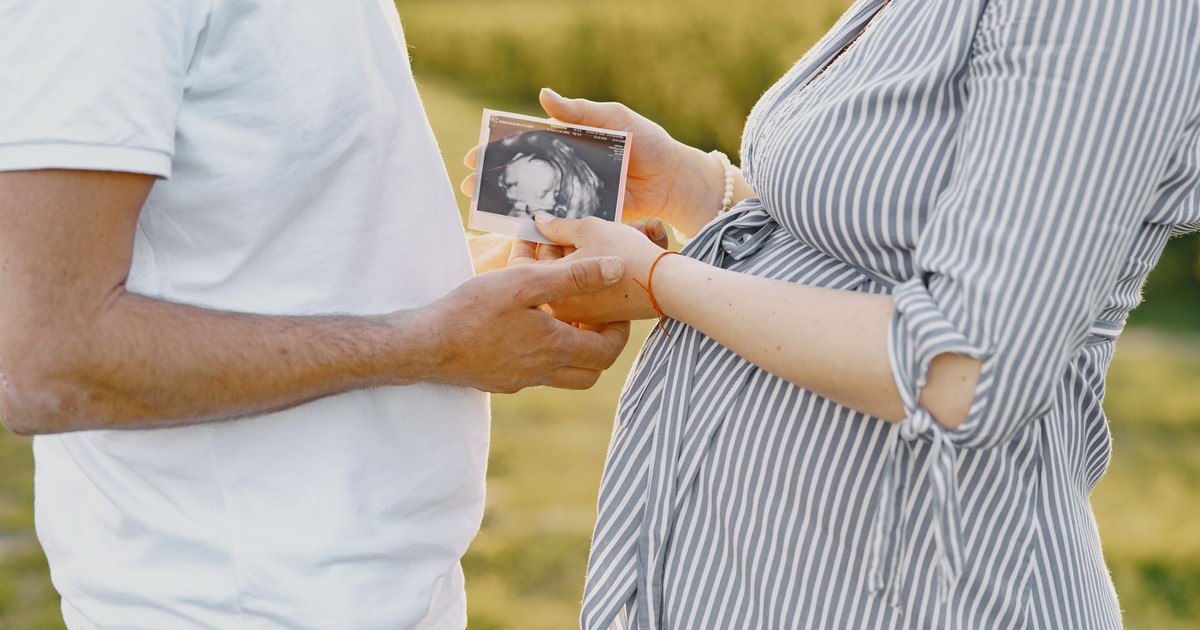
The paternal contribution is absolute here. Fathers may contribute an X or Y chromosome, while the mother always contributes an X chromosome. If the father contributes an X, the baby will be a girl; if he gives a Y, the baby will be a boy. The mother has no genetic input into whether her child is biologically male or female – she can only ever contribute an X. The determination is entirely paternal.
The Y chromosome in males is arguably the most well-known example of paternally inherited genetic material. Males inherit an X chromosome from their mother and a Y chromosome from their father, and this Y chromosome is entirely paternally derived. It passes from father to son essentially intact, generation after generation, which is why Y chromosome analysis is used in paternal lineage tracing.
10. Dental Structure and Tooth Shape – a Paternal Lean

A biological father can pass on physical traits such as biological sex, eye color, height, puberty timing, fat distribution, dimples, and even risk factors for certain health conditions. Tooth shape and the structural characteristics of the jaw also lean paternal. The size and placement of teeth – though influenced by many genes – have a documented paternal inheritance component, which is part of why forensic geneticists look to paternal lineage when analyzing dental records in ancestry work.
Inheritance through dominant genes means that if you inherit a dominant gene, you will develop that trait. Take eye color as an example: if either of your parents has brown eyes, you will likely have brown eyes, as this is a dominant trait. Many of the traits people casually assign to fathers – strong jawline, prominent brow, specific tooth spacing – are dominant traits that simply express themselves visibly and memorably, giving the father’s contribution an outsize presence in the family lore.
Read More: 10 Physical Traits Mom Passes To The Baby (And 4 From Dad)
The Archive Runs Deeper Than You Think

The version of genetics most people learned in school – one trait, two alleles, one dominant, one recessive, flip a coin – was always an oversimplification. The reality is that entire categories of your biology bypass the shuffle entirely. Your mitochondria came from your mother’s egg and nowhere else. Your Y chromosome, if you have one, came from your father and nowhere else. Your X-linked traits as a son arrived directly from your mother with no paternal counterpart to soften or override them.
What this means in practical terms is that when you notice something in your child – a headache pattern, a visual quirk, a metabolism that seems to have come from nowhere – the maternal line is worth asking about. Not as blame, and not as destiny, but as information. The inherited traits from your mother that travel through mitochondrial DNA don’t recombine or mix the way nuclear DNA does, so the same maternal line can carry those mutations for generations, making it a useful tool for tracing ancestry but also a potential risk factor for inherited conditions. The archive never gets smaller, only larger – and some of the oldest entries were written by women.
AI Disclaimer: This article was created with the assistance of AI tools and reviewed by a human editor.