
The question has occupied theologians, archaeologists, and anyone who has ever read Genesis and thought, “but actually, where?” for roughly three thousand years. Nobody has found a garden with a cherubim standing guard at the entrance. No archaeologist has turned over soil to reveal a plaque reading “Eden, Est. In The Beginning.” And yet the search has never really stopped, because the biblical account in Genesis offers something unusually tantalizing for a creation myth: it contains what read very much like real geographical directions.
According to Genesis 2:10 – 14, Eden was fed by a single river that split into four: the Tigris, Euphrates, Pishon, and Gihon. Two of those rivers are still on every modern map. That specificity has kept scholars, adventurers, and independent researchers pointing at different corners of the ancient world for centuries, each convinced the clues add up to their preferred location. The theories range from the meticulously argued to the genuinely unhinged, and several of them are more compelling than you might expect.
While scholars consider the story of Adam and Eve to be a metaphor and the literal Garden of Eden a myth, many also believe it was inspired by a real location. The name Eden is derived from a Sumerian word meaning “plain” or “steppe,” and the Bible itself contains geographical clues to its location. Those clues are the engine of every theory on this list. Ten researchers, ten conclusions, and not one of them has fully closed the case.
1. Southern Mesopotamia (Modern-Day Iraq)
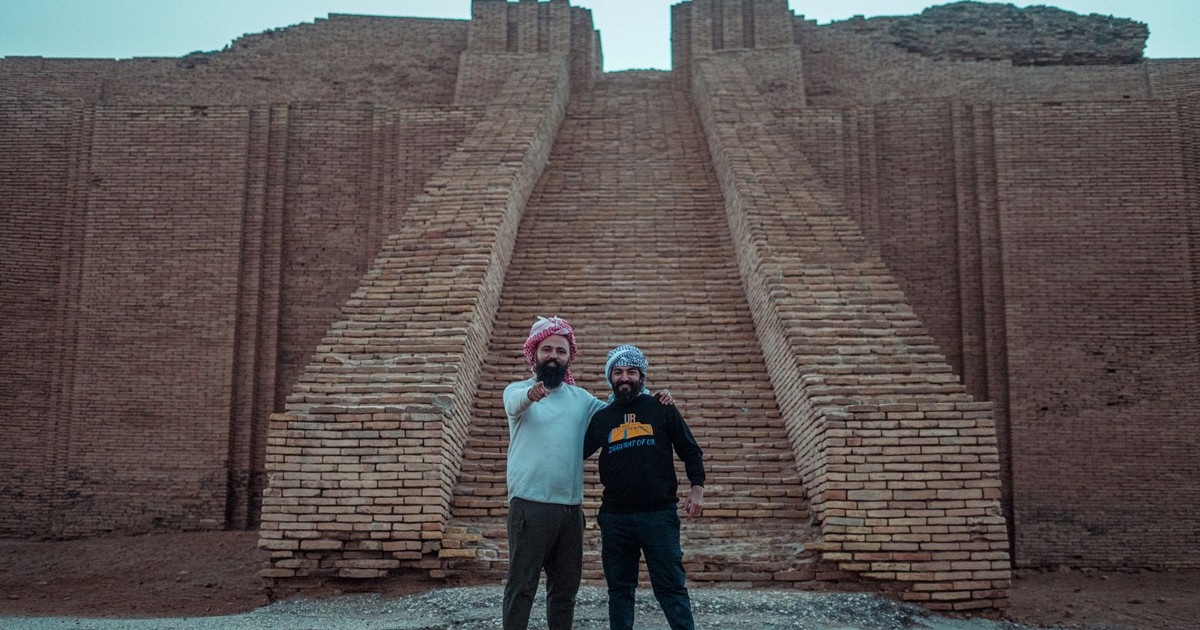
According to National Geographic, the question has resurfaced in recent years following new satellite studies, geospatial mapping, and reinterpretations of biblical geography. A September 2025 report from Daily Galaxy draws on multiple scholars, noting that the search for Eden draws from satellite data and ancient textual analysis in equal measure. Computational analysis published in 2024 via Arkeonews points to a non-traditional location entirely. And the World History Encyclopedia reminds us that the oldest temple structures in the world sit squarely inside the region where several of these theories converge.
This is the one that has held the longest, and for good reason. While most archaeologists would dispute the existence of Adam and Eve, a common belief among experts is that the authors of Genesis were inspired by the uniquely fertile properties of the marshes of southern Iraq. While the Garden of Eden story may be a myth, it seems to be inspired by the richness of ancient Mesopotamian culture, making it the leading candidate for the Garden’s location.
The Mesopotamian region was notorious for its wealthy families and idyllic royal gardens filled with a rich array of plants and trees, which may have inspired the biblical story. The Tigris and Euphrates corroborate the Mesopotamia theory as the rivers supplied water to an extensive floodplain, known as the Fertile Crescent. The land was lush, the civilization was ancient, and the rivers named in Genesis were right there. Two out of four is a strong start.
Despite much speculation concerning the exact location, it does seem likely that if Eden had a real counterpart it was located somewhere about one hundred miles northwest of present-day Basra in Iraq. South of the city of An Nasiriyah, no archaeological mounds exist, presumably because the Persian Gulf extended this far inland. Of all the ancient mounds in the region, Eridu is archaeologically one of the oldest known settlements in southern Mesopotamia, dating to about 4800 B.C. Ancient Sumerian texts named Eridu the oldest city in the world, which puts it neatly at the center of the world’s most historically supported Eden argument.
2. The Persian Gulf – A Submerged Paradise
Here is where it gets genuinely riveting. In the 1980s, archaeologist Juris Zarins proposed that the Garden might be submerged under the Persian Gulf. He believed the Gihon corresponded to the Karun River in Iran and that the Pishon could be mapped onto the Wadi al-Batin river system. Zarins analyzed satellite images taken by NASA, revealing the dry beds of two large rivers that once flowed from central and southern Arabia into the southwest region of the Persian Gulf.
The logic here is that at the end of the last Ice Age, sea levels across the globe rose dramatically as glaciers melted, and the low-lying basin at the head of the Gulf would have flooded. Climate change and sea level rise are critical elements in this theory. At the end of the last Ice Age, the Red Sea was largely dry, extending the region identified with the land of Cush into the southwest tip of the Arabian Peninsula. If Zarins is right, Eden isn’t lost in the sense of being destroyed; it’s simply underwater, buried beneath saltwater and sediment, still technically there.
However, no marine archaeology has yet supported Zarins’ theory. The absence of underwater evidence doesn’t necessarily disprove it – the Gulf is a difficult archaeological environment and systematic deep-sea excavation there has been limited – but it does mean the theory stands as a persuasive hypothesis rather than a confirmed fact. Given that satellite radar can now map ancient riverbeds buried beneath desert sands, the technological tools to test this more thoroughly exist. Someone just has to use them.
3. Northern Iran, Near Tabriz
British archaeologist and Egyptologist David Rohl claimed to have found the precise location of the Garden of Eden after over a decade of studying ancient documents, including the Sumerian tablets held at the Museum of the Orient in Istanbul, Turkey. His conclusion is that the location conforms to an area northwest of Tehran, Iran, in a valley near the city of Tabriz.
Rohl’s argument rests on a careful reassignment of the biblical river names. Rohl associates the four rivers mentioned in the Bible with the Euphrates, Tigris, Araxes, and Uizhon. By explaining that the climate in northern Iran was significantly wetter in ancient times, Rohl provides a stronger basis for discussing the concept of paradise and spring-like conditions. The region around Tabriz in the Azerbaijan province of Iran has always been fertile and well-watered compared to the surrounding landscape, and Rohl found place names and geographical features that he believed matched Genesis almost point by point.
The Rohl theory has attracted both serious academic attention and serious academic skepticism. His critics argue that the river identifications require too many assumptions and that the geographic fit, while suggestive, is not conclusive. His supporters note that the cultural memory of that region as a kind of paradise predates biblical writing, and that Sumerian texts use the word “Edin” to describe the very plain Rohl identifies. That word connection alone is hard to dismiss entirely.
4. Göbekli Tepe, Turkey
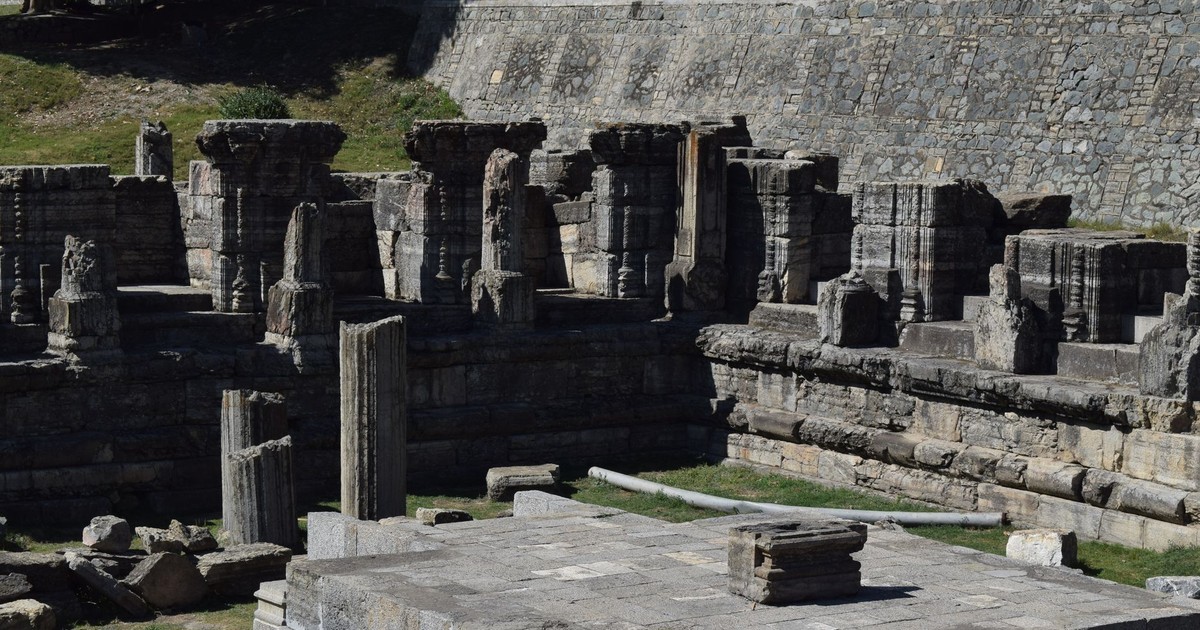
Located in modern Turkey, Göbekli Tepe is one of the most important archaeological sites in the world. The discovery of this stunning 10,000-year-old site in the 1990s sent shockwaves through the archaeological world, with some researchers even claiming it was the site of the biblical Garden of Eden.
Indeed, the animal and plant remains indicate such a rich and idyllic scene that Göbekli Tepe has been linked with the biblical story of the Garden of Eden. What has been excavated so far reveals 43 monolithic limestone pillars, up to about 16 feet tall, linked by stone walls to form roughly circular structures. The structures vary in size between around 33 and 98 feet in diameter. The pillars are covered with carved reliefs of animals – foxes, snakes, ducks, boars – which some read as an echo of the abundant wildlife described in Genesis.
The geographic argument for Göbekli Tepe leans on its location near the headwaters of both the Tigris and Euphrates rivers in southeastern Turkey. In ancient Assyrian texts, there is mention of a “Beth Eden” – a house of Eden. This minor kingdom was 50 miles from Göbekli Tepe. Archaeologist Klaus Schmidt, who led excavations at the site, was careful about the claim: he suggested Göbekli Tepe was not Eden itself but rather a temple built within the broader region of Eden. The distinction is a meaningful one, and his caution carries weight. The Eden-as-specific-garden and Eden-as-broader-territory are two quite different things.
5. Beneath the Great Pyramid of Giza, Egypt
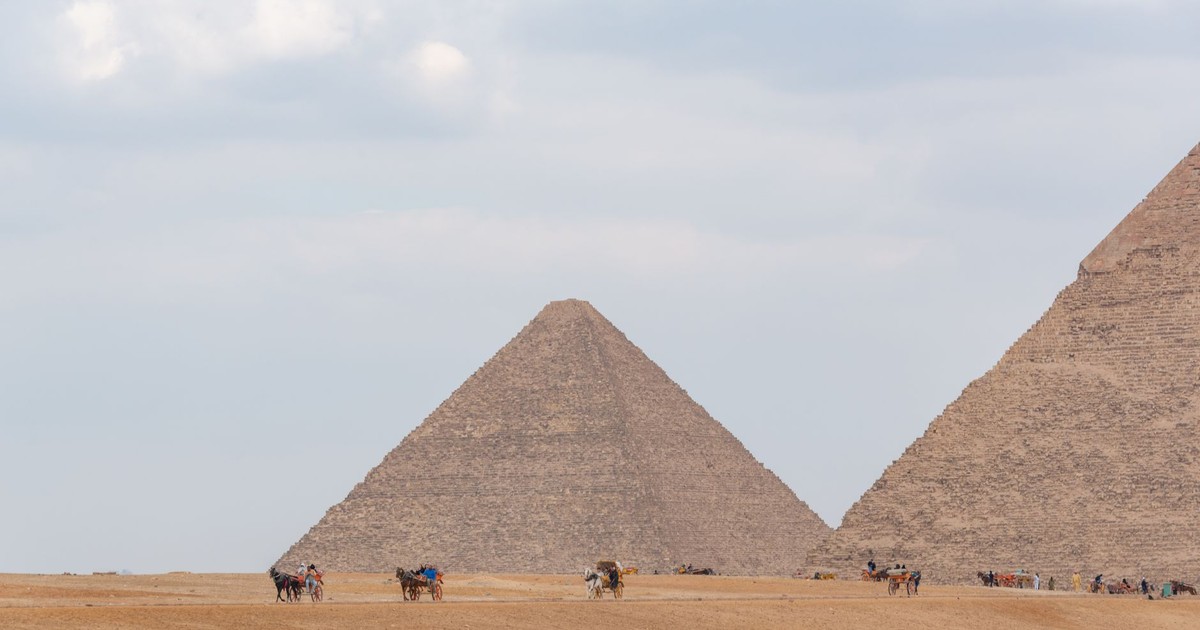
This one requires a more open mind, but it comes with peer-reviewed credentials. A radical theory proposed by a computer engineer suggests that the biblical Garden of Eden may not be in the traditionally believed location of Mesopotamia but rather lies beneath the iconic Great Pyramid of Giza in Egypt. Dr. Konstantin Borisov outlined his hypothesis in a study published in the journal Archaeological Discovery.
Borisov’s argument involves a reinterpretation of both the ancient river geography and the concept of the Oceanus – the mythical encircling ocean described by first-century Jewish historian Josephus. He argues that Eden is situated in Egypt, attributing the origin of the four rivers of Eden to the Oceanus River, a concept initially introduced by Josephus. On this reading, the rivers of Eden are not the literal Tigris and Euphrates but symbolic representations of the four great rivers of the ancient world, which Josephus placed as flowing from a single encircling source.
Critics point out that the Pyramids were built around 2600 B.C., which places them well within recorded human history and long after the Genesis narrative is set. That said, Borisov’s argument is not that the Pyramid is the Garden but that the Giza plateau region corresponds to the geographical description in Genesis when ancient maps and texts are interpreted through Josephus’s cosmology. Whether you find that convincing will depend heavily on how you feel about reinterpreting the map of the known ancient world from scratch. It is, at minimum, an argument made in good faith with actual sourcing.
6. The Land of the Bible – Israel and Jerusalem
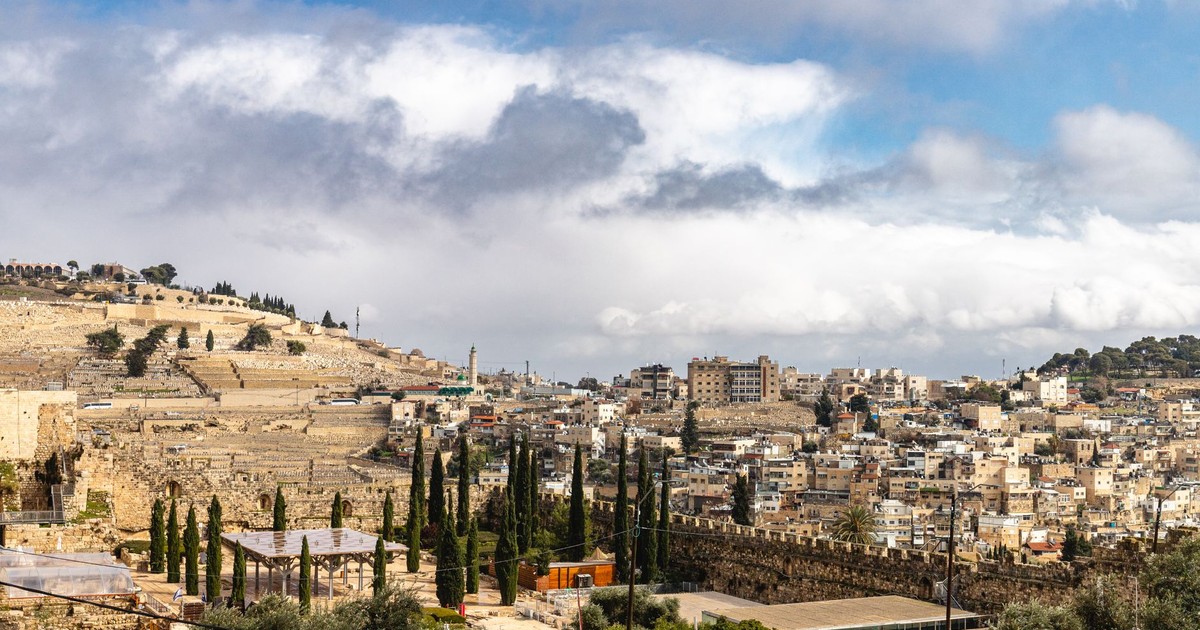
Some scholars have argued that Eden should be located not in Mesopotamia or Iran but within the biblical heartland itself. The Gihon is one of the four rivers of Genesis, and it is also the name of the Gihon Spring – the primary water source for ancient Jerusalem, the most important spring in the entire region’s history.
For those who read the Bible as a geographically self-referential document, this overlap is not accidental. The Book of Ezekiel describes a river flowing from the Temple Mount that brings life to the surrounding land, echoing Eden imagery closely. Early Jewish interpreters, including medieval rabbinical commentators, often placed Eden in the Holy Land precisely because of these textual parallels. Among the many proposed locations catalogued in recent scholarship is the Holy Land, proposed by Herbinius in 1678 and revisited by Lefebvre in 2018, which suggests this interpretation has never fully gone out of scholarly circulation.
The counterargument is the presence of the Tigris and Euphrates in Genesis, which are unambiguously associated with Mesopotamia rather than the Levant. Reconciling those rivers with a Jerusalem location requires creative geographical interpretation, which is where many scholars get off the train. But the spiritual logic of placing paradise at the center of the world’s most contested religious landscape has never lost its pull.
7. Africa – Ethiopia and the Nile Headwaters
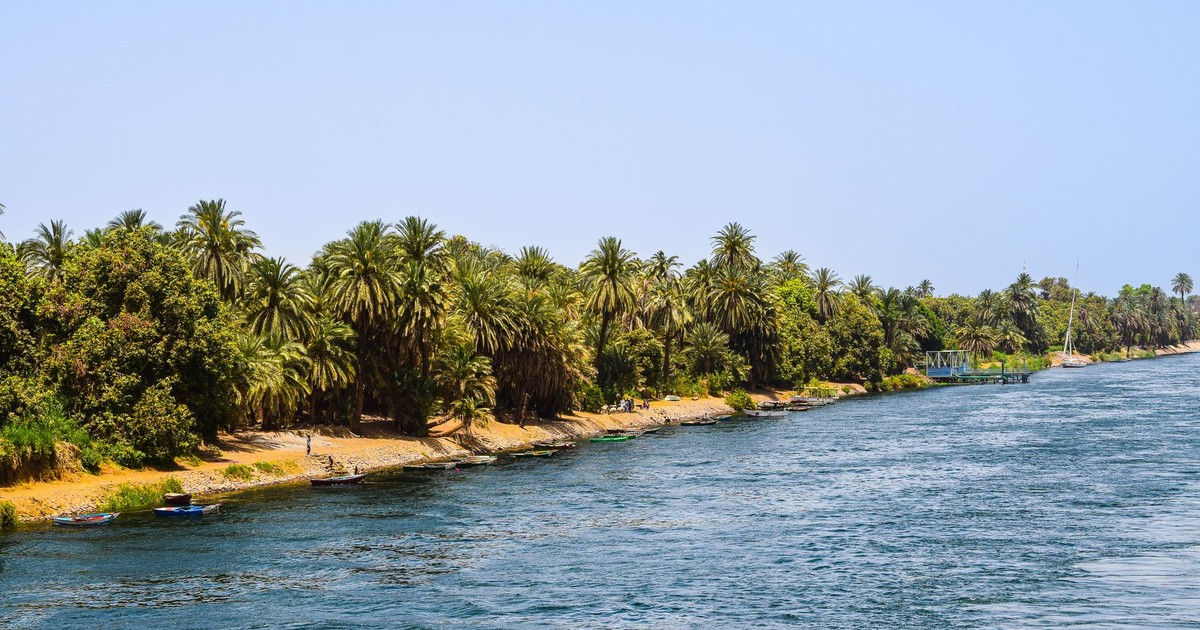
The Gihon, in the King James Bible, “encompasses the whole land of Ethiopia.” That translation has had an outsized influence on a persistent theory: that the Garden of Eden was somewhere in Africa, near the headwaters of the Nile. It is the Gihon, which “compasses the whole land of Ethiopia,” that has been the enduring challenge. In Hebrew, the geographical reference was to “Gush” or “Kush.” The translators of the King James Bible in the 17th century rendered Gush or Kush as “Ethiopia” – further to the south and in Africa – upsetting the geographical interpretation and creating confusion for researchers for centuries.
The translation issue is significant. The Hebrew “Kush” likely referred to the ancient kingdom that occupied modern-day Sudan and southern Egypt, not the Ethiopia we know today. But for centuries, that translation error set researchers hunting for Eden in sub-Saharan Africa, and the theory took on a life of its own, particularly in Ethiopian Christian tradition, which has its own deep relationship with Eden-related mythology.
What makes this theory interesting is less the geography and more the cultural persistence. Ethiopian Orthodox Christianity has maintained continuous traditions connecting its highland landscape to paradise. The monasteries around Lake Tana, near the Blue Nile’s source, carry centuries of textual and artistic tradition associating that region with the original garden. It is a reminder that the search for Eden is not only a Western or academic exercise – it has been an active, living question for communities across East Africa for a very long time.
8. Armenia and the Caucasus Region
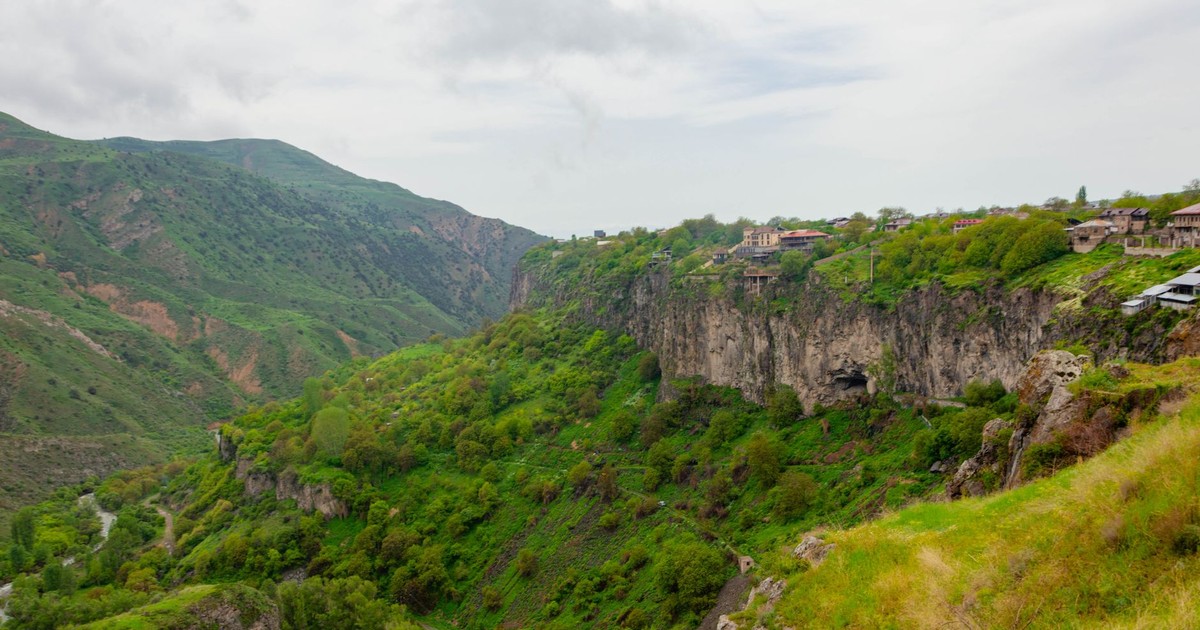
Armenia has had a persistent place in Eden scholarship since at least the 17th century. Armenia was proposed as the Garden of Eden by Carver as early as 1666, and the theory has returned periodically ever since. The argument connects to the presence of Mount Ararat – the mountain of Noah’s Ark – in the Armenian highland, which draws the logic that if the great flood story is rooted in this region, perhaps the pre-flood paradise was here too.
The Araxes River, which flows through modern Armenia and Azerbaijan, has been proposed by various scholars as one of the four Genesis rivers, including by David Rohl in his Iranian theory (where it becomes one of the four rivers he identifies). The Caucasus region more broadly is notable for its extraordinary biodiversity, which has long attracted the attention of botanists and geneticists studying the origins of cultivated plants. The wild ancestors of wheat, barley, grapes, and many other foundational crops are native to this region, which has prompted some researchers to connect the agricultural richness of the Caucasus to the abundance described in Eden.
The oldest-known domesticated grapevines have been traced to the South Caucasus region, a detail that gives the Armenian theory an unexpected empirical anchor. Whether that makes it the Garden of Eden or simply an extraordinarily fertile region at the dawn of agricultural civilization is, of course, a matter of interpretation. But the fruit, at least, is undeniably there.
9. A Symbolic and Cosmic Location – Nowhere Physical

Not every theory involves a dig site or a satellite image. A substantial body of scholarly opinion holds that the Garden of Eden location is not a geographical question at all. For many modern theologians, the Garden of Eden is best understood not as a geographical location but as a symbolic narrative. Scholars like Francesca Stavrakopoulou of the University of Exeter and Mark Leuchter of Temple University contend that reading Genesis as a geographical document misunderstands its purpose and literary form.
On this reading, Eden is a theological concept representing humanity’s original relationship with the divine – a state of consciousness or spiritual condition rather than a physical place. The “east” direction mentioned in Genesis (“God planted a garden eastward in Eden”) is understood as a symbolic orientation, since east carried deep spiritual meaning in ancient Near Eastern cosmology. The rivers are understood as representations of the four corners of the known world, not literal waterways to be tracked on a map.
This view is academically dominant and, to many readers, deeply unsatisfying. There is something in the human mind that resists the idea that paradise was always only a metaphor. Even scholars who hold this position professionally tend to acknowledge that the Genesis authors were likely drawing on real landscapes and real cultural memories – the question is whether those memories congeal into a specific place or remain beautifully, irreducibly diffuse.
10. The Equatorial Belt – An Unconventional Hypothesis
Among the more unusual proposals is the suggestion, built on a fringe but published theory, that the Garden of Eden may have been situated along the equatorial belt, based on a hypothesis by Vail who theorized that in the distant past, Earth had rings similar to those of Saturn. These rings would have provided shade, creating a more pleasant and temperate environment on the equator. According to this hypothesis, as Earth’s rings gradually dissipated, the agreeable conditions they offered diminished, leading to a drier climate. The environmental shift from a shaded and delightful setting to a more arid one might mark the time when Adam and Eve were banished from the Garden.
This is, to put it gently, not the mainstream view. Planetary scientists have found no evidence that Earth ever had a ring system analogous to Saturn’s, and the theory requires accepting several astronomical premises that have not cleared peer review. But the impulse behind it represents something revealing: the recurring human need to explain the Fall as something that happened not just spiritually but physically – a real change in the natural world that corresponds to the biblical narrative of expulsion.
What it shares with the more credible theories on this list is a willingness to take the text seriously as a document that might preserve some fragment of real memory, however distorted. The scholars hunting for Eden beneath the Persian Gulf and the theorists proposing Earth’s lost ring system are, at their core, animated by the same question: what if something actually happened? The difference is in the rigor with which they’ve pursued the answer.
The Map Nobody Can Finish
The honest summary of three thousand years of searching is this: every theory has something going for it, and not one of them closes the case. The Mesopotamian theory has the strongest scholarly backing and the most direct geographical correspondence to the named rivers. The Persian Gulf theory has satellite data and a plausible Ice Age flooding scenario as its foundation. The Iranian theory has a meticulous geographical argument built by a researcher who spent a decade on it. Göbekli Tepe has ten-thousand-year-old stone pillars carved with the animals of a pre-agricultural paradise. None of them have a gate, a cherubim, or a flaming sword.
What the Garden of Eden location debate really maps is something more interesting than geography: it maps the human conviction that paradise was real and that it was lost, not imagined. Every culture that has ever existed has some version of a golden age, a better time, a place where things were right before they went wrong. Genesis gives that universal feeling a specific address, and the search for that address has never really been about finding a garden. It has been about proving that the loss was real – that something genuine was taken from us, and that the wound has coordinates.
AI Disclaimer: This article was created with the assistance of AI tools and reviewed by a human editor.