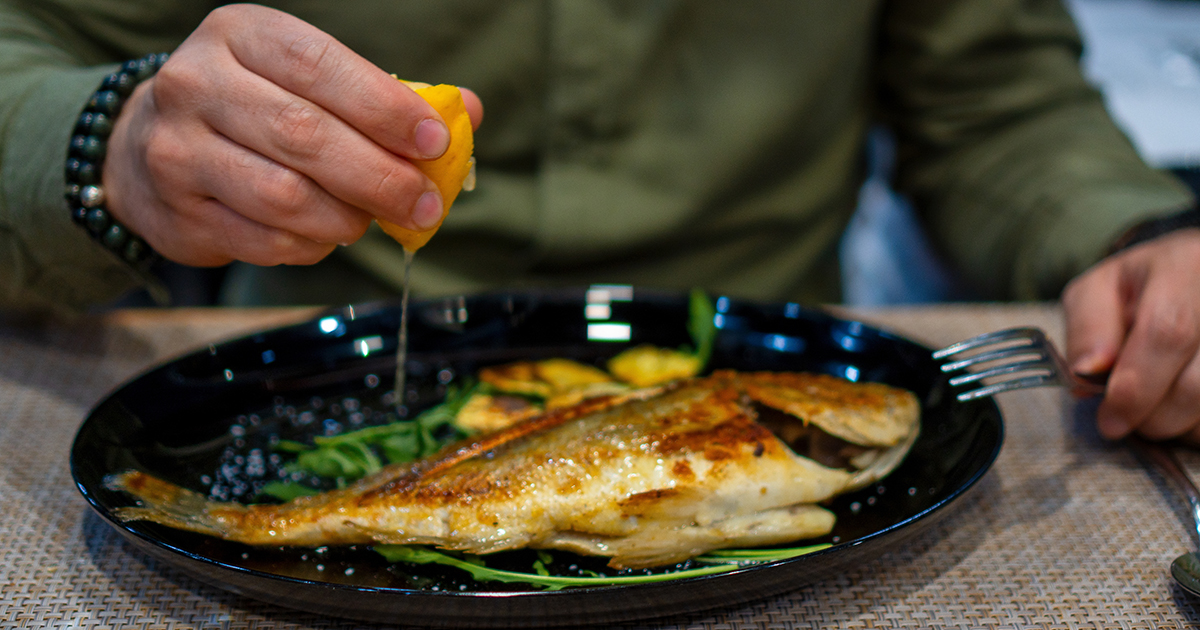

The roughly 2,400 men and women currently sitting on death row in the United States did not get there by accident, and neither did the peculiar institution that allows many of them to choose what they eat on the way out. The tradition of offering condemned prisoners a final meal before execution has existed in various forms for centuries, and for most of that history, it was understood to be one of the last human courtesies extended by the state before it took a life. What that tradition actually looks like in practice, what gets requested, what gets denied, and what one famously untouched banquet did to change the rules forever, turns out to be genuinely fascinating.
There is exactly one item no death row inmate can request, regardless of which state they are held in, regardless of how small or elaborate their order might otherwise be. Knowing what it is tells you something about the nature of the ritual itself. Everything else is more complicated than you think.
The dinner-party version of this question – the one where you imagine what you’d choose for your last meal – gets asked all the time, usually over wine on a Friday night. The real version, as it turns out, looks almost nothing like what people imagine.
The One Item That Is Always Off the Menu
The item prisoners generally cannot request is alcohol. Prisons treat booze as contraband, so it is not allowed inside the facility as part of a final meal request under any circumstances. Tobacco is also usually, but not always, denied. These bans hold across every state that still offers the tradition, regardless of whatever else the inmate is allowed to choose. The logic is straightforward: a final meal is still served inside a prison, and prison rules do not pause because someone is facing execution.
Back in 1835, convicted murderer Manuel Fernandez was reportedly allowed “a nip of brandy” and several cigars before his execution. Those kinds of luxuries have long since disappeared from the tradition. What replaced them was something more controlled, more bureaucratic, and in some states, more generous than you might expect – and in others, considerably less so.
How the System Actually Works
The tradition of granting a final meal is not as widespread as many people assume. Today, only about a dozen states still allow death row inmates to request a special meal before their execution, and even then, the rules vary considerably from one state to another.
Among states that maintain capital punishment, some place strict price limits – Florida caps requests at $40, while Oklahoma limits inmates to $25 – while others strictly serve standard prison cafeteria food with no exceptions. In Louisiana, it is traditional for the prison warden to join the condemned inmate for their last meal, a detail that manages to be both humanizing and deeply strange.
In practice, prisons may limit the cost, require food to be available nearby, or refuse anything that cannot be safely prepared inside the facility. This is why the popular image of the death row inmate ordering lobster and champagne does not match the reality. The champagne is out entirely. The lobster is theoretically possible but only if someone can actually get it there. That is also why famous last meals tend to feature fast food, comfort food, desserts, and soft drinks rather than expensive or unusual requests.
In the United States, most states give the meal a day or two before the actual execution and now use the euphemism “special meal.” The word “last” has fallen out of official favor, which tells you something about the bureaucratic instinct to soften the edges of state-sanctioned death even while carrying it out.
What People Actually Order
The most striking thing about death row last meal requests is how consistent they are. Across decades of records, the same foods appear again and again, and they are not the extravagant orders you might expect from someone with nothing left to lose. They are fried chicken, cheeseburgers, french fries, ice cream, and soda. They are, almost universally, the food of childhood.
French fries, soda, ice cream, hamburgers, chicken, steak, and pie are the most commonly requested items among inmates facing execution, according to a 2012 study from Cornell University that examined 193 last meal requests in the United States. More than two-thirds of the condemned ordered fried foods, mostly french fries, and they ordered dessert at about the same rate. Inmates were five times more likely to request soda than milk.
The analysis, published in the academic journal Appetite, found the average last meal is calorically rich at 2,756 calories, proportionally averaging 2.5 times the daily recommended servings of protein and fat. Nutrition becomes almost beside the point. When you have hours left, you are not thinking about cholesterol.
Lead researcher Brian Wansink, who directed the Food and Brand Lab at Cornell University, said the popularity of comfort foods and name-brand products like Coca-Cola could reflect people trying to deal with extremely high stress by surrounding themselves with familiar food. As Wansink put it, “You don’t find people going for Neapolitan ice cream or for Chunky Monkey or Chubby Hubby. They go for chocolate; they go for vanilla.” The instinct under maximum stress is not toward novelty. It is toward the thing that already feels like safety.
Name-brand specificity is surprisingly common. Inmates do not just ask for chicken – they ask for KFC. They do not just ask for a soda – they ask for Coca-Cola, or Dr. Pepper, or Pibb Extra. Name brands were asked for by about 40 percent of inmates, with Coke, Dr. Pepper, KFC, McDonald’s, Pepsi, and Wendy’s among the most frequently requested. There is something in that specificity that reads as a kind of insistence on being a particular person, with particular tastes, right up to the end.
Notable Last Meal Requests
Some requests have become genuinely famous, partly because of who made them and partly because of what they reveal.
Serial killer John Wayne Gacy Jr., known as the “Killer Clown,” had a family picnic before his execution in 1994. Gacy, who had previously managed three KFC restaurants, asked for a bucket of KFC Original Recipe chicken, 12 fried shrimp, french fries, and a pound of strawberries. He ate all of it. The detail about the KFC management history is one of those facts that lodges itself somewhere uncomfortable.
Oklahoma City bomber Timothy McVeigh, sentenced to death for the murders of 168 people, kept things surprisingly simple, choosing two pints of mint chocolate chip ice cream before he died in 2001 by lethal injection in Indiana at age 33. Two pints of ice cream as a final statement, after the deadliest domestic terror attack in American history. The smallness of it does something the enormity of it cannot.
Victor Feguer famously asked for a single olive, which many interpret as a call for peace. Others have rejected the last meal ritual entirely, a choice often associated with maintaining innocence or choosing defiance.
Ted Bundy chose not to make a special request at all. He was served the standard prison meal: steak, eggs, hash browns, toast, milk, and juice – the traditional last meal of Florida’s death row at the time, offered when no special request was made.
A second study from Cornell University, examining the last meals requested or rejected by 247 persons executed in the United States between 2002 and 2006, found that those who maintained their innocence to the very end were far more likely to reject the meal than prisoners who had accepted their guilt. Those who denied guilt were 2.7 times as likely to decline a last meal than people who admitted guilt. Declining the meal, it turns out, is its own kind of last word.
Read More: Three Symptoms That Appear 24 Hours Before Death
The Man Who Ruined It for Everyone in Texas
No conversation about the death row last meal is complete without Lawrence Russell Brewer, the man who single-handedly ended an 87-year tradition in the state of Texas.
Brewer was a white supremacist convicted of the 1998 murder of James Byrd Jr., a Black man who was chained to the back of a pickup truck and dragged for three miles along a Texas road. It was a crime so savage that Brewer and his accomplice became the first white men in modern Texas history to receive the death penalty for killing a Black man.
For his death row meal, Brewer requested and was given: two chicken fried steaks smothered in gravy with sliced onions, a triple-meat bacon cheeseburger with fixings on the side, a cheese omelet with ground beef, tomatoes, onions, bell peppers and jalapeños, a large bowl of fried okra with ketchup, one pound of barbecue with half a loaf of white bread, three fajitas with fixings, a Meat Lovers pizza, three root beers, one pint of Blue Bell vanilla ice cream, and a slab of peanut butter fudge with crushed peanuts.
He didn’t eat any of it. Brewer’s refusal sparked frustration from Texas state senator John Whitmire, who wrote a letter to the executive director of the Texas Department of Criminal Justice stating that “it is extremely inappropriate to give a person sentenced to death such a privilege.” The director agreed the senator’s concerns were valid, and thus ended the 87-year tradition of allowing death row inmates in Texas to choose their last meal. State prisons chief Brad Livingston announced that, effective immediately, last meals would consist of whatever was on the menu for all prisoners at Huntsville’s Walls Unit, home of the state death house.
On Brewer’s execution day, the Walls prisoners were fed sloppy Joes, navy beans, creamed corn, and sliced bread. That was what everyone else had. That is now what everyone in Texas has.
Senator Whitmire, who is now Houston’s mayor, framed it as a matter of principle: the condemned should not be treated with a celebrity’s courtesy that their victims never received. The argument was effective. The tradition has not been reinstated.
What the Meal Actually Means
There is a question underneath all of this that is harder to answer than it looks: why does any of this matter? These are people convicted of some of the most serious crimes on record. The question of whether they get fried chicken or cafeteria food before they die seems almost trivially small next to everything else.
But the tradition persists in roughly a dozen states for a reason that has less to do with generosity toward the condemned and more to do with something older. The last meal is a ritual, and rituals exist to give form to things that would otherwise be formless. What someone chooses for their last meal on death row might seem trivial, but it is often a final act of self-expression. Psychologists and criminologists agree that last meal choices are rarely random – they often reflect nostalgia, protest, identity, or surrender.
For some inmates, it’s about control. In a system that dictates every aspect of life, the last meal allows a condemned person to take charge, if only for a moment. The choice of vanilla over Neapolitan, of KFC over a blank refusal, of a single olive over a full banquet – each of these is a statement made in the only language still available.
What This Says About All of Us
What stays with you, after going through the records and the research, is not the monstrous orders or the famous names. It is the specificity. The man who wanted Blue Bell vanilla in particular. The one who asked for two pints of mint chocolate chip, nothing else. The one who asked for a single olive and left the room having said everything he needed to say.
Food is how humans mark time and meaning. Every culture in the world has meals attached to its most significant moments – birth, marriage, grief, celebration, the end of things. The death row last meal sits inside that same instinct, even at the most extreme end of human experience imaginable. The condemned reach for the same things everyone reaches for when the world feels unmanageable: something familiar, something from before, something that tastes like a moment when things were not yet this way.
The fact that alcohol is the one thing universally denied makes a strange kind of sense. The comfort being sought in that final meal is not the comfort of numbing or escape. It is the comfort of recognition – of tasting something that says, plainly, I existed. I had preferences. I was a person who liked this particular thing. A glass of something could blur that. A bucket of KFC, a pint of ice cream, a pound of strawberries – those are specific. Those are indelible. Those are, in their own strange way, a refusal to disappear quietly into the record.
The state of Texas decided in 2011 that the ritual had become theater. It is hard to entirely argue with that. But the dozen states that still offer it seem to have concluded that the theater serves a purpose – not for the condemned, necessarily, but for the rest of us who have to live with what is being done in our name. Whether that conclusion is right is a question the records don’t answer. They only show you what people chose, and let you sit with what that means.
AI Disclaimer: This article was created with the assistance of AI tools and reviewed by a human editor.