
There are cases that stay in the public imagination not because they are easy to explain, but because they refuse to be. Demonic possession is one of those subjects that most people keep at arm’s length – fine to discuss in the context of a horror film, slightly less comfortable when you realize the film was based on a real boy, a real town, a real priest keeping a diary. America has produced some of the most documented, most disputed, and most culturally penetrating demonic possession cases in history. What happened in those rooms – whether the explanation is supernatural, psychological, or some unsettling overlap of the two – is a question that courts, doctors, clergy, and ordinary people have argued about for decades. Several of these cases never got resolved. The people at the center of them lived with that ambiguity for the rest of their lives.
What follows are the cases that shaped how America thinks about possession. They are not all the same. Some are rooted in grief. Some moved through courtrooms. Some were witnessed by police officers and social workers who had no agenda to believe what they saw. Each one tells a different story about what happens when the inexplicable arrives in an ordinary life and refuses to leave.
These are not myths or campfire stories. They are documented events – documented by priests, journalists, government agencies, and in one case, a 29-page handwritten diary that sat in a sealed drawer for nearly thirty years.
The Earling Exorcism: Anna Ecklund, Iowa, 1928
Anna Ecklund was a pseudonym for Emma Schmidt, an American woman whose alleged demonic possession and exorcism occurred over several decades, culminating in an extensive exorcism that lasted from August 18 to December 23, 1928, in Earling, Iowa. Ecklund was said to have exhibited symptoms akin to possession beginning at age fourteen, and was forty-six years old during her final exorcism by Father Theophilus Riesinger, a Roman Catholic priest.
Riesinger performed at least 22 exorcisms in his lifetime, but it was this 1928 case that became the most publicized case of exorcism in American history. His firsthand account was published in 1935 as Begone Satan!, shocking readers worldwide, and the story was covered in Time magazine, influencing both Catholic exorcism procedures and the broader study of possession.
The exorcism was reportedly so grueling, and Ecklund’s behavior so violent, that several nuns in the Franciscan order asked to be relocated to a different convent. Ecklund was believed to be possessed by Judas Iscariot, as well as Jacob, her own father, who had cursed her with the help of his lover, her aunt Mina, for refusing his advances during her adolescence. The extensive exorcism resulted in deterioration of Ecklund’s body, as she refused to consume food, also vomiting foul debris and what appeared to be tobacco leaves. Her head, lips, and face reportedly swelled, and she was also able to speak in multiple languages unknown to her.
The booklet about the case would eventually serve as research material for author William Peter Blatty, whose depiction of possession in The Exorcist very closely mirrors the events said to have taken place in that Iowa convent. The skeptics have long pointed to unverified biographical details and the absence of any independent medical documentation. The believers point to Time magazine. Both sides are still arguing.
Roland Doe: The Case That Built a Culture, Maryland and Missouri, 1949
In the late 1940s, in the United States, priests of the Catholic Church performed a series of exorcisms on an anonymous boy, documented under the pseudonym “Roland Doe” or “Robbie Mannheim.” The 14-year-old boy was a victim of alleged demonic possession, and the events were recorded by the attending priest, Raymond J. Bishop. In December 2021, The Skeptical Inquirer reported the true identity of Roland Doe as Ronald Edwin Hunkeler, who was born June 1, 1935, and died May 10, 2020.
The boy was a Lutheran from Cottage City, Maryland, whose disturbances reportedly began in late 1948 following the death of his spiritualist aunt, Harriet “Tillie” Nolan, who had introduced him to Ouija board use. The Doe family first began hearing strange sounds in January 1949. They assumed the scratching noises coming from their walls and ceiling were caused by rats, but exterminators couldn’t find any evidence of infestation. The family soon claimed to experience other frightening phenomena, including unexplained footsteps, furniture and dishes moving of their own volition, and the violent shaking of their teenage son’s bed.
A 29-page handwritten journal kept by Father Bishop chronicles daily observations from January 15, 1949, when initial disturbances were noted in Cottage City, through the conclusion of the exorcism on April 18, 1949, in St. Louis. Entries describe phenomena such as scratching sounds, violent seizures, the appearance of words like “HELL” scratched into the boy’s skin, and the boy’s use of abusive language and unfamiliar voices during prayers.
Jesuit priests, led by Father Edward Hughes and later Father William Bowdern, conducted over 30 exorcisms across Maryland and St. Louis, battling what they believed was a demonic entity. On April 18, 1949, a final confrontation marked the turning point in the case. According to witnesses, Ronald experienced a vision of St. Michael the Archangel, the warrior saint who battles demons. Ronald reportedly declared that the entity was gone, and the supernatural phenomena ceased immediately. Following the exorcism, Ronald Hunkeler returned to what appeared to be a normal life. He eventually married, had children, and lived quietly away from the public eye.
The skeptics won at least one significant concession: Father Walter Halloran, a Jesuit priest who assisted in the St. Louis exorcisms, later expressed doubts about the supernatural nature of the events, stating he never witnessed anything beyond possible self-inflicted scratches and that the boy seemed “scared, confused, and caught up in something he didn’t understand.”
Subsequent supernatural claims surrounding the events were used as elements in William Peter Blatty’s 1971 novel The Exorcist), which became one of the most influential horror films ever made. The demonic possession cases of America – and this one in particular – effectively created a cultural template that the entire genre has lived inside ever since.
The “Devil Made Me Do It” Case: Arne Cheyenne Johnson, Connecticut, 1981

Some demonic possession cases stay within the church. This one went to criminal court, and the trial of Arne Cheyenne Johnson changed American legal history in the process. The trial, also known as the “Devil Made Me Do It” case, is the first known court case in the United States in which the defense sought to prove innocence based upon the claim of demonic possession and denial of personal responsibility for the crime.
According to testimony by the Glatzel family, 12-year-old David Glatzel had allegedly played host to a demon. After witnessing a number of increasingly ominous occurrences involving David, his family, exhausted and terrified, decided to enlist the aid of paranormal investigators Ed and Lorraine Warren in a last-ditch effort to “cure” the child. After Johnson told the alleged demon to enter into his body instead, he began behaving strangely, committing acts such as putting his fist through a chest of drawers with no explanation and falling 100 feet without injury.
On February 16, 1981, Johnson, then 19 years old, stabbed his landlord several times with a five-inch pocket knife. It was the first murder on the books in the 193-year history of Brookfield, Connecticut. Johnson’s lawyer argued that demonic possession caused Johnson to kill his landlord, a defense that argued his lack of intent. Johnson claimed that he completely blacked out and did not remember stabbing his landlord at all.
The defense attorney attempted to submit a plea of not guilty by virtue of possession, but the presiding judge, Robert Callahan, promptly rejected this defense. The jury deliberated for 15 hours over three days before convicting Johnson on November 24, 1981, of first-degree manslaughter. He was sentenced to 10 to 20 years behind bars, though he served only five.
The case was messy in the way real cases always are. In 2007, Debbie’s brother Carl Glatzel claimed in a legal filing that most of the incidents described in the book about the case are “complete lies,” and that his family was manipulated and exploited by the Warrens. The story was later made into a film adaptation titled The Conjuring: The Devil Made Me Do It in 2021, and was the subject of a Netflix documentary, The Devil on Trial, in 2023.
The Demon House of Gary: Latoya Ammons, Indiana, 2011 – 2012
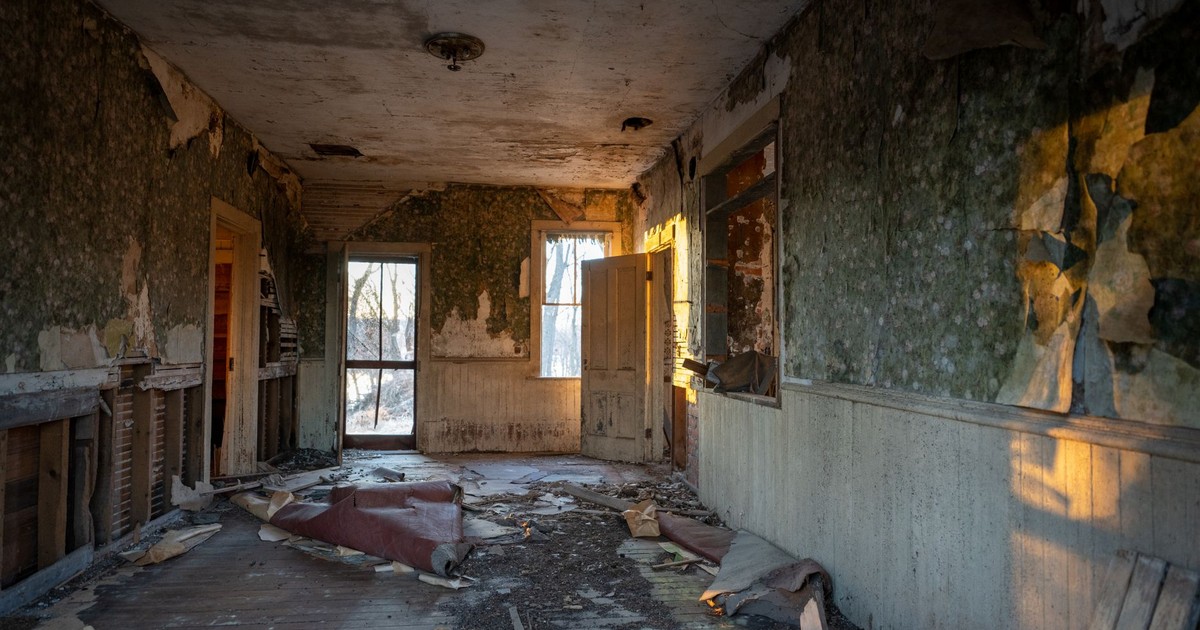
The Ammons case is one of the most unsettling in the history of demonic possession cases in America precisely because of who witnessed what was happening. This was not just a family’s account. Latoya Ammons, a mother of three, began experiencing what she claimed were supernatural occurrences – from infestations of flies to the sounds of footsteps and doors opening in the night – after moving herself, her mother, and her children into a rental home in Gary, Indiana.
Things reportedly escalated over the next few months, with Ammons describing increasingly bizarre and dangerous episodes during which the kids allegedly levitated, were thrown across rooms, and spoke in deep, unnatural voices. The Gary Police Department, Indiana Department of Child Services, and local hospital all became involved in the case, with officers, medical staff, and social workers reporting they had witnessed incidents of this nature.
According to a report released from the Department of Child Safety, medical staff witnessed Latoya’s youngest son fly into the air and then against a wall without anyone touching him. The boy also reportedly walked up a wall and did a flip over his grandmother. As the police and the Department of Child Services investigated the odd behavior going on inside the home, they compiled nearly 800 pages of official documents.
The family hired Reverend Michael Maginot to perform an exorcism. He interviewed the family on April 22, 2012, and concluded they were being “tormented by demons.” He eventually performed three exorcisms, two in English and one in Latin. After moving to a new house and working to meet the objectives of the DCS case plan for her family, Ammons regained custody of her children in November 2012.
The skeptics had a reasonable case too. Psychologists concluded “the children were acting deceptively and in accordance with their mother’s beliefs.” One psychologist noted that the youngest son “acted possessed” whenever he was challenged or was asked questions that he did not wish to answer. In 2014, Zak Bagans purchased the house for $35,000 and demolished it in January 2016 after filming a documentary in it, titled Demon House, that was released on March 16, 2018.
What makes this case impossible to fully dismiss is the 800 pages of government paperwork from people with nothing to gain and careers to lose by saying what they said they saw.
The Psychiatrist Who Believed: “Julia,” New York, 2008
This case is different from the others because the most significant witness wasn’t a priest or a family member. In 2008, Dr. Richard E. Gallagher, a board-certified psychiatrist and associate professor of clinical psychiatry at New York Medical College, documented the case of a patient nicknamed “Julia” whom he deduced was indeed possessed by demons. It is rare that a scientist and psychiatrist would acknowledge the possibility of possession; typically, doctors think that possession is either fraudulent or a result of mental illness.
Gallagher was persuaded of the legitimacy of the possession by inexplicable phenomena that occurred during the exorcisms: the temperature of the room would drop; “Julia” spoke in multiple voices not her own and recounted things she could not have known, like personal details about the lives of those present; she displayed extreme strength, needing six people to hold her down.
Despite her possession, “Julia” refused to leave the cult she was part of and, according to Gallagher’s account, settled into a kind of coexistence with her demons. A board-certified psychiatrist documenting a case like this and attaching his professional name to it is, whatever you believe about the supernatural, an extraordinary thing to do. It didn’t end a career. It didn’t get ignored. It became one of the more cited accounts in the literature on possession precisely because of who was doing the citing.
Read More: 25 of The Scariest Places in The United States
What These Cases Actually Tell Us
America is not a country that is supposed to believe in this kind of thing. The cultural story we tell about ourselves is one of reason, progress, and institutional clarity. And yet the demonic possession cases that originated here – in Iowa convents, in Maryland suburbs, in Indiana rental houses, in Connecticut courtrooms – have proven stubbornly immune to that self-image. They have generated hundreds of pages of government documents, academic papers, legal arguments, and bestselling novels. They have refused to simply go away.
What is consistent across these cases, and what the secular and spiritual accounts both tend to acknowledge, is that something happened. Exactly what depends on the frame you bring. A psychiatrist sees dissociative disorder. A priest sees a demon. A court sees a question it cannot legally answer. To priests, the Roland Doe case was one of demonic possession. To writers and film and video producers, it was a great story. Those involved saw what they were trained to see. That is probably true across the board, and it does not actually settle anything.
The people at the center of these events – the Hunkeler boy who grew up and lived a normal life; Latoya Ammons, who regained custody of her children and moved to Indianapolis; Arne Johnson, who married while in prison and has maintained his account for over forty years – all had to keep living after the cameras moved on. The cases became cultural touchstones. For them, it was just what happened one particular stretch of months, in a particular house, in an ordinary American life that turned into something it was never supposed to be. Whether a demon was involved is a question nobody has fully answered. That the events were real, that they were witnessed, that they permanently changed the people at their center – none of that is in dispute.
The Weight of the Unanswered
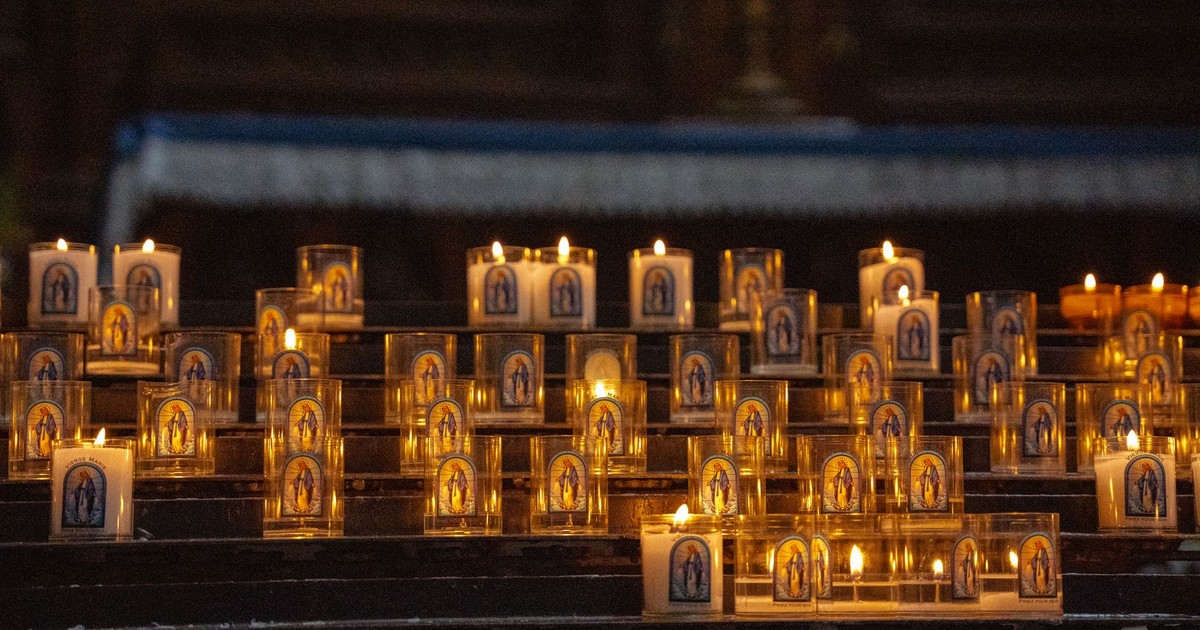
What these cases share is not a conclusion. They share a refusal to collapse into one. Every time a skeptic closes the book on one of them, a witness steps forward with something that doesn’t fit the tidy explanation. Every time a believer declares it proof, a psychologist points to a detail that required no demon at all. The cases keep their ambiguity because ambiguity is, in this context, the honest position.
The demonic possession cases America has produced are not horror stories that got out of hand. They are, at their core, documents of ordinary people caught inside something they could not explain, surrounded by other ordinary people – nurses, police officers, psychiatrists, priests – who also could not explain it. That convergence is what keeps these cases alive decades after they closed. Not the levitation. Not the scratched skin. The fact that trained professionals, people with reputations and careers on the line, stood in those rooms and wrote down what they saw. Whatever was in those rooms, people paid a real price for being there. That, at minimum, is not nothing.
AI Disclaimer: This article was created with the assistance of AI tools and reviewed by a human editor.