

Most men who divorce in their 50s or 60s will tell you, if you ask directly, that they are not in a hurry to date again. Some will say they are not going to date again at all. While younger divorced men often remarry within two to three years, those over 50 may take four to five years, or choose not to remarry at all. That is a widespread, recognizable pattern – and the reasons behind it are more specific, and more human, than the generic idea that men “just need time.”
Gray divorce has become one of the more remarkable demographic stories of recent decades. While overall divorce rates fall, people over 50 are divorcing twice as much as they did in 1990, which means millions of older men are landing in single life at an age when the rulebook for that experience was never really written. Some of them eventually find new relationships. Many do not.
What follows is not a list of excuses. Most of these reasons are honest, grounded in real psychology and real data, and deserve to be treated as legitimate choices rather than failures of nerve. Some of them are also things that nobody says out loud.
1. The Emotional Cost of Starting Over Feels Too High
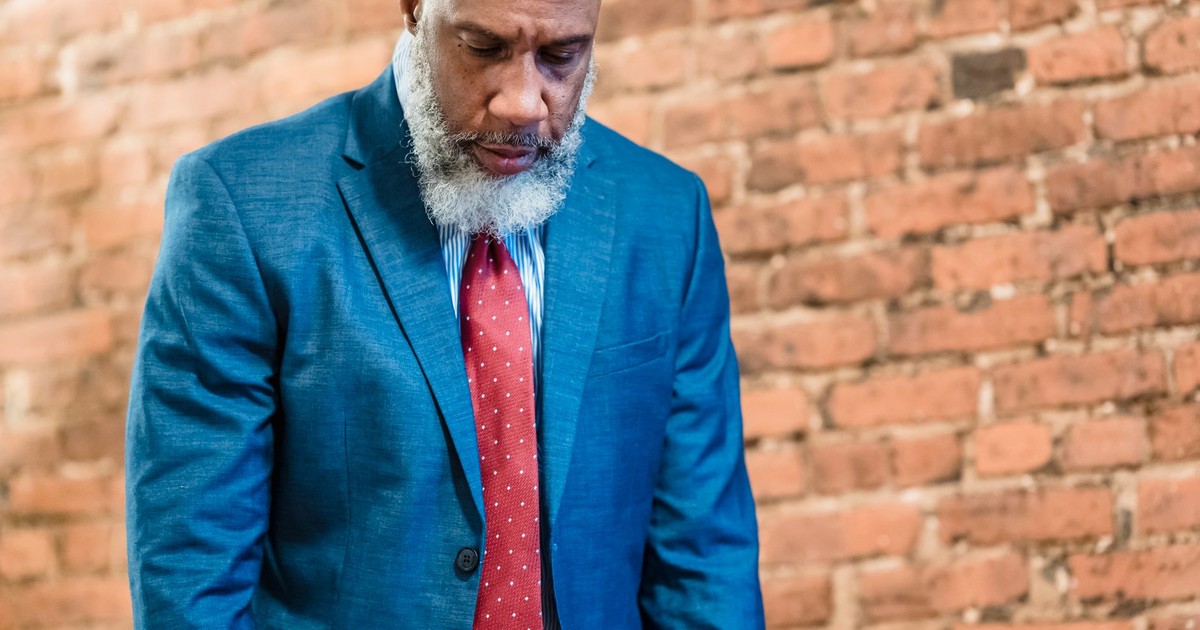
There is a particular kind of exhaustion that arrives not from activity, but from the prospect of it. Because men tend to have fewer strong social ties than women, their identity is more closely tied to their roles as husband and father. When those roles are eliminated or diminished, men often have a harder time creating new personal goals and a sense of who they are. Rebuilding that identity once is a serious undertaking. Being asked, implicitly, to do it again – to learn someone new, to become vulnerable again, to present a version of yourself you aren’t sure you fully recognize yet – is a lot to contemplate from a standing start.
For men who went through a prolonged or contentious divorce, the depletion is real. They may be functioning perfectly well in their careers and friendships, but the emotional reserves that dating requires feel spent. Men over 50 frequently take several years to remarry after divorce, and many don’t remarry at all. This isn’t weakness or avoidance in every case. Sometimes it is an accurate reading of where a person is.
2. They Have Already Learned What They Actually Want, and It Isn’t Simple to Find
A long marriage, regardless of how it ended, teaches a man with some precision what he needs in a partner. He knows his deal-breakers. He knows what poor communication looks like up close. He knows which of his own habits required work, and which he isn’t interested in changing. That clarity is genuinely useful – but it also makes the casual end of the dating pool feel like a waste of everyone’s time.
Older men dating after divorce often describe a frustration with the early stages of dating that goes beyond awkwardness. The process of determining compatibility that used to feel like discovery now feels like an audit with no guaranteed outcome. Some men decide they would rather not begin the process than spend a year in it and end up exactly where they started.
3. The Financial Stakes of Another Serious Relationship Are Genuinely Daunting

Some men experience divorce as a deep loss of agency. Even when they participated willingly in the decision, the process can feel invasive and destabilizing. Promising themselves they will never remarry can feel like reclaiming control – partly emotional, but also substantially financial.
A man who went through a divorce in his 50s likely divided significant assets: a home, retirement accounts, long-term investments. He may have emerged from the process in a stable but not abundant position, with fewer years remaining in his working life to rebuild. The prospect of entering another serious relationship – with its potential for shared finances, shared property, and the possibility of a second divorce – can feel like a risk the arithmetic doesn’t support. The prenuptial conversation alone is enough to cool enthusiasm in people who experienced the legal system of divorce and did not enjoy it.
4. Their Social World Doesn’t Naturally Generate New Romantic Connections

Meeting potential partners organically becomes harder in the later decades of life. According to a 2025 Pew Research Center analysis, among adults 40 and older, women are more likely to be unpartnered than men – which means the demographic playing field at that age is not as symmetrical as it might seem from the outside.
At that age, most of a man’s friends are coupled. His social calendar, if he has one at all, is shaped by work functions and family occasions where arriving alone is noticed. The casual infrastructure of dating – the places and situations where it happens without being called dating – has essentially disappeared from his life. Online dating exists, but for men who built their entire adult identity through face-to-face social dynamics, the swipe-left culture can feel alienating rather than promising.
5. Grief, When a Partner Died, Is Not on a Schedule

For men who lost a partner rather than divorced one, the reasons for not dating are different – and the social pressure they receive can be especially tone-deaf. The emotional weight of losing a spouse can create a tangle of grief, memories, and lingering emotional ties that affect readiness and approach to new relationships. Widowers often face the difficulty of managing feelings of guilt or disloyalty to their deceased partner while trying to open their hearts to someone new.
Grief does not move in a linear direction, and it does not respect the timeline that well-meaning friends have in mind. A widower who seems to be doing well six months out may be blindsided by loss two years later. He is not broken; he is experiencing something that takes the time it takes. The decision not to date is, in many cases, a decision not to bring that grief into someone else’s life before he has some command of it himself.
6. Adult Children Complicate the Picture More Than Anyone Admits
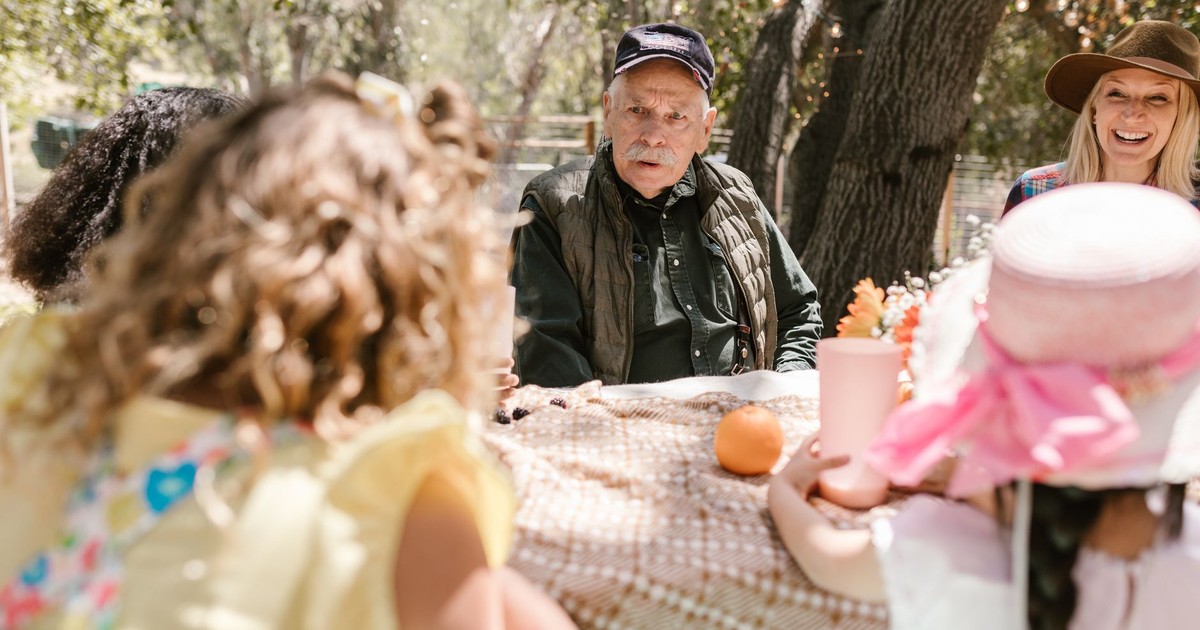
Later-life dating carries complications that younger dating doesn’t – among them, adult children whose opinions and feelings can influence the process in ways that range from cool to actively hostile. A man whose adult children are grieving the divorce of their parents, or the death of their mother, may find that introducing a new person provokes reactions he didn’t anticipate.
He loves his children. He also, possibly, loves or could love someone new. The psychological weight of managing both things at once – being the parent and also the person with needs – is considerable. Many men decide, without announcing it, that the path of least resistance is to simply not introduce the complication.
7. The Remarriage Statistics Are Not Encouraging
Research from the National Center for Family and Marriage Research at Bowling Green State University tracks U.S. marriage and divorce rates annually. Broader research on remarriage outcomes consistently shows that second marriages carry a divorce rate of approximately 60 percent or higher, compared to roughly 40 to 45 percent for first marriages. A man who went through one divorce already knows what that process feels like. The prospect of a second at 65 or 70 – with all the complexity that comes with merged households, blended families, and divided estates – is a reasonable thing to want to avoid.
The men who articulate this reason clearly are usually not resigned or bitter; they are simply doing the math and concluding that legal marriage is not the prize they once thought it was. Many of them are perfectly open to companionship. They are not open to another round of court dates.
8. Loneliness Has Become Comfortable, or at Least Familiar

Some men arrive at a form of solitude after divorce or loss that is not depression and is not contentment but sits somewhere in between – a practiced aloneness with its own routines and rhythms. According to a 2026 report from Retirement Living, only about 5 percent of adults aged 50 to 64 and 2 percent of those 65 and older currently use online dating – figures that suggest most older singles are not actively pursuing new relationships through the most available channel. Dating burnout is common among this group, with many taking extended breaks before returning to dating with clearer expectations – if they return at all.
Some of those breaks become permanent, not from despair, but because the alternative requires a reorganization of daily life that feels enormous from the inside. He has learned how to make dinner for one and not mind it. He has learned how to occupy a weekend without another person’s schedule or preferences in the picture. Some men adapt so thoroughly that re-entry feels like learning to live differently all over again, which is exactly what it is.
9. The Modern Dating Scene Is Disorienting

The norms of online dating – the pace of it, the volume of shallow first impressions, the expectation of rapid escalation or rapid abandonment – are calibrated for people decades younger. A man who had one serious relationship for thirty years has none of the practical fluency that people who have been dating continuously have developed. He doesn’t know what the apps expect of him. He doesn’t know what the etiquette is. And unlike a younger person, he has enough self-awareness to notice when he’s doing it wrong, which does not make it easier.
Beyond the learning curve, there is the identity question. Men who spent their adult lives presenting themselves as husbands and fathers now have to figure out who they are to a stranger, in a profile, in 200 words or less. For men who are private by nature, or who were simply never fluent in the vocabulary of self-promotion, the entire format can feel like it was designed for someone else entirely.
10. He Doesn’t Trust His Own Judgment Anymore
This one runs through a lot of conversations men have in the years after a long marriage ends. If he was blindsided by the divorce, or if the marriage deteriorated so gradually that he didn’t see the full picture until it was over, he has reason to doubt his own ability to read a relationship accurately. The confidence that “I know a good thing when I see it” is not available to him the way it once was.
That doubt is not irrational. It is the reasonable consequence of having been wrong in a significant way for a significant amount of time. The fix is not simply courage or someone telling him to trust again. It requires actually processing what happened – which takes longer than most people outside the situation imagine, and which older men, who were not raised to talk about emotional processing, often have to figure out without much of a map.
11. He Has Rediscovered Himself and Doesn’t Want to Lose That

Among those eligible to remarry, men have historically been more likely than women to do so – though Pew Research Center data on remarriage demographics shows this gap has narrowed as men have become somewhat less likely to remarry than in previous decades. Part of that shift tracks with something many older divorced men describe: a discovery, sometimes for the first time in their adult lives, of who they actually are when they are not performing a role.
Decades of being a husband and a father leave little room for the kind of self-examination that reveals what a person genuinely likes, wants, and values when no one else has a vote. Some men find, in the years after a long marriage ends, that they have opinions about how they want to spend a Saturday that are entirely their own. They have friendships they cultivated without consulting anyone. They have routines that nourish them. Folding another person’s preferences back into all of that – with real love and goodwill – still represents a kind of dissolution that they are not in a rush to experience again.
12. Health and Energy Are Real Considerations

Dating is physically tiring, and health complications that arrive in the later decades of life are not hypothetical for older men. Divorced men have more heart issues, battle with substance abuse, and die at younger ages than divorced women. The period following divorce is, for many men, a period of genuine health fragility – and navigating that while also navigating the vulnerability of a new relationship is a genuine weight.
Early-stage dating requires a certain performance of optimism and availability that takes fuel. A man who is managing his own medical appointments, his relationship with his adult children, his finances in retirement or near-retirement, and whatever grief he is carrying from the end of his last relationship does not always have that fuel to spare. This is not self-pity. It is an accurate accounting of what a new relationship requires, made by someone who has learned what that actually costs.
13. He Has Decided Companionship Doesn’t Require a Romantic Relationship

The least dramatic reason, and possibly the most common, is that a man has found ways to meet his needs for connection, purpose, and companionship that don’t require a partner. Strong friendships. A grandchild he sees every week. A community of some kind – a church, a running group, a poker game that has been going for fifteen years. These things are real and they are enough for some people.
This deserves its own category rather than being folded into grief or fear, because it isn’t either of those things. It is a man who has done the inventory of his life and found it full enough. He is not avoiding intimacy. He is not damaged by loss. He has arrived at a configuration of his life that works, and the expected next step – finding a romantic partner – is not a step he feels any particular pressure to take. That is, by any reasonable measure, a legitimate conclusion.
What This Is Really About

The conversation around older men dating after divorce tends to get treated as a problem to be solved – either for the men themselves or for the women who would like to date them. Pew Research Center findings on remarriage attitudes show that 29 percent of previously married men want to remarry and 36 percent are not sure, while just 15 percent of previously married women want to remarry and about 54 percent say they do not. Ambivalence about returning to serious partnership is not a male-specific phenomenon. It is the considered position of a large portion of people who have been through it once.
These 13 reasons share a common thread: they all describe a man who has survived something significant and is trying to build a second life with some care. Some of the reasons are fear in a reasonable costume. Some of them are genuine wisdom. Most of them are both at once. Many men reach conclusions that look like avoidance from the outside and feel like clarity from the inside. Both can be true. Often they are.
AI Disclaimer: This article was created with the assistance of AI tools and reviewed by a human editor.