

Florida public school students in third through fifth grade will be required to learn cursive writing and prove they’ve mastered it before moving on to middle school, under a new state law taking effect July 1. For sixteen years, since Florida dropped its cursive mandate in 2010 when it adopted Common Core standards, there was no enforceable requirement to teach it. Some teachers kept it anyway. Many didn’t have the time.
The implications are messier than any single headline makes them sound, and the debate touches something much older than the question of whether your child can write a looping letter “f.” Whether you see this as a long-overdue correction or one more thing piled onto already stretched teachers and kids probably depends on what you’ve watched happen in classrooms over the past decade.
What the Law Actually Requires

The Florida cursive requirement is part of a broader education bill, SB 182, passed during the 2026 legislative session. According to News4JAX, Governor Ron DeSantis signed the legislation into law on April 21, 2026. That the Senate passed it unanimously says something about how broadly this was seen as an uncontroversial correction rather than a culture war flashpoint.
Under the new law, third through fifth grade students must receive instruction in cursive writing, covering letter formation, proper spacing and alignment, and practice writing complete words and sentences. By the end of fifth grade, each student must demonstrate they can write uppercase and lowercase letters in cursive, write words and sentences legibly with proper spacing and alignment, and read and apply cursive writing in a way that supports literacy development.
That last part – “read and apply cursive writing” – carries more weight than it sounds. As WTSP reports, Florida’s English Language Arts “B.E.S.T.” standards already included cursive instruction for grades 3, 4, and 5, but there was no statewide exam attached to it. Districts taught cursive because the standards required it, but without any assessment tied to the skill, mastery varied widely. The new law turns that aspiration into an expectation with actual teeth.
Proficiency under the new law means writing upper and lowercase letters in cursive, producing legible words and sentences with proper spacing and alignment, reading cursive, and applying it in essays and other assignments. The Florida Department of Education is responsible for determining how that proficiency will be evaluated. What an assessment looks like, who administers it, and how results factor into a student’s progression are still being worked out as districts prepare for the 2026-2027 school year.
How It Got Here
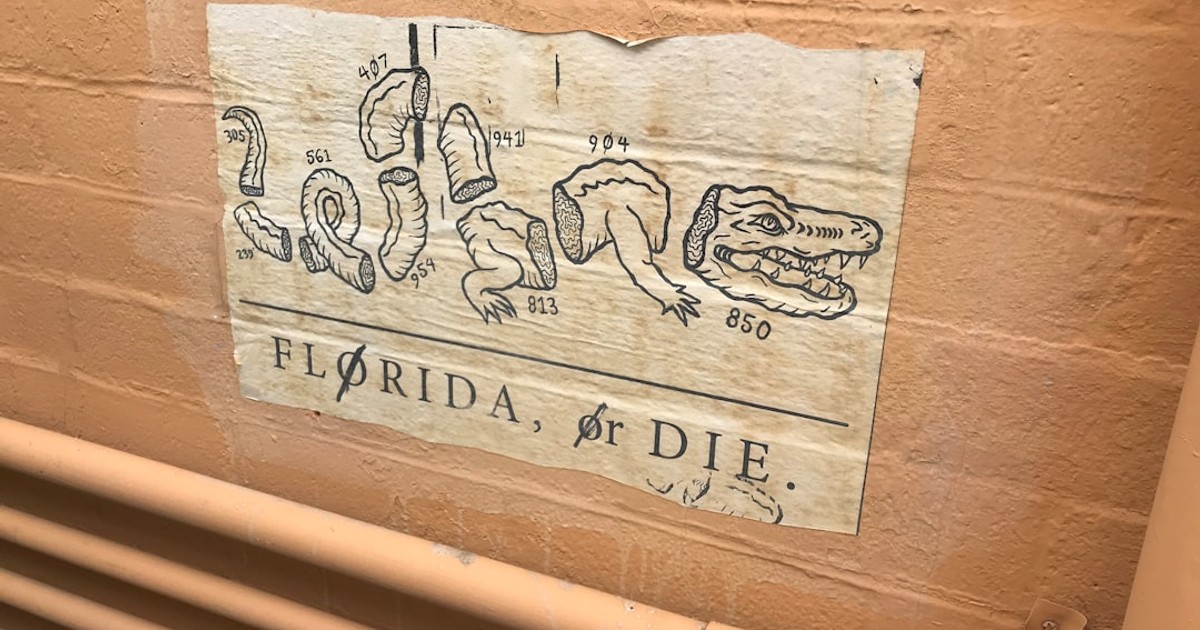
The legislative path for this bill was anything but smooth. As WUFT/Fresh Take Florida reports, Rep. Tobin Overdorf of Stuart initially drafted a cursive instruction bill for students in grades two through five, but the scope was narrowed to grades three through five before it passed. After it stalled in the House and Senate until the second-to-last day of the legislative session, it was added as an amendment to a proposal by Sen. Shevrin Jones, a Democrat from Miami Gardens, whose original bill established a new school teacher training and mentoring program. That’s the legislative version of getting your carry-on through customs – sometimes you end up attached to someone else’s luggage just to make the flight.
Overdorf moved forward after hearing from mortgage professionals in his district who were shocked when younger Floridians couldn’t sign legal documents because they didn’t know cursive. A closing table, a stack of paperwork, and a young adult hovering over the signature line with genuine uncertainty – that’s been happening with enough regularity that people in real estate noticed.
Overdorf cited research suggesting cursive writing helps with sentence development, comprehension, hand-eye coordination, and early-onset diagnosis of dyslexia and other learning disabilities. The dyslexia angle is one educators have been watching closely – the continuous, connected motion of cursive appears to help some students with letter recognition in ways that isolated print letters do not.
What the Research Says About Handwriting and the Brain

A 2024 study published in Frontiers in Psychology compared brain activity during handwriting versus typing using EEG. Handwriting – whether in cursive on a touchscreen or traditional pen and paper – activated extensive brain regions vital for memory and learning.
Handwriting produces more complex brain connectivity patterns than typing. The study’s authors suggest those patterns may support learning, though researchers continue to debate how directly the observed connectivity differences translate into classroom outcomes. The physical act of forming letters by hand engages the brain differently from typing. The motor control required to connect loops and curves, letter by letter, draws on regions that a keyboard tap simply doesn’t reach.
The repetitive motion of hitting a key with the same finger is less stimulating for the brain than the variable, precise movements involved in handwriting. Florida’s classrooms aren’t about to throw out the tablets, but handwriting and typing develop different cognitive pathways, and losing one to make room for the other carries a real cost.
For parents who’ve watched their kids navigate digital learning over the past decade and wondered whether something important was being traded away, the research gives that instinct some grounding.
Florida Is Not Doing This Alone
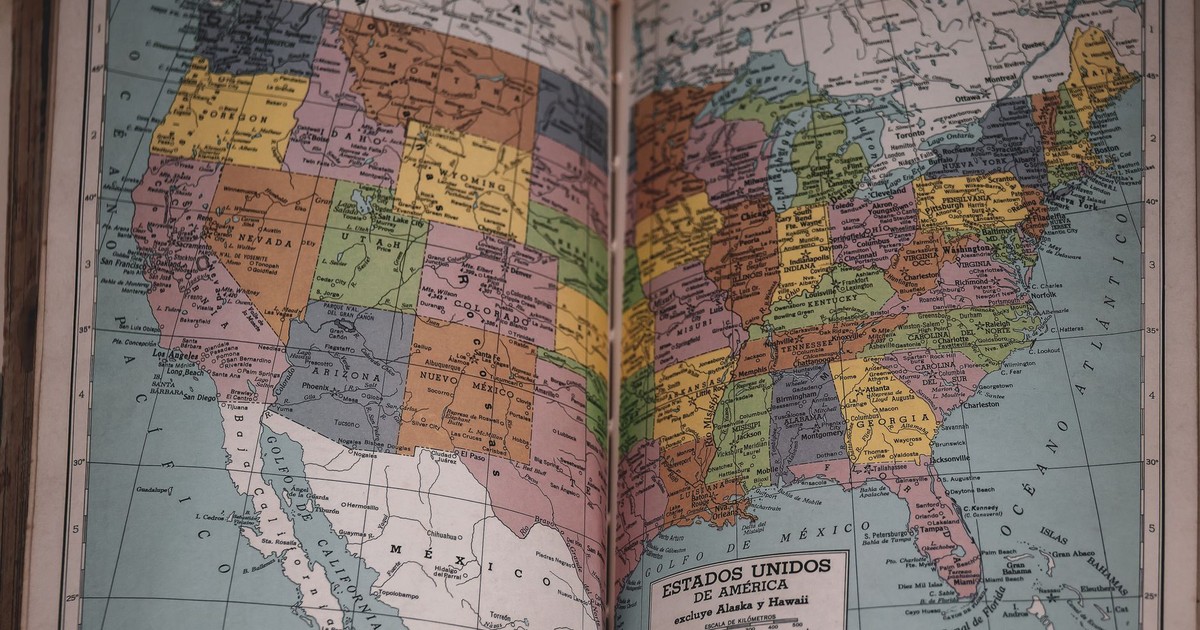
The Florida cursive requirement sits in the middle of a national conversation that has been building for years. Around 25 U.S. states now require cursive in schools, up from 14 states a decade ago. California reinstated cursive effective January 1, 2024, for grades one through six, while Michigan passed similar legislation in 2023.
Five years ago, cursive felt like it was headed the way of the card catalog. The momentum now clearly runs in the other direction. Whether that reflects educational research catching up with what teachers always knew, or a broader pull toward analog skills in a digital world, is probably both.
What Teachers and Educators Are Actually Saying

The educator response to the Florida law is more varied than the binary headlines suggest. A professor of medieval and ecclesiastical history at Florida Gulf Coast University, who regularly works with historical legal texts written in connected script, found that students who wrote in cursive during a handwritten exam produced more detailed essays than those who wrote in print. That observation connects cursive not just to penmanship but to the quality of thought put to paper.
A veteran teacher who spent 18 years in Florida elementary classrooms across grades two through five noted that cursive instruction was often limited because other writing standards had to take priority. She reflected that literacy and spelling connect whether in print or cursive, and that any kind of different experience and practice with letter formation and phonics is a plus for literacy skills.
Then there’s the implementation concern, the quieter but arguably more pressing part of the conversation. Critics have noted that the new requirement could pile on more testing and act as an unfunded mandate for districts already running on tight budgets. Local superintendents and teacher unions are watching state budget talks closely to see whether lawmakers back up the new rules with actual dollars. Good intentions don’t pay for workbooks.
The Historical Literacy Argument
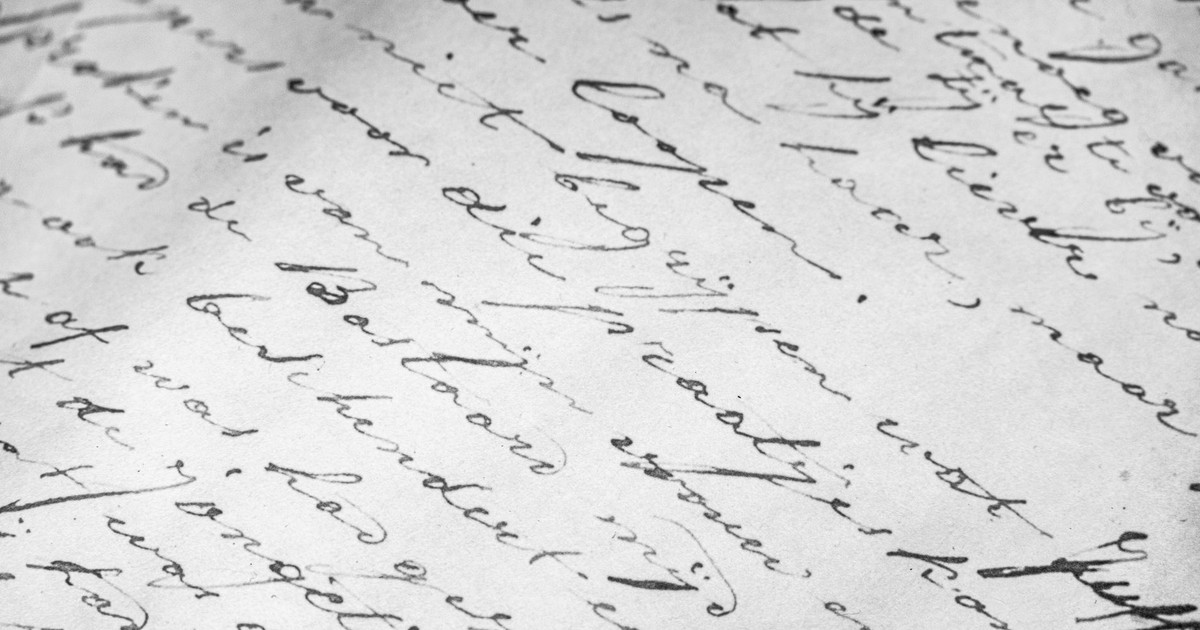
Beyond brain development and signatures, there’s an argument for cursive that doesn’t get enough airtime: future generations will struggle to read primary sources if no one teaches them the script those sources were written in. The Declaration of Independence, letters between Revolutionary War soldiers, a great-grandmother’s recipe written in 1943 – these exist in cursive. Without instruction, they become as inaccessible as a foreign language, requiring translation rather than direct reading.
Students who can’t read cursive can’t access handwritten letters from older generations or historical documents without transcription. Lawmakers behind the bill argued this disconnects children from their own history. The case for cursive isn’t that it’s inherently superior to print or typing – it’s that the ability to read it is a form of cultural literacy, the same way knowing how to read a map is distinct from knowing how to use GPS.
Read More: Kindergarten Teachers Want Incoming Students To Focus on Life Skills, Not Academic Ones
The Real Question Is Implementation

Florida has passed the law. The clock started July 1. What happens in actual third-grade classrooms this fall depends on things that aren’t yet settled: what a proficiency evaluation looks like, whether the Department of Education provides adequate guidance and materials, whether teachers who haven’t taught cursive in years receive the training they need, and how districts handle students with fine motor challenges or developmental delays who will also be expected to reach these benchmarks.
The Department of Education will be responsible for deciding how to assist students with developmental delays. Differentiated instruction for a skill as physically specific as handwriting requires real thought, and the law leaves that particular problem to be solved downstream.
The assessment question is also unresolved. A requirement that every student demonstrate proficiency by the end of fifth grade implies some kind of evaluation, but the state has not yet announced what that will look like in practice. Whether it becomes a formal checkpoint that could affect a student’s progression to middle school, or a classroom-level check-in assessed by teachers, remains to be determined. The language of the law is clear that proficiency is expected. The process for measuring it is still being built.
What This Means for Your Family
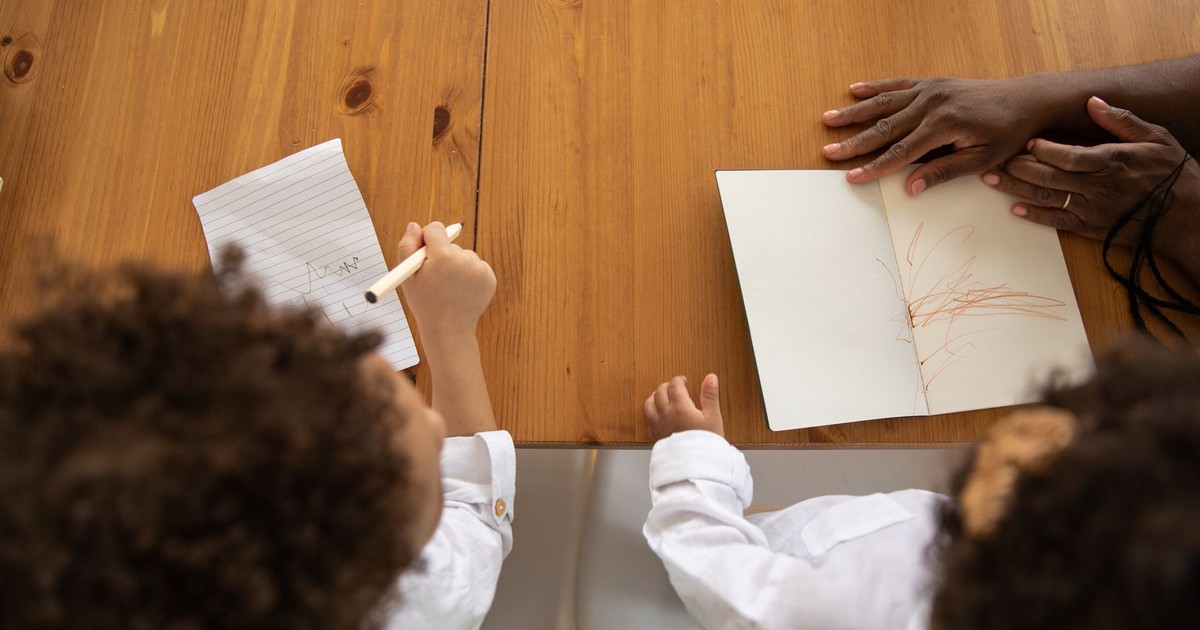
If your child is entering third grade in Florida this fall, the practical answer is: this is coming, it’s real, and practicing the basics at home won’t hurt. Most children pick up cursive more easily than adults expect. The learning curve is steeper for some, particularly children who struggle with fine motor control, but the research on its cognitive benefits is solid enough that the time investment is unlikely to be wasted.
Regardless of where you land on Florida politics or education policy, this law raises a genuine question: what skills do we actually want children to carry out of elementary school? Not which skills are fastest to learn or easiest to test, but which ones build and deepen with use. A handwritten signature is a small thing. The ability to read your own family’s letters from seventy years ago is not.
What Nobody Fully Intended

The decision to stop teaching cursive in 2010 made sense in its moment – digital literacy felt urgent, the standards were shifting, and something had to give. The decision to bring it back in 2026 makes sense in its moment too.
A generation of kids slipped through a gap nobody fully intended to open, and the state is now trying to close it with a pen. The implementation questions are real, the funding questions are real, and the pressure on teachers is real. A child who reaches middle school unable to read her grandmother’s handwriting has lost something specific – not abstract, not theoretical, but particular to her own family and her own history. Whether the new law delivers on its promise depends almost entirely on what happens next, in the months before any Florida third-grader picks up a pencil to practice her first looping letter.
AI Disclaimer: This article was created with the assistance of AI tools and reviewed by a human editor.