

Holding two small objects in the dark at the end of a long day is exactly the kind of situation where the brain starts running on autopilot. You reach for what you think is your ibuprofen, tip it back with a sip of water, and swallow. A second later, you glance down at your hands and feel your stomach drop. The pill is still there. The other object is gone.
Mistaken ingestion happens more often than most people realize. Fatigue, distraction, poor lighting, and routine can combine in a way that causes the brain to fill in details instead of actually processing what is in front of it. One absent-minded moment is all it takes. Most incidents are never reported beyond a startled phone call to a family member or a quick search for medical advice online.
The viral version of this story centers on one woman whose mistake quickly captured the internet’s attention. The non-viral version plays out quietly in homes every day, often ending with equal parts relief and embarrassment. The error sounds ridiculous until you realize how easily it could happen to almost anyone. Carli Bellmer is not the first person to make this kind of mistake. She is simply the one who documented it.
The Mistake

Bellmer, a 27-year-old podcaster and licensed esthetician from Boston, was crawling into bed with a headache when she had an 800mg ibuprofen in one hand and her left AirPod in the other. According to The Mirror US, she was about to put the earbud back in its case, and in a moment of distraction sent the wrong item down the wrong passage. The result was a TikTok saga that millions of people followed in real time, a panic-filled visit to get an X-ray, and a piece of technology that, bafflingly, kept working from inside her stomach.
Known on TikTok as @IamCarliiib, she told her followers exactly what happened: “So like, I ate my left AirPod. I was crawling into bed and I had an ibuprofen 800 in one hand and my AirPod – my left earbud – in the other.” The 800mg ibuprofen is a prescription-strength dose, and as more than a few commenters noted in her defense, it is substantially larger than your standard over-the-counter tablet. Tired, distracted, holding two objects of not-entirely-dissimilar size in the dark – the mistake is more understandable than it sounds.
She described how she swallowed what she thought was the tablet with water, then realized it wasn’t the ibuprofen. She tried to make herself sick, but it wouldn’t come back up. She became aware of the mistake almost immediately, and documented the entire journey on TikTok in real time.
The clip amassed over 2.4 million views. Carli said she felt compelled to share her unusual experience because she wasn’t the first individual this had happened to. “So for educational purposes, I wanted to share my journey of how this is all going,” she said.
The AirPod Started Playing Audio From Inside Her Stomach

Here is where the story tips from embarrassing into genuinely surreal. Bellmer told her followers that the earphone continued to play a voice memo she sent to a friend while inside her stomach. The AirPod, still connected to her iPhone via Bluetooth, was picking up audio and transmitting it – from her digestive system. Her stomach, essentially, was leaving a voicemail.
Despite some saying the video was simply an attention stunt, an X-ray seemed to confirm her claim. The scan showed the earbud inside her body, and she later shared that she had passed the AirPod. “I had a feeling that I passed it. I did not retrieve it, but I know that it’s passed. I know that it was in my stomach and no longer is,” she said – perhaps the most sensible approach to the whole ordeal.
She also noted: “It’s comical now, but very scary at the time.” That’s a fairly measured response for someone whose left earpiece spent a day touring her gastrointestinal tract.
She Is Not the First Person This Has Happened To

Carli is not the first to suffer from AirPod ingestion. In 2021, a Massachusetts man woke up gasping for air after swallowing his AirPod in his sleep. The device had to be removed via emergency endoscopy.
Then there is Tanna Barker, whose story went viral on the internet in September 2023 and followed a strikingly similar arc. Barker, a 52-year-old realtor from Utah, went viral on TikTok when she shared the “embarrassing” story of how she ate one of her AirPods. Her situation was slightly different: Barker was on her morning walk when she ran into a friend. Halfway through the walk, she decided to take her vitamins, put them in her mouth, took a drink – and when she went to reach for one of her AirPods, she realized it wasn’t in her pocket. Her pills were in her hand. She had swallowed her AirPod.
Barker’s video had been viewed more than 2.7 million times since it was posted. Coverage of Barker’s story noted that she immediately called close friends and doctors to ask for advice, and they all told her the same thing: let it pass naturally. Despite swallowing her AirPod, Barker pointed out there was still a “bonus” to the unfortunate situation: “I still have my right AirPod.” The woman has a point.
Why Distracted Ingestion Happens More Than Anyone Wants to Admit

The pattern running through all of these stories is not stupidity. It is distraction – specifically the kind of inattentiveness that happens when a routine task gets layered on top of a conversation, a thought, or sheer end-of-day exhaustion. You are holding two things. Your brain has already decided which one goes where. Your hand just didn’t get the memo in time.
Accidental medication ingestion involving adults is far more common than the viral-video framing of these stories suggests. In 2024, 55 US poison centers provided telephone guidance for nearly 2.1 million human poison exposures – roughly one poison exposure reported to US poison centers every 15 seconds. Across all ages, 77.8% of poison exposures reported to US poison centers in 2024 were unintentional. The majority of those cases never go viral. They are just people making mistakes in the ordinary fog of a busy life.
An adverse drug event, or ADE, is when a medication causes harm to someone. ADEs include allergic reactions, side effects, overmedication, and medication errors – and they are a serious public health concern. Each year in the United States, ADEs cause more than one and a half million visits to hospital emergency departments, according to the CDC. Not all of those are accidental medication ingestion cases in the traditional sense, but the number reflects just how many things can go wrong when medication and inattention end up in the same moment.
The ibuprofen-vs-AirPod scenario fits a specific category of error: two objects of similar size and shape, in each hand, late at night, when the brain is running on autopilot. The mistake isn’t that different from putting your car keys in the refrigerator, except the consequences are considerably more memorable.
What Actually Happens When You Swallow a Foreign Object

For an AirPod specifically, the short answer is: usually not much, as long as it makes it past the esophagus. Young children, and sometimes older adults, may swallow foreign objects including small electronic devices. These objects often pass all the way through the digestive tract in 24 to 48 hours and cause no harm. Problems arise when objects are stuck for a long time, are sharp, or contain corrosive materials. Complications can include tears in the esophagus and infection.
An AirPod is smooth, rounded, and contains a lithium battery – which is where the conversation gets less comfortable. Button batteries, the flat disc-shaped kind found in many small devices, are a well-documented medical emergency when swallowed, particularly in children, because they can cause chemical burns to the tissue of the esophagus within hours. AirPod batteries are encased differently and are not the same as loose button batteries, but the broad category of battery-containing objects is one that emergency physicians take seriously regardless.
The practical advice that Bellmer and Barker both received – let it pass naturally, monitor for symptoms, see a doctor – is the standard first response for smooth, blunt objects that have cleared the esophagus and reached the stomach. But this is never a decision to make without medical guidance. If there is any chest pain, difficulty swallowing, drooling, vomiting, or breathing difficulty after swallowing any object, that is an emergency room situation, not a “let’s wait and see.”
The Skeptics, the Defenders, and the Defense

Part of what made Bellmer’s story spread so widely was the split in the comments. Many people wished Carli a swift recovery, while others made it plain they did not believe her. One commented: “How do you mix up ibuprofen and an AirPod?” Another accused her of simply trying to go viral.
Others, however, jumped to her defense, with one person noting: “In her defence, Ibuprofen 800 are huge so they do sorta resemble an AirPod if you’re distracted.”
The skepticism is understandable in the era of staged content. The X-ray confirmation does a lot of the heavy lifting for credibility, and the fact that she wasn’t alone – multiple people had done the exact same thing before her – lends the story a ring of mortifying truth. These are the kinds of mistakes that happen in the specific, irreproducible fog of being a distracted human being at the end of a long day.
Read More: Starbucks barista’s viral video about making ‘a grown adult their 6am milkshake’ sparks debate
What This Actually Tells You
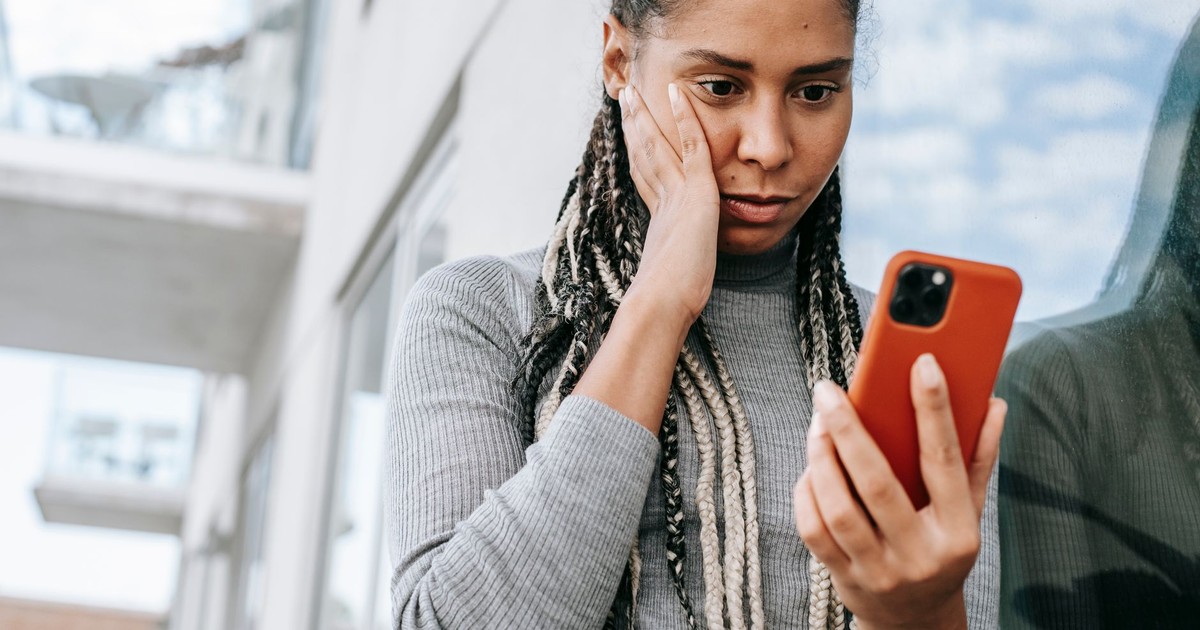
The light reading of this story is a woman who swallowed her AirPod, survived, and left the internet with excellent content. The other reading, which doesn’t cancel the first one, is a useful reminder of how automated our routines become and how quietly wrong things can go in the space of one inattentive moment.
Nobody thinks they’re going to swallow a piece of tech when they reach for their painkillers. Nobody plans to call Poison Control at midnight about a Bluetooth device lodged in their stomach. These things happen in the gap between intention and execution, when the brain is already somewhere else and the hand is just finishing the job it was given.
One Thing at a Time, Lights On

If there is anything practical in all of this, it is probably the simplest possible advice: one thing at a time, lights on, look at what’s in your hand before it goes anywhere near your mouth. Not because you’re careless, but because being tired and human is a condition that does not exempt anyone, regardless of how obviously distinguishable an earbud and a tablet are in daylight. At midnight, crawling into bed with a headache, holding two objects that are roughly pill-adjacent in size? The margin for error is smaller than it looks.
The AirPod, for its part, passed. It played audio from inside a stomach. It completed its journey and was retired without ceremony. Somewhere, there is a right earbud still in its case, waiting patiently, outlasting its sibling by an unusual margin. The lesson isn’t that Carli Bellmer is careless. It’s that the combination of exhaustion, routine, and two objects in two hands is a setup that any one of us could walk into. She just happened to document it.
Disclaimer: This information is not intended to be a substitute for professional medical advice, diagnosis, or treatment and is for information only. Always seek the advice of your physician or another qualified health provider with any questions about your medical condition and/or current medication. Do not disregard professional medical advice or delay seeking advice or treatment because of something you have read here.
AI Disclaimer: This article was created with the assistance of AI tools and reviewed by a human editor.