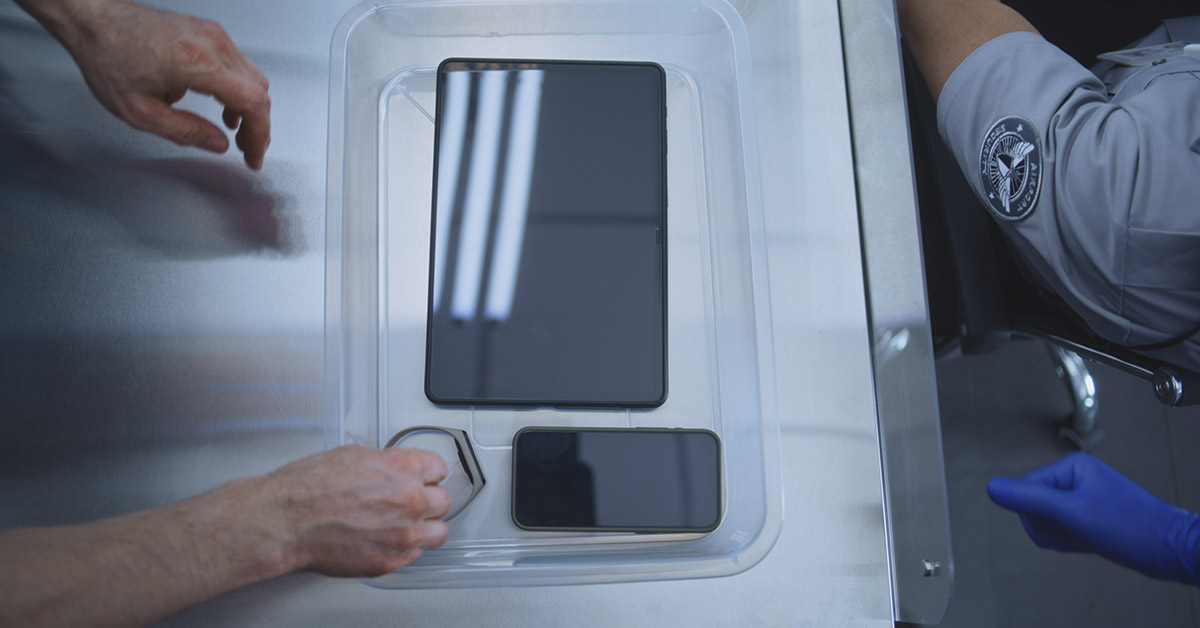

Most travelers think they’ve mastered airport security tips. You remove your shoes, take out your laptop, empty your pockets, and place everything neatly into those gray plastic bins. It becomes routine, almost automatic. But hidden inside that routine is one small habit that experts say you should rethink, putting your phone directly into a TSA bin.
By placing your phone into the TSA bin next to your keys or wallet, you can expose your device to a mix of risks that most people never consider. From germs and bacteria to distraction-based mistakes, the airport security line creates the perfect environment for small problems to turn into bigger ones.
Airports are designed to move people quickly, often under pressure. You are juggling documents, listening for instructions, and keeping an eye on your belongings all at once. In that moment, your brain shifts into autopilot.
Experts in travel safety, hygiene, and human behavior all point to the same conclusion. Keeping your phone out of the bin is not about fear. It is about reducing unnecessary risk in a high-distraction environment.
The Hidden Problem With TSA Bins
TSA bins look clean enough. They are simple plastic trays that move along a conveyor belt. However, what most people do not realize is just how many hands touch those bins every single day.
Airports process thousands of passengers daily. Each traveler places personal items into the same shared containers. Shoes, bags, electronics, and sometimes even loose items like tissues or food packaging all come into contact with these surfaces. Unlike other high-touch areas, these bins are not regularly sanitized between each use.
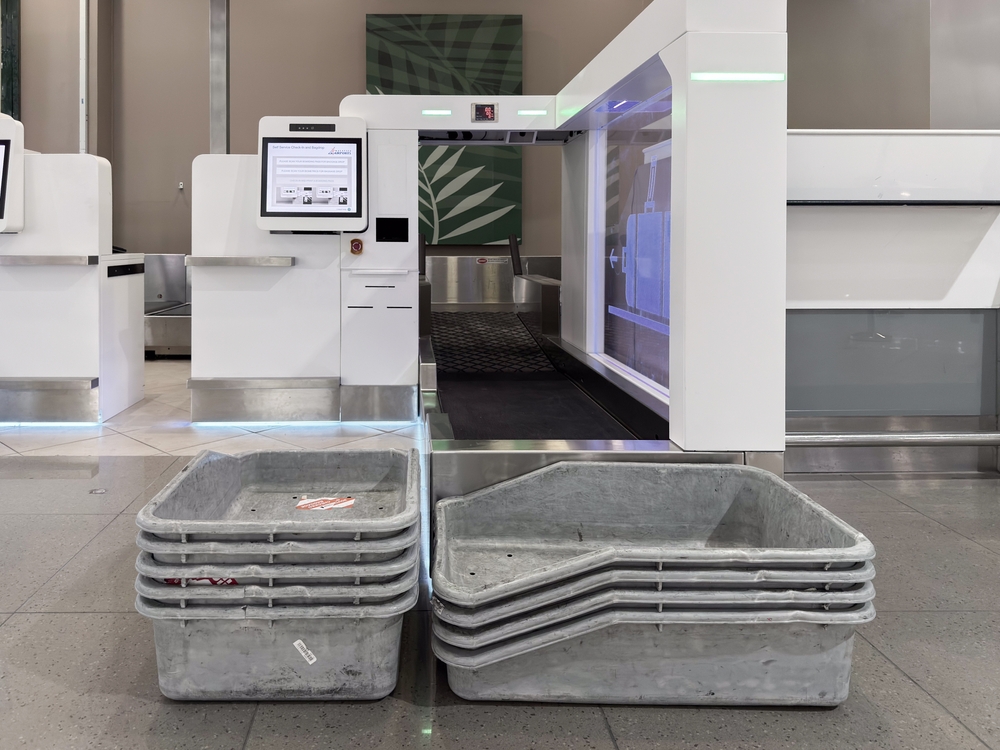
From a hygiene standpoint, this creates a perfect storm. Studies on airport security trays have found that they can carry a wide range of microbes, including respiratory viruses. In fact, some research has suggested that these trays can be more contaminated than commonly used public surfaces like restroom fixtures.
Now consider what happens when you place your phone directly into that environment. Your phone already carries bacteria from daily use. When it comes into contact with a heavily shared surface, it can pick up additional microbes. Later, when you hold your phone to your face or use it while eating, those microbes transfer easily.
This is not meant to cause alarm, but it does highlight a simple truth. The bin itself is not dangerous, but you should avoid direct contact if possible. Placing your phone in a bag or pocket significantly reduces exposure.
Why Your Brain Makes You Do It Anyway
If the risks seem obvious once explained, why do so many people still put their phones in TSA bins? The answer lies in how the brain handles busy environments. Airports are a textbook example of cognitive overload. You are managing multiple tasks at once, following instructions, watching your belongings, and often thinking about your flight, your timing, or your destination.
In these situations, the brain relies on shortcuts. Psychologists call this automatic processing. Instead of analyzing every decision, the brain defaults to familiar habits. You empty your pockets because that is what you have always done. You place everything in the bin without questioning it.
This behavior becomes even stronger under time pressure. When a line forms behind you, there is an unspoken expectation to move quickly. That pressure pushes people to act faster, often at the expense of careful thinking.
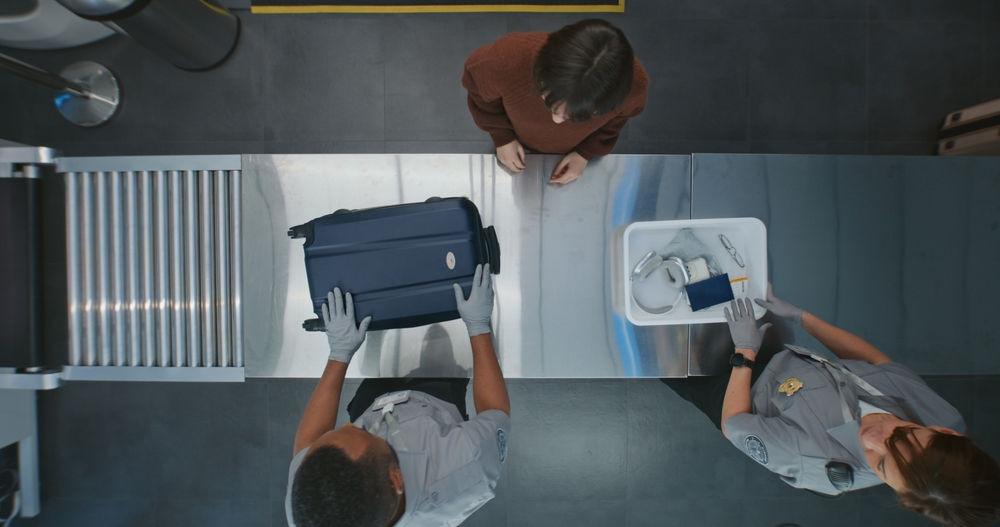
At the same time, attention becomes divided. You may be focused on removing your laptop while also listening for instructions from security staff. Your awareness of smaller details, like where your phone is placed, becomes limited.
This combination of habit, pressure, and divided attention creates the perfect conditions for mistakes. You are not being careless. Your brain is simply prioritizing speed over precision. Understanding this helps explain why even experienced travelers make the same choices repeatedly. It is not about knowledge. It is about how the brain operates in complex environments.
Germs, Phones, and the Things We Touch Most
Your phone is one of the most frequently handled objects in your daily life. On average, people touch their phones hundreds of times per day. It travels with you everywhere, from your home to public spaces, and often comes into close contact with your face.
Because of this, phones naturally accumulate bacteria over time. Studies have shown that mobile devices can carry more germs than many household surfaces. However, the type and variety of microbes can increase significantly when the phone is exposed to shared public environments.
Airport security bins add another layer to this equation. Unlike surfaces you control, such as your desk or home environment, these bins are used by thousands of strangers. Each interaction introduces new microbes. The concern is not just about quantity, but also variety. Different people carry different bacteria, and shared surfaces become mixing points. When your phone touches that surface, it can pick up microbes that are not part of your usual environment.

You may scroll through messages while waiting at the gate, hold your phone during a meal, or press it against your face during a call. Each of these actions creates opportunities for transfer.
The good news is that this risk is easy to manage. Keeping your phone inside your bag during screening reduces direct contact. Cleaning your phone occasionally, especially after travel, can also help minimize exposure. This is less about avoiding germs completely and more about reducing unnecessary contact with high-touch surfaces.
The Risk of Distraction and Theft
Most people assume airport security is one of the safest places to handle valuables. Cameras are everywhere, staff are present, and the environment feels controlled. While that is largely true, experts still point out a subtle but important risk: distraction.
The TSA line is one of the few places where you are temporarily separated from your belongings. Your items move ahead of you on a conveyor belt while you are still going through screening. For a brief moment, your phone may be out of reach and out of sight. That gap creates an opportunity for confusion, mix-ups, or opportunistic mistakes.
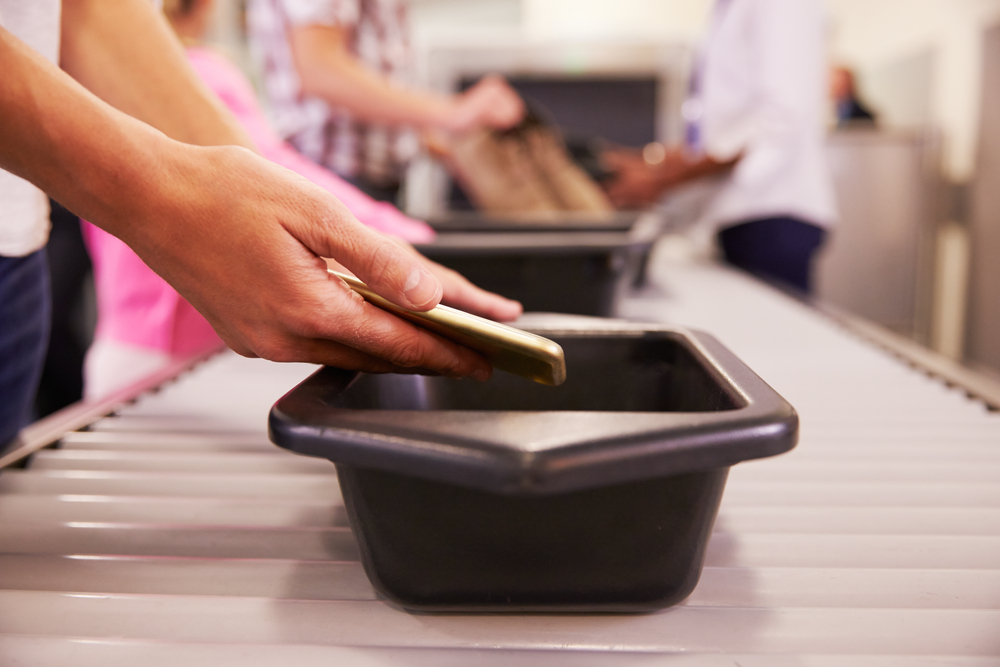
For example, imagine two nearly identical phones placed loosely in bins. Someone ahead of you grabs the wrong one by accident. Or someone behind you picks up your phone, thinking it is theirs. These situations happen more often than people expect, and they are usually unintentional.
Then there is the issue of divided attention. While your items pass through the scanner, you are focused on removing your shoes, stepping through the detector, and listening for instructions. You are not watching your belongings the entire time.
Keeping your phone inside your bag reduces this risk significantly. It keeps your belongings grouped together, making it easier to track everything at once. Instead of monitoring multiple loose items, you only need to focus on a single bag.
Why So Many People Forget Their Phones at Security
If you have ever rushed through airport security, you know how chaotic it can feel. Shoes go in one bin, electronics in another, and smaller items often get scattered across multiple trays. This setup increases the chances of leaving something behind, especially smaller items like phones.
From a psychological perspective, this comes down to how memory works under pressure. When you are juggling multiple tasks, your brain prioritizes the most important ones. Getting through security becomes the main goal. Smaller details, like remembering every individual item, can slip through the cracks.
There is also something called “task switching.” You move quickly from one activity to another, removing items, walking through the scanner, collecting your belongings, and getting dressed again. Each transition increases the chance of missing something.
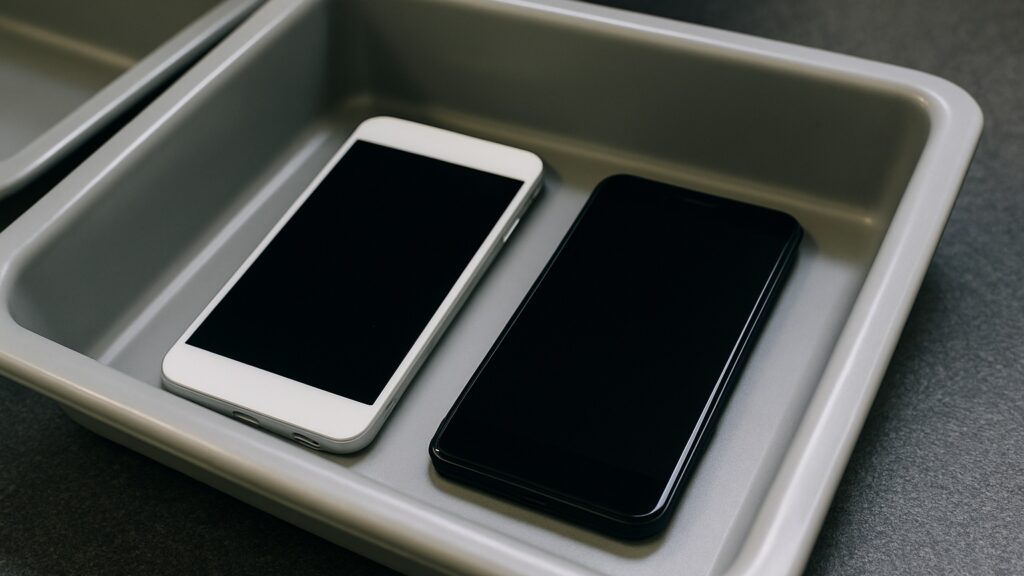
Phones are particularly vulnerable because they are often placed separately. Unlike a bag or a laptop, which are larger and more noticeable, a phone can easily blend into the tray or be overlooked in the rush to move on.
Lost and found departments at airports frequently report phones as one of the most commonly forgotten items at security checkpoints. It is not because people are careless. It is because the environment encourages quick movement and divided attention.
Physical Damage Is More Likely Than You Think
While germs and forgetfulness are common concerns, physical damage is another factor worth considering. TSA bins are not designed to protect delicate items. They are meant to move objects efficiently through a screening process. As a result, items often shift, bump into each other, or get stacked as they move along the conveyor belt.
If your phone is placed loosely in a bin, it may come into contact with heavier objects. Someone might place a bag or a pair of shoes in the same tray. Another bin might slide into it from behind. These small movements can lead to scratches, pressure on the screen, or even cracks in some cases.
Even if damage does not occur, the risk is still present. A phone inside a bag has an extra layer of protection. The bag absorbs impact and prevents direct contact with other items.
Experts in travel gear often recommend treating electronics as fragile items during transit, even in short processes like security screening. A few seconds of exposure may not seem like much, but repeated travel increases the chances of wear and tear over time.
What Experts Actually Recommend Instead
So what should you do instead of placing your phone in a TSA bin? Travel experts and frequent flyers tend to follow a few simple habits that reduce risk without slowing down the process.
- First, keep your phone inside a zippered compartment in your carry-on or personal item. This keeps it secure, reduces exposure to shared surfaces, and makes it easier to track.
- Second, group your belongings whenever possible. Instead of spreading items across multiple bins, try to keep smaller objects contained within your bag. This reduces the number of loose items you need to monitor.
- Third, stay aware of your items as they move through the scanner. Even a glance can help ensure everything stays together and nothing gets left behind.
If you do need to place your phone in a bin, place it inside your bag or under a larger item rather than leaving it loose. This adds a small layer of protection and makes it less likely to be overlooked. These habits are not complicated, but they are effective. They reduce multiple risks at once without adding extra steps to your routine.
Read More: Airport Has Therapy Llamas, And They’re Bringing a Smile to Travelers
Small Travel Habits That Make a Big Difference
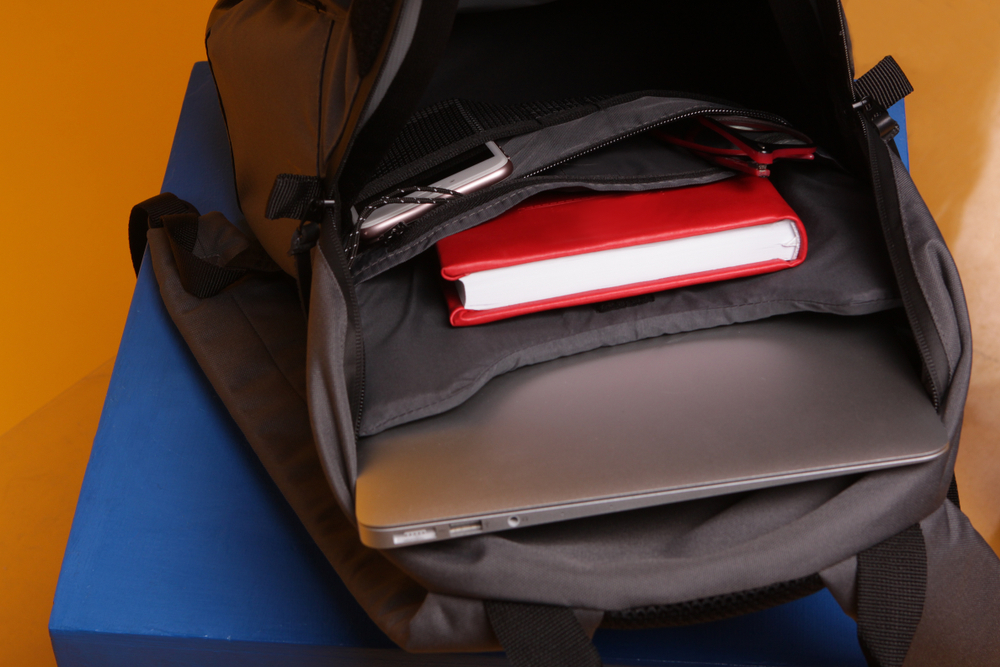
Image credit: Shutterstock.
Travel often comes down to small habits repeated over time. One simple change, like keeping your phone in your bag, can prevent several potential issues at once. This idea applies to many aspects of airport behavior. Preparing your documents in advance, organizing your bag efficiently, and staying aware of your surroundings all contribute to a smoother experience. The goal is not to make travel more complicated. It is to make it more intentional.
When you understand why certain habits matter, they become easier to adopt. You are no longer following random advice. You are making informed choices that reduce risk and improve efficiency. Over time, these small adjustments become second nature. Just like removing your laptop or keeping your boarding pass ready, keeping your phone out of the TSA bin becomes part of your routine.
A Smarter Way to Move Through Security
Putting your phone in a TSA bin is not dangerous. Millions of people do it every day without any issues. However, it does introduce unnecessary risks that are easy to avoid. Experts are not suggesting major changes or complicated routines. They are suggesting airport security tips that make travel smoother and safer. Keeping your phone in your bag is one of those adjustments. It protects your device, keeps your belongings organized, and reduces the chances of mistakes in a busy environment.
The next time you approach airport security, take a moment to pause before you empty your pockets. Instead of following autopilot, make a simple choice that works in your favor. Because sometimes, the smartest travel habits are the ones that seem the smallest.
A.I. Disclaimer: This article was created with AI assistance and edited by a human for accuracy and clarity.
Read More: Did a Florida Airport Really Just Ban Crocs and PJs? Here’s What You Should Know.