

You’ve done it yourself. You get three texts in a row from a friend, no response to yours, then your coffee spills, then the parking app crashes – and before you’ve even pulled out of the lot, your brain has filed a complaint. Something is wrong. The universe is sending a message. Today is going to be bad.
None of those things are connected. Your coffee mug doesn’t communicate with parking technology, and neither has any opinion about your social life. But the part of your brain running in the background didn’t care about logic. It cared about pattern. It found three data points, drew a line through them, and handed you a narrative with a bow on it.
That tendency has a name, and it runs much deeper than spilled coffee or unanswered texts. Psychologists call it apophenia – the cognitive drive to perceive meaningful connections between things that have no actual relationship. The reason you feel like everything happens for a reason, even when reason has genuinely nothing to do with it, is probably this.
Where the Word Came From
The term “apophänie” – from an ancient Greek word meaning “to show” or “to make known” – was introduced by German neurologist and psychiatrist Klaus Conrad in 1958 to describe the process of repetitively perceiving abnormal meaning between objects or events in one’s experiential field. Conrad was working with patients in the early stages of schizophrenia, and what he kept observing was a very specific experience: his patients weren’t hallucinating, exactly. He described the early stages of delusional thought as self-referential over-interpretations of actual sensory perceptions, as opposed to hallucinations. The lamp in the corner wasn’t imaginary. The feeling that the lamp was placed there specifically to send a message – that was apophenia.
Although Conrad’s patients exhibited apophenia to the extent of delusional thinking, apophenia is a spectrum. As researchers have since framed it, it can include “any instance in which a pattern is falsely detected or labeled as meaningful when it is actually absent or attributable to chance.” Which puts most of us somewhere on that spectrum, most days of our lives.
The word “apophenia” comes from Conrad’s 1958 work on schizophrenia, and the contrast embedded in it is striking: while an epiphany is a sudden realisation of a true connection or meaning, an “apophany” is the false realisation of one. You think you’ve had the insight. You haven’t.
Your Brain Was Built for This
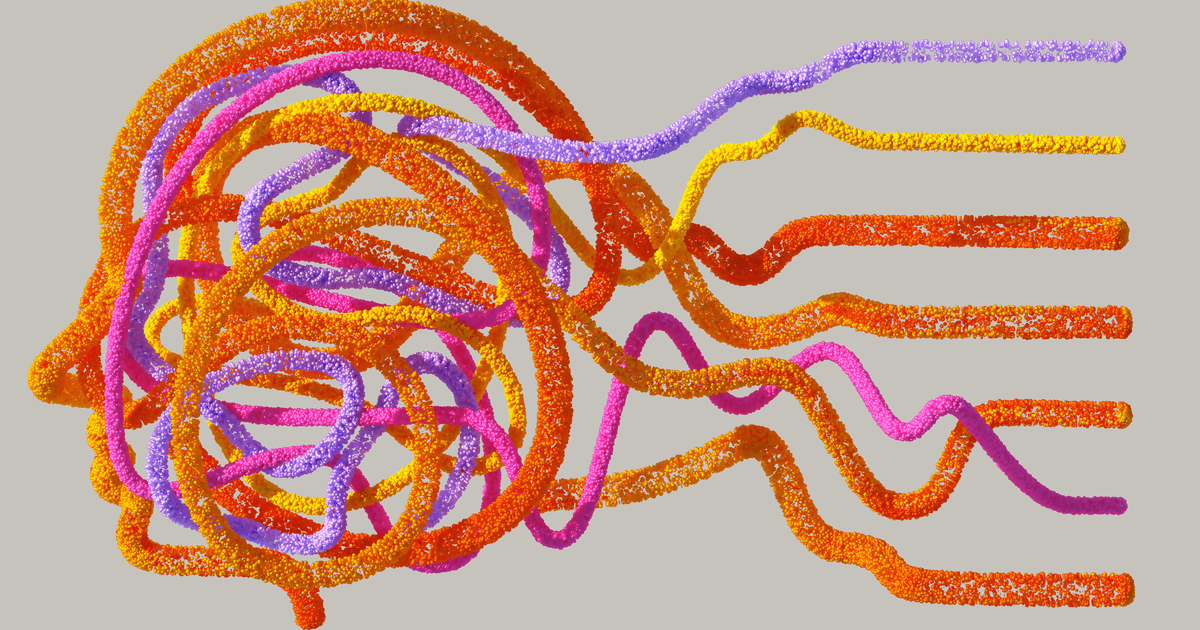
Here’s the part that makes apophenia harder to dismiss than a simple quirk: the tendency didn’t develop by accident. Research has led to the proposal that apophenia is rooted in human evolution, wherein the recognition of patterns associated with foraging, predators, or reproduction offered opportunities for individuals to take risks that resulted in positive outcomes and, ultimately, a survival advantage.
Put simply, the ancestors who noticed a pattern – rustling in those particular bushes usually means a predator – lived longer than those who shrugged it off. The brain is geared for pattern recognition, looking for structure and organisation within chaos and randomness. Spotting a pattern is also a basic and ancient survival process – don’t eat the plant with the dots; it will kill you.
The problem is that this system is extremely difficult to switch off when the threat is a roulette wheel instead of a predator. Such pattern-based risk-taking likely also had many negative outcomes, and as is the case in many instances for modern humans, the natural inclination of the brain to find patterns often leads to false attributions. The circuitry that kept your great-great-grandmother alive in a genuinely dangerous world is the same circuitry that makes you convinced the red numbers on the roulette table are “due” for a break. The casino didn’t change; your brain did not get the memo.
The Everyday Flavors of Apophenia

Apophenia isn’t one single experience. It spreads across a surprising range of very ordinary human behavior.
Pareidolia is probably the most charming version. In pareidolia, illusory perception is visual, and individuals tend to see familiar patterns – such as faces or objects – in random stimuli. A person may see images of animals or figures in clouds or rock formations. The man in the moon. The face in the wood grain. The burnt toast that somehow resembles a historical figure well enough to make the news. The brain isn’t malfunctioning when this happens. It’s doing exactly what it was designed to do, which is find faces fast, because faces are socially important and have been for as long as humans have existed in groups.
The gambler’s fallacy is a less whimsical version. The gambler’s fallacy is the erroneous belief that an event that has already happened is less likely to happen again. An example is believing that if a coin has landed on heads several times in a row, it is more likely to land on tails on the next flip, even though the probability of either event – 50-50 – remains unchanged. People lose a great deal of money on this one. The coin has no memory. The slot machine has no loyalty. The roulette wheel does not owe you anything. But the pattern-seeking brain keeps adding up the numbers and arriving at conclusions that aren’t there.
Superstitions live in the same neighborhood. Superstitions attribute causal relationships to actions or symbols without any scientific basis – such as the notion that breaking a mirror brings seven years of bad luck. Knock on wood. Don’t walk under ladders. Wear the lucky socks for the job interview. These aren’t irrational in the clinical sense. They’re apophenia made ritual – the brain found a pattern once, or inherited someone else’s pattern, and has been filing it under “meaningful” ever since.
When Pattern-Seeking Turns Political

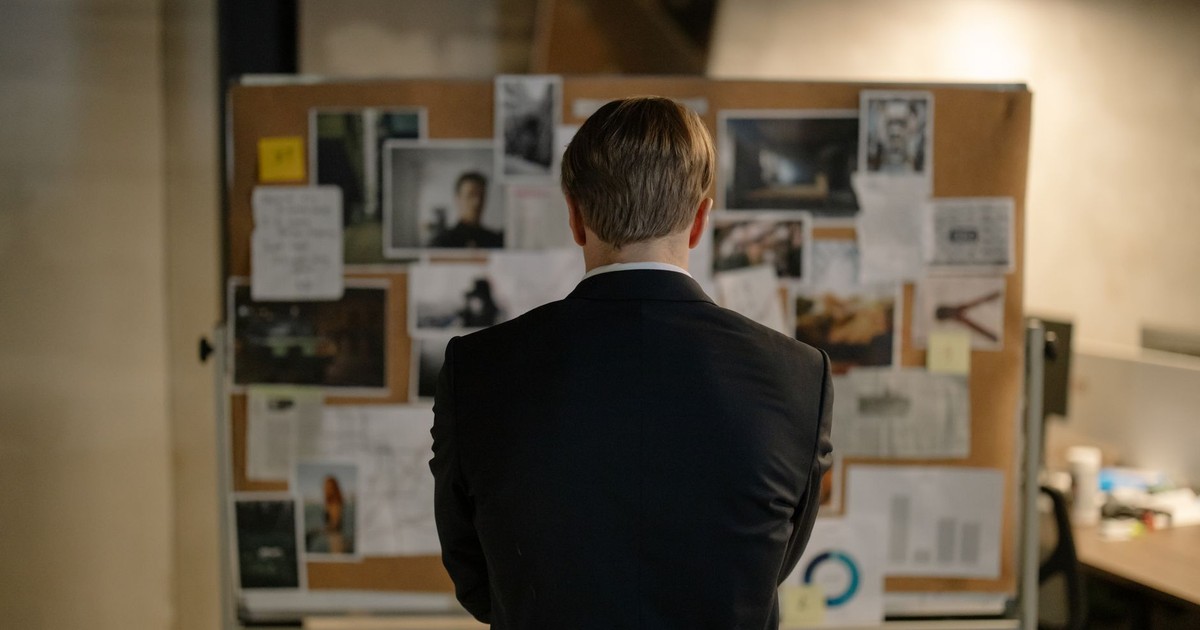
Apophenia is also typical of conspiracy theories, where coincidences may be woven together into an apparent plot. This is where the stakes rise considerably. In conspiracy theories, elaborate explanations for unrelated events – often involving secret plots or hidden agendas – are constructed from random events, such as events reported in the news.
The research on the neuroscience here is unsettling. Findings suggest that conspiracy believers may exhibit an overactive pattern recognition system, potentially linked to apophenia – the tendency to perceive meaningful patterns in random data. It’s not that conspiracy thinkers are less intelligent or less educated as a blanket rule. It’s that the signal-detection system is running hot. Everything looks like signal. Nothing reads as noise.
Research from Psyche reports evidence that apophenia could be “an important cognitive process at the core of what is shared between openness and risk for psychosis.” And seeing connections all around can also be predictive of belief in conspiracy theories. There’s something particularly uncomfortable about the overlap there – the same cognitive trait that makes someone deeply creative and interested in unexpected connections can, in the wrong conditions, tip into seeing coordinated plots in unrelated news events. The trait itself is neutral. Context and degree do an enormous amount of work.
The Dopamine Thread

One reason apophenia is so persistent is that finding a pattern doesn’t just feel satisfying – it activates a reward response. We want the patterns we see to fit together: it gives the universe order and a feeling of comfort. And we prefer things to happen for a reason, as ambiguity can bring uncertainty and anxiety.
That comfort is real. The relief of having an explanation – any explanation – for why something happened is a neurological event, not just a philosophical preference. Variations in dopamine signaling pathways in certain conditions render many experiences salient and meaningful. This is why people with schizophrenia are said to receive “messages” from seemingly random data. In people without those conditions, the same underlying process operates at lower intensity. The world is chaotic and indifferent, and the brain’s response to that is to find order wherever it can. Pattern completion feels like resolution.
A form of apophenia known as scientific apophenia occurs when researchers draw incorrect conclusions from random data – particularly important in fields such as epidemiology, big data analytics, and financial modeling, where large datasets can easily produce spurious correlations. The human brain behind the data analysis is not exempt just because it has a methodology. Even trained scientists have to deliberately resist a pattern that looks too good to be coincidence, because the brain doesn’t stop running its pattern-recognition software just because you have a PhD.
When It Becomes Something to Watch
Apophenia is relatively common, representing a kind of cognitive bias that is perhaps most evident in the form of superstitions and similar generally benign beliefs. For most people, most of the time, it causes no serious harm beyond occasional bad betting decisions and firmly held beliefs about lucky mugs.
Apophenia is not a clinical disorder or a mental illness. Rather, it is a normal and common human experience, although one that some people can take to extremes. The line between ordinary and concerning isn’t about the presence of pattern-seeking – everyone does that. The line is about what happens when you find your pattern. If the patterns you’re perceiving are generating anxiety, feeding a sense of persecution, or leading you to make decisions that consistently damage your life, that’s worth taking seriously. The illusory perception of patterns can occur in extreme forms that have wide-ranging impacts on human cognition and behavior – contributing, for example, to delusions and being symptomatic of mental illnesses such as paranoia and schizophrenia.
Most people who exhibit apophenia do not require treatment. But awareness is its own intervention, to a point. Knowing the brain is wired to manufacture meaning out of coincidence doesn’t make you immune to doing it – but it creates a small gap between the pattern and the conclusion. That gap is where the critical thinking gets in.
Read More: Seeing a Cardinal: Meaning, Symbolism & Messages from Beyond
The Upside Nobody Talks About Enough

It would be too easy to end here, with apophenia as purely a liability. The creativity angle deserves its due. Some of the most inventive ideas arise from linking unrelated concepts in novel ways – the very process at the heart of apophenia. Einstein imagined riding alongside a beam of light. Leonardo da Vinci combined anatomy and engineering into new forms of expression. Their minds didn’t just accept traditional connections – they wandered, combined, and synthesized.
The same cognitive tendency that makes someone insist the universe arranged their parking situation personally is also, at a lower setting, what makes artists notice what no one else noticed, what makes scientists ask questions that look ridiculous until they don’t. Pattern-finding is not the problem. False certainty about the patterns you find is the problem. The brain that sees connections everywhere is an asset; the brain that refuses to question the connections it sees is a liability.
The Real Reason We Believe Everything Means Something
There’s something underneath apophenia psychology that the research tends to dance around: the need for meaning is not a cognitive error. It’s one of the most human things there is. The brain builds patterns because a world with patterns in it is a world that can be understood, predicted, and survived. The problem isn’t the need. The problem is when the brain starts doing that work on empty – filling in significance where there isn’t any, because the uncertainty of randomness is more frightening than the comfort of a false pattern.
The broken parking app and the spilled coffee and the unanswered texts are not a coordinated message. The red numbers on the roulette wheel don’t know you’re watching. The universe is not keeping track of your lucky socks. But the part of your brain doing all that filing? It’s ancient, it’s persistent, and it genuinely believes it’s helping you. You can hold that – the absurdity of it and the usefulness of knowing it – at the same time.
AI Disclaimer: This article was created with the assistance of AI tools and reviewed by a human editor.