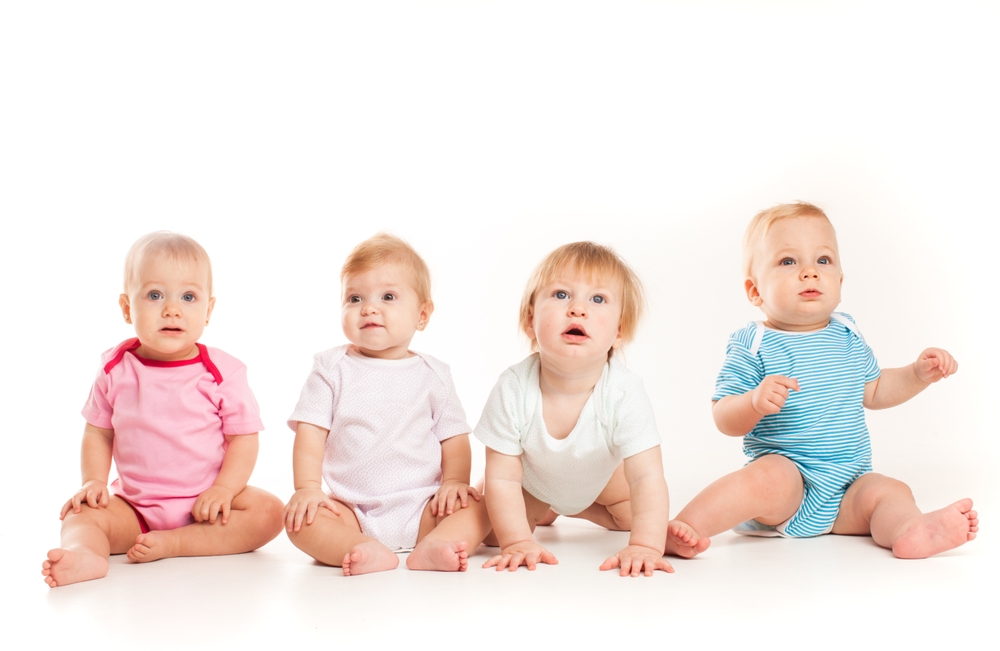

You already know the answer the moment you see the picture. Or at least you think you do. Four cartoon babies, staring back at you from your phone screen, each with their own little expression, their own particular way of sitting, their own vibe, and the question floating above them like the most deceptively simple thing you’ve read all day: which one is the girl?
You spend maybe two seconds on it. Then six. Then you’ve been staring for a full minute, and you’ve reconsidered your original answer twice, and you’ve started to wonder if you’re overthinking a drawing of babies. The answer is yes, obviously, but that’s not going to stop you from finishing. Nothing about this challenge is intellectually demanding, and yet somehow it has the attention of millions of people who absolutely have better things to do. The gap between how simple it looks and how genuinely absorbed you become is the trick. That’s the whole engine.
Four Babies, One Question, Zero Wrong Answers
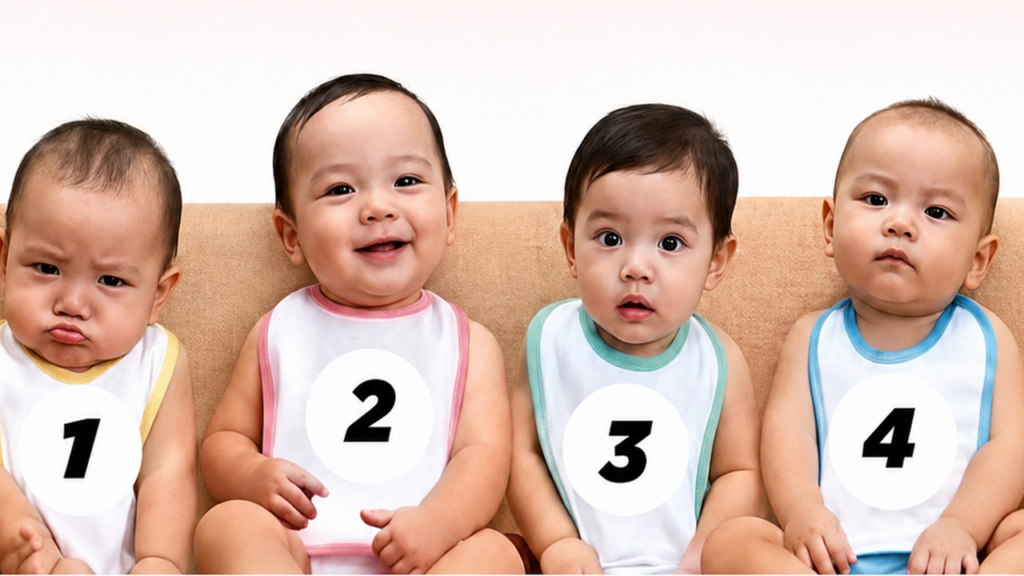
The setup is about as bare-bones as it gets: four infants sit side by side, labeled simply as Baby 1, Baby 2, Baby 3, and Baby 4. No pink bows, no blue onesies, no context. Just four little faces with four different expressions, and a prompt that sounds almost insultingly easy. Many people find themselves looking at the image longer than expected, carefully comparing faces, expressions, and tiny details before making a choice.
That pause tells you something. When you’re shown four babies and asked which one is a girl, your brain doesn’t analyze, it reacts. It relies on subtle reflexes and the tiny details your attention clings to first. What you land on says less about the babies than it does about what you instinctively look for when you’re reading a face. And we are all, constantly, reading faces. Every room you’ve walked into, every conversation you’ve tried to decode before it started, you were doing this exact thing. The baby challenge just makes it visible.
While there is no correct anatomical answer in a visual puzzle like this, the baby you gravitate toward is said to reflect your dominant personality traits and how you move through life. Whether that’s entirely true is beside the point. The real fun is in recognizing something accurate in the description, or in arguing loudly with someone you love about why their answer is obviously wrong.
If You Chose Baby 1
If you picked Baby 1, the description says you’re deeply sensitive and protective. You’re pulled toward what feels delicate or in need of care, and others sense this and open up to you easily, even strangers. You’re the person at the party who ends up in the hallway with someone you just met, listening to the longer version of a story that probably started somewhere else entirely. You didn’t plan it. You just have a face that says you can tell me.
There’s a warmth to this profile, but also a quiet exhaustion that comes with it. When you’re the person everyone gravitates toward, you absorb a lot. The challenge for Baby 1 people isn’t empathy, they have that in abundance. It’s remembering to save some attention for what’s happening in their own chest.
Other readings of this choice suggest a person of logic and reason who prefers to have all the facts before making a decision, the grounded one in the friend group that people come to for an objective opinion rather than just a shoulder to cry on. Different versions of the challenge, different interpretations. Pick the one that sounds more like you.
If You Chose Baby 2
According to the viral version of this challenge, Baby 2 is considered the “girl,” and people who choose this option are often described as warm-hearted, intuitive, and emotionally aware. They may naturally notice positive energy and cheerful expressions before focusing on details, and they tend to be seen as social, approachable, and easy to talk to.
The reasoning behind why Baby 2 tends to get designated the girl is genuinely interesting on its own. In most circulating versions, Baby 2 is revealed as the “girl” because she’s smiling, bright-eyed, or framed in softer tones. That tells you something, not about the babies, but about the assumptions we carry. A warm expression reads as feminine. An open face reads as feminine. We absorb these associations so early that they feel like observation rather than interpretation, which is exactly why a drawing of a cartoon baby can stop a person mid-scroll and make them think harder than they expected to.
If Baby 2 was your pick, you probably already knew some version of this about yourself. You read rooms well. You notice when someone’s smile doesn’t reach their eyes. You also, if the description is to be believed, tend to bring a particular lightness to the people around you, which is not a small thing to bring.
If You Chose Baby 3
The Baby 3 crowd tends to get described as practical, balanced, and reliable, the ones who don’t catastrophize, who find the path through, who somehow have the right thing packed in their bag when everything goes sideways. Choosing Baby 3 is associated with being grounded and dependable in a way that other people notice before you do.
Other versions of the challenge describe Baby 3 choosers as drawn to movement and energy, the spontaneous ones who book the trip on a Thursday and leave on Saturday. The two descriptions aren’t as different as they sound. Practical people can be impulsive in the best way, they’re not afraid of action, they just don’t spiral about it afterward. If this is you, you probably have a very short list of things you actually worry about, and the people around you find that either deeply reassuring or mildly infuriating, depending on the day.
If You Chose Baby 4
Choosing Baby 4, typically depicted as reserved or inward-looking, points toward a personality that is deeply analytical, independent, and comfortable with silence and introspection. You noticed something the others didn’t. You held back your first instinct and looked again. You probably also didn’t announce your answer immediately, you sat with it, turned it over, checked your reasoning. That’s not overthinking. That’s just how you operate.
Baby 4 people tend to move through the world with a certain self-sufficiency that others read as cool, even when it isn’t. It’s just internal. The person least likely to be swayed by what everyone else is saying is also, almost always, the one who has thought about every possible angle before arriving at a conclusion. They’re not contrarian. They’re just thorough.
If you chose Baby 4 and are now reading your description with one raised eyebrow because you’re already scanning it for flaws, that is the most Baby 4 response imaginable.
The Part Nobody Says Out Loud
None of this is science. What makes this challenge entertaining is not only the guessing game itself, but also the idea that your answer may reveal something interesting about your personality and decision-making style.
The gender framing, though, is where it gets genuinely interesting. For a challenge that has no wrong answer and no actual baby-identifying criteria, it sure does rely on some very old ideas about what a girl looks like. Soft. Smiley. Open. The assumption baked into the setup is so familiar that most people don’t even clock it, they just feel like they know which one is the girl, and the knowing feels almost like a memory. That recognition instinct is real, even when what it’s recognizing is a learned pattern rather than a fact. These puzzles have been circulating in various forms for years precisely because they mirror something back at us, not our personalities exactly, but the invisible assumptions we carry about faces, expressions, and what we believe they mean.
If you enjoy this kind of visual challenge, the personality test about which colors you notice first has a similar energy and is a good few minutes with your phone.
Here’s the Thing
These puzzles go viral because they offer a specific, low-stakes version of the question people are actually asking all the time: do you see me correctly? We want to know if a stranger looking at the same four babies would land where we did, and we want the description of our choice to say something that sounds true. When it does, even a little bit, there’s a moment of recognition that is genuinely pleasant. Not life-changing. Not therapy. Just the mild satisfaction of feeling briefly understood by a cartoon baby quiz on a Tuesday.
The babies, for what it’s worth, do not have opinions about any of this. They’re just sitting there with their various expressions, waiting to hand you a small, familiar mirror. And if the description lands a little too accurately, if you read “deeply sensitive and protective” or “analytical and independent” and felt a small, specific pang of recognition, then the challenge did exactly what it was supposed to do. Not prove a scientific truth. Just see if you recognized the face looking back.
AI Disclaimer: This article was created with the assistance of AI tools and reviewed by a human editor.