
Box office records exist to be broken, but most of them go quietly, replaced by a bigger franchise sequel or a holiday blockbuster opening on more screens. The Backrooms box office story is not that. A film budgeted at roughly $10 million, directed by a 20-year-old who taught himself filmmaking software on a home computer, has just crossed $100 million at the domestic box office in six days. That is not a record that gets quietly updated in the ledgers. That is the kind of number that makes people in corner offices sit up and genuinely reconsider what they thought they knew.
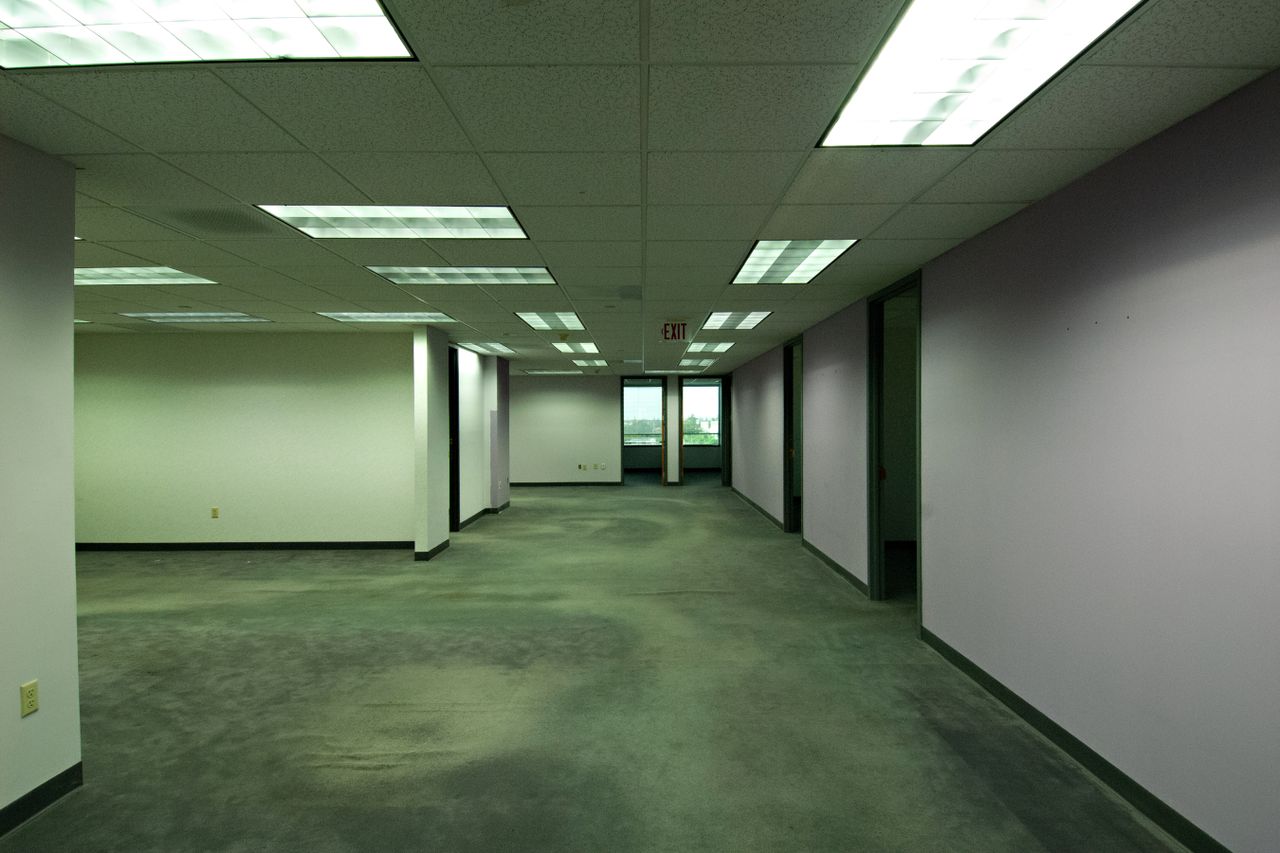
For anyone who grew up on YouTube spirals and creepypasta wikis, the mythology behind the film needs no introduction. For anyone who didn’t: the Backrooms began in 2019 with a single photograph of an empty office hallway, yellowish carpet, fluorescent lights, walls that seemed to stretch on longer than they should. It was posted anonymously to the internet and it immediately felt like something remembered from a half-forgotten dream. Millions of people felt it the moment they saw it. The internet built an entire shared mythology around that image, and now that mythology has become A24’s first-ever film to cross $100 million domestically.
This is not just a box office story. It is evidence that the internet’s cultural underground, the one humming along in found-footage YouTube series and Reddit lore threads for years, has enough gravitational pull to move the needle at a scale Hollywood historically reserved for Marvel sequels and animated family films. And it got there through a kid from Northern California who uploaded short films to YouTube when he was 16.
From a 4chan Thread to the Top of the Charts
The Backrooms originated as a fictional location that crystallized in a 2019 thread on the imageboard website 4chan – an impossibly large extradimensional complex of empty rooms, accessed by exiting reality, and one of the best-known examples of the liminal space aesthetic. On May 12, 2019, an anonymous user started a thread on /x/, the paranormal-themed board, posting the photograph. Another anonymous reply supplied the name and the lore, describing a place you could fall into if you “noclipped out of reality in the wrong areas” – a term borrowed from video game parlance for moving through a wall that was never meant to be passed through. The framing was perfectly calibrated for the audience receiving it: people who had grown up gaming, who already understood “noclipping” as both a technical concept and a metaphor for slipping outside the edges of the world you were supposed to inhabit.
Internet users expanded on the concept, introducing “levels” – interconnected layers of the Backrooms – and “entities,” hostile creatures that inhabit the space. The mythology grew collaboratively, across Reddit threads, TikTok videos, Discord servers, and dedicated wikis. The #liminalspaces hashtag amassed nearly 100 million views on TikTok. What began as a single photograph had become a shared creative universe, and it was waiting for someone to give it a coherent narrative spine.
That person was Kane Parsons. In January 2022, a short horror film titled The Backrooms (Found Footage) was uploaded to YouTube, created by then-16-year-old Parsons, known online as Kane Pixels, of Northern California. It was presented as a VHS tape recorded by a filmmaker who accidentally enters the Backrooms in the 1990s and is pursued by an unknown monster. Parsons was just 16 when his nine-minute clip went from one million to seven million views in one 48-hour stroke. He ultimately built a web series of episodes, and the viral videos were credited with igniting a surge in Backrooms content and taking the concept into the mainstream.
Kane Parsons: The Director Who Grew Up on the Same Platform as His Audience
There is a specific kind of filmmaker credibility that no film school can manufacture and no studio deal can replicate – the credibility of having built the mythology yourself, from your bedroom, for an audience that was watching with you the whole time. Parsons has that in a way that is essentially unprecedented at this level of mainstream filmmaking.
Born in 2005, the year YouTube launched, Parsons has “always taken that for granted,” having the platform at his disposal. “YouTube, really more than just being a cultural reference for me, has been how I know how to do any of the stuff I do,” he explained while discussing his debut as A24’s youngest ever director, at just 20 years old.
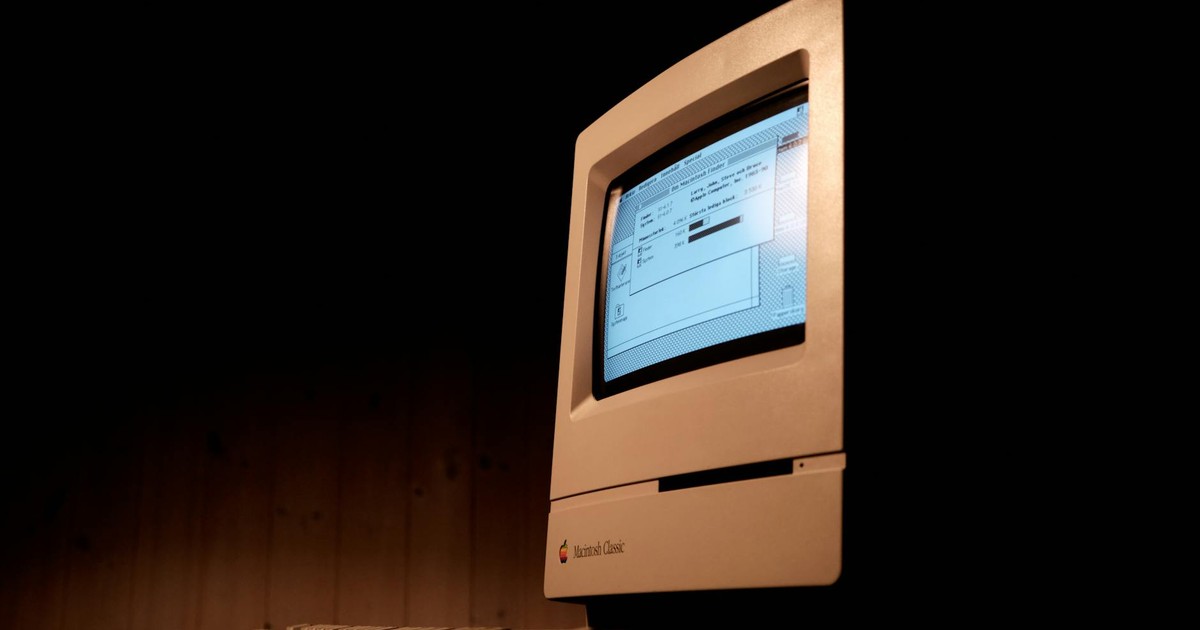
Parsons taught himself to use the free, open-source 3D graphics software Blender to create the world of his YouTube videos, which he continued to use for the feature film. Describing his process at CCXP Mexico, he said: “I was working in Blender, modelling the sets, and then we would literally go and build them in real time. We did a lot of tests there to make sure we were getting the general tone that people expected from Backrooms. We did 50 wallpaper tests to get the right shape of yellow.” That last detail – fifty tests to nail a specific shade of institutional yellow – tells you everything about why this film resonated the way it did. The yellow is the whole point. Anyone who spent time with the original lore knows that.
To achieve the physical scale of the Backrooms on screen, A24 handed Parsons a script, a $10 million budget, and a cast that included Renate Reinsve and Chiwetel Ejiofor. The resulting film was shot on a 30,000-square-foot set, which, ironically, the cast and crew got lost in themselves.
The move makes Parsons, 20, the youngest filmmaker in history to top the domestic box office, smashing the record set in 2012 by Josh Trank, who was 27 when his found footage superhero movie Chronicle opened at No. 1. The comparison to Chronicle is not accidental – both films demonstrate what happens when a filmmaker works in a genre they genuinely love, rather than one they have been assigned.
The Backrooms Box Office Milestone, by the Numbers

The numbers here tell a story about how dramatically expectations were rewritten in a matter of weeks. In early May 2026, three weeks before opening, the early tracking outlook had Backrooms set to open to $20 million in North America. By the week of its release, projections had increased to $40 to $50 million. Neither figure came close to what actually happened.
The film grossed $38.4 million on its first day and went on to debut to $81 million domestically and a total of $118 million globally, becoming A24’s biggest opening weekend, more than tripling the record of Alex Garland’s 2024 thriller Civil War, which had opened to $25.5 million.
Backrooms crossed $100 million at the domestic box office, becoming A24’s first movie ever to do so and their highest-grossing movie stateside, surpassing the Timothée Chalamet period dramedy Marty Supreme ($96 million domestic) – and it pulled this off in just six days.
On a global basis, with north of $136 million, Backrooms was poised to topple A24’s multi-Oscar winner Everything Everywhere All at Once ($148 million worldwide) as their second highest-grossing film ever. Marty Supreme currently stands as A24’s highest-grossing film worldwide at $191.3 million – though that record may not stand for long.
A24 and Chernin Entertainment co-financed Backrooms for roughly $10 million, meaning it’s already hugely profitable. A film budgeted at the cost of a mid-range television pilot has generated more than thirteen times its production budget in its first week alone. Backrooms‘ second weekend is expected to be down anywhere from 55 to 60 percent, with projections landing between $32 million and $37 million.
The Audience Behind the Numbers
The demographic data confirms what anyone familiar with the Backrooms community would have expected. Screen exits showed a massive turnout by the 18-to-24 age group at 43 percent, with the combined 18-to-34 bracket accounting for 76 percent of the audience. This is the generation that found the original 4chan post, built out the Reddit wikis, watched Parsons’ YouTube episodes frame-by-frame looking for lore details, and debated the canon of various Backrooms “levels” in Discord servers at midnight. They turned out in force.
According to A24’s internal polls, more than 50 percent of the opening weekend crowd came to the film specifically because it is an A24 release, while 30 percent came for Parsons himself. The top reasons for attendance included fanship of the Backrooms IP and A24 as a brand. That last data point is remarkable in its own right – over 14 years, brand loyalty to a film studio has become a real and measurable driver of opening weekend performance.
How Backrooms Rewrote A24’s Record Books
To understand what Backrooms has accomplished within A24’s own history, it helps to know how long that history has been building to a moment like this.
A24 was founded in 2012 as a distribution company whose explicit purpose was to fill the gap between arthouse and commercial cinema – films for young audiences who were not being served by franchise sequels or prestige Oscar bait. Everything Everywhere All at Once (2022) was A24’s first film ever to cross the $100 million mark worldwide. It took the studio a decade to get there. Marty Supreme (2025) then became A24’s highest-grossing worldwide release of all time, generating $191.3 million globally.
Backrooms has now blown past every domestic record A24 has ever posted – in six days – on a budget that would not have covered the catering on a studio tentpole. Box office analyst Jeff Bock put it plainly: “Nobody expected this to open above $80 million. There’s an obsession with ‘Backrooms’ mythology, and part of that is responsible for the Marvel-sized opening weekend.”
The YouTube-to-Hollywood Pipeline Gets Its Biggest Proof of Concept Yet

Backrooms did not happen in a vacuum. It is the current high watermark of a demonstrable trend: filmmakers who built their craft and their audiences on YouTube before ever setting foot on a proper film set.
Earlier in 2026, YouTube creator Mark Fischbach, known as Markiplier, directed, self-financed, and distributed the horror film Iron Lung, which earned $50 million against a $3 million budget. The YouTube duo Danny and Michael Philippou achieved a similar feat with A24’s supernatural horror film Talk to Me, which earned $92 million against a $4.5 million budget in 2022.
Jason Blum, who produced Backrooms through Blumhouse-Atomic Monster, called YouTube “a new place to look for the next generation of talented filmmakers,” adding that he believes it’s up to Hollywood to cultivate the ones with genuine artistic promise.
The Philippou brothers came from YouTube. Markiplier came from YouTube. Parsons came from YouTube. What they share – beyond the platform – is a specific relationship with their audiences built over years of free content, active comment-section engagement, and iterative creative work done in public. When Parsons’ first Backrooms video went viral in 2022, the people who watched it became invested in his interpretation of the mythology. When A24 announced the feature, those same people became its built-in opening weekend audience. Hollywood has been trying to understand how to manufacture that loyalty for decades. These filmmakers arrived with it already intact.
Though a sequel has not been announced, Parsons has already teased the idea of turning Backrooms into a film franchise. Parsons has also mentioned he would like to create a TV series based on his Backrooms content, telling the New York Times: “I feel like I’m going to go insane if I don’t get this out of my system.”
Critical Reception: What the Reviews Are Saying
The commercial performance is only part of the picture. Critical reception has been strong enough to suggest that the film is not simply riding nostalgia for internet lore – it is functioning as a genuinely accomplished piece of horror filmmaking.
On Rotten Tomatoes, 89 percent of critics’ reviews are positive, with an average rating of 7.5 out of 10. Angie Han of The Hollywood Reporter praised Backrooms as an unsettling and immersive expansion of the universe, highlighting Parsons’ use of labyrinthine spaces, sterile fluorescent lighting, and a constant sense of disorientation to build tension. Lex Briscuso of IGN called the film “a truly terrifying cinematic rabbit hole that takes its audience down a twisted and dread-filled path as cerebral in its horror as it is aesthetically pleasing in its design.”
Read More: Netflix Horror Movie Was Pulled from U.S. Streaming, Fans Call It a Masterpiece
What This Moment Actually Means
When a number like $100 million arrives in six days on a $10 million budget, the comfortable industry reading is to file it under “exception” and move on. A perfect storm, the argument goes: the right IP, the right studio, the right weekend. That reading is available, and it is wrong. Around 86 percent of the Backrooms audience was younger than 35, and more than half were under 25 – the exact demographic that streaming platforms and studio executives have spent the better part of a decade insisting could not be reliably moved to a movie theater. They were moved. Enthusiastically. By a found-footage horror film rooted in internet lore that most people over 40 had never heard of, directed by someone not yet old enough to rent a car in most U.S. states.
What Kane Parsons actually demonstrated is that the audience Hollywood has been trying to decode for a decade – the 18-to-34 crowd that streams everything and theaters nothing, the one that supposedly can’t be dragged out of the house for anything short of a superhero event – will absolutely turn out on opening night. They just need to feel like the film was made for them, not at them. Parsons didn’t adapt the Backrooms mythology for a general audience and then hope the lore community came along. He made something completely, almost defiantly, native to that world – and the general audience followed the lore community in. That is the opposite of how Hollywood usually thinks about this problem, and the box office receipts are the counter-argument.
The other thing worth naming is that Backrooms is not the beginning of this story. It is the loudest proof of concept so far in a pipeline that has been building for years – in YouTube comment sections, in Reddit threads, in Discord servers where teenagers argued about canonical Backrooms levels at 2 a.m. The next Kane Parsons is almost certainly already uploading. The next mythology is probably already accruing its first hundred thousand believers somewhere on the internet right now. Hollywood is only just learning to look in the right places.
AI Disclaimer: This article was created with the assistance of AI tools and reviewed by a human editor.