

Early railway travel sparked genuine medical debate about whether the human body could safely endure the speeds locomotives produced. Doctors and commentators warned that no human could safely ride at such unnatural velocities — that the brain would give out, nerves would shatter, and madness would follow.
They were wrong, obviously. But the people who read them didn’t know that yet, and so they believed them, and some of them refused to board a train, and the ones who did board one sometimes reported trembling hands and racing hearts and a creeping sense that something had gone terribly, permanently wrong with their minds. Fear doesn’t need to be accurate to be completely convincing. It just needs an audience and a little bit of uncertainty – two things America has never been short of.
These bizarre fears Americans once carried weren’t fringe beliefs held by a few nervous eccentrics. Most of them were mainstream, often doctor-endorsed, and in some cases written into law. They shaped what people ate, how they traveled, what games their children played, and what they thought their own bodies were capable of. Looking back at them is a little like reading your own diary from fifteen years ago – uncomfortable in its specificity, impossible to dismiss entirely, and just unsettling enough to make you wonder what we believe right now that future generations will find equally baffling.
1. That Train Travel Would Drive You Insane

Some doctors and commentators warned that no human body could safely endure motion faster than twenty miles per hour, a belief that was especially widespread during the early decades of railway travel. This wasn’t idle speculation. It was treated as a medical consensus, the kind of thing you’d read in respectable journals and repeat at dinner parties.
Trains were believed to injure the brain. The jarring motion of the train was alleged to unhinge the mind and either drive sane people mad or trigger violent outbursts from a latent lunatic. Mixed with the noise of the train car, it could, doctors claimed, shatter nerves. Passengers reported headaches, confusion, memory lapses, and a general sense of nervous collapse after even short journeys. Doctors had a name for it: railway madness. As more case reports appeared, the term entered everyday language, with physicians warning of physical and mental breakdowns.
The fear grew social as well as medical. One “American Traveller” spoke of carrying a loaded revolver on trains in England because of the prospect of encounters with a madman. The man sitting across from you in the compartment might seem perfectly reasonable when the train departed, and completely unraveled by the time it arrived. Scientifically speaking, this was nonsense. Emotionally speaking, it made a certain amount of sense to anyone who’d ever had a long train ride make them feel slightly unhinged.
2. That Tomatoes Were Poisonous (and Possibly Witchcraft)

Until the early 19th century, tomatoes were incorrectly thought to be poisonous and potentially associated with witchcraft. These beliefs originated in Europe but spread across the Atlantic to America. The tomato’s resemblance to deadly nightshade, a genuinely toxic plant in the same botanical family, gave this fear a kernel of plausibility that kept it alive for decades.
The tomato arrived in American kitchens under deep suspicion. It was red, it looked dangerous, and its acidic juice leached lead from the pewter plates wealthy colonists used – which did, occasionally, make people sick, though the plate was doing the poisoning, not the fruit. None of this helped the tomato’s reputation. For a long stretch of American culinary history, the thing was treated less like a vegetable and more like a trap.
Things began to change in the early 1800s, and then even more substantially during the Civil War, as canned goods were often used to feed soldiers, and tomatoes were a produce which could comfortably be contained in that form. Their popularity grew further after the post-war increase in the use of canned goods, as well as due to growing awareness of their health benefits. It took a war and an industrial canning process to make Americans comfortable eating a tomato. That says something about either the power of fear or the power of logistics, and possibly both.
3. That Female Emotions Were a Medical Emergency Called “Hysteria”

For the best part of two centuries, a fondness for writing, symptoms of post-traumatic stress disorder or depression, and even infertility could easily fall under the umbrella of female hysteria. Throughout the 18th and 19th centuries, female hysteria was one of the most commonly diagnosed disorders.
From ancient Greek physicians like Hippocrates to Victorian-era doctors, the belief held that the uterus could move through the body, causing everything from fainting and paralysis to grief and rage. Any symptom that didn’t fit neatly into another diagnosis – and plenty that did – could be reassigned to the wandering womb. Virtually any symptom, from fevers to kleptomania, could be chalked up to a restless uterus.
Richard Maurice Bucke, a Canadian psychiatrist active in the late 19th century, opted to perform invasive surgery, such as hysterectomies, to cure female patients of mental illnesses. Women who expressed opinions too forcefully, grieved too visibly, or simply failed to perform cheerfulness on schedule were not seen as people having reasonable responses to difficult circumstances. They were seen as medical problems in need of management. For a long time, hysteria remained an umbrella term that included numerous and widely different symptoms, reinforcing harmful stereotypes about sex and gender.
4. That the Salem Witches Were Real and the Threat Was Everywhere

Most people know the Salem Witch Trials as a discrete historical event – something that happened in 1692 in Massachusetts and then stopped. What gets less attention is how broadly Americans believed, for a very long time, that witchcraft was an active and present danger in their communities. In seventeenth-century Colonial America, and especially in Salem and the Massachusetts Bay Colony, the belief that the Devil could grant witches extraordinary powers in return for their loyalty – and that witchcraft could be used to inflict harm on the good and godly – was taken for granted.
The panic at Salem resulted in 19 people being executed by hanging, one man pressed to death with heavy stones, and hundreds more imprisoned while awaiting trial. The accused included a former minister, a four-year-old child, and a dog. The fear was not selective. Anyone could be a witch, which meant everyone was potentially in danger from everyone else, which is precisely the kind of social terror that makes ordinary life nearly impossible to sustain.
Many argue that the publication of the Malleus Maleficarum – a handbook on witchcraft written c. 1486 – laid the groundwork for a resurgence of panic surrounding witchcraft in the North American colonies. The belief didn’t vanish cleanly after Salem. It receded, shifted shape, and found new hosts – the logic of “there is a hidden enemy among us causing invisible harm” proving remarkably portable across centuries and contexts.
5. That Vampires Were Feeding on New England Families
This one requires a moment. In late 18th and early 19th century New England, vampires were not considered fiction. The most widely recognized image – a glowering, gaunt creature that drains the blood of its victims – was largely popularized in Eastern Europe and carried over to the American colonies. And in late 18th and early 19th century New England, the vampire was perceived as much more than a spooky legend.
The fear was rooted in something real and genuinely terrifying: tuberculosis, then called consumption, was sweeping through rural communities. Families would watch one member waste away – growing pale, coughing blood, losing weight – and then, weeks or months after that person died, another family member would develop the same symptoms. The connection seemed obvious to people who didn’t yet understand how infectious disease spread. Records report that in Manchester, Vermont, in 1793, Congregational Deacon Captain Isaac Burton had the body of his wife Rachel unearthed. His second wife, Hulda, had fallen ill with the same symptoms that killed Rachel. Like Rachel, Hulda was wasting away, deathly pale, and was coughing up blood.
The solution, in the minds of many New England communities, was to exhume recently deceased family members, check their bodies for signs of undead activity – preserved blood, intact organs – and, if found, burn or rebury them in ways that would prevent further harm. This was not considered fringe behavior. It was community medicine.
6. That Fiction Would Corrupt Society From the Inside Out

In the late 19th century, there was a notable rise in the popularity of reading fiction, which led to the emergence of what is known as “dime novels.” Named as such due to the fact that each of them only cost one dime, they helped make stories more accessible to the public. However, they also became a source of fear for some in society, due to a belief that these books carried the ability to subvert social behavior and corrupt readers.
The argument was not subtle. Cheap fiction, available to anyone with ten cents, would fill the minds of the working class with violent fantasies, criminal ambitions, and moral looseness. Young people especially were thought to be at risk – one lurid story about a train robber or a fallen woman and the next generation would be lost. This led to the censorship of these works by the controversial Anthony Comstock and the 1873 Comstock Law, along with other works of fiction regarded as sensationalist and dangerous. This was one of numerous things Comstock sought to suppress during his time at the US Postal Service.
The Comstock Law gave the government the power to intercept and destroy obscene materials sent through the mail, and obscene was defined broadly enough to include contraception information, anatomy textbooks, and, yes, dime novels. The fear that a story could rewire a person’s brain entirely and send them hurtling toward crime or depravity is, if nothing else, a very high opinion of literature’s power.
7. That Dungeons & Dragons Was a Gateway to Demonic Possession

The role-playing game Dungeons & Dragons became the center of a moral panic in the 1980s. The game involved players rolling dice, consulting handbooks, and pretending to be elves or wizards in a fantasy world. This was understood by a significant portion of the American population as a direct pipeline to Satan.
The game was wrongly believed to be the cause of a student’s suicide in 1980. The media attention to this gradually developed into a wave of fear which led to campaigns by religious groups against the game, who stoked further anxiety by claiming it opened up young people to dangerous supernatural influences. The charges escalated to include witchcraft, ritual murder, and Satanic recruitment – an accusation list so comprehensive that it’s difficult to imagine what a game would have to contain to be considered genuinely harmless by the people making it.
Eventually, a number of organizations sought to clear up the misinformation, and several studies investigated and found no link between suicide and the game. But the panic had already done its damage. Libraries pulled the books. Schools banned the game. Parents threw sets in the trash. The dungeons, as it were, were not actually full of dragons – they were full of kids eating Doritos and arguing about whether their wizard had enough spell slots.
8. That the Full Moon Caused Madness
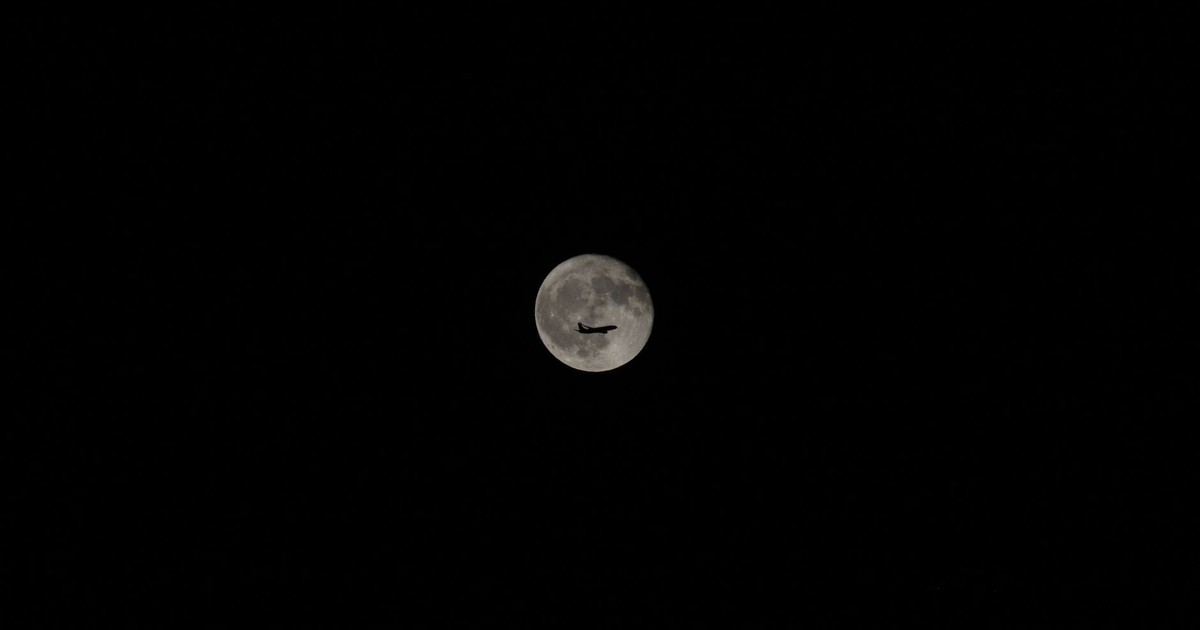
The word “lunatic” comes from the belief that the full moon could trigger madness. Asylums sometimes noted patient behavior during lunar cycles. Some even adjusted treatments based on the moon phase. The fear was old enough to have its own vocabulary baked into the English language and institutional enough to influence actual medical practice.
The belief linked the moon’s pull on ocean tides to a similar pull on the fluids in the human brain – a theory that sounds intuitive until you consider that the moon’s gravitational effect on a body of water requires that body of water to be, at minimum, the size of an ocean. The fluid in a human skull does not qualify. None of this stopped the idea from persisting across centuries and finding its way into 19th-century American asylum records, courtroom testimony, and popular wisdom.
The “lunar effect” has since been studied extensively and found to have no reliable correlation with psychiatric episodes, ER admissions, or violent behavior. The word “lunatic,” however, remains. Language archives what science has long since discarded.
9. That the Satanic Panic Was Grounded in Reality

The Satanic Panic of the 1980s was a period of intense public anxiety and moral hysteria in the United States surrounding unfounded claims of widespread occult activity. It wasn’t a fringe belief. It was covered by national news programs, investigated by police departments, prosecuted in courtrooms, and believed by millions of ordinary Americans who were convinced that a network of Satanists was systematically abusing children in daycare centers across the country.
It led to mass suspicion of everyday activities, with media reports and suburban rumors fueling the belief that secret cults were harming children and infiltrating local communities across the country. Families were torn apart. Innocent people spent years in prison. Daycare workers who had dedicated their lives to caring for children were convicted of crimes that, when investigators returned to examine the evidence years later, had simply never happened.
When all charges were finally dropped in the McMartin case – with no convictions – it was the longest and most expensive series of criminal trials in American history. The damage, of course, had already been done. Careers ended. Families destroyed. Children grew up having testified, under pressure, to events they’d been coached to describe. The fear of what might happen to children in a chaotic world had generated the very harm it claimed to be preventing.
10. That Photography Could Steal Your Soul
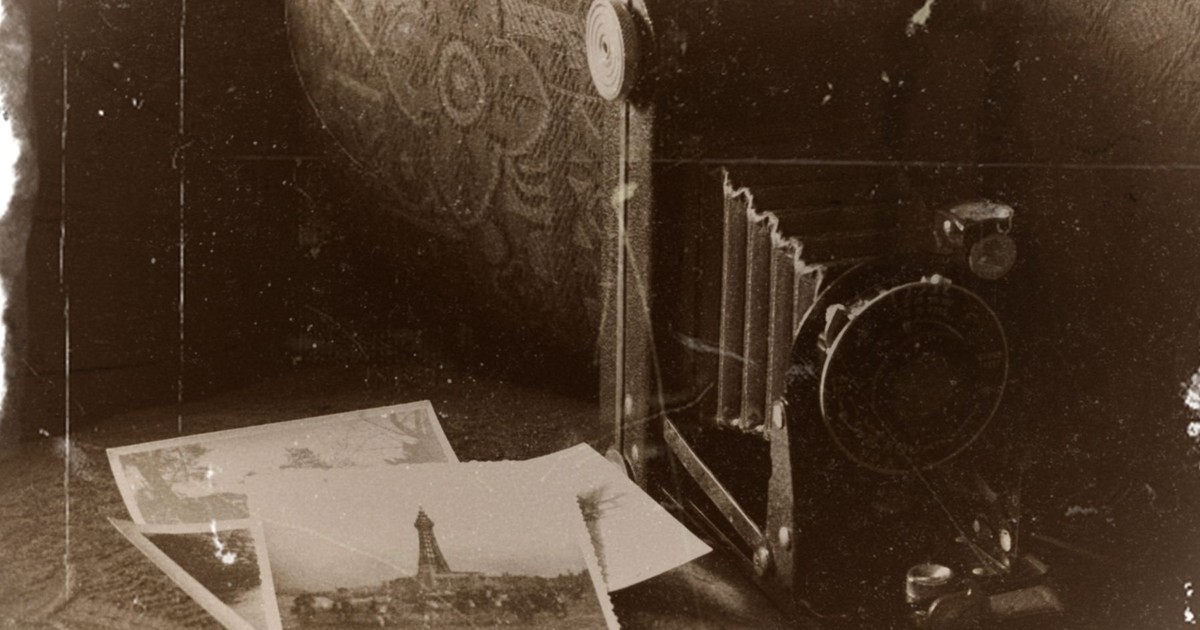
Early photography spooked some people, especially in isolated or traditional communities. It was believed that capturing someone’s image could also capture part of their spirit. As a result, many avoided having their photo taken. The idea wasn’t purely superstitious – there was also a visible strangeness to the early daguerreotype process, which required subjects to hold perfectly still for long exposures and produced images that were reversed, ghostly, and somehow not quite like looking in a mirror.
The fear crossed cultural lines and ran through documented resistance throughout 19th-century America, particularly in communities that held strong convictions about the spirit world. The logic was intuitive: if an image captures your likeness exactly, what else might it capture? The modern equivalent might be the vague unease some people still report about being watched through their phone camera – different technology, identical psychological architecture.
The irony, of course, is that Americans who refused to be photographed are now entirely absent from the historical record, which is its own kind of disappearance.
11. That Radio Broadcasts Could Be Real Life and the World Was Ending

On the evening of October 30, 1938, Orson Welles narrated a radio adaptation of H.G. Wells’ The War of the Worlds in the style of a live news broadcast. Some listeners who tuned in midway through the program did not realize that it was fictional, and thought it was a radio announcement that an alien invasion had actually happened, leading to panic evacuations in public places.
The scale of the panic has since been debated and somewhat revised downward by media historians, but contemporary newspaper accounts documented genuine, widespread alarm – phone lines jammed, emergency services overwhelmed in some areas, people fleeing on foot from towns in New Jersey. The fear wasn’t irrational given the context: Americans in 1938 had been listening to real, terrifying radio news about European fascism for years. The format of urgent interruption was already wired to mean genuine catastrophe.
What the broadcast exposed was less a fear of aliens and more a fear of information itself – of not being able to tell the difference between what was real and what was performance. That particular anxiety has not aged out of American life, it has simply found new formats.
12. That Women’s Minds Were Responsible for Whatever Their Bodies Did

This one runs underneath several of the other entries, but it deserves its own space. For most of American history, the fear was not just that women were medically fragile – it was that the female mind was inherently unstable and that instability could travel through the body, into the family, and out into society. The wandering womb myth reflected a broader societal belief that women were emotionally unstable and physically fragile, and that their bodies could be blamed for nearly any misfortune.
The practical effects of this belief were wide-ranging. Women who advocated for their own health were labeled hysterical. Women who expressed ambition were considered medically at risk. Women who grieved publicly, or not at all, were both diagnosable. The condition was capacious enough to contain any behavior that made the people around a woman uncomfortable. Freud turned hysteria from a medical spectacle into a psychological case study, but bias stuck around. Women were still the main subjects, and behaviors tolerated in men were often treated as symptoms in women.
The fear here wasn’t really about medicine. It was about what would happen if women were simply believed – believed about their symptoms, their experiences, their intelligence, their intentions. The hysteria diagnosis was less a description of what women were doing and more a management strategy for what they might do if left undiagnosed.
Read More: Shocking Daytime Talk Show Topics from 20 Years Ago That Would Never Fly Today
The Pattern Underneath All of It

So many of the bizarre fears Americans held across these centuries were less about the thing itself and more about the anxiety of living in a world that was changing faster than people knew how to process. Trains were new. Photography was new. Canned tomatoes were new. The Satanic Panic happened precisely as mothers entered the workforce in record numbers and left their children, for the first time, in the care of strangers at daycare centers. The panic was dressed in religious language, but the fear underneath it was about a world that no longer looked the way it used to.
Every era generates its own version of this – the collective fear that something ordinary is secretly destroying everything, that the danger is invisible and everywhere, that the experts have missed it and only the worried few have seen the truth. Future generations will compile their own list. Some of the entries will be obvious in retrospect, and some of them are almost certainly beliefs held right now, today, by people who would describe themselves as clear-eyed and rational. The archive never gets smaller, only larger.
Disclaimer: This information is not intended to be a substitute for professional medical advice, diagnosis, or treatment and is for information only. Always seek the advice of your physician or another qualified health provider with any questions about your medical condition and/or current medication. Do not disregard professional medical advice or delay seeking advice or treatment because of something you have read here.
AI Disclaimer: This article was created with the assistance of AI tools and reviewed by a human editor.