

You could call it grumpiness. But that’s too easy, and it’s too wrong. What’s actually happening is closer to a reckoning with time. By 2030, all Baby Boomers will be 65 or older, and more than 11,200 Americans are turning 65 every day between now and 2027. The demographic math clarifies priorities in ways that no self-help book ever could. When you start doing the math on your own calendar, things that used to slide don’t slide anymore. The Boomers are done performing tolerance they don’t feel.
What follows is not a criticism. It’s closer to a field guide, equal parts recognition and respect. These are the thirteen things Boomers have collectively decided they are, in fact, too old for – and if you’re paying attention, you’ll notice that at least a few of them are things the rest of us should have stopped tolerating years ago.
1. Boomer Behavior Change Starts With Dramatic Relationships
There is a version of chaos that reads as passion when you’re twenty-three. The friend who makes every minor conflict into a four-day crisis, the family member who requires emotional triage after routine conversations, the relationship where calm is always just a misunderstanding away from being shattered. At a certain age, that stops reading as passion and starts reading as exhausting.
Research on psychological traits by age finds that Baby Boomers score the highest of any generation on what researchers call “Stable-Mindedness,” a measure of emotional resilience and equilibrium under pressure, with scores that significantly exceed those of younger generations. That’s not a coincidence. Decades of accumulated experience tend to give you a finely tuned detector for manufactured drama, and a strong disinclination to engage with it. That characteristic allows Boomers to move through contemporary social disruption without the psychological reactivity often seen in younger cohorts.
The practical result is simple: Boomers increasingly gravitate toward relationships that have some baseline emotional stability to them. The kind where a disagreement can be handled in one conversation and everyone goes home. A relationship that requires constant management, constant reassurance, constant dramatic narrative – it doesn’t feel like connection anymore. It feels like a second job with no pay.
2. Being Talked Down To
This one runs deep. A generation that rebuilt the American economy, raised children, navigated decades of seismic cultural change, and is now sitting on 51.8 percent of the total wealth in the United States does not particularly need to be explained things slowly. Condescension from a customer service rep, a doctor who doesn’t answer the actual question, a younger colleague who restates the obvious with an air of patient expertise – all of it has become something Boomers simply refuse to absorb without comment.
Retailers have noticed this: research finds that Boomers are the most intolerant generation when it comes to irrelevant or condescending content, making messaging and tone absolutely critical for anyone trying to reach them. The parallel holds in personal relationships just as well as in commerce. Being treated as a demographic rather than a person – being handled – is something that used to get swallowed. It doesn’t anymore.
The irony is that the same generation that sometimes gets stereotyped as set in its ways is among the most emotionally sophisticated when it comes to reading the subtext of a conversation. They know when they’re being managed. They always knew. They just used to let it pass.
3. Wasted Time
At sixty-two, you are no longer willing to sit on hold for forty minutes because a company decided that having fewer customer service agents was a better business decision. You are no longer willing to spend an entire afternoon hunting down the real price of something that was advertised with exactly one number and billed at three. The so-called “Annoyance Economy” – the compounding friction of hold times, insurance paperwork, spam calls, and surprise fees – costs Americans at least $165 billion a year.
Boomers didn’t invent impatience with wasted time, but they have developed a clean-edged willingness to simply stop. Stop waiting. Stop rescheduling. Stop tolerating a process that was clearly designed to wear you down. According to the FTC’s Junk Fees Rule announcement, in the live-ticketing and short-term lodging sectors alone, consumers waste up to 53 million hours per year trying to find the actual total price of their purchases, time valued at more than $11 billion over a decade.
Time, for Boomers, has stopped feeling abstract. The years between sixty and seventy-five are prime years. Real years. Not the years you fill with administrative punishment.
4. Hidden Fees and Deceptive Pricing
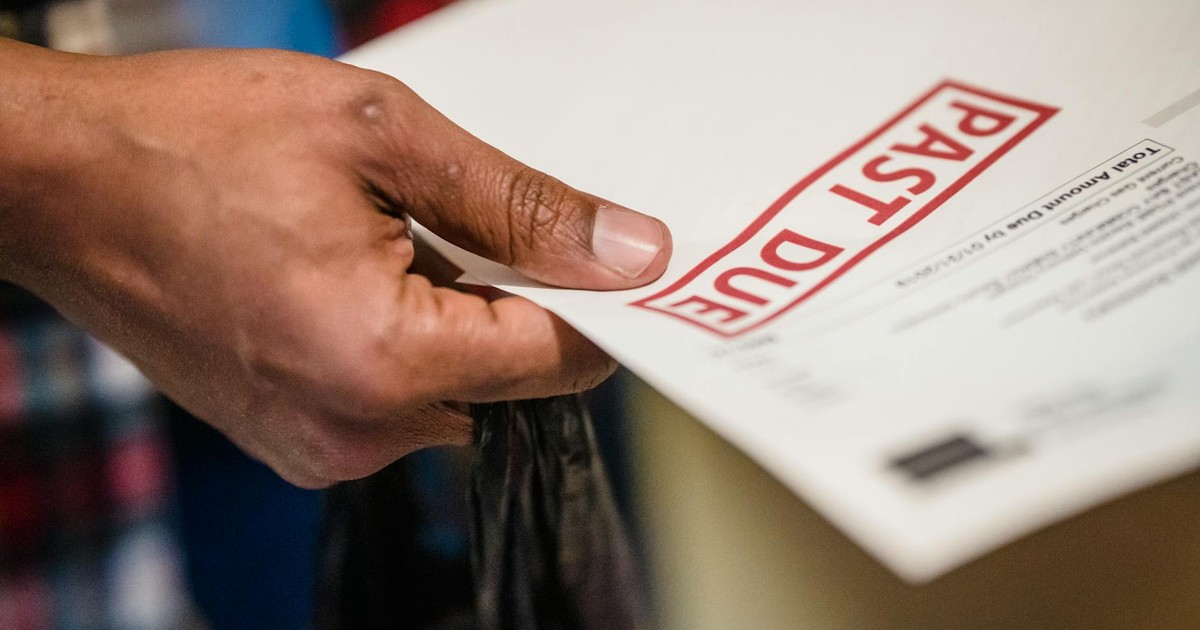
Related to the above, but distinct enough to deserve its own entry. There’s a particular quality of insult to being shown one price, making a decision based on that price, and then discovering at checkout that the actual price is something different – padded with a resort fee, a service fee, a technology fee, a fee for the privilege of paying the other fees.
A Morning Consult survey on junk fees found that 56 percent of consumers say junk fees have negatively affected their financial situation, and 51 percent say the impact extends to their emotional well-being. In the financial sector alone, 62 percent of consumers report reduced trust in financial institutions because of these practices. Boomers have become notably quick to walk away from businesses that play this game. They are the hardest generation to win over – but once earned, their loyalty tends to hold. They stay loyal to brands in a way younger generations don’t. The flip side is that they hold businesses to a higher standard before granting that loyalty in the first place.
The whole architecture of the junk-fee economy depends on customers being willing to absorb the frustration and pay anyway. A growing number of Boomers have simply decided not to.
5. Performative Busyness
There is a particular social currency in younger professional culture around being overwhelmed. The person who signals their importance through how many meetings they have, how little they sleep, how utterly swamped they are at all times. It’s a form of status performance. Boomers, on the whole, have aged out of respecting it.
This generation lived through decades in the workforce where overwork was genuinely expected and delivered. The difference is that most of them have arrived at an age where they can finally see what that cost. The forty-year-old who brags about not taking vacation is not impressive – he’s making the same mistake they did, and he doesn’t know it yet. Research finds that Baby Boomers, particularly women, score high on self-control, measured as the ability to regulate behavior toward long-term goals despite short-term pressures. That capacity for long-range thinking tends to make the theater of urgent busyness look like what it is.
You also just don’t have the patience for a two-hour meeting that could have been three sentences in an email. That calculus gets sharper with every year.
6. The “Tech Illiterate” Stereotype

This one tends to genuinely annoy people, and fair enough. The assumption that anyone over sixty is confused by technology, needs help with the remote, and is perpetually one software update away from calling their grandchild for assistance has been outdated for years.
As of 2025, 90 percent of adults aged 65 and older report using the internet. In 2024, 26 percent of adults aged 50 and older bought a new smartphone, and 62 percent upgraded their phone within the past two years, spending an average of $753 on tech purchases. These are not the behaviors of a generation frozen in 1987. AI use among adults 50 and older doubled from 9 percent to 18 percent in a single year.
The slow-it-down-for-grandpa routine, delivered by a younger person with visible patience and invisible condescension, is something Boomers have developed a zero-tolerance policy for. They know how to use the technology. They were using the early versions of it before half the people explaining it to them were born.
7. Social Obligations That Don’t Mean Anything
The obligation-based social calendar – the event you attend because you’ve always attended it, the gathering you go to because declining would cause more disruption than simply going, the friendship that runs entirely on inertia – this is something Boomers have become increasingly unwilling to maintain.
Research from Mintel’s 2024 consumer analysis finds that almost two-thirds of US Boomers see themselves as accepting and open-minded. But acceptance of other people is different from obligating yourself to their schedule. Boomers have watched enough of their peers – and parents – lose time to illness, loss, and circumstance to understand that the hours spent at events you didn’t want to attend are hours that don’t come back.
This is not the same as becoming isolated or antisocial. Boomers still invest heavily in the relationships that matter. The distinction is between presence that comes from genuine connection and presence that comes from social obligation. One feeds you. The other empties you. By this point in life, most Boomers have a fairly clear read on which is which.
8. Poor Quality Disguised as Good Value
A generation that grew up watching things be built to last has a specific and particular contempt for products that are designed to fail. The appliance that dies on month thirteen. The clothing that pills and warps after four washes. The mattress with a twenty-year warranty that develops a canyon in the middle by year three.
McKinsey’s 2025 consumer data shows that while three-quarters of consumers traded down in early 2025, Boomers were among the least likely to do so – and researchers suggest this is because Boomers tend to stick with their established purchasing patterns and brand preferences even under inflationary pressure. That’s not rigidity. That’s a generation that has learned, through experience, that cheap usually costs more in the long run and that a familiar brand that has earned trust is worth more than an unfamiliar one that’s thirty percent cheaper.
The philosophy has always been there. What’s changed is the willingness to say it plainly, return the product, and not apologize for expecting better.
9. Rude Behavior in Public Spaces
There’s a short distance between “I don’t suffer fools gladly” and “I will absolutely say something in this checkout line,” and Boomers have crossed it with increasing frequency. Loud phone calls in quiet spaces, queue-jumping, noise at a level that assumes everyone else’s comfort is irrelevant – these are things that used to get absorbed with internal irritation and no external action.
The 2025 National Customer Rage Survey found that 77 percent of consumers reported a product or service problem in the past year, a rate that has more than doubled since 1976. The ambient frustration in American public life is real and measurable. Boomers are not uniquely responsible for it, but they have also stopped pretending it isn’t happening. Calling out bad behavior, asking someone to lower their voice, declining to simply absorb rudeness as if it were weather – these have become default behaviors rather than exceptional ones.
Whether that’s a loss of inhibition or an acquisition of moral clarity probably depends on the specific incident. Both things can be true at once.
10. Unreliable People
Fifty years of watching people follow through on their commitments – or not – tends to produce a very accurate detector for who actually does what they say and who generates a lot of interesting reasons why something didn’t happen. By this point, most Boomers have encountered both types in sufficient quantity to have stopped extending unlimited second chances to the second.
Boomers score higher on trust than all younger generations, particularly among women – a trait that measures belief in others’ goodwill and reliability, including institutional trustworthiness. The interesting thing about scoring high on trust is that you also feel the violation of it more cleanly. When someone who was trusted repeatedly doesn’t come through, the pattern becomes impossible to explain away. Extending benefit of the doubt to someone who has repeatedly not earned it stops feeling generous and starts feeling naive.
The standard doesn’t get applied to strangers or to people navigating genuine difficulty. It gets applied to the chronic overpromisers who have been overpromising for decades.
11. Revisiting Settled Decisions
The second-guessing dynamic – being asked, repeatedly, to re-examine a decision that was made, discussed, and resolved – is one Boomers have grown particularly impatient with. It turns up in family systems, in professional settings, in friendships. The person who re-litigates a conversation that was finished. The adult child who continues to lobby against a choice their parent has made about their own life. The colleague who disagrees with a decision and handles it by circling back to it indefinitely.
If you are well past sixty and someone is still applying social pressure to make you second-guess your own clearly stated position, the response has become shorter, firmer, and a lot less apologetically diplomatic than it used to be. Research on Boomer psychology notes that this trait of stable-mindedness transcends gender lines among the generation, creating a cohort equipped to respond to disagreement with measured perspective rather than reactive anxiety. That measured perspective is exactly what makes the “but have you really thought about it?” loop so easy to step out of. They have thought about it.
12. Being Stereotyped as a Generation
The Boomer-as-cultural-villain arc has had an extended run online, and while some of the critique hits in the general vicinity of fair, a lot of it doesn’t. The assumption that every person born between 1946 and 1964 holds identical politics, values, spending habits, and worldview is the same kind of lazy generalization that drives the rest of us crazy when it’s applied to other groups.
Mintel’s 2024 consumer research found that almost two-thirds of US Boomers see themselves as open-minded and accepting – which doesn’t mean every Boomer is, but it does mean the “OK Boomer” dismissal strikes a lot of people it wasn’t even aimed at. The internal diversity of this generation is as wide as any other. What makes Boomers particularly notable is their size – 60 percent larger than the preceding generation – which means painting them with a single brush is statistically improbable from the start. You can’t do that with 70 million people and come away with anything true.
The tolerance for being reduced to a caricature has grown thin. That’s not defensiveness. That’s just basic dignity, applied consistently.
13. Pretending to Be Fine When They’re Not
This one cuts differently. There’s a cultural legacy in this generation around stoicism, around keeping it together, around not making a fuss about the internal weather. Feelings were private. Problems were handled. You didn’t talk about what was hard.
Something has shifted. Partly it’s cultural, partly it’s the kind of clarity that comes from watching people you love die too soon, or watching them spend their later years performing a contentment they didn’t feel. The pretending starts to look like a waste. More than two-fifths of US Boomers express worry about the future and who will care for them as they age – which is a real concern, said plainly, in survey form. The willingness to name the actual feeling rather than papering over it with “fine” is not a weakness. For a generation that often had to earn honest self-expression in therapy or in crisis, arriving at it now is something closer to a long time coming. The performance of fine takes energy that, at a certain point, you’d rather spend on something else.
Read More: 6 Generations Captured in 1 Photo as Woman Meets Her Great-Great-Great-Granddaughter.
What This Is Actually About

None of these thirteen things, looked at plainly, are really about getting old. They’re about getting honest. The through-line is a generation that spent decades managing other people’s comfort and has, at a certain point in the arc of a life, decided that their own time, dignity, and clarity of vision matter enough not to compromise on. That is not the same as becoming rigid or bitter or closed. It’s closer to the opposite.
Consumer researchers note that tolerance for friction and inconvenience continues to decrease as expectations for genuine quality and service increase. That trend isn’t unique to Boomers – it describes all of us, across every generation, as we accumulate enough experience to stop accepting less than we should. The difference is that Boomers, many of them now firmly in their sixties and seventies, have had the most time to learn exactly where their lines are.
The version of this that younger generations tend to mock is the surface level – the older person who complains about fees or makes a scene at a restaurant. The version worth paying attention to is what’s underneath it: the decision, made without ceremony or anyone’s approval, that a life is too short to fill with things that don’t deserve to be there. That’s not a generational quirk. That’s wisdom. It just takes most people a few decades to get there.
AI Disclaimer: This article was created with the assistance of AI tools and reviewed by a human editor.