

Pick up any random conversation about religion in America and you will find that nearly everyone has an opinion about what Christians are like, what they believe, and what they want from the rest of us. Most of those opinions were formed not from conversations with actual believers but from cable news segments, angry Twitter threads, and the one church lady who made headlines for the wrong reasons. The image has calcified into something that bears almost no resemblance to the 200-million-plus people it’s supposed to describe.
That gap between the stereotype and the reality is wide enough to drive a church bus through. Christian misconceptions are everywhere: in how people frame political debates, in how faith is portrayed in film, in the assumptions that get made at dinner parties the moment someone mentions they go to church. Some of these ideas are innocent enough, just lazy generalizations that never got updated. Others do real damage, flattening an enormous and genuinely diverse community into a single, unflattering cartoon. Twelve of the most persistent ones deserve a closer look.
1. All Christians Are Republican

This is probably the most entrenched Christian misconception in contemporary American life, and it gets messier the moment you look at actual data. 62% of U.S. adults describe themselves as Christians, including 40% who are Protestant, 19% who are Catholic, and 3% who identify with other Christian traditions, according to Pew Research Center’s 2023-24 Religious Landscape Study. That is a huge and varied population, and lumping all of them into a single political column ignores enormous internal disagreement.
While Republicans are more likely to identify as white Christians (68%) than independents (36%) and Democrats (23%), Democrats are more likely to identify as Christians of color (34%) than independents (24%) and Republicans (16%), according to PRRI’s 2025 Census of American Religion. Black Protestant churches, Latino Catholic parishes, and historically marginalized Christian communities have long leaned progressive on economics, healthcare, and immigration. The assumption that faith automatically maps onto one party erases their presence entirely.
The confusion tends to happen because white evangelical Christians have been the most visible and loudest religious bloc in recent political cycles, and they do lean heavily Republican. But white evangelical Protestants are only one thread in a very large fabric. Christianity in America is politically diverse in ways that rarely make the evening news, partly because “congregation votes split ticket” is not much of a headline.
2. Christians Don’t Think Critically About Their Faith

The idea that believing in Christianity requires checking your brain at the door has a long shelf life in certain circles, but it does not survive contact with intellectual history. The tradition that produced Augustine, Aquinas, C.S. Lewis, and Dorothy Sayers is not one that has historically been hostile to rigorous thought. Many of the foundational institutions of Western higher education, from Oxford to Harvard in its early years, were established with explicitly Christian missions.
Modern Christian thinkers continue to engage seriously with philosophy, biology, cosmology, and ethics. Entire academic disciplines, including theology, apologetics, and philosophy of religion, exist precisely because the questions Christianity raises are genuinely difficult and demand careful reasoning rather than easy answers. The idea that faith and intellectual rigor are inherently at war is itself a relatively recent framing, one that conflates a particular strand of literalism with the whole of a 2,000-year tradition.
To assume that every person in a pew has simply stopped asking questions is to misunderstand what drives many of them there in the first place. A lot of people arrive at religious commitment through asking hard questions, not in spite of it.
3. Christians All Interpret the Bible the Same Way

Put three Christians in a room and ask them what a particular passage means, and you will often get three different answers. Biblical interpretation has been contested, argued, revised, and denominated into hundreds of branches for the better part of two millennia. Catholics read Scripture through the lens of church tradition and Magisterial teaching. Protestants of various stripes hold to different degrees of literalism. Eastern Orthodox Christians bring their own hermeneutical framework entirely.
Some Christians read Genesis as literal history. Others read it as poetry, allegory, or theological narrative that makes no claim about the age of the earth. Some traditions emphasize the letters of Paul; others center the Gospels. These are not peripheral disagreements. They have produced schisms, reformations, and entirely new denominations. The assumption that “Christians believe X” about any given passage ignores centuries of documented theological disagreement.
This diversity of interpretation is not a weakness. It reflects the genuine complexity of ancient texts being read across cultures and centuries, which is exactly what you would expect from a living tradition rather than a frozen one.
4. Christianity Is Dying Out
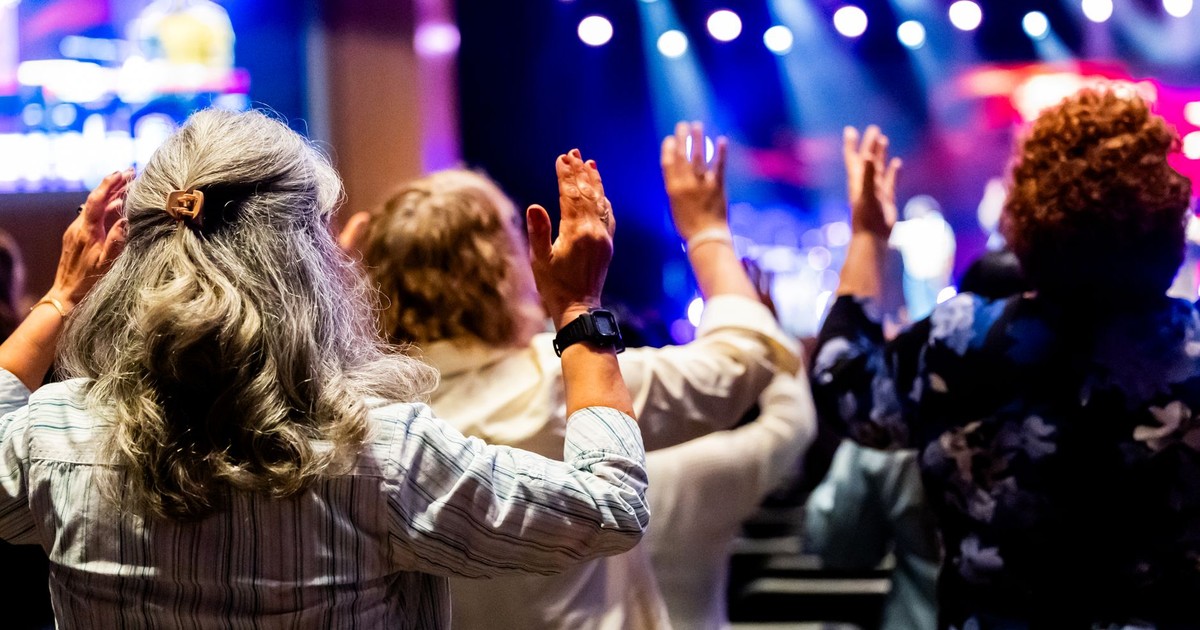
The narrative of Christianity’s imminent collapse has been a staple of cultural commentary for decades, but the most current data complicates it. An extensive survey from Pew Research Center finds that a decades-long drop in people identifying as Christians in the U.S. may have leveled off; after many years of consistent decline, the share of Americans who identify as Christians appears to have stabilized, at least temporarily.
That does not mean growth. The long-term decline from 78% of American adults identifying as Christian in 2007 to around 62% today represents a real and significant shift. But the picture of Christianity evaporating into irrelevance within a generation does not match where the numbers currently stand. Globally, Christianity remains the largest religion in the world, with significant and growing populations in sub-Saharan Africa, Latin America, and parts of Asia. The decline being discussed is largely a Western, and particularly American and European, phenomenon.
Treating a regional trend as a global verdict misses a great deal. Christianity’s center of gravity has been shifting southward and eastward for decades, and the communities driving that growth often look very different from the ones dominating the cultural debate.
5. Christians Are Joyless and Anti-Fun

Few stereotypes are as durable or as wrong as the image of the sour, disapproving Christian standing at the edge of a party, waiting to remind everyone that they are sinning. It gets perpetuated in film and television so consistently that it has started to feel like documentary. It is not.
The actual theological tradition emphasizes joy as central, not peripheral. Celebration, feasting, music, and communal gathering run through Scripture from Genesis to Revelation. The New Testament accounts of Jesus include him at weddings, at dinner parties, at the homes of people who were distinctly not considered respectable by the standards of his time. Early Christianity spread in part because it created genuine community and genuine celebration in a world that could be brutal and isolating.
Contemporary Christian communities run the full spectrum from the somber to the exuberant. Gospel choirs, charismatic worship, festival traditions, and the sheer sociality of congregational life do not fit the joyless caricature. The people who find community, laughter, and meaning inside a faith tradition are generally not experiencing it as punishment.
6. All Christians Are Against Science

The image of Christianity as monolithically anti-science tends to rest on a few high-profile flashpoints: evolution debates, certain faith-healing controversies, and the ongoing conflict over how science should inform public policy. These flashpoints are real. They are not, however, the whole story, or even most of it.
A significant majority of Christians in America have no conflict with mainstream science on most issues. Catholic scientists have made major contributions to genetics, astronomy, and cosmology. Georges Lemaître, the Belgian priest who first proposed what became known as the Big Bang theory, was a devout Catholic. Francis Collins, the geneticist who led the Human Genome Project and later served as director of the National Institutes of Health, is a committed Christian who has written extensively about his faith being compatible with, and deepened by, his science.
The specific flashpoints that drive the “Christians vs. science” narrative are largely concentrated in particular American evangelical denominations and do not represent the full range of Christian engagement with the scientific enterprise. Conflating the loudest voices on one particular issue with an entire global religion is a reliable path to misunderstanding both.
7. Christians Never Doubt Their Faith
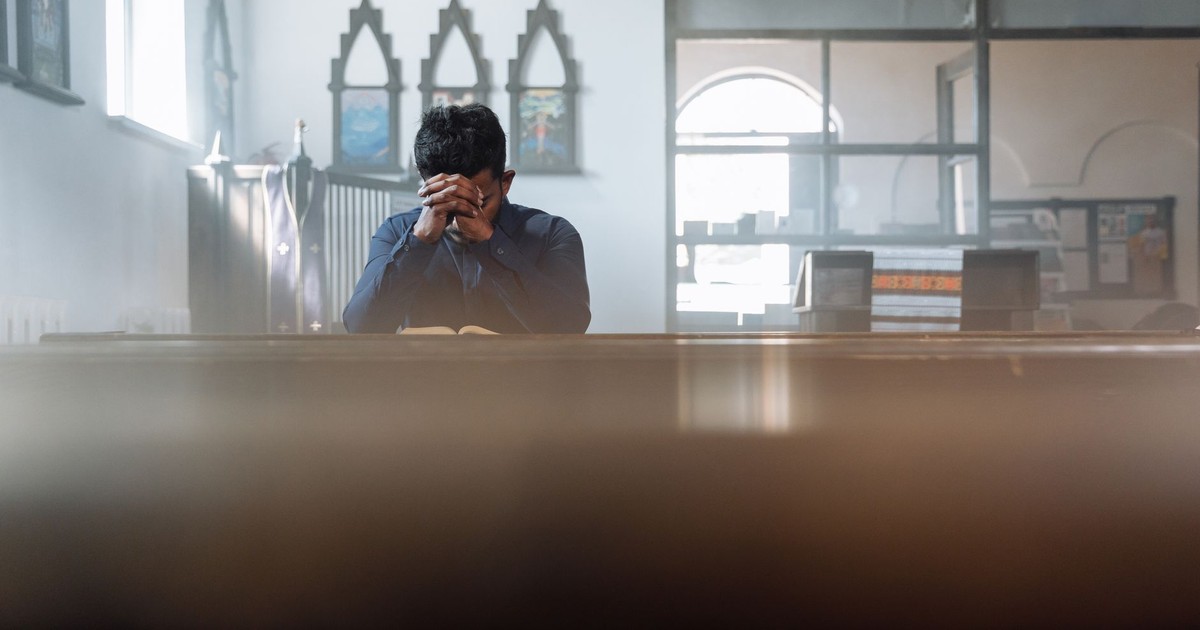
The assumption that a genuine Christian is one who never questions, never wavers, and maintains iron certainty at all times creates an impossible standard that most serious believers will tell you they have never met. Doubt has been a recognized and discussed feature of Christian spiritual life since the beginning. The Psalms are full of it. The figure of Thomas in the Gospel of John exists in the text precisely because the question of doubt was worth addressing directly.
Contemporary Christian writers, pastors, and theologians regularly address the experience of spiritual dryness, seasons of questioning, and the gap between what is believed intellectually and what is felt emotionally. The concept of “dark night of the soul,” described by the 16th-century Spanish mystic John of the Cross, captures a recognized spiritual experience of desolation that has nothing to do with abandoning faith and everything to do with its depth.
A faith that has never been questioned is often one that has never been tested. Many Christians would say that moving through doubt rather than around it is precisely how belief matures. Treating certainty as the only authentic form of Christianity gets the tradition backwards.
8. Christianity Is Primarily a White, Western Religion
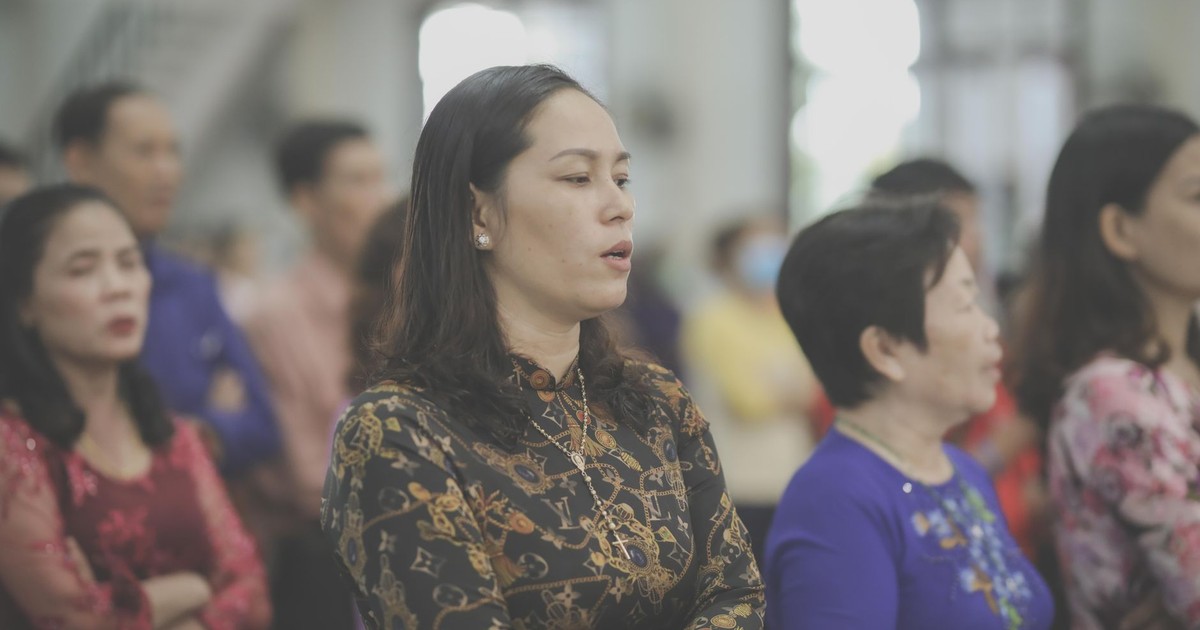
This one is both empirically wrong and historically ahistorical. Christianity originated in the Middle East, spread through North Africa and Asia in its early centuries, and has a documented presence in Ethiopia dating back to the 4th century. The Egyptian Coptic Church and the Ethiopian Orthodox Tewahedo Church are among the oldest continuous Christian institutions in the world, predating many of the European traditions that tend to dominate cultural conversation about the faith.
Around two-thirds of Americans identify as Christian, including 40% who identify as white Christian and 25% who identify as Christians of color. That 25% represents tens of millions of people, and their experience of Christianity – its theology, its community life, and its political implications – is often substantially different from the white evangelical tradition that receives the most media attention.
Globally, the numbers are even more striking. The most rapidly growing Christian populations are in Nigeria, the Democratic Republic of Congo, Ethiopia, Brazil, and the Philippines. To describe Christianity as a white Western religion in 2026 is to describe something that has not been true for quite some time.
9. Christians Want to Force Their Beliefs on Everyone

The loudest and most politically aggressive voices within certain Christian movements have done real damage to the broader perception here. When legislative efforts are explicitly framed in religious terms, it is not unreasonable for people outside the faith to feel concerned. The concern is legitimate. But the generalization that Christians as a whole are engaged in a project to impose their beliefs on others treats an extreme as though it were the norm.
Most U.S. Christians say that “good Christians” do not need to take a particular view on Trump, according to Pew Research Center’s Religion & Politics data, which is a useful indicator of internal diversity on political questions. Most churchgoers are focused on their own communities, families, and lives. The impulse toward proselytizing, which does exist within certain traditions, varies enormously in how it is expressed, from gentle personal conversation to aggressive street preaching, and many Christian traditions place little or no emphasis on it at all.
The idea that every Christian is politically activated in the same direction and working to turn secular law into religious law mischaracterizes the actual distribution of motivations across a population of 200 million people.
10. Going to Church Every Week Means You Are Christian; Not Going Means You Are Not

The relationship between church attendance and religious identity is more complicated than a simple attendance record suggests. According to Gallup’s church attendance research, just three in 10 U.S. adults attend religious services regularly, with only 21% attending every week. And yet the share of Americans identifying as Christian is more than twice that figure.
Many people maintain a genuine Christian faith without fitting into the weekly-attendance model. Work schedules, disability, geographic isolation, and the collapse of certain institutional structures have all contributed to a population of what researchers sometimes call “believing but not belonging.” Faith practiced at home, in small groups, online, or in informal community settings does not register on a church-attendance survey but does not cease to be faith.
The reverse is also true. Sitting in a pew on Sunday morning is no guarantee of any particular depth of belief. Attendance and identity are related, but they are not the same measurement, and treating one as a proxy for the other misses a lot of how people actually live their religious lives.
11. All Christians Are Anti-LGBTQ

Christian communities hold a genuinely wide range of positions on LGBTQ inclusion, and that range has been shifting noticeably over the past decade. Mainline Protestant denominations including the Episcopal Church, the Evangelical Lutheran Church in America, the United Church of Christ, and the Presbyterian Church (USA) all perform same-sex marriages and ordain LGBTQ clergy. The debate within Christianity on these questions is active, often fractious, and far from settled in one direction.
Among individual Christians, views differ dramatically by denomination, region, age, and personal experience. Younger Christians in particular hold more affirming views on average than older generations. Some of the most visible LGBTQ-affirming voices in recent years have come from people who describe their advocacy as rooted in, not in conflict with, their Christian faith. The assumption that opposition is the only possible Christian position on these questions is increasingly out of step with where significant portions of the tradition actually stand.
12. Christians Are Always Trying to Convert You

The assumption that every Christian you encounter is running a covert conversion operation tends to make people nervous around openly religious friends, colleagues, and neighbors. It is based on a real thing: evangelism is theologically important in certain traditions, particularly evangelical and Pentecostal Christianity, where sharing faith is understood as an obligation of love. But how that plays out in actual human relationships is almost nothing like the popular image.
Most Christians are not rehearsing a sales pitch when they sit down for coffee with a non-believing friend. They are having coffee. Faith may come up in conversation the way any significant part of a person’s life might come up, not as a calculated recruitment effort but as something that is simply part of who they are. The many Christian traditions that place little theological emphasis on active proselytizing, including most Catholic, Orthodox, and mainline Protestant communities, do not operate with the same missionary framework at the individual level at all.
Treating every religious person as a potential ambush waiting to happen misreads both the theology and the humans involved. Most of them just want to live their lives, same as everyone else.
What the Caricature Gets Wrong
The persistent Christian misconceptions that circulate in popular culture tend to do two things simultaneously: they flatten an enormous and genuinely diverse population into a single silhouette, and they locate all the power in that silhouette. The image of the domineering, certainty-filled, politically activated Christian is partly built on a real thing that exists in a real subset of the community. But applied to 62% of American adults, it stops being a description and becomes a distortion.
None of this means criticism of specific Christian institutions, doctrines, or political movements is off the table. Real harm has been done under the banner of Christianity, historically and recently, and that deserves honest reckoning. But honest reckoning requires accurate description, and accurate description requires resisting the shortcut of treating the loudest, most extreme voice as the representative one. The people who actually fill those pews, informal living-room Bible studies, and online prayer groups are doing something far more ordinary and human than the caricature allows: they are trying to make sense of their lives, find community, and hold onto something that feels true to them. That is a project most people can recognize, whatever they believe. The archive of actual Christian life, with all its diversity, internal argument, doubt, joy, and daily practice, is larger and stranger and more interesting than the caricature suggests.
AI Disclaimer: This article was created with the assistance of AI tools and reviewed by a human editor.