

People treat you differently depending on what you’re wearing. The meeting where you wore that particular blazer and the room gave you the floor without you having to ask for it, versus the day you dashed in wearing whatever was clean and spent the whole time feeling like you had to prove something extra. The clothes didn’t change your brain. They changed the room’s first read of you, and that changed everything that followed.
Clothing that commands respect works through specific psychological signals. A 2024 study published in the Global Scientific Journal confirmed that individuals perceive those dressed in formal attire as possessing higher status and authority, leading to differential treatment. The gap between being heard and being talked over is often, frustratingly, this tangible.
What follows is a breakdown of the specific things that shift how people respond to you before you’ve said a word. Some of them cost nothing. Some of them require a tailor. All of them work.
1. Well-Fitted Clothes

Fit is the loudest signal a garment sends. A moderately priced shirt that fits perfectly reads as more authoritative than an expensive one that pools at the shoulders or pulls across the chest. Clothes that fit communicate that you paid attention to how you present yourself.
Researchers at Princeton University conducted nine studies in which people rated the competence of individuals wearing different clothing. Clothes perceived as richer, even if the garment type was identical, consistently produced higher competence ratings. Those judgments were made almost instantly and proved resistant to correction even when participants were explicitly told to ignore the clothing. A tailored silhouette reads as intentional; a baggy one reads as accidental.
Three well-fitted pieces will do more work than ten ill-fitting ones. Find a tailor for the items you wear most. Trousers that sit at the right break, a jacket whose shoulder seam falls exactly at the edge of the shoulder, a shirt whose cuffs appear just past the sleeve. These details compound into a total impression that is the foundation of clothing that commands respect.
2. Dark, Rich Colors

The brain processes color before it processes content. Dark, saturated shades like black, deep navy, charcoal, and burgundy carry more visual weight than pale or muted tones, and that weight reads as authority. Judges, executives, clergy, and heads of state have historically worn dark clothing, and those associations shape how observers perceive the person wearing them.
According to Colorpsychology.org, research in color psychology shows that black consistently evokes immediate associations with strength, control, and decisiveness, and “consistently evokes respect and conveys authority in ways that few other colors can achieve.” Navy sits in a related category, scoring high on perceptions of trust, dependability, and conservatism. It conveys authority without the occasional severity of full black, making it one of the most reliably effective colors for commanding respect without also commanding discomfort.
Red and deep burgundy sit in a separate category: assertive rather than authoritative, more useful when you need to project energy and confidence than when you need to project settled, calm control. Place your most authoritative color at the top of your outfit, closest to your face, because that’s where people look first when forming a judgment about you. A deep navy blazer over almost anything does a significant amount of social lifting.
3. A Structured Blazer or Jacket

A blazer can sit over a plain white t-shirt and still read as polished. It can turn a casual outfit into a meeting-ready one in under thirty seconds. The structural element (the defined shoulders, the layered fabric, the implied formality) does something to how a person occupies space, both in the room and in the mind of whoever is looking at them.
A 2025 meta-analysis in Personality and Social Psychology Bulletin examined 105 effects from 40 studies on enclothed cognition and found that many effects published after 2015 remained reliable, including the finding that structured clothing can prime someone toward confident, assertive behavior in a meeting or negotiation. That effect runs both directions: the wearer feels more composed; the observer reads them as more authoritative. The concept behind this is enclothed cognition, which describes how the symbolic meaning of a garment influences the cognitive and behavioral states of the person wearing it. A blazer’s symbolic meaning, across nearly every professional and social context, is competence and intentionality.
A blazer doesn’t need to be expensive. It needs to fit at the shoulder, button without pulling, and be worn with enough regularity that it doesn’t feel like a costume when you put it on. The more naturally you carry it, the more naturally authority attaches to it.
4. Clean, Polished Shoes
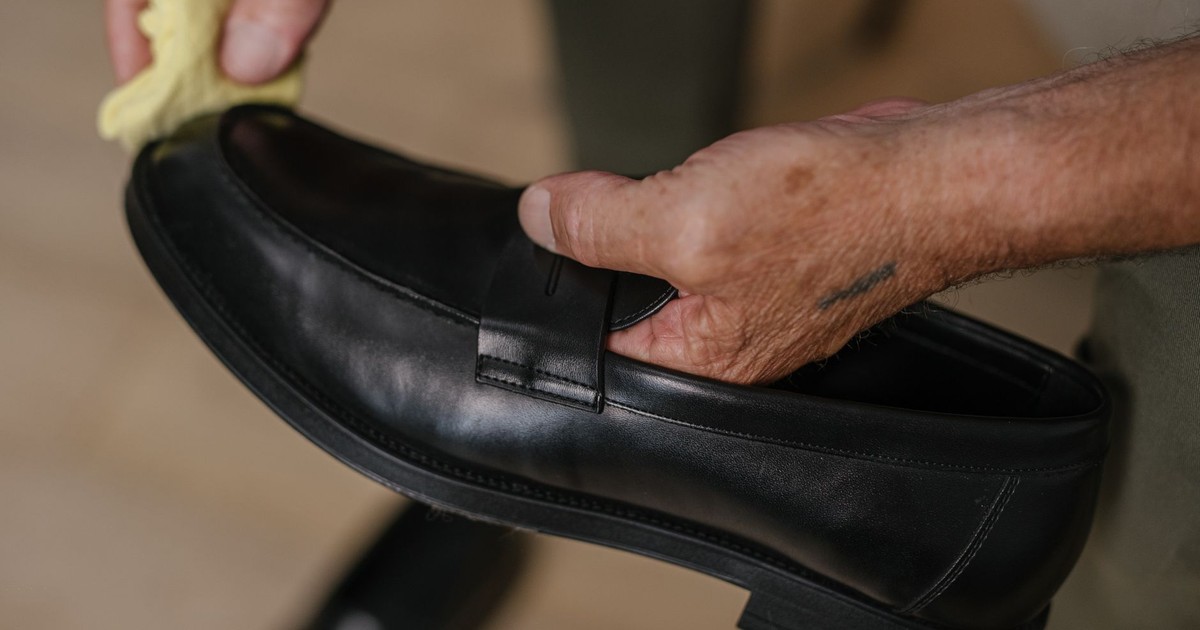
People notice shoes. Not always consciously, not always immediately, but they notice, and they make inferences. Scuffed, worn-down heels on otherwise polished clothing create a contradiction the eye catches and the brain logs as a detail left unattended. Clean, well-maintained shoes, in a style appropriate to the occasion, complete the authority signal that the rest of the outfit started.
Shoes that are well-cared-for signal that the person wearing them is thorough, detail-oriented, and genuinely invested in the impression they make. A single scuff or a worn sole doesn’t undermine everything, but a consistent pattern of neglected footwear creates an inconsistency in the total picture that people sense even when they can’t articulate it.
The style matters less than the condition. Clean leather loafers, polished boots, well-maintained heels. Classic silhouettes, in particular, tend to hold more authority than fashion-forward or heavily branded options, because the eye goes to the person rather than the shoe.
5. Monochromatic or Tonal Outfits

Dressing head to toe in one color family, or in tones that are closely related, creates an unbroken vertical line that reads as deliberate, polished, and powerful. When your presence fills the space rather than your outfit competing for attention, the authority you carry reads as considerably larger.
Outfits with sharp color breaks (a bright top, dark bottom, contrasting belt) divide the eye and create visual interruptions. A tonal look moves the eye upward to your face, which is where authority registers. Navy trousers with a navy or charcoal top, all-black, a deep khaki or camel head to toe: all of these create a streamlined silhouette that photographs as intentional and reads in person as someone who has made up their mind.
You don’t lose personality in a monochromatic look. You trade variety of color for quality of texture, which is a better trade in most professional and social contexts. Different fabrics in the same color family create depth and visual interest without breaking the authority line.
6. A Quality Watch or Single Considered Accessory
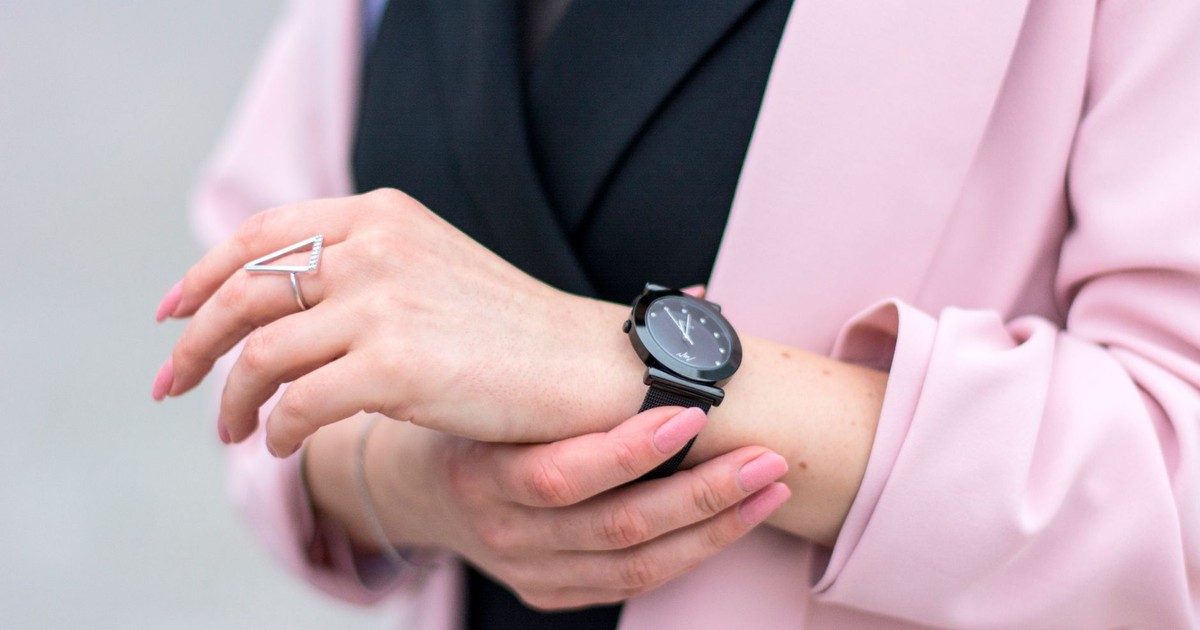
Accessories either confirm a first impression or undercut it. The ones that command respect are almost always specific in one way: they look like decisions rather than collections. A single, well-chosen watch, especially one that prioritizes quality over branding, reads as a person who has made a deliberate choice.
The watch is the most reliable choice because it occupies the wrist, which is visible during handshakes, during gestures, during the moments when professional contact happens. A classic metal watch with a clean face, in a style that doesn’t require explanation, carries significant social currency without ever being ostentatious. The same logic applies to a well-made leather bag, a considered piece of jewelry, or even a quality pen that appears at the right moment. One thing, clearly chosen.
Multiple competing accessories draw the eye in conflicting directions and read as uncertain rather than assured. The accessory that commands respect isn’t the most expensive or the most visible. It’s the one that looks like it was chosen on purpose, that doesn’t need you to explain it or draw attention to it, and that fits so naturally into the overall picture that its removal would leave a small, noticeable absence.
7. Clean, Pressed, and Lint-Free Clothing

Wrinkled linen in a setting that calls for polish, a blazer covered in pet hair at a first meeting, a shirt that came out of the dryer bunched and never quite recovered: these details don’t cancel out everything else, but they register. The brain files them under “didn’t fully prepare,” and that’s a file that’s hard to undo in a single conversation.
Clean, well-fitted clothes signal discipline; intentional outfits signal self-awareness; good grooming signals self-respect; sloppy clothing signals chaos or apathy. Sloppy isn’t a neutral signal. It’s an active one, and it runs directly counter to the impression of competence and control that clothing that commands respect is built to create.
A garment steamer is faster than an iron and more forgiving on most fabrics. A lint roller by the door takes fifteen seconds. Checking in a full-length mirror before you leave means the wrinkle across the back of your jacket is your problem to fix rather than everyone else’s problem to notice. None of this is fussy or excessive. It’s the minimum required for the rest of the outfit to do its job.
8. Clothes That Match the Context

Dressing for the room you’re walking into is a form of respect for the occasion, for the people in it, and for the implicit social contract that governs that space. People who dress significantly below the context of an event read as either oblivious or indifferent. Context-appropriate dressing signals that you understood what was being asked of you and responded accordingly.
When a person dresses in a way that is clearly calibrated to the context they are entering, it creates a particular kind of social coherence. It communicates that the person understands the situation and has prepared for it, and that communication has psychological effects on the interaction: trust is easier to establish, authority is easier to extend.
A casual environment where you arrive significantly overdressed creates its own kind of disconnection: the sense that you don’t know where you are, or worse, that you’re performing rather than participating. Dressed one step above the baseline expectation for important moments, and exactly at it for ordinary ones. That one-step advantage is almost always the right distance.
9. Tailored Trousers or a Structured Skirt
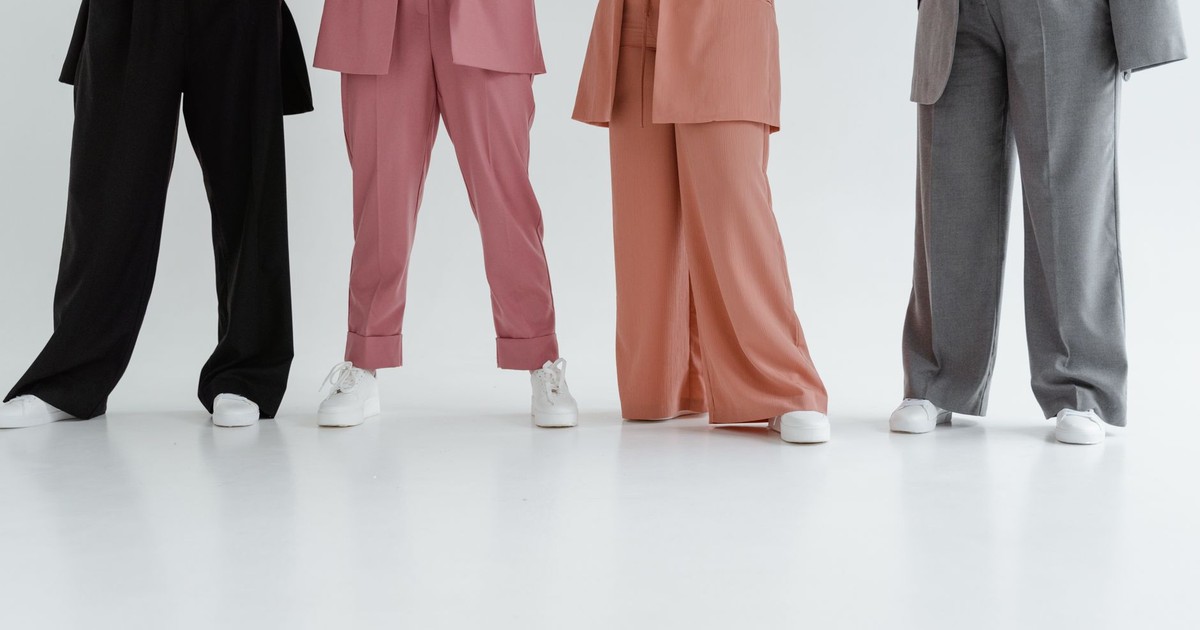
Trousers and skirts anchor an outfit from the bottom up. When they fit correctly and hold their shape, they create a foundation that makes everything above them read better. When they pull at the hips, sag in the seat, or pool over the shoe, they undermine even a strong top half and create the slightly off-balance impression that no one can quite name but everyone registers.
Structured bottoms (tailored trousers with a clean crease, a pencil skirt with a proper hem, wide-leg trousers that break exactly where they should) carry a formality that signals preparation. They take more effort to wear correctly than jeans or casual alternatives, and that effort is visible. Effortful clothing looks different from casual clothing in a way that maps directly onto the competence-and-authority signals people are already reading.
The secret with trousers, specifically, is length and hem. A hem that drags reads as uncorrected. A hem that sits too short reads as accidental. The correct break (for straight-leg trousers, just above the top of the shoe) is one of those details that only registers when it’s wrong, which means getting it right is a case of simply removing a liability rather than adding a bonus. Go see a tailor for this one. It’s usually a twenty-dollar alteration that changes the entire read of an outfit you already own.
10. A Crisp White or Pale Blue Shirt

A white shirt appears in virtually every style system designed to project authority. It creates contrast against darker suiting, it reads as clean and deliberate, and it has enough cultural weight in professional contexts to carry an immediate formality even when paired with casual pieces. A white shirt tucked into dark trousers is a complete authority signal without needing anything else added to it.
Pale blue performs a similar function with slightly less severity and slightly more warmth. Light blue combines professionalism with approachability, slightly less formal than white but more visually interesting, and makes the wearer appear calm, trustworthy, and competent, which is particularly effective in client-facing roles. The tradeoff between white and pale blue is essentially the tradeoff between maximum authority and maximum trust, and which one you reach for should depend on what you need more from any given situation.
The condition of this garment matters more than with almost any other piece. A white shirt that is slightly grey, slightly wrinkled, or slightly pulling at the buttons loses most of its authority signal immediately. This is one item worth buying in duplicates, laundering carefully, and replacing when it starts to look tired. The visual clarity of a truly crisp white shirt is a disproportionately large part of its effect.
11. Well-Groomed Hair and Neat Presentation Overall

Clothing doesn’t exist in isolation. It exists on a person, and the overall picture is what creates the impression. An excellent outfit worn with visibly unkempt hair or with grooming that suggests a rushed morning reads as incomplete, like a room that’s been beautifully furnished except for one corner piled with boxes. The total presentation is what people are actually assessing, even when they think they’re assessing your clothes.
Hair that is clean, styled with some intentionality, and appropriate to the setting signals the same attention to detail as well-maintained shoes or a pressed shirt. This doesn’t require expensive products or a particular style. It requires consistency: a reliable routine that produces a result you could walk into a room with confidently on a Monday morning in February. The confidence itself is part of the presentation, and the grooming is part of the confidence.
This extends to nails, to skin, to the overall impression of a person who has taken the time to prepare. A well-put-together person reads as someone who is in control of their circumstances, and that read happens before you’ve opened your mouth. The dressing rules everyone should learn that hold up across decades are almost always as much about presentation as about the specific garments themselves.
12. A Minimal, High-Quality Bag or Briefcase

The bag you carry signals organizational capacity before you’ve demonstrated it. A structured, well-maintained bag (a leather tote, a clean briefcase, a minimalist backpack in quality material) reads as someone who has their materials, their day, and their priorities in order. A visibly overstuffed, worn-out, or disorganized bag creates the reverse impression, even subconsciously.
Quality construction is more persuasive than brand recognition. A well-made bag in an understated style from an unknown label will almost always outperform a recognizable logo bag in cheap materials. The eye is registering structure, durability, and cleanliness, not brand hierarchy.
Keep the interior reasonably organized, which also means avoiding bags so overstuffed that the silhouette is distorted. A bag that opens to a clear interior, or closes cleanly without bulging, adds to the overall picture of someone who has made deliberate choices about what they carry and what they leave behind. The restraint signals competence at least as much as the bag itself.
13. Intentional, Well-Maintained Footwear That Matches the Rest of the Outfit

Footwear that contradicts the rest of the outfit creates a visual dissonance that people notice even when they can’t name it. Very casual sneakers under tailored trousers, worn sandals under a structured dress, running shoes at a professional meeting: these combinations register as incomplete, like someone who assembled the outfit from memory and then added the shoes without looking in the mirror.
The standard is not formality for its own sake. Clean white sneakers with a tailored trouser can be excellent. Leather loafers with dark jeans read as intentional and polished. The question is always whether the footwear choice was made as part of the outfit or independently of it. When shoes look chosen to complete a picture, the whole picture holds. When they look like an afterthought, the picture breaks, and broken pictures don’t command respect.
Classic silhouettes hold their authority longer than trend-driven ones for the same reason that classic cuts in clothing do: they don’t require the context of a specific cultural moment to read as intentional. A clean leather Oxford, a structured boot, a well-proportioned heel in a neutral color. These are choices that read as confident without requiring explanation. The shoe that commands respect is the one that doesn’t make you think about the shoe.
What All of This Actually Comes Down To

The thread running through every item on this list is the same thing: intentionality. Not formality, not expense, not trend-accuracy. The clothing that consistently produces respect from other people is the clothing that appears to have been chosen with purpose (chosen for this occasion, this context, this version of the person wearing it). That appearance of purposefulness is what the brain is actually reading when it decides whether to extend authority to someone or withhold it.
The Princeton research that found people judge competence from clothing almost instantaneously, and maintain that judgment even when explicitly instructed to ignore it, is a finding about the limits of other people’s objectivity, not about your actual capabilities. Clothing that commands respect is not a substitute for competence. It’s the toll you sometimes pay to have your competence taken seriously in the first place.
Disclaimer: This information is not intended to be a substitute for professional medical advice, diagnosis, or treatment and is for information only. Always seek the advice of your physician or another qualified health provider with any questions about your medical condition and/or current medication. Do not disregard professional medical advice or delay seeking advice or treatment because of something you have read here.
AI Disclaimer: This article was created with the assistance of AI tools and reviewed by a human editor.