

Most people notice it in someone else first. A parent who used to laugh easily now delivers a running commentary on everything wrong with the world. A friend who once tried new restaurants has decided that all new restaurants are overpriced and not as good as the old places. A relative who used to give people the benefit of the doubt now assumes the worst before the evidence is in. You watch it happen with a kind of anthropological curiosity, right up until the day someone else is watching it happen to you.
Cynicism and aging have a long, tangled relationship, and not all of it is unfair. Life genuinely does pile things up. Disappointments accumulate. Trust gets broken and the repairs don’t always hold. You get lied to enough times that you stop being surprised by it. Some of what looks like bitterness is really just pattern recognition, and hard-earned skepticism can be genuinely useful. The trouble is knowing when you’ve crossed from one into the other, and most people cross that line so gradually they never feel it happen.
The signs are usually visible to everyone except the person carrying them. They look like strong opinions. They sound like realism. They pass themselves off as wisdom. Below are 12 of the most recognizable ones, not as a diagnosis, but as a mirror.
1. You Have Stopped Giving Anyone the Benefit of the Doubt
There used to be a version of you that assumed the slow email response was because the person was busy, not because they were ignoring you. The missed call was an accident, not a statement. Somewhere along the way, that version got replaced by one who has a ready explanation for every slight, and the explanation is always that people are careless, selfish, or deliberately dismissive.
Expecting bad intent can feel like being realistic, but it becomes a cynical lens that colors everything. A late reply becomes disrespect. A forgotten detail becomes proof that you don’t matter. A joke becomes an insult. The person who operates this way isn’t paranoid, exactly. They’ve just built a filing system where every new piece of evidence goes into the folder marked “people are disappointing,” and the folder never gets reviewed for accuracy.
This pattern tends to be self-reinforcing. When you approach people as though their motives are suspect, they often pull back. The distance that creates then gets filed as further proof that people can’t be trusted. The cycle is extremely tidy and almost impossible to see from inside it.
2. Complaining Has Become Your Primary Form of Conversation
You used to have a range. Now the conversational opening is almost always a complaint, and not a minor one. It tends to be an extended brief on everything currently wrong, delivered with the confidence of someone who has thought about it at length and reached a settled verdict. The weather. The service. The neighbors. The news. The way things used to be done versus the sorry state of how they’re done now.
Some people grow more bitter with age because complaining becomes their main way of feeling in control. Naming the problem creates a momentary sense of authority over it. The cost is closeness. People start bracing for the download before you’ve said a word. They stop bringing you good news because they’ve learned it’ll somehow loop back to a grievance.
3. New Things Annoy You on Principle

New music is worse. New movies don’t have real stories. New technology is either unnecessary or a conspiracy to make you feel incompetent. New restaurants are overpriced and pretending to be something they’re not. New people are exhausting. It’s not that you’ve evaluated these things and found them wanting. Newness itself has become the problem, a standing offense you didn’t ask for.
Unwillingness to embrace new experiences is often linked to bitterness, the feeling that life hasn’t turned out the way you wanted, so why bother trying anything new. Openness to experience tends to decline in later adulthood, with people increasingly preferring familiar routines and resisting change. The practical result is a narrowing. Each year, the list of things you’re willing to try gets a little shorter, and the list of things you’ve already decided about gets a little longer.
4. You Keep a Mental Ledger of Who Owes What

You know exactly who called last. You know who remembered the thing you mentioned in passing three months ago and who didn’t. You know who was there when things were hard and who had a convenient conflict. The ledger isn’t written down, but it shapes how you approach every interaction.
According to research on bitterness psychology from ScienceInsights.org, bitterness is a slow accumulation of anger, sadness, and resentment that settles in across months and years, usually in response to feeling treated unfairly. Unlike a flash of anger that fades, bitterness stays and colors how you see the world and the people in it. It grows out of unresolved anger and repeated disappointment that pile up over time. A running ledger is one of the most recognizable expressions of this. Every entry is technically accurate. The problem is the weight attached to each one, which tends to be disproportionate and never gets revised downward.
5. Nostalgia Has Turned Adversarial
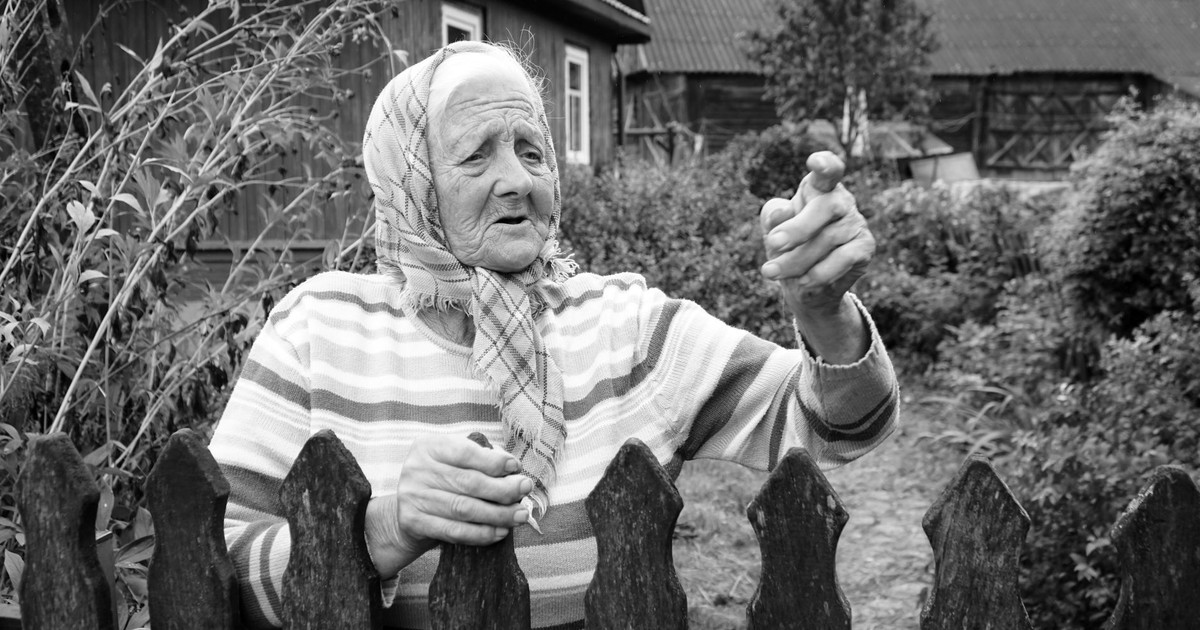
Nostalgia used to be pleasant. Now it’s an argument. Things were better before, and the present is a failure by comparison, not in a wistful way, but in a prosecutorial one. You’re not just fond of how things were. You’re actively annoyed that they changed. The music, the neighborhood, the way people used to talk to each other, the effort that used to go into things. The past has become a standing indictment of the present.
There’s a meaningful difference between remembering the past fondly and using it as a weapon against everything current. The first is human and warm. The second tends to isolate you from anyone who didn’t live through the same reference points, which is almost everyone younger than you. The present keeps disappointing because you’ve decided it can’t possibly measure up to a memory that gets more perfect every year it recedes.
6. You’ve Stopped Trusting People You Don’t Already Know

New people are treated as guilty until proven innocent. The assumption isn’t that a stranger might be decent. You need sufficient evidence before extending any goodwill. This might look like caution, and it might present itself as experience, but when the bar for earning basic courtesy is set very high and almost no one manages to clear it, what you’re running is less a screening process than a wall.
A 2026 bioRxiv study on aging and trust found that older adults display lower initial trust and reduced trust learning when interacting with others, and that loneliness amplifies these age-related differences. The practical loop this creates is hard to escape: the lonelier you get, the harder trusting new people becomes, and the harder it becomes to trust new people, the lonelier you tend to get. The wall doesn’t protect you. It just makes the space inside it smaller.
7. You Find Other People’s Happiness Vaguely Irritating

Someone’s vacation photos land as a mild affront. Someone’s excitement about their new job or relationship produces a private inventory of reasons it probably won’t last. Someone’s enthusiasm is met with an internal note about how they’ll learn. People who’ve grown bitter often scan others’ lives for evidence that their own dissatisfaction is justified, and find it whether or not it’s there.
It doesn’t feel like envy from the inside. It feels like realism, like you’ve just lived long enough to know how things actually go. But there’s a specific kind of joylessness in this that other people register immediately, even when they don’t name it, and it tends to repel exactly the warmth you’d benefit from most.
8. Every Story Has a Villain, and It’s Never You
The narrative of your life, as you tell it, has a structure. Opportunities were blocked by people who didn’t recognize your worth. Relationships failed because of what the other person did. Things went wrong because of forces outside your control. None of this may be inaccurate. Life really does produce bad actors, real obstacles, and genuine injustice. But when the story never includes a version of you who made choices you’d now make differently, something has hardened.
Almost every case of chronic bitterness traces back to one theme: the belief that you were singled out for unfair treatment you didn’t deserve and couldn’t control. This belief can be entirely factually correct and still function as a trap. Naming what was done to you is not the same as understanding your own role in what came after. The first is honest. The second is where it gets more complicated, and more useful.
9. You’ve Become Contemptuous of Younger People
Not just confused by them, not just different from them, but actively dismissive. Their concerns are shallow. Their work ethic is lacking. Their relationship with difficulty is an embarrassment compared to how things were handled in your day. They’re soft, distracted, ungrateful, and have no idea what things used to cost in money, in effort, in sacrifice.
Adapting to a rapidly changing world can feel destabilizing, leaving people with the sense that their views are no longer recognized or that they no longer belong. That feeling of irrelevance can fuel cynicism and resentment toward a world they no longer recognize. Contempt for younger people is one of the cleaner signals that this dynamic is at work. It isn’t really about the younger people. It’s about the uncomfortable awareness that the world has reorganized itself in ways that don’t center you, and contempt is a more comfortable response than sitting with that.
10. You’ve Stopped Being Curious About Other People

You already know what they think. You’ve heard the type before. You can finish the sentence, predict the opinion, see where the story is going. There’s nothing interesting in the conversation because you’ve pre-sorted everyone into categories that arrived before they opened their mouths. Curiosity requires a willingness to be surprised, and you’ve lost patience for surprises.
Cynicism is not an innate trait that simply appears with age but rather a belief system that develops over a lifetime of processing and reacting to experiences. For many older adults, this worldview functions as a protective response born from repeated disappointments, loss, and perceived injustices. The protection is real, but the cost is connection. Genuine curiosity about another person is one of the few things that reliably makes both parties feel better, and it’s one of the first things cynicism takes.
11. Physical Irritability Has Become a Default Setting
Everything is too loud, too bright, too slow, or too fast. People talk too much or not enough. Spaces are too crowded or weirdly empty. The temperature is never right. Small inconveniences that used to pass unnoticed now produce a disproportionate internal reaction, not just annoyance, but something closer to offense, as if the universe is personally and specifically failing you.
As the body ages, so does the brain. Declining dopamine levels can contribute to mood disorders like depression and irritability, which can show up as a more cynical or pessimistic outlook. Hormonal fluctuations and cognitive changes can contribute to a more irritable or negative temperament. This doesn’t mean the irritability is entirely your fault or entirely in your head. There are real physiological things happening. But what reads as a reasonable response to external circumstances may also be a neurological shift worth paying attention to.
12. You’ve Stopped Expecting Things to Go Well

When you’re told the results will be in Friday, you don’t feel anything like optimism. When someone makes a plan, you’re already mentally rehearsing the version where it falls through. When something seems like it might actually be good, there’s an ingrained habit of listing the ways it can still go wrong, because getting ahead of the disappointment feels safer than being caught out by it.
A study reported by Newsweek found that people with high levels of cynical distrust were three times more likely to develop dementia than people with low levels of cynicism, even when adjusted for other risk factors. Repeated experiences where trust was broken, ideals were shattered, or outcomes were unfair can erode a person’s inherent optimism and solidify a cynical outlook. That pattern often begins as a defense against future emotional pain, but it can produce a self-fulfilling cycle of loneliness and isolation.
Read More: This Sudden Personality Change Could Signal Dementia Earlier Than Many Realize
The Joke and the Weight Behind It
Cynicism and aging are easy to laugh about from a distance. From inside, they’re a different thing. This particular flavor of bitterness usually doesn’t start as bitterness. It starts as self-protection, as reasonable caution after a specific bad experience, or a lowered expectation after a specific disappointment. It hardens slowly, in layers you don’t notice until they’re load-bearing.
None of the signs on this list make someone a bad person. Most of them make a certain amount of sense given the life that produced them. But there’s a difference between a worldview that was earned and one that has stopped being updated. The archive of grievances, when it only grows and never gets reviewed, stops being history and starts being a lens. The question worth asking isn’t whether the bitterness is justified, it probably is, at least in part, but whether it’s still serving you, or whether it has become the thing that’s running the show. Some of these patterns go back further than the most recent injury does. That isn’t a reason to excavate every wound. But it is usually where the real conversation starts, when people are ready to have it.
AI Disclaimer: This article was created with the assistance of AI tools and reviewed by a human editor.