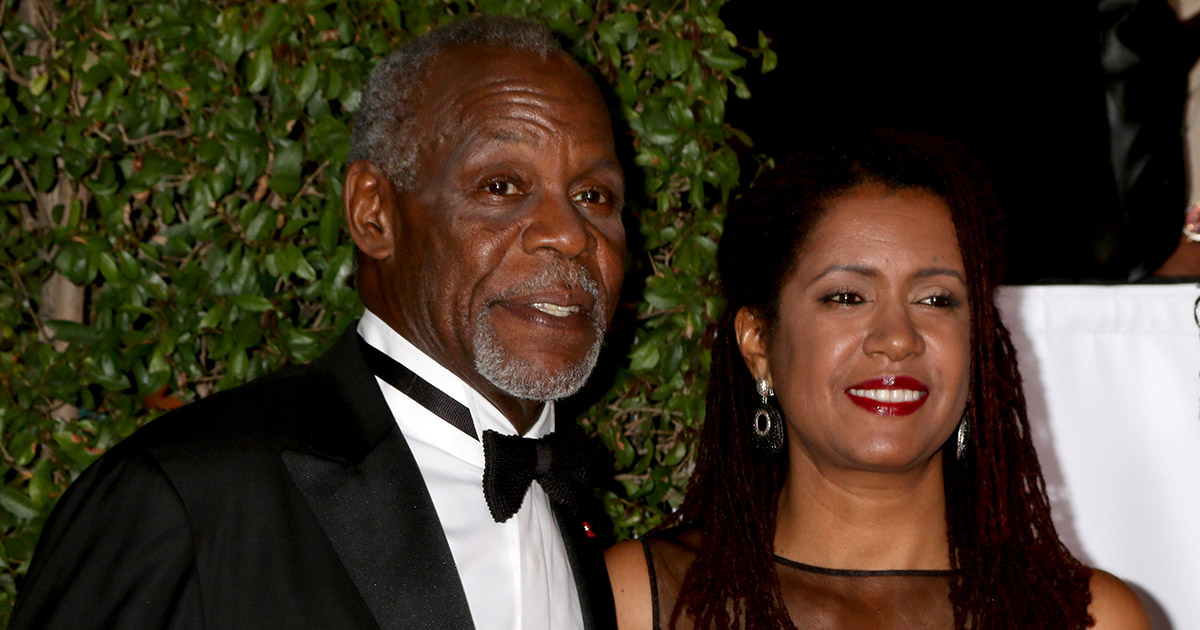

Danny Glover appeared on the Today show on July 1, 2026, accompanied by family and speaking directly to anchor Lester Holt. He had something harder to say than a new film announcement or an award. He revealed that he has been living with Alzheimer’s disease for multiple years, seated at home with the people he loves most, and said it plainly: “I’m sure as it advances, things are going to be different and changing.” No dramatic pause, no performance. Just a man telling the truth about what is happening to him.
His family sat beside him. His brother was there. His daughter was there. The man who spent half a century fighting for other people’s dignity was, for once, letting the people who love him fight for his.
The Diagnosis He’s Been Living With

According to NBC News, Glover was diagnosed with Alzheimer’s disease shortly before receiving the Jean Hersholt Humanitarian Award at the January 2022 Governors Awards. The timing came just before one of the most significant professional moments of his later years: he received that honorary Oscar recognizing a lifetime of advocacy on behalf of human dignity, while privately beginning to reckon with a disease that would go on to affect the very faculties that made that work possible. Memory. Speech. Movement. The tools of a storyteller.
Since being diagnosed, Glover’s movements, speech, and memories have slowed. He is still active, attending events and engaging with his community in his native San Francisco. “I could live with it, in a sense,” he told Holt. That is not resignation. It is something closer to a choice.
What He Said, in His Own Words
“I’m still not accepting in my mind all parts of it,” Glover told People in an interview published July 1. “There are the moments that you keep remembering that validate the fact that you can remember stuff. And there are moments I’ll never forget.”
He reflected on accepting his diagnosis, adding that it is “in some sense, acknowledging that it’s happening to you and at the same time that there are millions of people suffering from it.” Even in the middle of his own crisis, he is looking outward, connecting his private experience to a public one, the way he has always done.
To Holt, he was equally direct about what the road ahead looks like. When asked whether his family had his back: “Absolutely,” he said. “They’ve got my back.” Glover is one of more than 7 million Americans over age 65 living with Alzheimer’s, a progressive, fatal brain disease that robs people of their memories, their speech, and eventually their ability to move through the world independently.
A Career That Earned Every Word of Praise
According to Variety, Glover rose to fame in the late 1980s starring as Roger Murtaugh in the Lethal Weapon films, but his career spans far beyond that franchise. Major roles in Places in the Heart, The Color Purple, Predator 2, To Sleep With Anger, Angels in the Outfield, Saw, and Dreamgirls make up just a portion of a filmography that crosses genres, decades, and registers, with action franchise work sitting alongside quiet independent films that most big-name actors would never have taken. He accumulated more than 170 acting credits across nearly 40 years, plus multiple Primetime Emmy nominations that tend to get buried under the Lethal Weapon headline.
The Humanitarian Who Lived His Values

The Jean Hersholt Humanitarian Award Glover received just before his diagnosis is given to recognize those in the motion picture industry whose efforts have promoted human welfare. He had been earning it for decades.
A native Californian, Glover was raised by parents who were active NAACP members. As an adult, he joined the Black Students’ Union at San Francisco State University and helped organize a months-long strike that led to the creation of the United States’ first College of Ethnic Studies. He has since advocated for a wide range of causes, from substance abuse and AIDS awareness to the preservation of African culture.
He was appointed UNICEF Goodwill Ambassador in 2004, traveling first to Ethiopia, where he met children who had been harmed by landmines. His work off-screen, in boardrooms, in communities, and at international forums, ran parallel to his film career throughout. For Glover, the two were never separate things.
The Family Holding Him Up
When Glover sat down for this interview, he did not do it alone. Several of his family members appeared with him, in an interview taped at his home. They said they hope that Glover sharing his story publicly will help challenge some of the stigma surrounding Alzheimer’s disease.
His youngest brother, Martin Glover, has worked with him throughout his career and is now part of that foundation. “He took me under his wing, and I love him to death,” Martin said on Today. “And I’m here to help him now. It’s my turn.”
A man who spent his life taking others under his wing, on screen, in communities, in classrooms, is now the one being held up. The people around him are clear-eyed about what that means and grateful for the chance to do it.
The Disease and Why Race Matters
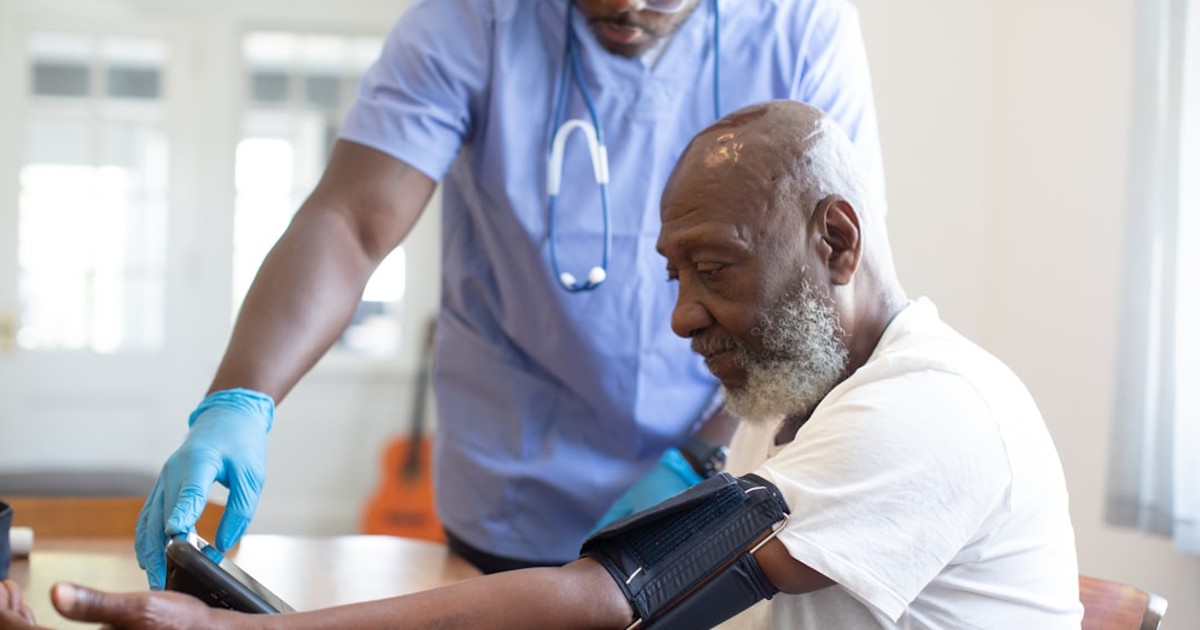
Alzheimer’s does not affect all communities equally, and Glover’s diagnosis is part of a larger, underdiscussed story. Black Americans are twice as likely to develop Alzheimer’s or another form of dementia compared to white Americans, according to the Alzheimer’s Association.
The reasons for this disparity are not purely biological. Higher rates of conditions like hypertension and diabetes in Black communities, conditions strongly linked to dementia risk, combine with longstanding inequities in access to healthcare and early diagnosis to widen those differences. Stigma, fear, and gaps in education contribute to a significant number of undetected Alzheimer’s cases going unaddressed. This is part of why Glover and his family framed their decision to go public not as a personal disclosure alone, but as something with community stakes.
What the Alzheimer’s Association Is Advising

The Alzheimer’s Association is now working directly with Glover. The organization advises that staying physically active, managing blood pressure and diabetes, getting quality sleep, and staying socially connected can all play a role in reducing Alzheimer’s risk. None of those are cures. All of them are the kind of advice that sounds almost too ordinary in the face of something this large, and yet the evidence for each of them is real.
The organization also stresses how much early detection can change outcomes. Brain changes linked to Alzheimer’s, the gradual erosion of memory, language, and coordination, can begin up to 15 years before a person receives a formal diagnosis. The earlier a person gets assessed and supported, the more time they have to make decisions for themselves, to stay engaged, and to be present for the people they love.
Other public figures have made similar choices to speak openly about serious neurological illness. Celine Dion’s documentary about her own condition offered a comparable kind of candid public witnessing, as does Glover’s diagnosis now.
The Stigma He Is Helping Dismantle
Glover and his family believe they can help remove the stigma surrounding Alzheimer’s by coming forward about his condition. In Black communities, where the disease is most prevalent but research representation remains lowest, a diagnosis can feel like an erasure before the erasure begins. It can make people withdraw rather than seek help. It can make families carry the weight silently for years.
Glover is choosing the opposite. At 79, with more than 170 acting credits behind him and a lifetime of advocacy in every corner of the world, he is walking into the most difficult chapter of his life the same way he has walked into every other one: with his eyes open and his door unlocked.
What His Story Leaves Us With
“I’m still not accepting in my mind all parts of it,” Glover said. Anyone who has watched a parent or a partner receive a diagnosis like this one knows something of that place. The person is still there, still themselves, still cracking jokes and remembering your birthday, but every ordinary moment now carries the weight of an hourglass. He is not at peace, exactly, and he is not in denial. He is somewhere in between.
Glover hopes to pass his passion for activism on to young people before the disease takes further hold. He wants to leave something behind that keeps moving. He has spent his whole life building that momentum, in the civil rights organizations his parents raised him in, in the films that told stories nobody else would tell, in the classrooms and communities he appeared in without a camera present. None of that disappears with a diagnosis. Some of it, he knows, will.
“I’m sure as it advances,” he said, “things are gonna be different and changing.” He said it without flinching.
Disclaimer: The author is not a licensed medical professional. The information provided is for general informational and educational purposes only and is based on research from publicly available, reputable sources. It is not intended to constitute, and should not be relied upon as, medical advice, diagnosis, or treatment. Always consult a licensed physician or other qualified healthcare provider regarding any medical condition, symptoms, or medications. Do not disregard, avoid, or delay seeking professional medical advice or treatment because of information contained herein.
AI Disclaimer: This article was created with the assistance of AI tools and reviewed by a human editor.