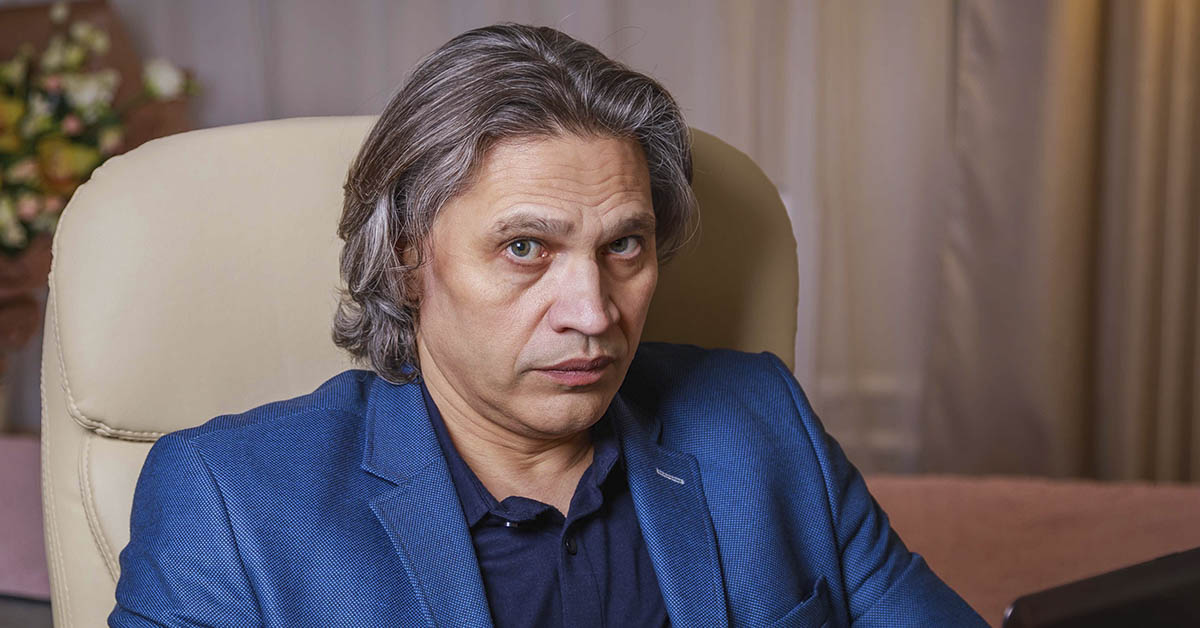

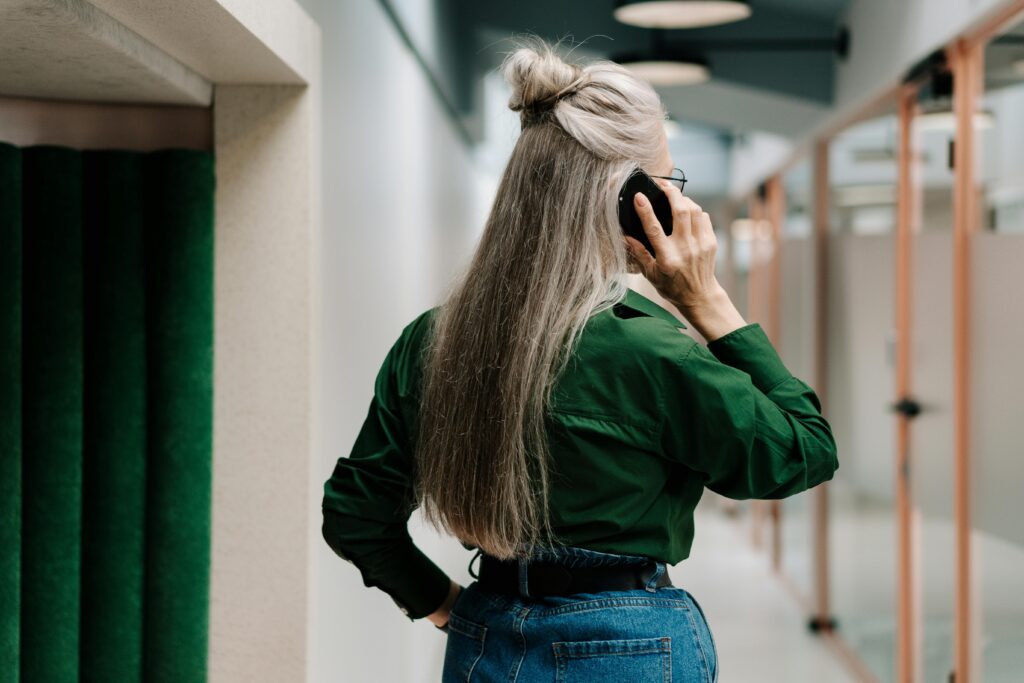
There is a quiet rule in the world of women’s hair that nobody remembers agreeing to. Somewhere around your mid-40s, you are supposed to cut it all off. Not because you want to. But because our culture has decided that long hair past a certain age sends the wrong message. Keep it long, and the assumptions start. You are trying too hard, clinging to something, looking like what one British columnist recently called “a rare aging mermaid.”
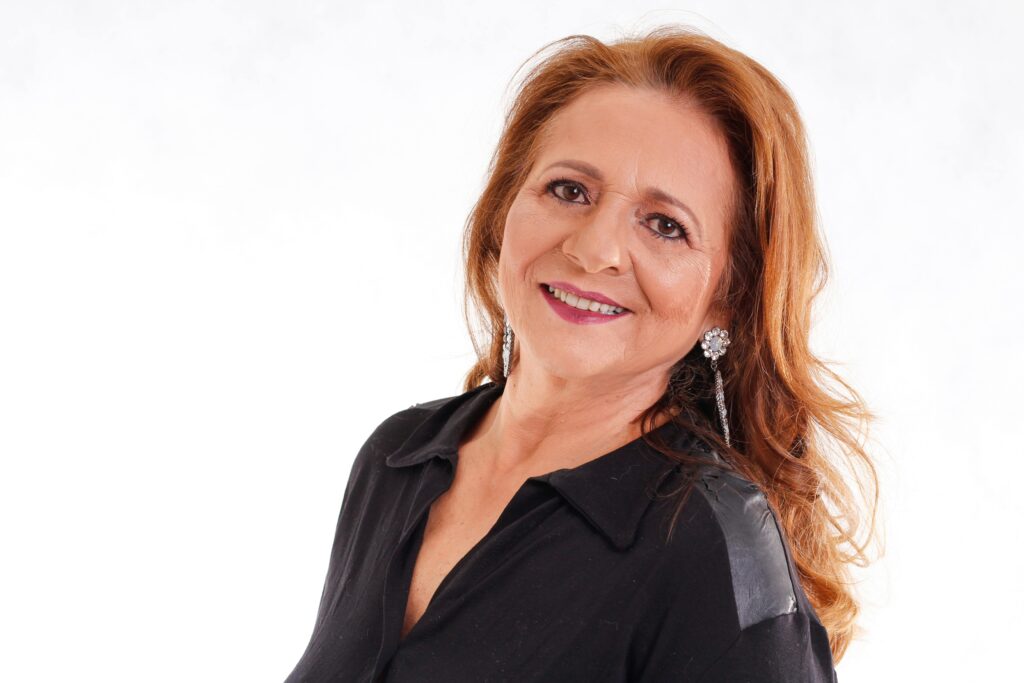
This idea picks up speed every time a celebrity over 40 debuts a shorter cut. Margot Robbie shows up with a wavy bob, and the internet celebrates. Demi Moore sits front row at Gucci with a cropped look, and suddenly every headline reads like a mandate. Shorter is better, shorter is more appropriate, shorter is what a grown woman does with her hair.
But more stylists, more women, and more research are pushing back on the idea that your birth certificate should determine your hair length. Because length was never the real issue. Thin, damaged, flat hair that hangs past your shoulders with no shape can drag your features down and add years to your face. But well-maintained hair with volume, movement, and shine can look fantastic at any length and any age. The real question is whether your hair looks healthy, whether it has movement, and whether the style still works for the face and the life you have right now.
So, where does that leave you if you are in your 40s or 50s, wondering whether to book the big chop? That depends on what your hair actually needs, and the answer might not be what you expect.
Why Shorter Hair Gets All the Praise After 40
The argument for going shorter as you age is not just a cultural preference. There are real, observable reasons why so many stylists lean toward recommending it, and a growing body of evidence that hair length affects how old you look to other people.
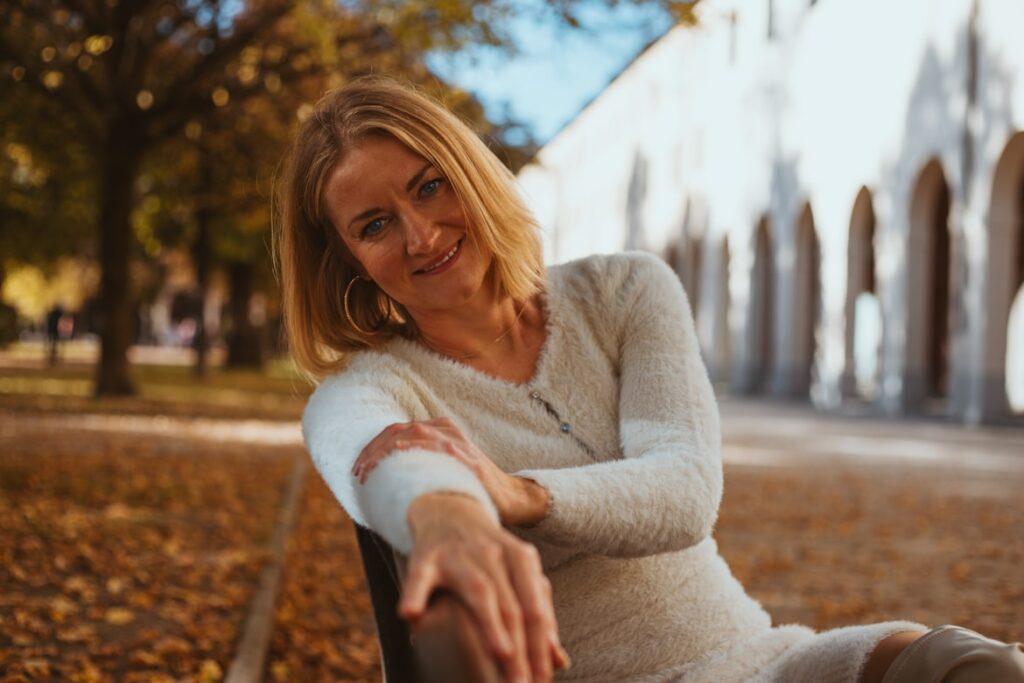
Researchers at the Crown Clinic in the UK analyzed how hair length changes age perception and found that women with shorter haircuts appeared roughly 4 years younger than women with longer styles. In the same study, 64% of respondents agreed that shorter hair had a noticeable anti-aging effect. Men saw a similar but smaller shift, with shorter styles reducing perceived age by about 3 years. The numbers suggest that length alone moves the needle, at least in terms of first impressions.
When hair falls well past the shoulders at a single length, it pulls the viewer’s attention downward and can make facial features look like they are drooping. According to hairstylist Igor Santos of Christo Fifth Avenue Salon in New York City, speaking to Prevention. A shorter cut does the opposite by directing focus toward the eyes and cheekbones, creating a natural lifting effect.
Your hair changes as you age, and the shift is more dramatic than most people realize. It naturally thins, produces less sebum, and develops a drier, coarser texture because less natural oil reaches the strands. The cells responsible for pigment, called melanocytes, gradually stop producing melanin, which is why grey hair starts appearing. Grey hair also happens to be more vulnerable to UV damage, so it feels more brittle and looks more fragile. Put all of that together, and the hair you are working with at 50 is a different material from the hair you had at 30. Even if the length has stayed the same.
That difference becomes visible in specific ways. When thin or damaged hair hangs long and flat against the face, it can cast shadows on the cheeks and jawline that emphasize sagging and lines. Session stylist Neil Moodie, a Viviscal ambassador, made the same point in Prima. Noting that shorter hair tends to be “a bit perkier” and naturally lifts the face. While very long hair pulls it down. The visual effect is similar to what happens with clothing. A structured blazer looks polished, but the same fabric hanging loose and shapeless reads as tired.
Beyond what is happening to the hair itself, there is the question of what you are doing with it. Plenty of women find a cut they like in their 30s and then keep it for the next 2 decades without changing a thing. That kind of consistency might feel comfortable. But hair trends evolve just like fashion does, and a style that stops evolving with them becomes a timestamp. A layered, blow-dried look from 2005 reads differently in 2026. Not because the cut was bad. But because it places you in the year you stopped updating.
None of this means that every woman over 40 needs to rush to the salon and ask for a pixie cut. But the reasons behind the advice to go shorter are grounded in how aging affects hair texture, density, and the way it interacts with your face. For women dealing with thinning, dryness, or hair that has lost its shape. A shorter cut often does make things easier.
Why Length Is Not the Real Problem
For every stylist who says cut it short, there is another one saying the exact opposite. And their arguments are just as strong. The industry is moving away from the idea that women of a certain age need to cut their hair short, according to Dom Seeley, international creative director for Color Wow Hair, in an interview with British Vogue. If long hair makes you feel confident and defines your style, there is no reason to change it. Going short when you get older is fine, but doing it because society expects you to is something else.
London-based hairstylist Paul Edmonds, quoted in the same piece, pointed to Jane Seymour and Michelle Pfeiffer as strong examples. Seymour wears a soft fringe graduation around the face with good color. While Pfeiffer keeps her hair soft, wavy, and slightly tousled, both women look great without looking like they are trying to pass for 20, and neither of them got there by cutting everything off. They got there by making sure the hair itself looks healthy, and the style has structure.
Victoria Painting, lead educator at Paul Mitchell, made a similar case in HELLO! magazine. A lot of people think cutting your hair shorter is the only way to change up your look, Painting said, but that is often not the case. Sometimes all you need is a light layer of makeup around the front to soften your facial features. If you are keeping your hair long, the most important thing is to give it consistent care and use the right products to maintain smoothness and prevent frizz.
The through-line across all of this advice is that the conversation is less about whether to cut and more about how to take care of what you have. Healthy hair catches light, moves well, and looks full of life. Damaged hair looks dull, thin, and flat. Those qualities shape perception far more than whether your hair touches your shoulders or your lower back.
The idea that women must go short after a certain age assumes that the goal of getting older is to look “appropriate” rather than to look like yourself. Some women feel more confident with a pixie cut, and others feel like themselves with hair down to their waist. Both are valid, and the right choice depends on the individual, not a number. Long hair can work at any age, but it requires more effort as you get older. Your hair changes, and your routine needs to change with it. If you are willing to invest in the maintenance, there is no reason to let go of the length just because someone told you it was time.
Men Are in This Conversation Too
Most of the advice around hair and aging is aimed at women, but men deal with the same dynamics. The Crown Clinic study that found women look younger with shorter hair also looked at men. Men with shorter, well-groomed styles appeared about 3 years younger than men with longer hair, and 58% of respondents said shorter hair had an anti-aging effect on men. Letting your hair go without a plan tends to add years regardless of gender.

Long hair on men is not the problem, just like it is not the problem for women. A man with thick, healthy, well-maintained longer hair can look fantastic, but a man with thinning, wispy hair that he is growing out to compensate for what he is losing on top almost never gets the result he is hoping for. A shorter, textured cut that works with the thinning tends to look far more intentional and current. The same principle applies to greying. Embracing it with a clean cut and regular trims looks a lot better than patchy, root-heavy dye jobs that call attention to the very thing you are trying to hide.
The same thinking applies once you move past the hairline. A well-groomed, shaped beard can define the jawline and give structure to a face that has naturally softened with age. While an overgrown, patchy beard does the opposite, making the lower face look heavier and less defined. The same applies to mustaches, goatees, and sideburns. If it looks intentional, it works. If it looks like you forgot about it, it ages you.
Women face enormous social pressure to address their appearance as they age. While men rarely hear anyone tell them to update their style. But grooming and hair care affect how old everyone looks, regardless of gender. A man who has not changed his hairstyle since 1998 is doing the same thing as a woman who is still clinging to “The Rachel.” The style has become a timestamp, and timestamps are never flattering.
A cut that goes too long between trims starts to lose its shape, and once split ends and uneven growth set in, even a good style starts to look neglected. Most stylists recommend every 4 to 6 weeks for shorter cuts and every 8 to 10 weeks for medium or longer hair. That schedule alone can be the difference between looking pulled together and looking like you gave up.
So does product, which is easy to overlook entirely. A lightweight styling cream or texturizing spray can add enough definition and movement to turn a flat, lifeless cut into something that looks deliberate. Even a small amount worked through damp hair before it dries can change the way your hair sits and how it catches light.
What Actually Makes Hair Look Younger
The factors that make hair look youthful are the same regardless of length, and most of them come down to things you can control. Conditioning has to take priority because aging hair loses moisture faster, becomes more brittle, and does not recover as easily from heat styling and chemical treatments. Deep treatments at least once a week, along with less reliance on heat, go a long way toward preventing further damage. But adjusting your routine only gets you so far if the style itself is working against you.
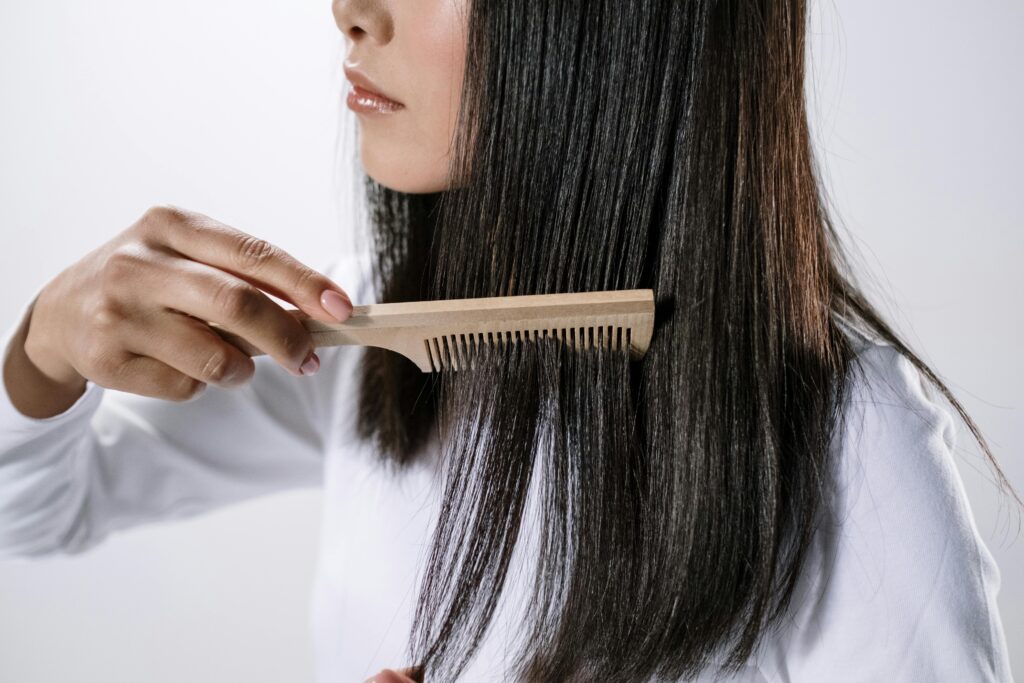
That is where the cut comes in. A haircut ages you when it becomes too heavy or disconnected from your natural texture and face shape, according to stylist Andreas Wild of the Larry King Salon in Notting Hill, speaking to Marie Claire UK. He sees too many clients forcing their hair into something it does not naturally want to do, and it shows. If you have wavy hair and spend every morning straightening it flat, the result often looks stiff and overworked. Whereas working with your texture instead of against it produces a softer, more effortless look. That effortlessness itself reads as youthful.
Color works the same way. Dark, heavy block color without highlights is the single biggest aging mistake he sees, according to Mathew Soobroy, principal stylist at Charles Worthington Salons in London, in an interview with Prima. Very dark hair against aging skin creates a harsh contrast that draws attention to shadows, lines, and discoloration.
The fix does not require going blonde or abandoning dark hair altogether. Face-framing highlights in warmer tones soften the contrast and add brightness around the eyes and cheekbones. Celebrity hairstylist Jamie Stevens, who has worked with Kylie Minogue and Elle Macpherson, told Prima that a technique called strobing takes this further by placing highlights exactly where light would naturally fall to counteract the heaviness of a single shade.
The same principle applies to volume. Flat, limp hair makes the face look drawn and tired. While a lift at the crown and roots visually opens everything up. You can get there by flipping your hair upside down while blow-drying. Or using a round brush at the root, and root-lifting sprays applied to damp hair before styling help too. The goal is not teased-out hair from the 1980s. Just enough body to keep it from lying flat and weighing your features down.
Adding layers around the face pushes this further because they create movement and soften hard lines on short, medium, and long hair alike. A well-cut set of bangs does similar work from a different angle. Covering forehead lines, bringing attention to the eyes, and changing the proportions of the face entirely.
Wispy and curtain bangs tend to be the most flattering across age groups because they are soft and blended rather than blunt and heavy. But where they sit on your face changes everything. Celebrity hairstylist Tom Smith has noted that face-framing pieces falling too low can cast shadows that emphasize sagging. While a soft sweeping fringe does the opposite by opening up the width of the face. If you have never tried bangs before, a curtain bang that blends into your layers is a low-risk place to start.
Styles Worth Asking Your Stylist About
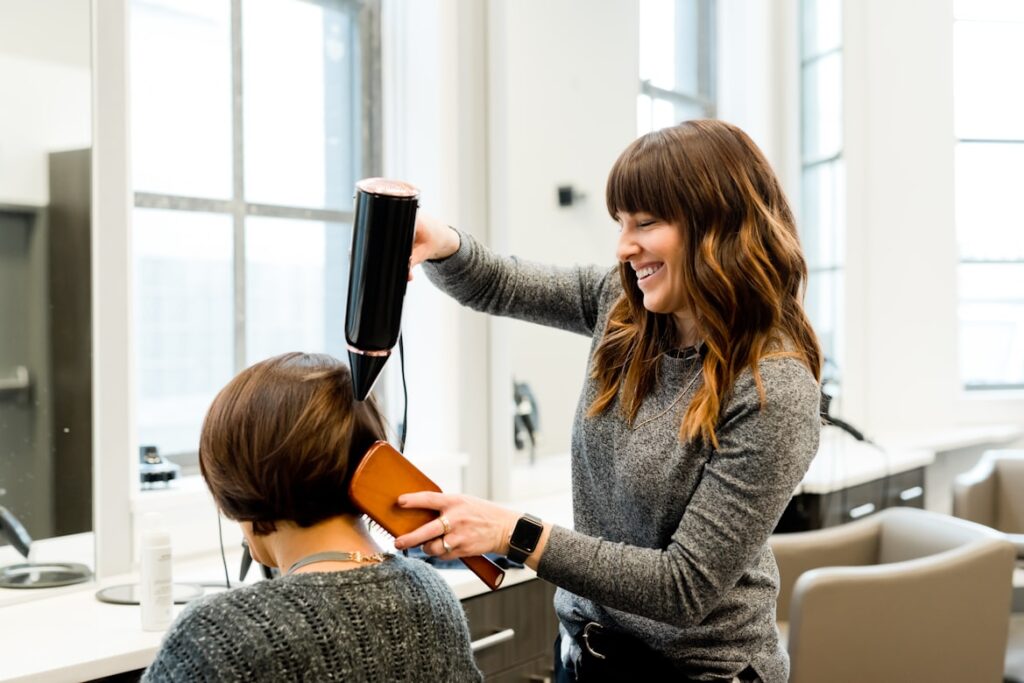
The textured lob sits somewhere between chin length and shoulder length. Short enough to create lift and frame the face, but long enough to style in different ways depending on the day. Light layers and lived-in movement give it a slightly undone quality rather than a stiff or overly styled feel. A lob with soft waves or a slight bend at the ends works especially well for women with fine or medium hair. Because the layers create the illusion of fullness, thinning becomes less noticeable.
The modern shag is another strong option, especially for women who want more edge in their look. Shorter layers at the crown and longer ones at the bottom create a lot of natural movement and texture, making the hair look thick and full of life. Even if it is naturally on the finer side. The shag works on straight, wavy, and curly hair, though the final look varies depending on your natural texture. If you have natural waves, this style leans into them beautifully. On straighter hair, a little product and scrunching help it come to life.
For women who love their length and are not ready to give it up. Long layers keep that length looking intentional rather than neglected. A single-length cut past the shoulders can look heavy and pull features down. But adding shorter layers around the face that blend into the longer length creates dimension and keeps the hair moving. Pair long layers with face-framing pieces and regular trims, and longer hair can look just as polished as a shorter cut.
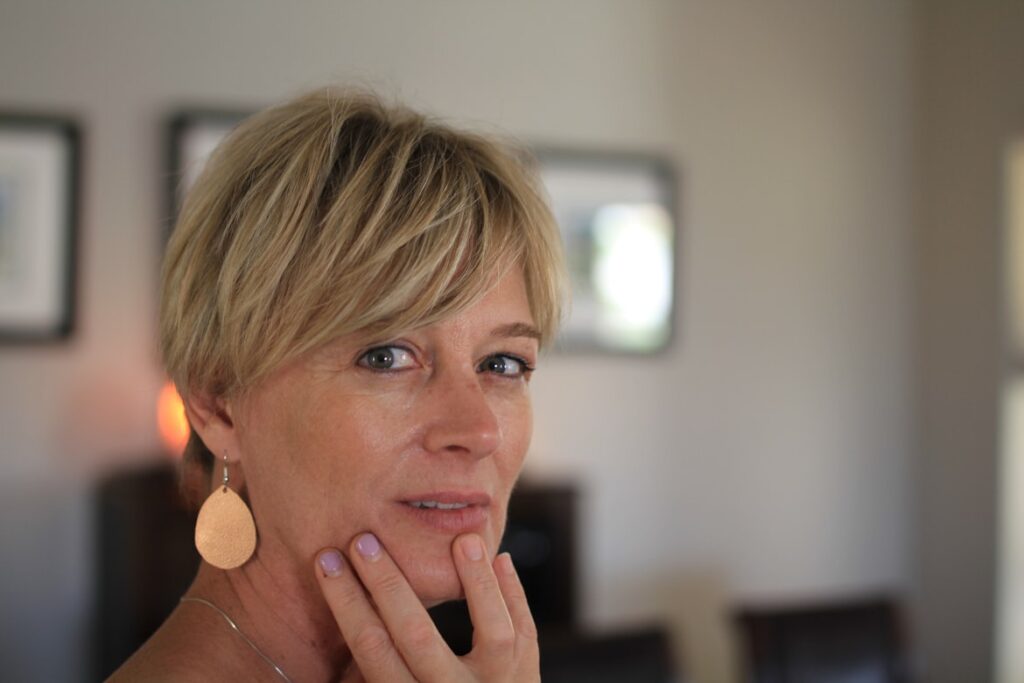
Modern pixie cuts are softer and more flexible than the severe crops of the past. And if the idea of going that short makes you nervous, a bixie splits the difference between a pixie and a bob for a less dramatic starting point. Both draw the eye upward, emphasize the eyes and cheekbones, and give thin hair the appearance of volume it might not have at a longer length. Today’s pixie tends to be longer through the top and fringe with shorter sides and back. Styled with a bit of texture and product rather than cut tight to the head, and the bixie follows the same logic with just enough extra length to ease you in.
Curtain bangs paired with almost any of these cuts are worth considering as an add-on. They sit parted down the middle and sweep gently to the sides, framing the face without covering it entirely. Unlike heavy, blunt bangs that can look dated. Curtain bangs are blended and airy, softening the forehead and drawing attention to the eyes. While adding a modern touch to everything from lobs to long layered cuts. They are also fairly low-commitment compared to a full fringe because they blend into the rest of your hair as they grow out.
For men, a textured crop is one of the most reliably fresh-looking cuts available. Varying lengths on top with a slightly shorter back and sides work well with thinning hair because the texture creates the impression of more density. A short, layered cut with a side part is another classic that ages well and looks intentional without requiring much styling time. Men with thicker hair who want some length can consider a longer top with a fade. This keeps things clean around the ears and neck while allowing some personality on top. And for men embracing gray, a clean buzz cut or a cropped Caesar can turn what feels like a liability into something that looks sharp and deliberate.
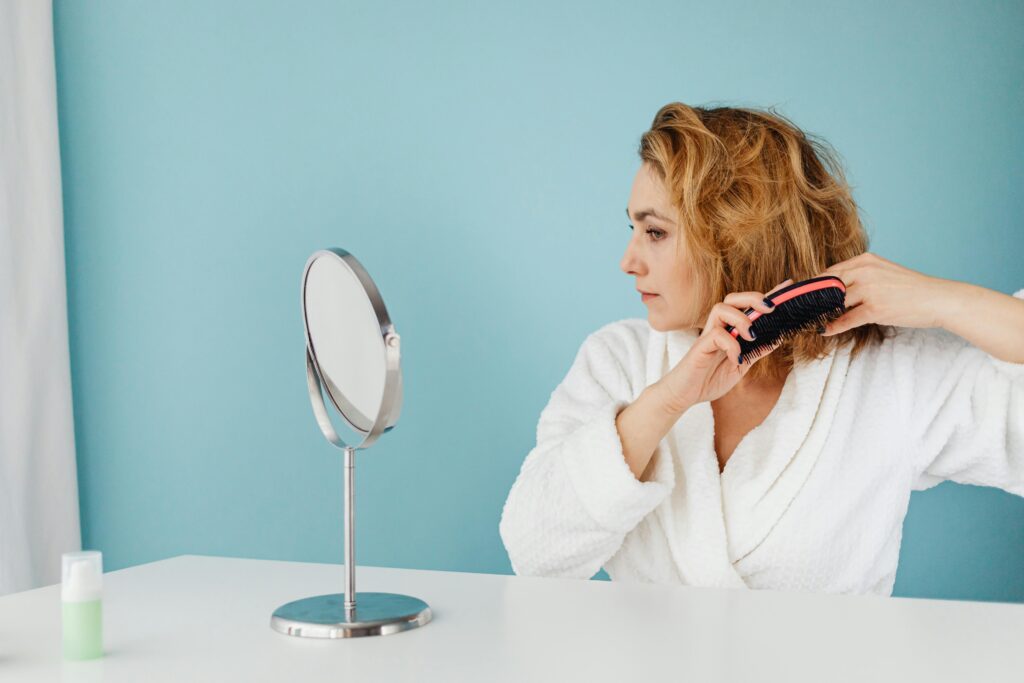
None of these styles works because of their length; they work because they have movement, texture, and shape. Those three things are what separate a cut that looks alive from one that just sits there. The only real mistake is choosing a style from a photo without thinking about whether it suits your hair as it actually is, not as it was 10 years ago, or as it looks on someone with a completely different texture. Bring reference images to your stylist, but bring ones of people whose hair looks like yours.
Read More: Woman’s Boss Banned Her Pink Hair, So She Started Wearing Big Ugly Wigs
Your Hair, Your Call
The pressure to chop your hair off at 45 comes from the same place as a lot of other rules about how women are supposed to age. It sounds like practical advice, but underneath it is an assumption that growing older means shrinking yourself, taking up less space, and giving up the things that used to make you feel like you.
Long hair does not age you. Neglected hair ages you. A style that no longer fits your face, 5 years ago, ages you. Dry, damaged ends that never see a conditioning treatment age you. Block color with visible roots ages you. But length on its own is neutral, and it can go either way depending on how you take care of it and how the style works with your face, texture, and lifestyle.
The most youthful-looking hair is hair that looks healthy, current, and intentional, and that might mean a pixie cut for one person and waist-length layers for another. It might mean adding bangs, changing your color, or just investing more in conditioning. The right answer is always personal, and it changes as you change.
If your hair feels heavy, flat, or like it is not doing anything for you anymore. A consultation with a good stylist can tell you whether the issue is length, layers, color, condition, or some combination of all four. And if you leave that conversation and decide you want to keep every inch, that is a perfectly fine outcome too. The only wrong choice is making a decision based on a rule you have no power over. About a version of yourself you do not recognize.