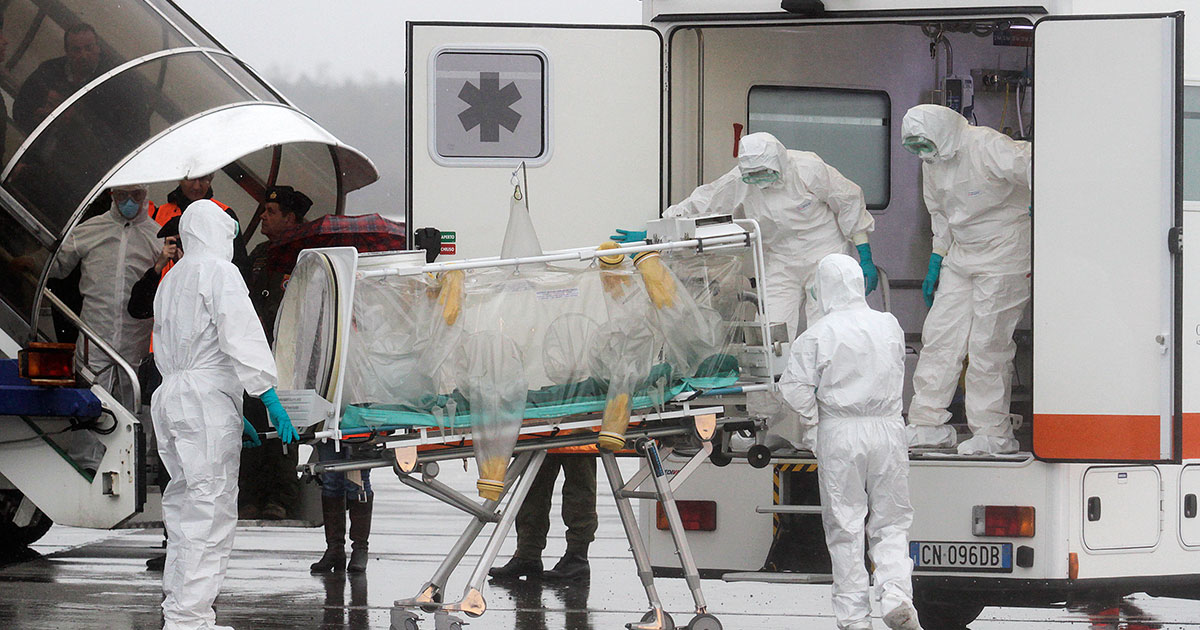

The name “Ebola” comes with a specific kind of weight that has built up over decades of outbreak coverage – the grainy footage from isolation wards, the particular horror of a hemorrhagic fever spreading through communities that already have too little of everything. What has changed in May 2026 is specific: the strain now moving across the Democratic Republic of the Congo and into Uganda is one the world has almost no tools to fight, and it was circulating for weeks before anyone knew what it was.
This is not the Ebola most people picture. The strain behind this outbreak is called the Bundibugyo virus, a rarer member of the Ebola family, and the words that keep appearing in official statements about it are stark: no approved vaccine, no approved treatment. The equipment used in regional health centers to test for Ebola was not even designed to detect it. By the time anyone understood what was happening in the forests and mining towns of eastern Congo, weeks had already passed.
On May 16, 2026, the WHO Director-General determined that the Ebola disease caused by Bundibugyo virus in the Democratic Republic of the Congo and Uganda constitutes a public health emergency of international concern. That designation – known as a PHEIC – is the WHO’s highest level of global health alert. It signals that an outbreak poses a potential international risk requiring urgent coordinated action, and it helps unlock funding, technical support, and faster international cooperation. It does not mean a global pandemic is inevitable. What it means is that the situation has become too serious to manage at the local level.
The Virus Nobody Was Ready For
The Bundibugyo virus has no approved therapeutics or vaccines, and this is only the third time it has ever been reported across all of recorded human history. That rarity is part of what makes this outbreak so alarming to the scientific community.
The first time Bundibugyo appeared was in 2007, in the Ugandan district that gave the virus its name. That initial outbreak reported 131 cases and 42 deaths, a case fatality rate of 32 percent. The second outbreak came in 2012 in Isiro, Congo, where 57 cases and 29 deaths were reported. Both were contained. Both were relatively small. Neither produced a vaccine, and neither produced an approved treatment. The world moved on.
Now, the third outbreak is unfolding at a scale that dwarfs its predecessors, in a region far more connected, more mobile, and more conflict-torn than the settings where Bundibugyo was first encountered. According to the CDC’s current situation summary, Bundibugyo virus historically carries death rates ranging from 25 to 50 percent, and patients experience classic Ebola symptoms including fever, headache, vomiting, severe weakness, abdominal pain, nosebleeds, and vomiting blood.
The existing Ebola vaccines in global stockpiles were designed for the Zaire strain and may not protect against Bundibugyo. There is no approved vaccine or targeted treatment for Bundibugyo virus specifically, so patients are treated with supportive care – meaning medical treatment that keeps the body functioning while it fights the infection, including fluids, oxygen, nutritional support, and treating complications – which can significantly improve a patient’s chances of survival. That is what the doctors in Ituri are working with right now. Not a cure. Not even a therapy aimed at the virus itself. Just the basic mechanics of keeping a human being alive long enough to hope.
How the Outbreak Went Undetected for Weeks
The timeline of this outbreak is one of its most troubling features, and it has nothing to do with the virus itself.
The suspected index case – meaning the first known patient in the chain of transmission – was a nurse who died at a hospital in Bunia, with the case dating back to April 24. A critical detection gap of approximately four weeks between the onset of symptoms in that presumed index case and laboratory confirmation on May 14 suggests a low clinical index of suspicion among healthcare providers, compounded by the presence of co-circulating arboviruses and influenza-like illnesses that masked the initial signs of Ebola disease.
The diagnostic failure runs deeper than confusion with other illnesses. Early samples tested negative for Ebola not because Ebola wasn’t there, but because the diagnostic machine used at the regional health center in Bunia – a device called GeneXpert – only recognizes the Zaire strain, which is the most common species and the cause of almost all previous outbreaks in the DRC. The Bundibugyo strain does not register on it. The test reads negative, and the health workers have no reason to push further. People keep dying, and the official case count remains zero.
By the time samples were sent to the national laboratory in Kinshasa and properly analyzed, the virus had already moved. On May 14, 2026, the Institut national de recherche biomédicale (INRB) in Kinshasa analyzed 13 blood samples from Rwampara Health Zone in Ituri Province, and laboratory analysis confirmed Bundibugyo virus disease in eight of those samples on May 15. As of May 18, the Ebola Bundibugyo outbreak in the DRC had been reported across nine health zones in Ituri Province.
From Congo to Kampala
The spread to Uganda happened fast, and in the way these things always happen – not through some dramatic border crossing, but through ordinary human movement. A man seeking care traveled from Ituri to Kampala.
The Uganda Ministry of Health confirmed an outbreak of Bundibugyo virus disease following the identification of one imported case from the DRC, a Congolese man who died in the capital city of Kampala. A second imported case was confirmed on May 16 in Kampala, in an individual returning from the DRC with no apparent links to the first case. Two confirmed cases, in the capital of a neighboring country, with no connection to each other – that pattern is what triggers international emergency declarations.
The ongoing insecurity, humanitarian crisis, high population mobility, the urban or semi-urban nature of the current hotspot, and the large network of informal healthcare facilities further compound the risk of spread, as was witnessed during the large Ebola epidemic in North Kivu and Ituri provinces in 2018-19. Ituri is a mineral-rich region, heavily mined, heavily traveled. Outbreak response in a conflict zone is not a public health problem with a public health solution. It requires security, access, community trust, and coordination across systems that are already stretched thin, or missing entirely.
The Surveillance Vacuum
The delay in detection is not just a laboratory problem. It also reflects years of decisions about where to spend money and where to pull it back.
According to public health experts, the U.S. invested significantly in disease surveillance capacity in Congo because the country represents a dense concentration of known outbreak risks. USAID had staff across the country gathering disease intelligence, while CDC staff in both the DRC and the U.S. helped transport samples and run analysis. That architecture no longer exists in the same form. NPR reporting on the outbreak notes that the CDC has been battered by funding and staffing cuts over the past year and a half, and USAID’s DRC mission was shuttered in 2025, limiting the U.S. response capacity.
Total humanitarian funding in Congo dropped by close to 80 percent, from over $900 million in the last year of the Biden administration down to $179 million during the first year of the Trump administration. While USAID previously had staff deployed across the country who could flag unusual disease events, those positions are largely gone.
The State Department disputed the connection, stating that it is false to claim USAID reforms negatively impacted the response to Ebola and that funding and support would continue. Whether the aid cuts directly caused the delayed reporting is difficult to say with certainty, but as one public health expert put it, U.S. funding for informal surveillance programs in conflict areas “has been almost wiped out.”
The WHO itself is operating under financial strain. Since 2025, the United Nations health agency has been struggling financially due to a lack of donor funding, and the WHO Director-General warned that global health would be at serious risk without enough donor support. WHO Director-General Tedros released $500,000 from the agency’s Contingency Fund for Emergencies to support the current response. The Africa Centres for Disease Control and Prevention (Africa CDC) mobilized $2 million and declared the outbreak a Public Health Emergency of Continental Security on May 18, but acknowledged that this represents only a fraction of the urgently needed funds.
What the Emergency Declaration Actually Means
Precision matters here, because the distance between what a PHEIC is and what it gets reported as can be significant.
It does not mean Ebola is about to become a global pandemic. WHO Director-General Tedros said the outbreak does not meet the criteria for a pandemic emergency and that neighboring countries are at high risk of further spread. International spread via air travel is possible but unlikely to cause a major global outbreak, because Ebola requires close physical contact to spread, and international monitoring and airport screening systems help catch cases early.
What it does mean is that the current situation has outpaced what affected countries can manage alone, and that the international community is being formally called to act. On May 18, 2026, the CDC and the Department of Homeland Security implemented enhanced travel screening, entry restrictions, and public health measures to prevent Ebola from entering the United States. On May 17, an American who was exposed while caring for patients in the DRC tested positive for Ebola Bundibugyo disease. As of the most recent update, no cases of Ebola disease had been confirmed in the United States as a result of this outbreak, and the overall risk to the American public and travelers remains low.
In the DRC, most cases to date have been in people between 20 and 39 years old, and two-thirds have been in female patients. That demographic pattern is not random. It maps onto who does the caregiving in communities without adequate health infrastructure – who is present at the bedside of the sick, who washes the body, who is there at the end.
The Response Under Way
Additional WHO experts in epidemiology, infection prevention and control, laboratory diagnostics, clinical care, logistics, risk communication, and community engagement are being mobilized to reinforce the frontline response, with priority actions including strengthening disease surveillance, active case finding, contact tracing, safe burial practices, and infection prevention in health facilities.
Researchers are actively studying antiviral drugs and antibody treatments that might work against multiple Ebola strains. Two vaccines exist for the Zaire strain and have proven highly effective, but neither is approved for Bundibugyo. Scientists are now working urgently to develop vaccines that protect against multiple strains at once. Early-stage research into cross-reactive antibody treatments has shown some promise, but none of it is available to the nurses and patients in Bunia right now.
What This Actually Costs
The gap between what happened in Ituri in late April and what the world knows about it today is not just a story about a virus. It is a story about what happens when the early-warning infrastructure – the people, the labs, the funding – gets pulled away before anyone has a replacement ready. Viruses don’t wait for budget negotiations. They don’t pause while institutions restructure. They move through the spaces that open up when the watchers leave.
The risk to people reading this in the United States or Europe is genuinely low. Ebola does not spread through the air. It requires close physical contact with the bodily fluids of a symptomatic person – which is a fundamentally different equation than a respiratory virus. The screening systems at airports exist precisely for this scenario, and they are being activated. Those facts are real and worth holding.
And so is this: the people in Ituri Province who were burying two and three neighbors a day before anyone had a name for what was killing them – their risk was not theoretical, and the world’s ability to get ahead of it was compromised before the first person fell ill. Both of those things are true at the same time. A global health emergency is not a single number on a risk dashboard. It is a particular community absorbing a catastrophe while the infrastructure designed to catch it early was somewhere else, or gone. Holding that tension honestly is what clarity actually requires.
AI Disclaimer: This article was created with the assistance of AI tools and reviewed by a human editor.