
Kayla Summers did not plan to become a single adoptive mother. She had spent time working with families involved in the state child welfare system, watching children cycle through foster homes while reunification processes played out. Somewhere in that work, something clicked. She went through the approval process, got licensed as a foster parent. In June 2024 she welcomed a twelve-month-old girl named Paisleigh into her home in Georgia. The plan, as it always is at the start of a foster placement, was temporary care. Reunification with Paisleigh’s biological family was the stated goal, and Summers knew it.
Four months later, she was asking Paisleigh’s case manager about adoption.
You go in knowing the rules. You love the child anyway. And then one day you realize the rules were never going to be enough to hold back what was already happening.
What the Paperwork Said

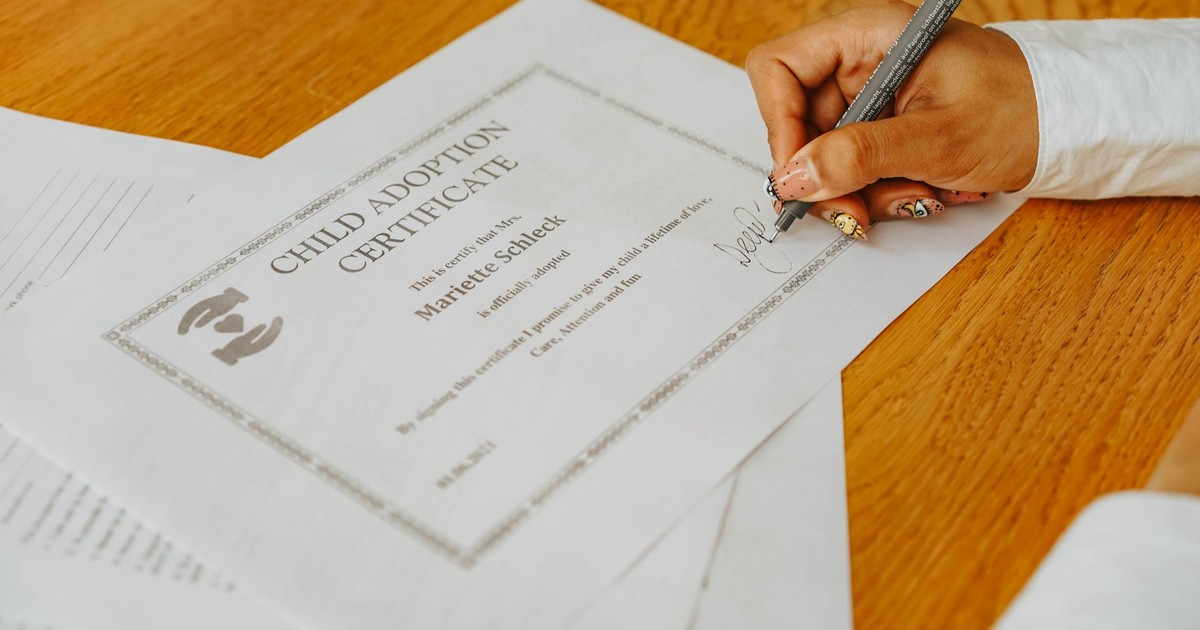
On September 30, Kayla Summers. Paisleigh arrived at the courthouse in matching white tweed dresses with gold buttons and ruffled hems. The adoption was finalized before a judge. Summers legally became Paisleigh’s mother, more than two years after she first welcomed twelve-month-old Paisleigh into her home. She has since described her daughter as “a mini version of me.”
What made the story travel beyond the courthouse was a series of coincidences so precise. So stacked on top of each other that they read less like random data and more like someone making a point.
Paisleigh shared Summers’ mother’s birthday and her hometown of Florida. All three, Summers, her mother, and Paisleigh, shared the same middle name, Renee. And both Summers and Paisleigh claimed Cinderella as their favorite princess.
The middle name discovery landed differently from the others. Paisleigh’s middle name is Renee, the same as Summers’ and her mother’s. Summers recalled literally gasping when she saw it. It was on Paisleigh’s Social Security card. The document that makes a person officially real in the United States had the same name on it that Summers’ own mother gave her decades ago.
The Part People Notice First
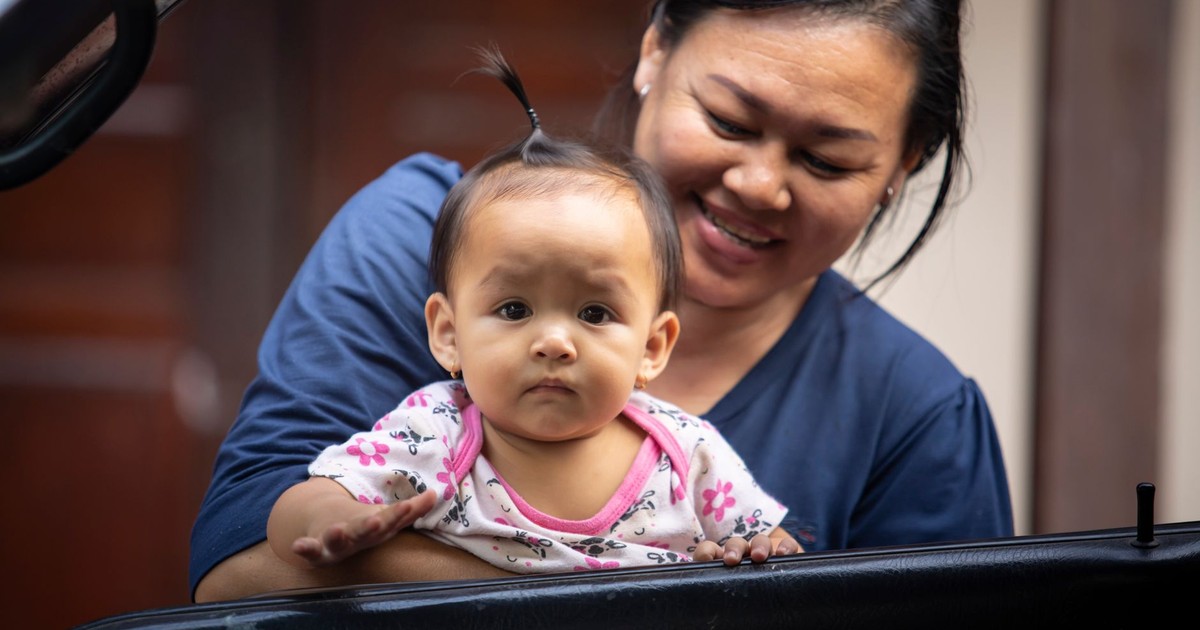
Summers is Black, and Paisleigh is white, a difference Summers knows people notice. She has never pretended otherwise. She has not tried to make it disappear by ignoring it. Instead, she has tried to help her daughter understand it in age-appropriate ways. As Paisleigh learned about the colors of the rainbow, Summers found herself explaining their skin colors, too. She told Paisleigh, “Your skin is white. Mommy’s skin is brown,” and Paisleigh simply responded: “OK, I’m white, Mommy’s brown.”
Summers took it. Those differences have also prompted Summers to educate herself on things like caring for Paisleigh’s hair. Understanding how her fair skin reacts to the sun. Summers has also maintained a relationship with Paisleigh’s biological extended family. As Summers put it: “I don’t work in a colorless world.”
Transracial foster care adoption is not unusual in the United States. Research published in Adoption Quarterly in 2025 found that about 28 percent of foster care adoptions are transracial. The direction of that dynamic, however, runs heavily one way in the data: the overwhelming majority of transracial adoptions from foster care historically involve children of color being adopted by white parents. A Black mother adopting a white child inverts that pattern almost entirely.
The Numbers Behind the Moment

The foster care adoption connection that brought these two together sits inside a system that moves a lot of children, though not always fast enough or far enough. In 2024, just under 172,000 children under 18 entered foster care in the United States, according to data from the Annie E. Casey Foundation. That same year, 176,772 children exited the foster care system. More than one in four were adopted.
More than one in four children who exited foster care in fiscal year 2024 were adopted, according to a Child Trends analysis of federal foster care data. The other exit routes, reunification with parents, aging out of the system, placement with relatives, account for most of the rest. Adoption is the outcome that makes the news. But it represents only a fraction of the children moving through the system in any given year. Adoptions from foster care have continued to decline, reaching their lowest level since 1999. In FY 2024, more than 34,000 children remained in foster care despite being legally free for adoption. Having adoption as their primary permanency plan.
Paisleigh was not one of those children left waiting. She had Kayla Summers. And Summers, it turned out, had already decided.
Why the Coincidences Matter
The matching-name detail is a sweet human interest hook, a gasp-worthy Social Security card moment, a courthouse dress code that happens to be identical for both mother and daughter. And that version is real. The story is genuinely charming.
But the reason it moves people is not really the middle name. The middle name is evidence of something the story was already trying to tell: that this connection was not an accident, that these two people found each other with an accuracy the foster care system does not usually promise.
Foster care is not designed to feel fated. It is designed to be temporary. The stated first goal is reunification. That goal is pursued seriously, just under half of all children who exited foster care in 2024 were reunited with a parent or primary caretaker. When reunification doesn’t happen, the system works to find permanency somewhere else. What it cannot engineer is the feeling Summers described when she looked at that Social Security card. Saw her own middle name staring back at her.
That feeling is not a policy outcome. It is not a placement statistic. Summers went in knowing the goal was temporary care. She walked out of a Georgia courthouse with a daughter in a matching dress. A middle name she already owned.
For Summers, loving Paisleigh has never required pretending the child has no history before her. She talks about Paisleigh’s biological extended family. She talks about their differences and tends to them carefully. She has held two things at once: the child who came to her through a system. The daughter she was apparently always going to have.
The foster care adoption connection Summers. Paisleigh share, one that began as a temporary placement and became something the paperwork could barely contain, is not the kind of story the system produces on purpose. It is the kind it sometimes produces anyway.
Read More: Woman Who Took In 600 Kids in 50 Years Took in Anyone, Regardless of Age or Medical Condition
What Sticks
Kayla Summers will almost certainly get asked about those three coincidences for a very long time. The birthday, the hometown, the middle name. The Cinderella detail will probably keep appearing in photo captions for years.
But the detail that settles in a different register, not the sweetest one. But the truest one, is something Summers said that is very easy to scroll past. Summers knew from the beginning that reunification with Paisleigh’s biological family was the goal. She took in a child as a foster parent with that knowledge fully intact. She loved her anyway. And four months in, she started asking questions about how to make it permanent.
A choice made in full view of everything that could have gone differently, by a woman who decided that loving someone is not something you hold in reserve until the outcome is guaranteed.
The middle name is a good story. The choice that came before it is the better one.
Disclaimer: This information is not intended to be a substitute for professional medical advice, diagnosis, or treatment and is for information only. Always seek the advice of your physician or another qualified health provider with any questions about your medical condition and/or current medication. Do not disregard professional medical advice or delay seeking advice or treatment because of something you have read here.
AI Disclaimer: This article was created with the assistance of AI tools and reviewed by a human editor.