

There is a package of raw ground beef sitting in roughly 40 percent of American refrigerators right now. Maybe it landed there two days ago during a rushed grocery run. Maybe it was three days ago – you’re not entirely sure, because the week blurred together somewhere between soccer practice and the third load of laundry. You’re standing at the fridge, eyeing the package, and you’re doing that very human thing of trying to sniff out an answer that probably isn’t there to smell.
This is a surprisingly common moment. And it turns out, the answer to what you’re actually wondering – how long can raw ground beef stay in the fridge before it becomes a problem – is both simpler and more alarming than most people expect. The window is shorter than many home cooks assume, the risks are less obvious than most packaging suggests, and there’s a biology-driven reason why raw beef patties behave so differently than a steak or a roast sitting in the same fridge, at the same temperature, on the same shelf.
There’s no guesswork needed here. Food safety researchers have studied this, and the federal agencies responsible for protecting American families from foodborne illness have published clear, firm guidance on exactly this question. What follows is what you need to know – and why the answer actually makes a lot of sense once you understand what’s happening at the microscopic level inside that package.
What the USDA Says About Ground Beef Storage
The rule is simple, and it doesn’t leave much wiggle room. Raw ground beef must be kept at 40°F or below and used within 1 or 2 days if refrigerated. That guidance comes directly from the USDA Food Safety and Inspection Service (FSIS), and it’s the same answer you’ll get from the U.S. Food and Drug Administration (FDA), whose official Refrigerator & Freezer Storage Chart lists raw hamburger and all ground meats at a refrigerator shelf life of just 1 to 2 days.
So when people ask what the USDA recommended storage time for raw ground beef actually is – the answer is 48 hours, maximum. Not “a few days.” Not “until it smells off.” Two days.
These short but safe time limits are designed to help keep home-refrigerated food from spoiling – and in the case of raw ground beef, from becoming genuinely dangerous. The USDA FSIS also notes a general rule of thumb that cooked leftovers are safe in the fridge for 4 days, but raw ground meats fall into a much tighter category: raw hamburger and ground meats get only 1 to 2 days in the refrigerator, and 3 to 4 months in the freezer for quality.
Why Ground Beef Is Different From Other Cuts
This is where it gets genuinely interesting. A ribeye steak can sit in your fridge for 3 to 5 days before it becomes a concern. A pork roast gets similar treatment. So why does a package of ground beef get such a dramatically shorter window? The answer lies in what the grinding process actually does to the meat.
When meat is ground, more of the meat is exposed to harmful bacteria. Think about it this way: a whole steak has bacteria mostly concentrated on the exterior surfaces. When that same beef gets put through a grinder, every interior part of the meat becomes a new surface. All the bacteria that was sitting on the outside gets mixed throughout the entire package. Ground beef has a larger surface area exposed to bacteria compared to a whole cut of meat, and when you grind meat, you increase the chances of bacteria spreading throughout – which increases the risk of spoilage.
That’s why the raw ground beef expiration window is so tight compared to whole cuts. It’s not arbitrary food safety bureaucracy. It’s a direct response to the biology of what grinding actually does. And the bacteria involved aren’t necessarily the kind that announce themselves with a bad smell or a discolored surface.
The Danger Zone, and Why You Can’t Trust Your Eyes
Here’s the part most people get wrong. There are two completely different families of bacteria: pathogenic bacteria, the kind that cause foodborne illness, and spoilage bacteria, the kind that cause foods to deteriorate and develop unpleasant odors. Pathogenic bacteria can grow rapidly in what food safety experts call the “Danger Zone” – but they do not generally affect the taste, smell, or appearance of food.
Read that again. The bacteria that can actually make you sick leave no visible clues. Food that has been left too long on the counter may be dangerous to eat, but could look fine. So the ground beef in your fridge that still looks pink and smells neutral on day three? That tells you nothing about whether it’s safe. Time and temperature are the only real guides you have.
Bacteria grow most rapidly in the range of temperatures between 40°F and 140°F, doubling in number in as little as 20 minutes. This range of temperatures is often called the “Danger Zone.” Your refrigerator, set correctly at or below 40°F, slows that growth – but it doesn’t stop it entirely. Bacteria multiply rapidly in the Danger Zone, and to keep bacterial levels low, ground beef should be stored at 40°F or below and used within 2 days, or frozen.
The math behind this is worth pausing on. A small number of bacteria can double every 20 minutes. Two hours at room temperature can take a relatively small bacterial load and turn it into something that will cause real problems. This is also why you should never leave ground beef or any perishable food out at room temperature for more than 2 hours – or 1 hour when the temperature is 90°F or above.
The Direct Answer: Is Ground Beef Safe After 2 Days in the Refrigerator?
To answer the question directly: no, it isn’t reliably safe. The official ground beef food safety guidelines from both the USDA and the FDA draw the line at 2 days. Day three is when the risk becomes significant enough that both agencies tell you to discard it. This isn’t a conservative overestimate – it’s based on how quickly pathogenic bacteria can reach levels that cause illness, even at refrigerator temperatures that are doing their job.
Ground beef provides a high protein environment that pathogenic bacteria love, especially at temperatures between 40°F and 140°F, and given enough time, this allows bacteria to grow to levels that can make people sick. Combine that with the inherently higher bacterial load that comes with the grinding process, and you can see why there’s no flexibility built into this particular window.
The ground beef refrigerator shelf life question also comes up a lot in the context of “use by” dates on packaging. Here’s the important distinction: these time limits are specifically designed to keep refrigerated food from spoiling or becoming dangerous – and product dates aren’t a reliable guide for safe use of a product on their own. A package dated for tomorrow might have been sitting in a warm car for 45 minutes after purchase. Time and temperature together tell the real story.
What About Cooked Ground Beef?
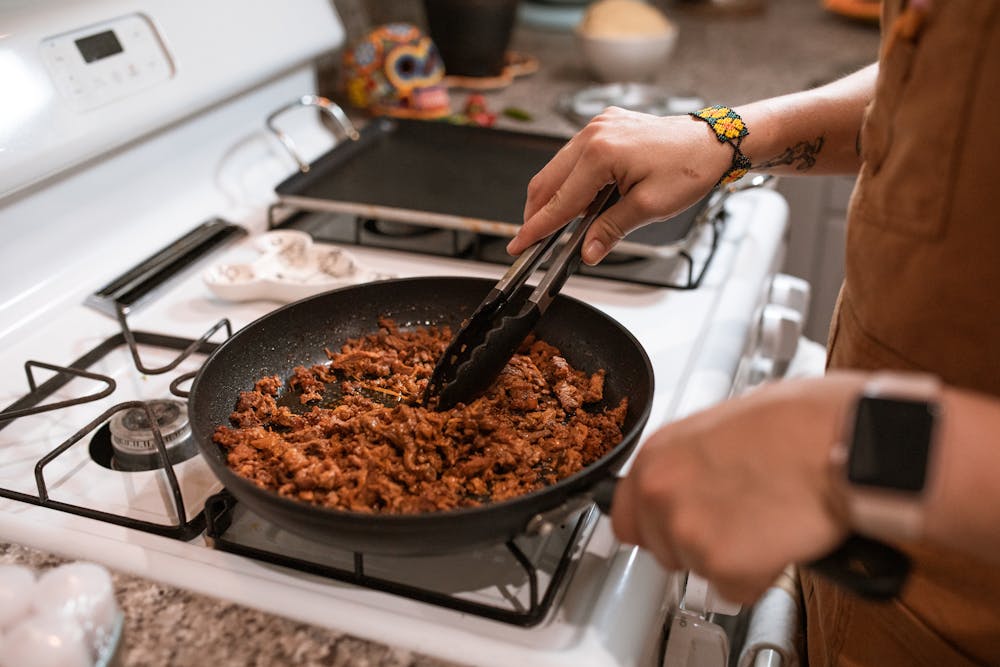
Once the raw meat has been cooked properly to an internal temperature of 160°F – which is the USDA’s required safe minimum for all ground beef – the storage picture changes. If ground beef is refrigerated promptly after cooking (within 2 hours, or 1 hour if the temperature is above 90°F), it can be safely refrigerated for about 3 or 4 days.
That’s a meaningful difference. Cooking through the meat eliminates the bacterial threat. The key phrase is “refrigerated promptly” – the 2-hour rule applies to cooked meat just as it does to raw. Letting taco meat sit on the counter while you clean up and get the kids through bath time counts toward that window. Get it in a sealed container and into the fridge before that clock runs out.
So to be clear: cooked hamburger, taco filling, meat sauce, or burger patties can safely live in your fridge for about 3 to 4 days. Raw ground beef gets 1 to 2 days. That’s the actual ground beef food safety guideline for both states of the meat, and it’s worth knowing both numbers.
The Freezer Is Your Best Friend Here
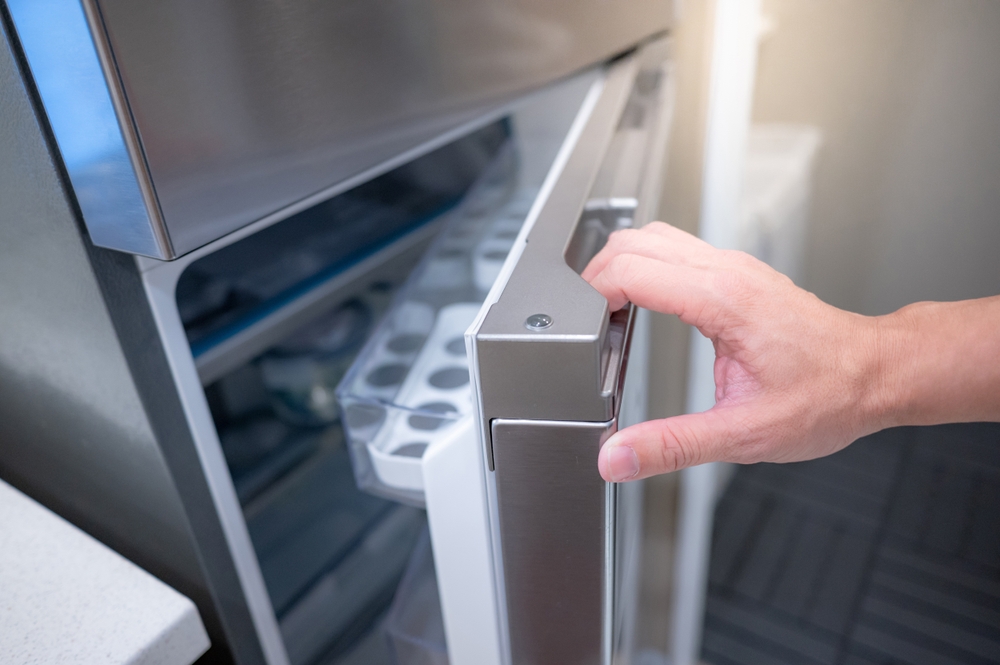
The cleanest solution to the raw ground beef expiration problem – especially for families buying in bulk or stocking up when there’s a good sale – is simply to freeze what won’t be used within two days. Ground beef is safe indefinitely if kept frozen, but will lose quality over time. It is best used within 4 months.
The FDA reinforces this, noting that if freezing meat in its original packaging longer than 2 months, it should be overwrapped with airtight heavy-duty foil, plastic wrap, or freezer paper, or placed inside a plastic freezer bag. The original store packaging isn’t always airtight enough for extended frozen storage, and freezer burn (while not a safety issue) does degrade quality.
A simple habit that makes this much less stressful: label packages with the date before they go into the freezer. Marking packages with the date they were placed in the freezer makes it easy to keep track of storage times. This is genuinely the kind of 5-second habit that prevents the freezer archaeology problem most families know well – pulling out something that might be from 2023 and making an optimistic call.
When you’re ready to use frozen raw ground beef, the safest method is thawing it in the refrigerator. The best way to safely thaw ground beef is in the refrigerator, keeping the meat cold while it defrosting is essential to prevent bacterial growth, and it should be cooked or refrozen within 1 or 2 days.
What This Means for You
The practical takeaway is straightforward. Buy raw ground beef and plan to use it within 2 days – or put it straight in the freezer when you get home if that’s not the plan. Don’t use smell, color, or texture as your primary safety check, because the bacteria that cause foodborne illness won’t announce themselves. Bacteria that cause food poisoning multiply quickest between 40°F and 140°F, so your refrigerator should be set to 40°F or below. It’s worth actually checking that temperature with a thermometer rather than assuming it’s right – many home refrigerators run slightly warmer than their dials suggest.
And if you find yourself standing at the fridge on day three, wondering if it’s still okay: it isn’t. The 1-to-2-day window is there for a real reason, built on real microbiology, not on overcaution. The freezer is always the better call when timing doesn’t work out. Knowing the actual numbers – 2 days raw, 3 to 4 days cooked, 4 months frozen for best quality – is genuinely useful information that reduces risk without making cooking feel like a hazmat exercise. Keep the rules simple, trust the timeline, and dinner stays safe.
Disclaimer: This article was created with AI assistance and edited by a human for accuracy and clarity.