

A new children’s mental health hospital has opened in Michigan, and it’s already being seen as a turning point in how the United States approaches pediatric behavioral care. At a time when anxiety, depression, and crisis-level mental health conditions among children are rising at alarming rates, this facility represents more than just another hospital. It signals a change in priorities, design, and long-overdue investment in young people’s mental well-being.
For years, families have struggled to find appropriate care for children in mental health crisis. Emergency rooms have become holding areas. Long waitlists have delayed treatment. In many cases, children have been placed in environments that simply were not built for them. Now, with the opening of a specialized pediatric facility by Pine Rest in Michigan, there is a growing sense that the system may finally be evolving.
A Crisis That Has Been Building for Years
Children’s mental health challenges have not appeared overnight. Instead, they have been building steadily over the past decade, with several factors accelerating the trend.
First, there has been a noticeable rise in diagnoses of anxiety and depression among children and teenagers. Studies in both the United States and globally have shown consistent increases, particularly among adolescents. Social pressures, academic expectations, and constant digital exposure all play a role. Many children now grow up in environments where comparison and overstimulation are constant.
Then came the COVID-19 pandemic. School closures, social isolation, and uncertainty added another layer of stress. Even after restrictions were lifted, the emotional impact lingered. Many children returned to school with heightened anxiety, difficulty concentrating, or behavioral challenges.
At the same time, access to care has not kept up. Mental health services for children have historically been underfunded. There are not enough specialists, and wait times can stretch for weeks or even months. In urgent cases, families often have nowhere to turn except emergency departments, which are not designed for ongoing psychiatric care. As a result, the system has been under pressure for years. What we are seeing now is not just a spike; it is the breaking point of a long-standing issue.
The Michigan Facility
The new hospital in Michigan, operated by Pine Rest Christian Mental Health Services, was designed specifically to meet the needs of children and adolescents. That distinction alone sets it apart from many traditional healthcare environments. Instead of adapting adult spaces for younger patients, this facility was built from the ground up with children in mind. That includes everything from the physical layout to the treatment approach.
Rooms are designed to feel less clinical and more calming. Bright lighting, soft colors, and age-appropriate decor help reduce anxiety. Safety is still a priority, but it is balanced with comfort and dignity. For a child already in distress, the environment itself can make a significant difference.
The hospital also offers inpatient care, which is critical for children experiencing acute mental health crises. These are situations where outpatient therapy is not enough, and immediate, structured support is required. Having a dedicated space for this level of care means children no longer need to wait in emergency rooms or be transferred far from home.
Staffing is another key factor. The facility brings together specialists trained specifically in pediatric mental health. That includes psychiatrists, therapists, nurses, and support staff who understand how children communicate, process emotions, and respond to treatment. This is not just a hospital that treats children. It is a hospital built around them.
Why Emergency Rooms Were Never the Right Fit
Before facilities like this, many children in crisis ended up in emergency departments. While ERs play a vital role in healthcare, they are not designed for mental health treatment, especially for young patients.
Emergency rooms are fast-paced, often noisy, and focused on immediate physical care. For a child dealing with anxiety, depression, or trauma, that environment can feel overwhelming. Bright lights, constant movement, and unfamiliar faces can increase distress rather than reduce it.

There is also the issue of time. Mental health care is not something that can be resolved in a few hours. Children in crisis often need observation, therapy, and a structured recovery plan. ERs are not equipped to provide that level of ongoing support.
Because of this mismatch, children have sometimes been kept in emergency rooms for extended periods while waiting for placement in a psychiatric facility. This practice, often referred to as “boarding,” has been widely criticized by healthcare professionals.
The new Michigan hospital helps address this gap. Providing immediate access to appropriate care reduces the need for children to pass through environments that were never designed for them in the first place.
Designing Care Around the Child, Not Just the Condition
One of the most important shifts represented by this hospital is the move toward child-centered care. This approach recognizes that treating a child’s mental health is not just about addressing symptoms. It is about understanding the whole person.
For example, therapy in pediatric settings often involves more than one-on-one sessions. Group activities, creative expression, and family involvement all play a role. Children may find it easier to communicate through art, play, or storytelling rather than direct conversation.
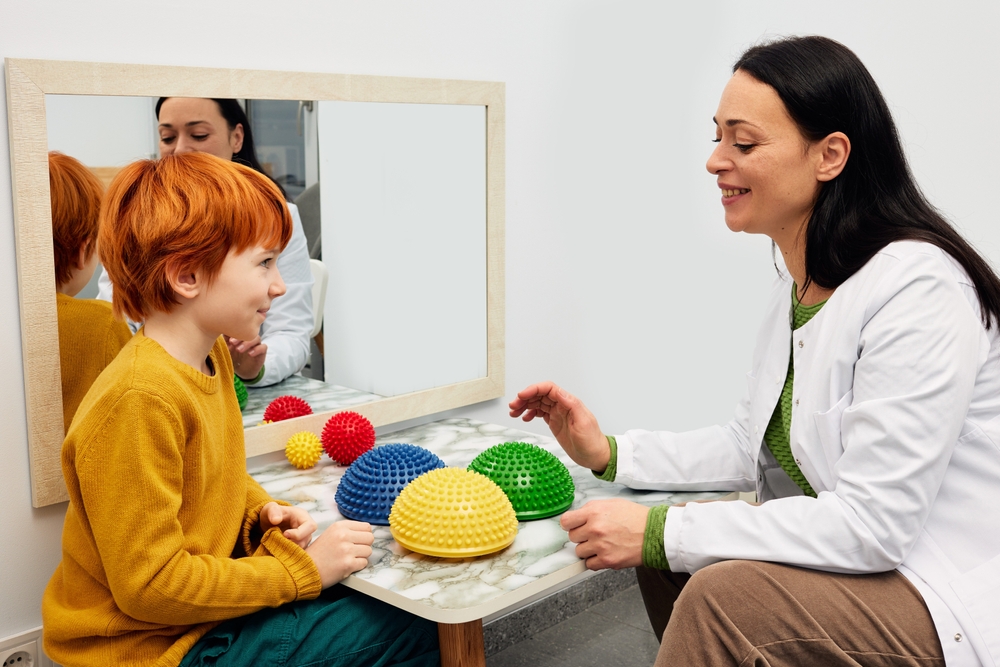
The hospital incorporates these methods into its care model. Spaces are designed for different types of interaction, from quiet reflection to guided group work. This flexibility allows treatment to be tailored to each child’s needs.
Family involvement is also emphasized. Parents and caregivers are not just observers; they are part of the process. This helps ensure that progress made in the hospital can continue at home. By focusing on the child as a whole rather than just a diagnosis, the facility sets a new standard for care delivery.
A National Signal That Priorities Are Shifting
The hospital’s opening sends a clear message. Children’s mental health is no longer being treated as a secondary concern. It is becoming a central part of healthcare planning. For years, funding and attention have been directed primarily toward physical health. Mental health services, especially for children, have often lagged. This has created gaps in care that are now becoming impossible to ignore.
Facilities like this one represent a change in how resources are allocated. They show that policymakers, healthcare providers, and communities are beginning to recognize the scale of the problem. However, one hospital alone cannot solve a national crisis. It is a step forward, but it also highlights how much work remains. The hope is that it will serve as a model for other regions, encouraging similar investments across the country.
Other Countries That Are Taking Action
While the Michigan hospital is making headlines, the United States is not the only country addressing this issue. Around the world, governments and healthcare systems are responding to the same rising demand.
In the United Kingdom, the National Health Service has expanded its Child and Adolescent Mental Health Services. New inpatient units have been opened, and schools are increasingly involved in early intervention programs.
Canada has taken a similar approach, with institutions like the Centre for Addiction and Mental Health expanding youth-focused services. Provinces are investing in crisis units and integrated care systems that connect hospitals with community support.
Australia has leaned heavily into accessibility. Through initiatives like headspace, young people can access mental health care in community settings without needing a hospital referral. At the same time, new inpatient facilities are being developed for more severe cases.
In Germany and Sweden, structured psychiatric systems have been expanded to include more pediatric care, with an emphasis on both inpatient treatment and step-down programs that help children transition back into daily life.
Even smaller countries like New Zealand are investing in youth mental health, combining facility expansion with culturally tailored programs that address the needs of different communities.

Although these countries use different strategies, the underlying message is the same. Children’s mental health has become a priority. Some countries focus more on hospital-based care, while others emphasize community and school-based support. Most are now blending these approaches, recognizing that no single solution is enough.
What connects all of these efforts is urgency. The demand for services is rising faster than systems can adapt. Even in countries with strong healthcare infrastructure, wait times remain a challenge. This shared experience reinforces the idea that the issue is not isolated. It is a global occurrence in how mental health is understood and addressed.
Why Early Intervention Is Becoming Essential

One of the most important lessons emerging from this global response is the value of early intervention. Treating mental health conditions early can prevent them from becoming more severe over time. Children who receive support at the first signs of anxiety or behavioral issues are more likely to develop healthy coping mechanisms. They are also less likely to require intensive treatment later.
Schools are playing an increasing role in this process. Teachers and counselors are often the first to notice changes in behavior. By connecting students with support services early, schools can act as a first line of defense. Hospitals like the one in Michigan still play a critical role, especially for acute cases. But the broader goal is to create a system where fewer children reach that level of crisis in the first place.
The Challenges That Still Remain
Despite these advancements, significant challenges remain. The most pressing issue is the shortage of trained professionals. Child psychiatrists, therapists, and specialized nurses are in high demand, and supply has not kept up.
Funding is another issue. Building a hospital is a major investment, but maintaining and staffing it requires ongoing resources. In many regions, budgets are already stretched. There is also the question of access. Even with new facilities, families in rural or underserved areas may still struggle to get care. Transportation, cost, and awareness all play a role.
Finally, there is stigma. Although attitudes toward mental health are improving, some families still hesitate to seek help. Reducing that stigma is an essential part of improving outcomes.
Read More: Study Identifies the Ideal Number of Children for Minimizing Parental Stress
What This Means for the Future
The opening of this hospital is a sign of progress, but it is also a reminder of how much work lies ahead. It shows what is possible when mental health is treated as a priority.

If similar facilities are built across the country, and if they are supported by strong community programs, the system could begin to catch up with demand. Children would have access to care that is not only available but appropriate.
Globally, the same shift is underway. Countries are rethinking how they deliver mental health services, especially for young people. The hope is that these changes will lead to better outcomes, not just in treatment, but in prevention.
A Turning Point, Not a Finish Line
The new pediatric mental health hospital in Michigan represents a turning point. It reflects a growing understanding that children’s mental health is just as important as physical health, and that it requires dedicated resources, thoughtful design, and specialized care.
At the same time, it is only one piece of a much larger puzzle. The challenges are complex, and the solutions will need to be just as multifaceted. Hospitals, schools, families, and communities all have a role to play.
What is clear, though, is that the conversation is changing. Mental health is no longer being pushed to the margins. It is moving to the center, where it belongs. And for many children and families, that change could make all the difference.
A.I. Disclaimer: This article was created with AI assistance and edited by a human for accuracy and clarity.
Read More: Study Finds Connection Between Screen Time and Mental Health in Kids Under 10