

You can usually spot them within minutes. They walk into a room and something about them is just different – not louder or more performatively cheerful, but genuinely lighter. They ask about your life and actually listen. They absorb bad news without crumbling. They find something funny in the same week they found something hard. The answer is almost never luck.
The research on happiness has reached a fairly consistent conclusion: the people who move through life with the most genuine energy and warmth are not the ones who had the easiest lives. They’re the ones who were taught certain habits early enough that those habits became a kind of second nature. Not a performance of happiness. Not an absence of difficulty. Just a practiced orientation toward the world that got installed young and compounded over decades. By providing an environment and daily routines that support positive feelings, the practice of fulfilling activities, emotional intelligence, and social skills, parents lay the ground for a happy childhood – and the habits formed there carry forward into a fulfilling adult life.
These are the four happy people energy lessons that seem so effortless from the outside. None of them are complicated. All of them take years.
1. They Were Taught to Notice What’s Already Good

There’s a difference between being told to “count your blessings” and actually learning to notice things. The first is a correction. The second is a skill. People who grew up in households where gratitude was practiced as something real – not as a performance before dinner, but as a genuine habit of attention – tend to carry that perceptual instinct into everything they do. They aren’t deluded about the hard stuff. They just have a wider frame.
For a long time, the science of gratitude focused mainly on adults and teens. But recent research is showing that it is never too early to learn how to be grateful. A 28-week study found that even first-graders can significantly boost their gratitude and overall well-being through simple 10-15 minute daily practices like journaling, writing thank-you cards, and creating gratitude collages. The study, published in the Early Childhood Education Journal, found that these structured practices produced measurable improvements in children’s gratitude and well-being, suggesting the habits build something durable in how a child processes their environment.
What this produces in adulthood is a person who spots the good thing in the room without pretending the bad thing isn’t also there. They notice that the coffee is excellent without needing the whole morning to be. They notice a kind gesture without requiring a perfect relationship. Positive psychology research shows that practicing gratitude can improve emotional well-being and increase how often someone experiences emotions like happiness, pride, and contentment. In the people who grew up with this habit, those emotions aren’t manufactured. They’re the natural output of a trained attention.
Simply writing or stating a reason to be thankful can improve mood, and children and teens who make a habit of expressing gratitude are more likely to report positive emotions such as happiness and satisfaction. By the time these kids are adults, the gratitude habit has had twenty or thirty years to become invisible – which is exactly why the people around them can’t quite put their finger on it. It doesn’t look like a practice anymore. It looks like a personality.
2. They Were Taught That Helping Others Is an Energy Source, Not a Drain

A lot of people were raised to think of generosity as costly. You give something – time, attention, money – and it depletes you. Happy people with good energy don’t seem to have gotten that memo, and it turns out, they were right not to. The research on altruism and happiness is consistent and a little startling: doing good for others is one of the most reliable routes to feeling good yourself.
Helping others – even tiny acts of kindness – makes us happier, according to Georgetown University neuroscientist Abigail Marsh. “It gives us a sense of pride in having done something we know to be worthwhile. And most importantly, it strengthens our social relationships and sense of connectedness to other people, which is essential for real happiness.” This isn’t about grand gestures or organized philanthropy. It’s about the accumulation of small moments – holding the door, sending the text, making time for the conversation someone actually needed.
Marsh and fellow researcher Shawn Rhoads reported that even observing others act altruistically has its own ripple effect: it can improve mood, energy, and desire to do good things for others. The benefit isn’t just internal. It moves. When a person with this orientation enters a room, they’re not just receiving the good energy that altruism generates – they’re also producing it, and the people around them pick that up. The person at the party who makes you feel like the most interesting person there? Almost certainly grew up in a home where doing things for other people was modeled as a joy, not a duty.
Children who learn this lesson early don’t grow up to be martyrs. They grow up to be the friends who are genuinely glad to see you, who remember the thing you mentioned in passing three months ago, who don’t keep score. The energy that produces is unmistakable, and it isn’t magic. It’s a habit that started somewhere around the age when they were watching the adults in their lives figure out what kind of people to be.
3. They Were Taught to Slow Down and Actually Taste Things
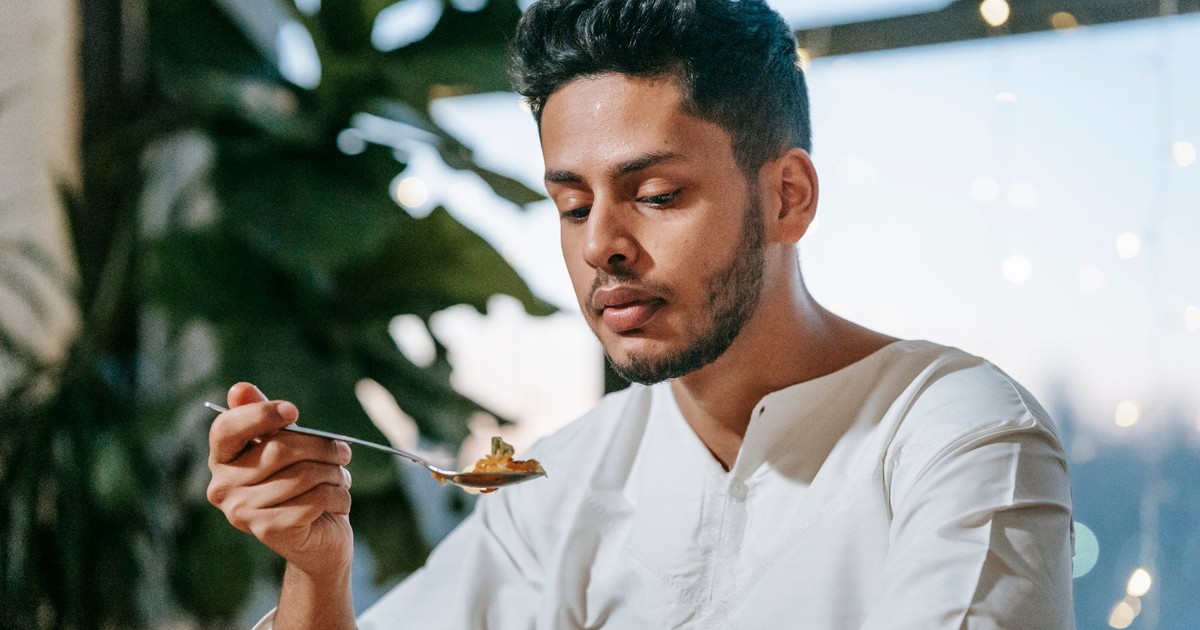
The technical term for this is savoring – the practice of deliberately attending to a pleasurable experience while it’s happening, rather than rushing past it toward the next thing. It sounds almost embarrassingly simple. Yet the difference between people who do it and people who don’t is enormous, both in terms of daily mood and in terms of accumulated life satisfaction.
The fast pace of modern life threatens the positive thoughts and emotions we might otherwise feel about the present. Children can be taught to slow down and really “savor” life’s pleasures. According to psychologist Martin Seligman, savoring is the “awareness of pleasure and of the deliberate conscious attention to the experience of pleasure,” and making slow-down-and-enjoy-life time habitual in childhood forms habits for a happier adulthood. The people who grew up learning this – through a family culture of lingering at the table, of being asked what they noticed today rather than what they accomplished – carry a different relationship to time.
As adults, they’re the ones who seem most present. Not because they’ve achieved some advanced meditative state, but because paying attention was the habit they built young. They eat the meal. They watch the film instead of half-watching it while scrolling. They have the long dinner that goes past midnight because no one wants to leave. This isn’t about having more leisure time than anyone else. It’s about using the time they have differently – extracting more of what’s actually there.
The secrets centenarians most often cite about living a long and happy life point in the same direction. Almost none of them recommend optimization or productivity. Almost all of them describe some version of absorption – in people, in moments, in whatever was in front of them. The people who grew up learning to savor don’t wait for the big events to feel fully alive. They’ve practiced finding it in the ordinary ones for so long that the ordinary ones don’t feel ordinary anymore.
4. They Were Taught That Optimism Is a Skill, Not a Personality Type

False optimism is just denial with better branding – a refusal to engage with difficult realities, a relentless brightness that curdles into exhaustion for everyone around it. That’s not what this is. The optimism that happy, energetic people carry into adulthood is something more precise: a learned habit of questioning the permanence and pervasiveness of negative events. When something goes wrong, they don’t automatically assume it will go wrong forever, or that it reflects something irreparable about themselves or their lives.
Parents can help children create more positive thoughts and emotions about the future by teaching them to be optimists. Learning to be an optimist means learning to recognize and then dispute negative or pessimistic thoughts. This is cognitive work. It’s not cheerleading. It’s the practice of asking: is this thought accurate? Is this setback really permanent? Does one bad outcome mean all outcomes will be bad? Children who grow up hearing those questions modeled – by parents who bounce back without performing invincibility – start asking them automatically.
Evidence shows that childhood mental disorders can have serious consequences on psychosocial, cognitive, and physical development, and approaches from Positive Education go further than the prevention of mental disorders by aiming directly at promoting subjective, psychological, and social wellbeing. The Frontiers in Psychology research on positive education programs found that structured wellbeing lessons for elementary-age children – covering optimism, engagement, and positive relationships – produced measurable improvements in children’s wellbeing that persisted at follow-up assessments.
As adults, people who learned this skill aren’t naive. They’ve seen things go wrong. They know the difference between genuine cause for concern and a brain running its familiar catastrophizing script. The energy they carry isn’t the energy of someone who hasn’t had hard experiences. It’s the energy of someone who has learned not to let hard experiences write the whole story. The distance between the fact of difficulty and the meaning you assign it is maybe the most important thing a child can ever be taught, and also the one most easily skipped over.
Read More: 60-Year-Old Woman Lists 23 of Her Life’s Regrets
What You’re Actually Looking At
When you’re in the presence of someone who has these happy people energy lessons written into their operating system, it can feel almost unfair. Like they have access to something you don’t. The research keeps pointing to the same truth: these are learned orientations, not innate traits. The people who seemed to be born this way were mostly just taught well, early, by someone who was either deliberate about it or happened to model it without trying.
None of these lessons require a perfect childhood. They can take root in complicated families, in hard circumstances, in households where joy and grief occupied the same rooms. What they require is repetition – enough encounters with gratitude, with generosity, with presence, with resilience, that the practice becomes the default. Defaults can be updated. They just take longer to change in an adult than they would have in a child, because you have to override more years of the old setting. Not impossible. Just honest work.
Disclaimer: This information is not intended to be a substitute for professional medical advice, diagnosis, or treatment and is for information only. Always seek the advice of your physician or another qualified health provider with any questions about your medical condition and/or current medication. Do not disregard professional medical advice or delay seeking advice or treatment because of something you have read here.
AI Disclaimer: This article was created with the assistance of AI tools and reviewed by a human editor.