

Aging sneaks up in small betrayals before it announces itself. The reading glasses you don’t technically need but somehow always seem to have nearby. The way recovery from a late night now takes two full days instead of a large coffee. The quiet realization, somewhere around your late forties or early fifties, that the body you’ve always lived in has opinions now, about stairs, about sleep, about the temperature of the room.
What’s strange is how little anyone tells you about what’s actually coming. The conversation around aging tends to fall into two equally unhelpful camps. There’s the deeply fearful version that treats every gray hair like a harbinger, and there’s the aggressively positive version that insists you’re “thriving” and “just getting started” as though positive framing is a substitute for the truth. Neither version does you any good. What actually helps is knowing what you’re dealing with.
1. Your Body Doesn’t Age in a Straight Line
The mental image most of us carry is one of slow, even decline, a gradual slope from peak to older. The biology is considerably less tidy. Research into how various tissues age suggests that aging does not march to a steady beat. Observational studies in human cohorts have pointed to specific windows, particularly around the late forties and early sixties, when biological aging appears to accelerate in ways that feel more like a gear shift than a gentle fade.
This matters because it reframes the experience. When something feels like it changes faster than expected, when sleep suddenly becomes unreliable or energy drops in a way that seems disproportionate to what’s happening in your life, it isn’t imagination. The body isn’t on a predictable schedule. It is responding to waves of internal change that research is only beginning to fully map.
What this means practically is that waiting to “feel old” before paying attention is a losing strategy. The acceleration periods are already in progress before the symptoms are obvious. The gap between what’s happening biologically and what you’re consciously experiencing can be years wide.
2. Living Longer Doesn’t Automatically Mean Living Better
Longevity has become a kind of cultural obsession, with supplements and protocols promising not just more years but more good years. The reality, at least in the United States, is more complicated. According to a 2025 report from the Population Reference Bureau, though premature deaths from heart disease and stroke have declined, Americans today are unhealthy for a longer portion of their lives, coping with chronic diseases and conditions such as diabetes, hypertension, arthritis, cancer, and heart problems.
The United States has experienced the earliest and greatest slowdown in life expectancy improvements among higher-income countries, with researchers pointing to diverging data showing that American longevity trends are falling further behind peer nations. The extra years being added to American lives are not, on average, years spent in excellent health. They are years spent managing conditions, adjusting medications, and navigating a healthcare system built largely around acute illness rather than sustaining long-term wellbeing.
This is not a reason for despair. But it is a reason to care more about what researchers call “healthspan,” the number of years you actually feel well, rather than chasing the total number on the calendar. The goal isn’t to live as long as possible. It’s to feel good for as long as possible. Those two things are related but not the same.
3. Loneliness Is a Physical Health Problem, Not Just a Feeling
There’s a version of the loneliness conversation that treats it as an emotional inconvenience, a soft problem for people who haven’t built their social lives correctly. The medical evidence says something considerably sharper. According to the WHO’s 2025 Commission on Social Connection, loneliness and social isolation increase the risk of stroke, heart disease, diabetes, cognitive decline, and early death, and the commission estimated that loneliness contributes to more than 871,000 deaths globally each year.
Social isolation is estimated to affect up to 1 in 3 older adults. It doesn’t arrive dramatically. It arrives through retirement, through the death of a spouse, through the gradual drifting of friendships that once felt permanent, through a body that makes getting out of the house harder than it used to be. Most people who end up isolated in older age did not plan to be. Life just arranged itself that way.
The WHO’s commission described social isolation as one of the defining public health challenges of the current era, and the framing is worth sitting with. It is not a personal failing. It is a structural risk that builds up quietly over decades, and it matters most at exactly the stage of life when people are least likely to be actively building new connections.
4. Women Age Differently, and Medicine Is Only Starting to Notice
Men and women age differently, and aging science has a significant data problem around this. A common assumption in aging research has been that if a person lives to 80, roughly the last quarter of those years will be in relatively poor health. The problem is that assumption has historically been built around male patterns. Women’s experience of aging, shaped by hormonal changes including menopause, diagnostic delays, and other sex-specific factors, follows a structurally different arc that has been consistently understudied.
The implication here is significant. The frameworks being used to study aging, the interventions being developed, the clinical assumptions being applied, have largely been built around male patterns. For women, the experience of aging is not a slightly different version of the male experience. It is structurally different, and for a long time the research simply wasn’t there to describe it accurately.
Menopause alone sits at the center of a period of accelerated change that women move through with remarkably little medical support relative to its scope. Bone density, cardiovascular risk, cognitive function, sleep quality, hormonal regulation: all of these shift in ways that are both significant and, for most of medical history, under-studied. The understanding is improving, but slowly.
5. Your Friendships Will Probably Need More Effort Than You Expect
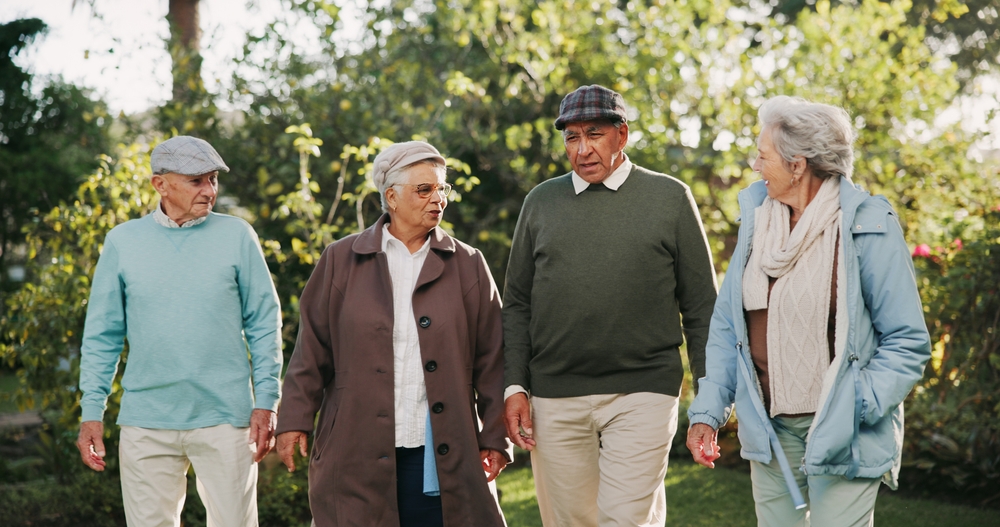
Friendships in the first half of life often run on proximity. School, neighborhoods, workplaces, shared stages of parenting: all of these create conditions where maintaining relationships requires relatively little active effort. Then the structures change. Children leave home, careers shift or end, people move. The friendships that seemed permanent were sometimes more dependent on shared circumstances than on deliberate choice.
Observational data has documented that social isolation begins accumulating earlier than people assume. The PRB report on aging trends cited research suggesting that isolation begins to increase as early as adolescence and continues steadily through the life course. By the time people are in their sixties and seventies, the attrition is already significant. Friendships require maintenance, and maintenance requires energy that is harder to summon when life has become smaller in various ways.
The hard part is that knowing this doesn’t make it easy. Making new friends as an adult is genuinely difficult in ways it simply wasn’t at twenty-two. The social infrastructure that made connection effortless is mostly gone. What replaces it requires intention, tolerance for awkwardness, and a willingness to invest in relationships that don’t yet have the history to feel natural. All of that is harder than it sounds when you’re already tired.
6. The Longevity Industry Is Selling Confidence It Doesn’t Yet Have
The wellness and longevity market is very good at dressing up uncertainty as science. There are supplements, protocols, tracking devices, and optimization regimens confidently promising outcomes that the actual research does not support. The honest version of where the science currently stands is considerably more tentative. There is no solid evidence that any drug, diet, or supplement can extend maximum human lifespan.
What does have solid backing is less glamorous: sleep, consistent movement, social connection, not smoking, not drinking heavily, staying mentally engaged, and seeing a doctor regularly. These interventions are unglamorous enough that an entire industry has built itself around making people believe there must be something more sophisticated available. There isn’t, at least not yet.
The longevity field sits at an adolescent stage: past childhood fantasies, not yet mature science. There are real tools to improve healthspan today, including exercise, nutrition, sleep, connection, and medical basics, but no proven way to extend maximum lifespan. That’s worth knowing when a supplement with confident branding and a four-digit price tag is promising to change your trajectory at the cellular level.
Read More: Justine Bateman Defends Her Decision to Age Naturally
7. How You Think About Aging Shapes How You Experience It
This one gets dismissed most easily, because it sounds like the kind of soft positivity that belongs in a greeting card. The evidence behind it is actually substantial. Observational research has consistently found that people who hold more positive views of aging, not delusional optimism, but a realistic acceptance that aging is a normal process and not a catastrophe, tend to live longer, recover more quickly from illness, and maintain better cognitive function than those who view aging primarily through the lens of loss.
The cultural messaging around aging for women in particular runs in the opposite direction. The expectation is that visible aging is a failure, a cosmetic problem to be managed and corrected. Women who choose to age without cosmetic intervention often describe fielding hostility, as though refusing to fight visible aging represents a kind of social transgression. That pressure is not neutral. It shapes how women feel about getting older in ways that have real downstream effects on health and wellbeing.
The research doesn’t suggest pretending aging is effortless or that loss isn’t real. It suggests that the frame you put around the experience matters, and that a frame built entirely around decline and correction may be making the experience measurably worse.
What to Do With All of This
None of these seven things are fixable in a weekend. That’s not what this is. Some of them are structural, some of them are cultural, and some of them are just the shape of human biology, which doesn’t care about your plans. The point isn’t to hand you a checklist.
What’s worth taking away is simpler: the conversation around aging tends to be either catastrophizing or cheerleading, and neither version is particularly useful when you’re actually in it. The actual terrain is more interesting than either version suggests. Aging accelerates in bursts and then settles. Friendship becomes an active project rather than a passive one. The longevity industry is largely selling confidence it hasn’t earned. Women’s experience of aging has been understudied for decades and the understanding is finally catching up. Loneliness is a genuine medical risk, not a character flaw. And how you hold all of this in your mind probably matters more than most of the products designed to help you avoid thinking about it.
You don’t have to have a tidy relationship with getting older. Nobody does. The goal is just to be clear-eyed about what’s actually happening, which tends to be more manageable than the version you’ve been worrying about in the dark.
AI Disclaimer: This article was created with the assistance of AI tools and reviewed by a human editor.